
Why correct assembly of wooden products affects their strength and durability
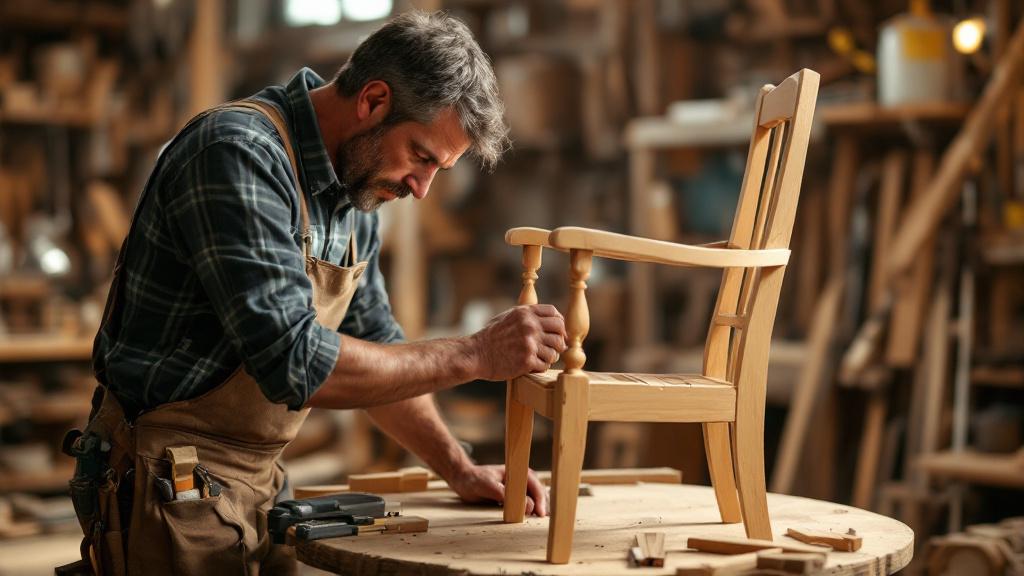
In the process of manufacturing wooden products — be it furniture, structural elements or decorative panels — maximum attention is often paid to the selection of raw material, its drying and precision machining. Indeed, the quality of the source material and the accuracy of cutting the parts are fundamental. Yet it is precisely assembly that is the decisive, final stage which turns individual components into a single, functional and, above all, reliable product.
Assembly carried out incorrectly, no matter how flawless all the previous stages were, is capable of nullifying the efforts of engineers and craftsmen. It becomes the weak link, a point where stresses concentrate, which will inevitably lead to a shorter service life and a loss of performance characteristics. And conversely: a professional approach to joining elements guarantees that the product not only meets its stated parameters but exceeds expectations in strength and durability.
Perceiving assembly as simply “joining parts together” is a mistake in professional woodworking. In reality, it is a complex technological process that requires deep knowledge of the properties of wood, the mechanics of joints and the chemistry of adhesive compounds. This stage determines how the product will withstand external loads, changes in humidity and temperature fluctuations throughout its entire service life. That is precisely why we consider it necessary to examine in detail the key aspects that prove the critical influence of assembly quality on the final characteristics of wooden products.
For a manufacturer focused on producing durable, reliable products, investing in perfecting assembly technologies, training staff and using high-precision equipment pays off in a guarantee of quality and the trust of customers.
Precise preparation of elements: the importance of perfect geometry
The quality of assembly depends directly on how accurately all the component parts have been made. If the geometry of the elements does not match the design drawings, then even the most diligent joining cannot eliminate the errors that arise. The strength of a structure begins with zero tolerances at the blank-preparation and machining stage.
When it comes to high-quality products, we are talking about millimetres, and often about fractions of a millimetre. An inaccurate angle on the end of a rail, or a displacement of the mortise for a tenon exceeding permissible values, is transformed into internal stress when you attempt to assemble the product. The craftsman is forced to apply excessive force to “fit” the elements, which leads to microcracks at the joints or deformation of the wood.
A perfectly precise fit, on the contrary, allows the elements to be joined without force, forming a monolithic structure where the load is distributed evenly. In the case of glued joints, a minimal but strictly controlled gap ensures an optimal contact area and glue-line thickness, guaranteeing maximum bond strength. An excessively tight fit will squeeze out the adhesive, creating a “starved” joint, while one that is too loose will require an excessive amount of filler.
Using CNC machines and precision measuring tools at the preparation stage is not a luxury but a strict necessity. Only in this way can it be guaranteed that all seats, holes and surfaces will have a perfect mutual orientation. An error in a single part will cascade through all the subsequent joints, accumulating a deviation that cannot be compensated for at the assembly stage.
The technological process must include multi-level geometry control after every operation: milling, drilling or cross-cutting. This approach minimises the risk of defects that appear only when attempting final assembly, which inevitably leads to rework and lost time.
Ignoring the rules of precise part preparation is like laying a time bomb under the strength of the whole product. The product may look assembled, but at the very first serious operational load (for example, when moving a cabinet or frequently using a drawer) the hidden stresses and weak joints will make themselves felt.
Thus, to achieve durability, a manufacturer must treat the element-preparation stage not as a separate process but as an integral part of the assembly system, where every perfectly fitted joint is a guarantee of structural integrity.
Choosing the type of joint: how different joints affect the load
Choosing the right type of joinery joint is a fundamental engineering decision that determines how the product will resist different kinds of operating loads. There is no universally best joint; the choice always depends on the functional purpose of the joint and the vector of the forces acting on it.
For example, for the corner joints of furniture frames, which must withstand significant bending and shear loads, tenon joints (for example, a dovetail or a simple through tenon) or dowel joints with additional screw reinforcement are often used. Using only mini-fixings or simple Euro screws may be sufficient for unloaded decorative elements, but will prove critically inadequate for load-bearing structures.
Joints can be classified according to their ability to resist particular loads:
- Tensile and bending loads: Joints with a large glue area and mechanical interlock work most effectively, such as the dovetail or the mortise-and-tenon joint.
- Shear loads: Joints with a large number of fastening elements or dowels spaced a considerable distance apart cope excellently.
- Torsional loads: Often addressed by using bulky corner elements or a combination of mechanical and glued joints.
A professional approach requires an analysis of the operating conditions. If a product (for example, a dining table) will frequently be moved or subjected to dynamic loads, it is necessary to use joints that provide not only initial strength but also repairability or, at the very least, resistance to loosening. This explains the popularity of knock-down joints in carcass furniture, where the ability to reassemble without loss of load-bearing capacity matters.
A less obvious but no less important factor is the joint’s reaction to changes in humidity. Wood is a hygroscopic material, and with fluctuations in humidity it expands and contracts. An incorrectly chosen joint type (for example, one that is too rigid and unable to compensate for even minimal movement) can lead to failure of the glue line, cracking of the wood or loosening of the fasteners. More complex joinery joints are often designed so that the wood can “move” without a critical loss of strength.
Design engineers are obliged to take into account not only maximum loads but also cyclic loads, as well as the long-term “fatigue” effect on the material and the joint. Saving on the complexity of a joint in favour of faster, cheaper options always leads to reduced durability and reliability of the entire structure.
The quality of fasteners and adhesive: the role of the invisible components
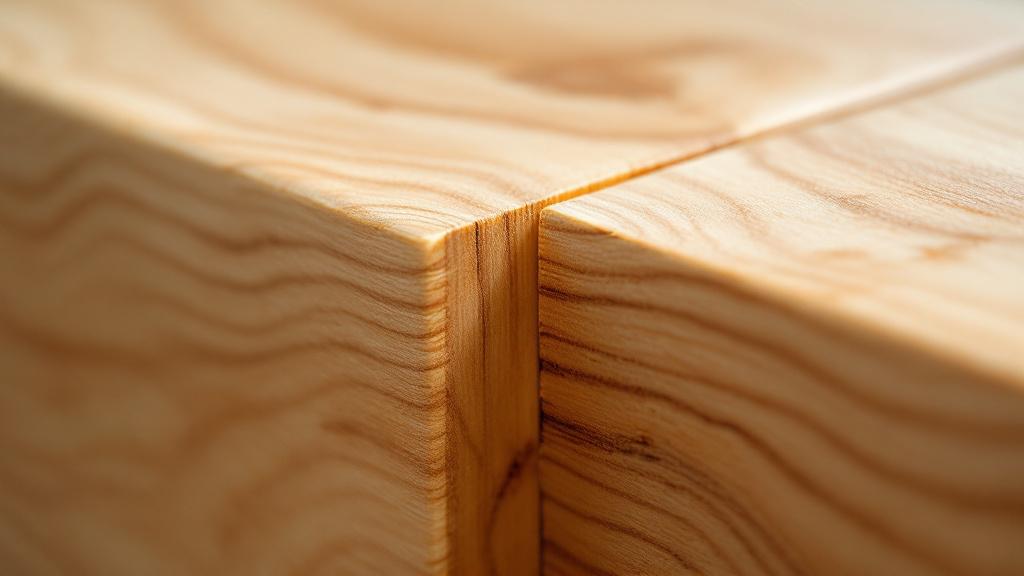
The strength of any glued or mechanically joined product depends not only on the geometry of the parts but also on the quality of the fastening materials. Adhesive and fasteners (screws, dowels, hardware) are invisible in the finished product, but their properties have a critical impact on its durability.
In woodworking, choosing an adhesive compound is a high-tech process. The adhesive must match not only the type of wood and the type of joint, but also the future operating conditions (moisture, temperature, environment). For example, for products intended for outdoor use or rooms with high humidity, it is necessary to use water-resistant adhesives of class D3 or D4 (in accordance with the EN 204/205 standard), which retain their strength even in direct contact with water. Using ordinary PVA that is not intended for such conditions will inevitably lead to failure of the joint.
In addition to the water-resistance class, what matters is the pot life of the adhesive compound, the open assembly time and the pressing time. Violating the technological schedule (for example, exceeding the time during which the adhesive remains liquid before clamping) leads to reduced adhesion and joint strength. Controlling the temperature in the workshop is also critical, since it affects the polymerisation of the adhesive.
As for mechanical fasteners, their quality is determined not only by the material (for example, the strength of the steel or its corrosion resistance) but also by the geometry. Inaccurate or poor-quality screws can damage the seat, strip the thread in the wood or particleboard, which reduces the clamping force. Using fasteners of the wrong size or with the wrong thread pitch also reduces joint strength.
Professional production always uses fasteners with a certain margin of safety, which have undergone standardisation and inspection. Saving on hardware is one of the most frequent causes of premature product failure. Cheap connectors may fail to withstand cyclic loads, and low-quality dowels made from soft wood may deform under pressure.
Thus, to achieve maximum joint strength, the enterprise must have strict incoming quality control of all consumables and strictly follow the recommendations of the adhesive and fastener manufacturers regarding their use.
Following the technological sequence: why the order of assembly is critical
The assembly of a complex wooden product is rarely chaotic. It is always subject to a strict technological sequence, the violation of which inevitably leads to reduced quality and strength. This sequence is developed by design engineers and process engineers to achieve the optimal result.
The critical importance of the assembly order is due to several factors. First, it is geometric accuracy. Some elements can only be installed on condition that others are already in place and serve as guides or reference points. If you assemble a frame and then try to insert an element requiring a tight fit, there is a high probability of damaging the already glued or fastened joints.
Second, it is the elimination of internal stresses. The correct sequence makes it possible to distribute the clamping force evenly across the whole structure. First the large load-bearing elements are assembled, and then the secondary ones are attached to them, which makes it possible to gradually let the structure “settle”. An incorrect order — for example, clamping the secondary elements before the final fixing of the load-bearing frame — can lock the structure in a slightly skewed state, creating permanent internal stresses.
Third, there is working with glued joints. Glue lines need a certain amount of time to gain strength, and it is critically important that during this period the product is under even pressure. The technological sequence must make it possible to clamp and press the assembled joint before it is loaded by the next stages of assembly. Trying to assemble everything at once without proper pressing time for each joint leads to weakened joints.
Following the schedule is also related to accessibility. Some fasteners or points for applying adhesive become inaccessible after subsequent parts are installed. For example, fixing the back panel may make it impossible to reach certain connectors or bolts. Professional assembly involves the step-by-step, controlled completion of each stage before moving on to the next.
Thus, the assembly process chart is not just an instruction but an algorithm for ensuring strength. Any departure from it is a gamble in which the product’s durability is at stake. At enterprises with a high level of control, this order is strictly regulated and supervised by the section foremen.
Controlling the tightening force: the balance between strength and material damage
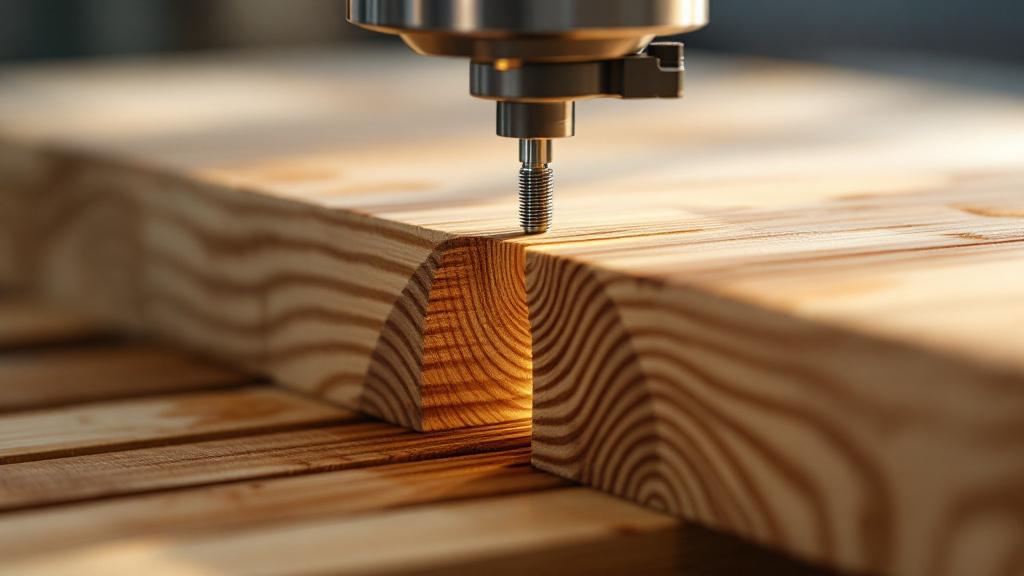
When using mechanical fasteners such as screws, bolts, self-tapping screws or confirmat screws, the strength of the joint depends on the tightening force. This is one of the most delicate moments in assembly, since over-tightening and under-tightening are equally ruinous for the product’s durability.
Under-tightening leads to the structural elements not fitting closely enough to one another. The joint remains movable, which in use quickly leads to loosening of the joint, increased gaps and, ultimately, its failure. Moreover, such a joint is unable to carry the design load.
Over-tightening, on the contrary, leads to damage to the material. In soft wood species or wood-based materials (particleboard, MDF), excessive force can deform or crush the fibres, creating concentrated stresses around the fastening point. This weakens the seat, making the joint more vulnerable to subsequent operating loads. This is especially critical for the edge joints of particleboard, where it is easy to strip the thread or cause the material to delaminate.
Professional assembly requires the use of a controlled torque. Specialised tools with adjustable tightening torque — torque screwdrivers or drivers — are used in production. This makes it possible to guarantee that every screw in a series will be tightened with a force that precisely matches the type of fastener and the material’s characteristics.
The value of the torque is calculated by process engineers on the basis of testing and depends on several factors:
- Wood density: The denser the material, the greater the force that can be applied, but the higher the risk of splitting.
- Diameter and thread pitch of the fastener: A larger diameter requires greater torque.
- Presence and diameter of a pilot hole: An incorrectly chosen pilot hole increases the risk of splitting or stripping the thread.
In cases where a fastener is used to clamp glued joints, its task is to ensure a close fit during the polymerisation of the adhesive, not to carry the main load after curing. Once the adhesive has set, the glue line takes on the main load-bearing function. However, even in this case, correct tightening at the pressing stage is critically important for the quality of the joint itself.
Thus, controlling the tightening force is not just a matter of carefulness but an engineering measure aimed at achieving an optimal balance between the reliability of the fastening and the preservation of the material’s structural integrity around the contact point.
Accounting for humidity and temperature: the influence of the environment on the assembly process
Wood is a living material in the sense that it constantly exchanges moisture with the environment. Changes in humidity and temperature in the assembly shop have a direct and often critical influence on the strength and durability of the finished product.
When parts are in the workshop, they must be acclimatised, that is, they must reach an equilibrium moisture content corresponding to the humidity of the air in the room. If assembly is carried out from parts with elevated moisture content, then after installation in a dry room (for example, a living room) the wood will begin to dry out. This will inevitably lead to a reduction in volume of the elements. In rigidly fastened joints (especially glued ones), drying-out causes internal stress that can lead to:
- Cracking of the wood itself.
- Rupture of the glue line.
- Loosening of mechanical fasteners.
A similar problem arises when assembling in conditions that differ from those of future use. For example, if assembly takes place at a low temperature and use takes place at a high one, the materials expand, which can cause deformation and loosening of the joints.
Adhesive compounds are also extremely sensitive to environmental conditions. Every adhesive has a clearly defined range of working temperatures needed for correct polymerisation. Too low a temperature can slow down or completely halt the curing process, as a result of which the glue line will not reach its design strength. Too high a temperature can cause premature curing (which shortens the time available for handling) or weaken the polymer structure.
The production quality standard requires assembly shops to have a controlled climate.:
- Maintaining a stable temperature: Usually within the range of +18 to +22 degrees Celsius.
- Controlling relative humidity: Often in the range of 45% to 60%.
Strict compliance with these parameters guarantees that the adhesive polymerises correctly and that the parts do not change their geometry critically after assembly. Professional enterprises keep a climate-control log and use moisture meters to check materials before they are fed to the assembly line. Ignoring these factors means giving up any guarantee of durability, since uncontrolled deformation of the wood is one of the main factors in the premature failure of furniture and other structures.
Final fitting and alignment: eradicating internal stresses

In professional assembly, the stage of final fitting and alignment is no less important than the use of quality fasteners. It consists in eliminating minimal misalignments and checking the flatness/perpendicularity of the structure before the glue lines finally harden or the fasteners are tightened to the design force.
Assembling any complex wooden product is a process of stacking tolerances. Even if all the parts are cut perfectly, minimal manufacturing errors or differences in wood density can lead to slight distortion of the structure. The aim of final alignment is to eliminate these deviations while the joint is still pliable.
When parts are assembled in a press or with clamps, the assembly craftsman uses measuring tools (squares, levels, templates) to check critical angles and planes. If a misalignment is detected, the clamping force is adjusted, or additional corrective clamps are applied to force alignment before the adhesive sets.
Ignoring this stage leads to the locking-in of internal stresses. A product assembled in a skewed state will be permanently under the action of forces striving to return it to its original (incorrect) position. This stress will concentrate in the weakest places: at the corners, at the boundaries of glue lines, or around the holes for fasteners.
Consequences of internal stresses:
- Accelerated loosening: During use (opening doors, pulling out drawers) the stress quickly “rocks” the joint.
- Coating defects: The stress can lead to cracking of the lacquer or paint, especially at the joints, where there is constant micro-movement.
- Reduced load-bearing capacity: Part of the structure’s strength is spent fighting its own internal stress rather than resisting the external load.
Final alignment also includes checking the diagonals and the parallelism of adjacent planes. This is not only a matter of aesthetics but also of functionality: a skewed cabinet or drawer will not work correctly, creating additional friction and premature wear of the runners.
A professional assembly line involves the use of specialised assembly tables and presses, which ensure perfect flatness and perpendicularity during clamping. Only in this way can it be guaranteed that a product coming out of the press has no hidden defects that will appear later.
Professional tools and tooling: how equipment guarantees quality
The quality of assembly cannot be high if inappropriate or faulty tools are used in the work. The use of professional equipment and tooling is a direct condition for ensuring the design strength and durability of wooden products.
The basic requirement is the use of tools that guarantee accuracy and repeatability. We have already mentioned torque drivers for controlling the tightening force, but other pieces of tooling are no less important.
- Assembly tables: They must be perfectly flat and rigid. Using a warped or uneven table inevitably results in the product being assembled with a skew. Tables with vacuum or mechanical clamping are often used to hold parts securely.
- Moulds and jigs: For complex joints requiring a perfect mutual arrangement, jigs are used. These are special templates or fixtures that guarantee the precise positioning of dowels, hinges or other hardware. They eliminate the human factor and ensure 100% repeatability of geometry.
- Clamping equipment (clamps, clamping frames): They must ensure even pressure along the entire length of the glue line. Using old, deformed or wrongly sized clamps can lead to uneven pressure, squeezing out the adhesive in one place and creating a “starved” joint in another. Professional clamping frames are equipped with systems for controlling and evenly distributing the force.
Tooling must regularly undergo calibration and inspection. Worn drill bits, inaccurate adjustment of pneumatic guns or worn driver bits reduce the quality of the seats and damage the fasteners, which directly affects the strength of the joint.
Professional equipment also increases the speed and efficiency of the work, while at the same time preserving quality. For example, automatic adhesive-application systems control its dosing and distribution, eliminating both an excess and a deficiency of the binder.
Here are a few examples of critically important equipment:
- Controlled drills/routers for creating seating holes for hardware.
- Clamps with pressure control for glued joints.
- Templates and gauges for checking diagonals and perpendicularity.
Thus, investing in quality, calibrated and specialised tools is a direct investment in the durability of the products and a reduction in the percentage of defects caused by assembly errors.
Assembly quality control (QC): the final stage in guaranteeing durability
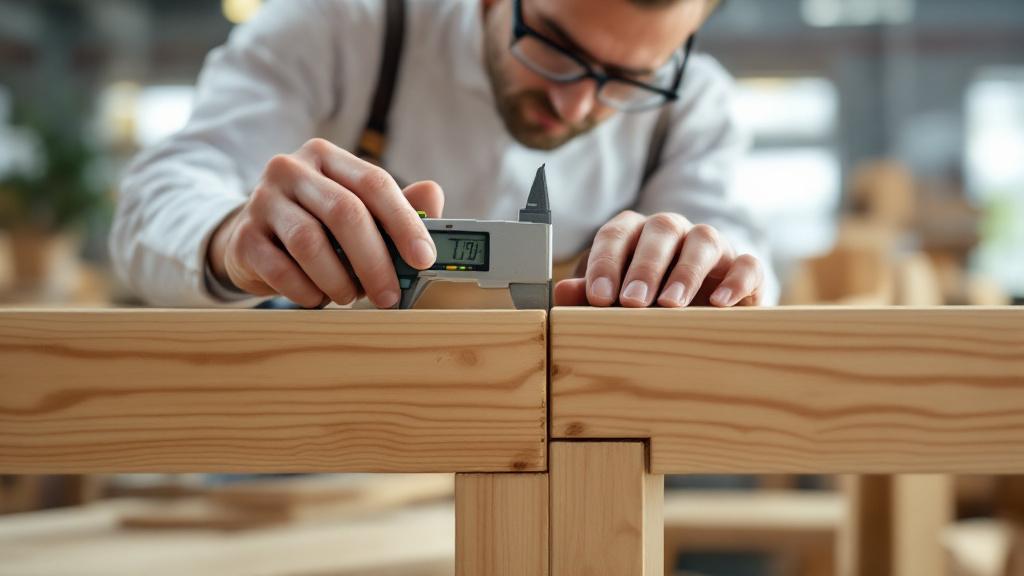
The quality-control (QC) stage after assembly is the last barrier on the path of a defective product to the customer and is critically important for guaranteeing durability. Even with strict adherence to all technological procedures, the human factor or minor deviations in materials can lead to errors that must be identified and corrected.
Professional assembly quality control is a comprehensive check that goes beyond a simple visual inspection. It includes several key aspects:
- Geometric control: Checking the perpendicularity of corners (with precise squares), the parallelism of elements and the control of diagonals. A deviation from the design geometry is a direct sign of internal stresses or inaccurate part preparation.
- Functional control: Checking the operability of all moving elements: opening and closing of doors, smooth running of drawers, operation of lifting mechanisms. The absence of sticking, squeaking and play is checked.
- Joint-strength control: Depending on the type of product, sample tests may be carried out that simulate the operating load (for example, test loading of shelves, checking the table’s stability against side pressure).
- Visual and aesthetic control: Checking the quality of the final fit, the absence of gaps between elements, traces of adhesive and damage to the coating caused by tools.
Particularly important is the control of the rigidity of the structure. A product that shows excessive movement or “softness” under minimal impact does not have the necessary margin of strength and will fail quickly.
If a defect is found, the QC procedure must provide for an immediate decision: correction (if this is possible without disassembly) or return for rework/reassembly. Using substandard products that only partly meet the requirements is a refusal of warranty obligations.
To ensure objectivity, quality control must be carried out according to pre-developed and standardised checklists. This guarantees that no critical parameter is overlooked.
- Checking all clamping screws for compliance with the tightening torque.
- Controlling the time a glued joint spends in the press.
- Checking that the moisture content of the finished product complies with regulatory requirements.
QC is an investment in the company’s reputation. Producing goods that are guaranteed to serve for many years depends directly on the strictness and uncompromising nature of the final inspection at the assembly section.
Typical assembly errors: examples that lead to defects
Understanding the typical errors made when assembling wooden products is the key to preventing them and, therefore, to increasing product durability. Most problems with strength and premature wear arise not from poor design but from departures from technology at this final stage.
1. Incorrect use of adhesive.
- Applying an insufficient amount of adhesive (creating a “starved” joint).
- Exceeding the open assembly time (the adhesive begins to set before clamping).
- Using an adhesive that does not match the operating conditions (for example, a low-water-resistance adhesive in bathroom furniture).
2. Disturbing the geometry of the seats.
- The wrong diameter of holes for dowels or screws. If the hole is too large, the joint will have play. If it is too small, splitting of the wood or stripping of the thread may occur.
- Drilling holes at an angle or to the wrong depth, which leads to a misalignment of the fastener.
3. Failure to follow clamping technology.
- Uneven clamping force, where some clamps are tightened hard and others weakly.
- The absence of pads under the clamps, which leads to damage to the edge of the part.
- Releasing the press force before the adhesive has reached the minimum required strength (shortening the pressing time).
4. Ignoring the natural movement of wood.
- Rigidly gluing wide panels along the entire length of the edge, which does not allow them to expand/contract in response to changes in humidity. This often leads to the panel splitting or the joint rupturing.
- Insufficient clearance for the floating fixing of panels (for example, panels in frame constructions), which causes them to buckle when they expand.
5. Poor-quality hardware.
- Using cheap cam connectors that do not provide the necessary clamping and quickly work loose.
- Using poor-quality drawer runners, which leads to their rapid wear and to deformation of the carcass due to jerking.
6. Failure to observe cleanliness.
- Dust, sawdust or grease getting onto the surfaces to be glued. This sharply reduces the adhesion of the glue. Joints require perfect cleanliness.
A professional approach to assembly requires constant monitoring of these potential errors, regular staff training and the use of checklists. Only by eliminating these typical problems can it be guaranteed that the assembled product will reach its stated service life.
The long-term consequences of incorrect assembly: use and repairability
The consequences of errors made at the assembly stage are not limited to reduced strength. They have a direct bearing on the performance characteristics and repairability of the product throughout its entire service life.
A product assembled with internal stresses or weak joints will show signs of premature wear within just a few months of active use.
- Play and squeaking: The first sign of loosening is the appearance of play at the corners and an unpleasant squeak under load (for example, when a person sits on a chair or opens a cabinet door). This play increases over time, leading to a complete loss of structural rigidity.
- Functional defects: Doors may sag or stop closing, drawers may jump out of their runners or stick. These are not just inconveniences; they are a direct result of the product’s geometry having been disturbed by loosened fasteners.
Incorrect assembly also sharply reduces the repairability of the product. If a joint was glued with a defect or damaged by excessive tightening force, disassembling it for repair often leads to the destruction of neighbouring elements. For example, an attempt to replace a damaged rail that was glued in violation of the technology may require damaging the entire frame. Whereas correctly assembled products, especially those that use knock-down joints, make it possible to replace an individual element without harming the whole structure.
Professionally assembled products provide:
- Stability: Retention of the design geometry throughout the entire service life.
- Reliability: The ability to withstand repeated cyclic loads.
- Cost efficiency: No need for expensive repair or replacement.
Ultimately, the quality of assembly is not merely a technical aspect of production; it is the foundation of the warranty obligations of the company. An enterprise that strictly controls all the parameters of the final stage minimises the risk of complaints and strengthens its reputation as a reliable manufacturer of durable, high-quality wooden products. This confirms a simple truth: even the most expensive and beautiful materials require flawless execution at the final stage in order to become a truly durable product.





