

Wholesale Furniture for Retail Shops
Wholesale furniture for retail shops covers shelving units, display cases, retail islands, counters, checkout areas, podiums, stands, panels and product stands made from solid wood, plywood, MFC, MDF and particleboard for retail spaces of any format. The production runs both standard models and custom projects: sturdy structures built for high footfall, safe rounded corners, a finish that stands up to cleaning, and branding tailored to a chain’s corporate identity. Below we break down what retail furniture is made from, how the production process works, which products the range includes, who orders wholesale batches, and what lead times, volumes and terms you can count on.
Aesthetics and function: manufacturing wooden furniture for retail shops
The category of wooden furniture for retail shops covers a wide range of products for presenting, displaying, storing and zoning merchandise on the sales floor. Unlike interior or home furniture, it is built for intensive use, easy adaptation to different retail formats and alignment with the brand’s corporate identity. In essence, it is a working sales tool: well-presented goods sell more often, so retail furniture is not decor but a part of commerce.
Manufacturing furniture for retail shops is not just building to standard dimensions. Behind it are specific goals: to make goods more visible, to provide quick access to products, to withstand heavy loads, and to follow the rules of merchandising. On top of that, retail furniture must be easy to maintain and both safe and convenient for staff and customers alike. A shelving unit that is awkward to reach or a display case that is hard to wipe down works against the shop, even if it looks good.
Wood opens up room for non-standard solutions. It lets you play with shapes, colour and finish, is easy to work, and pairs well with glass, metal and plastic. Depending on the task, furniture can be understated and quietly functional, or bold and original, emphasising the character of the outlet. The warm texture of wood also works on perception: goods on a wooden shelf are subconsciously read as higher-quality and more “honest” than on cold metal or cheap plastic.
The approach in this category covers both one-off manufacturing and serial supply. TigerWood develops solutions for specific formats — from small boutiques to large chains, from pop-up corners to flagship showrooms. We deliver across Europe and beyond. The customer receives products tailored to the specifics of their space, the nature of their goods and current sales-floor design standards. Furniture for a flagship boutique and for a discount chain solves different problems, and the same off-the-shelf solution won’t suit both.
What matters to our clients and partners

Professional team
Experienced craftsmen, engineers and CNC operators. Thorough quality control at every stage

Flexibility and a tailored approach
We adapt to any task: we work from your drawings or develop the cutting and machining program ourselves

End-to-end approach
We offer the full range of woodworking services — from sawing to painting and assembly

Wide delivery coverage
We work with clients across many European countries. We help with logistics and packaging

Fast lead times
Large-scale production and streamlined processes let us complete even complex orders quickly

Modern equipment
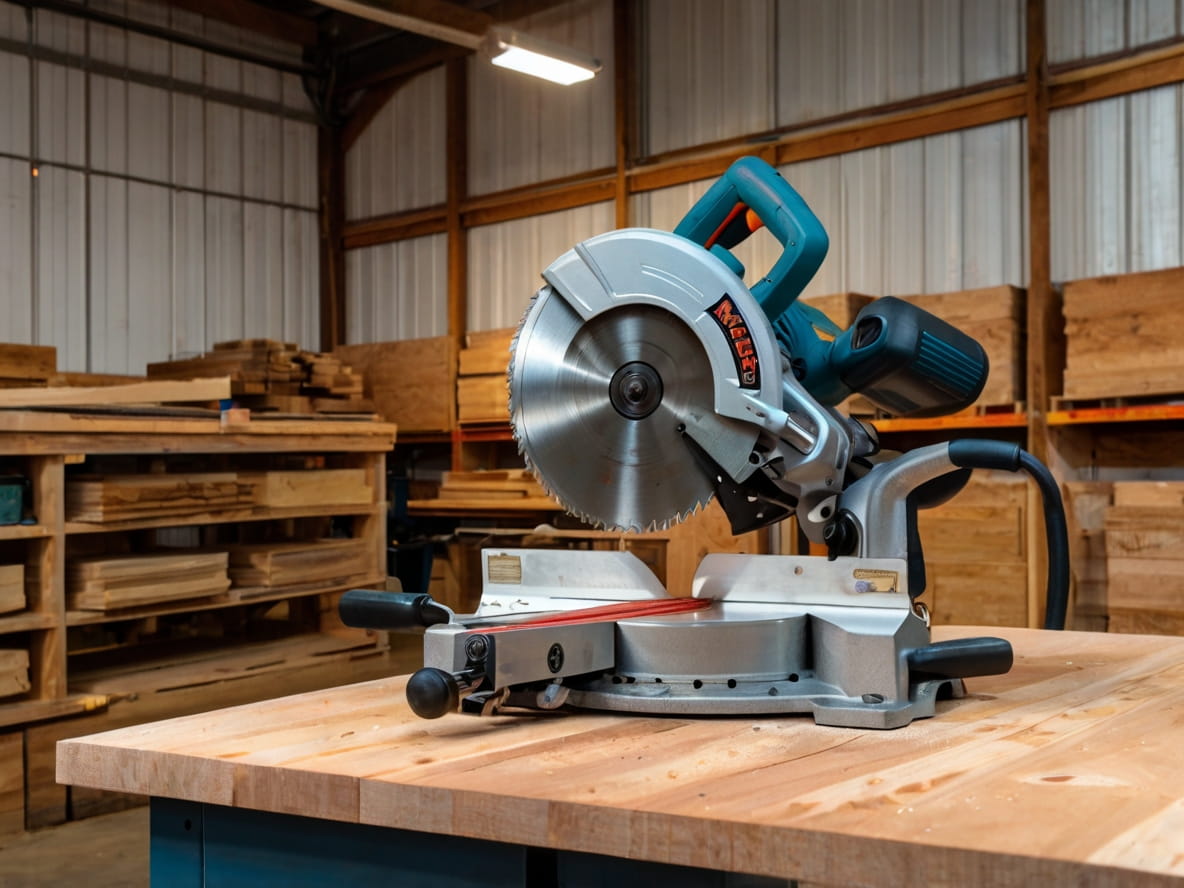
We work with panel saws, CNC machines, routers and sanding machines
Wooden furniture for retail shops: what to consider in production
Manufacturing furniture for retail shops involves plenty of specifics that shape the construction, the choice of materials, the processing and the finish. Retail outlets have high footfall and put heavy loads on furniture, so every piece must combine strength with wear resistance. This calls for dense timber species with stable geometry after drying — the kind that won’t warp under constant use. A shelving unit in a shop is touched by thousands of hands a month, and what would last for decades at home is put to the test far faster here.
The specifics show up as early as the design stage. A shop needs not just to place goods, but to do so with the logic of customer flow, visual perception and ergonomics in mind. That is why the design accounts for lighting, customer routes, packaging dimensions and even colour combinations matched to the brand’s corporate palette. Merchandising is a science: goods at eye level sell better than on a bottom shelf, and well-designed furniture directly influences what and how much a visitor buys.
Special attention goes to the versatility of the designs. Some furniture is made modular, reconfigurable and mobile, so the same elements work across different floor layouts or relocations. Furniture is often designed for easy assembly and disassembly by the staff themselves, without calling in fitters. For retail this matters: shops frequently change their displays for seasons and promotions, and furniture that can be rearranged in a single evening saves both time and money on constant reshuffling. Retail lives by seasons and promotions, and furniture that reconfigures flexibly lets you change the look of the floor for a new collection or a holiday without buying new equipment every time.
A significant factor is brand visualisation. Panels, counters and shelving units carry elements of the corporate identity: logos, corporate colours, signature shapes. Safety standards are just as important — rounded corners, no protruding parts, coatings resistant to impacts and cleaning agents. In a shop full of crowds and children, a sharp corner or a sticking-out fastener is a direct source of injuries and complaints, so such details are built into the design in advance rather than fixed after the fact.
To suit the customer’s needs, furniture is made from solid wood as well as veneer, MDF and plywood. Solid-wood structures are especially in demand in eco-friendly and premium concepts, where it matters to emphasise naturalness and warm texture. In such shops the material itself becomes part of the message: a buyer of organic produce or craft goods expects a fitting setting, and cheap plastic would break that expectation, whereas real wood reinforces it. In these concepts furniture works as part of the marketing: it confirms the brand’s promise of naturalness and quality before the customer even picks up the product.
What kinds of shop furniture are made from wood
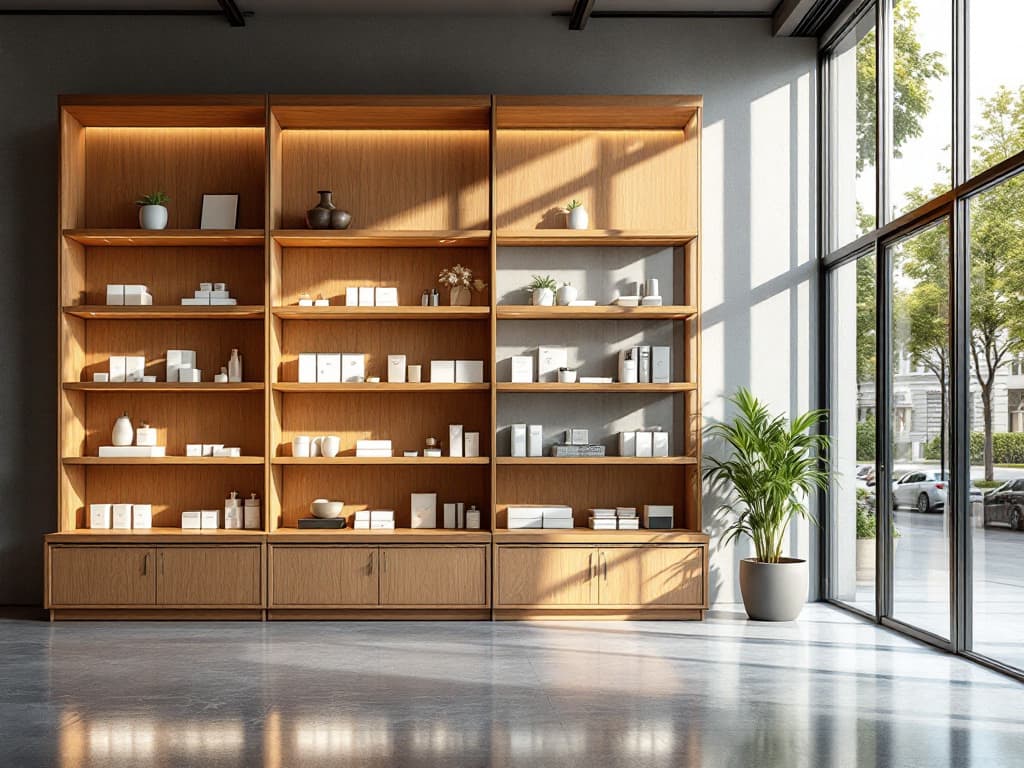
Shelves
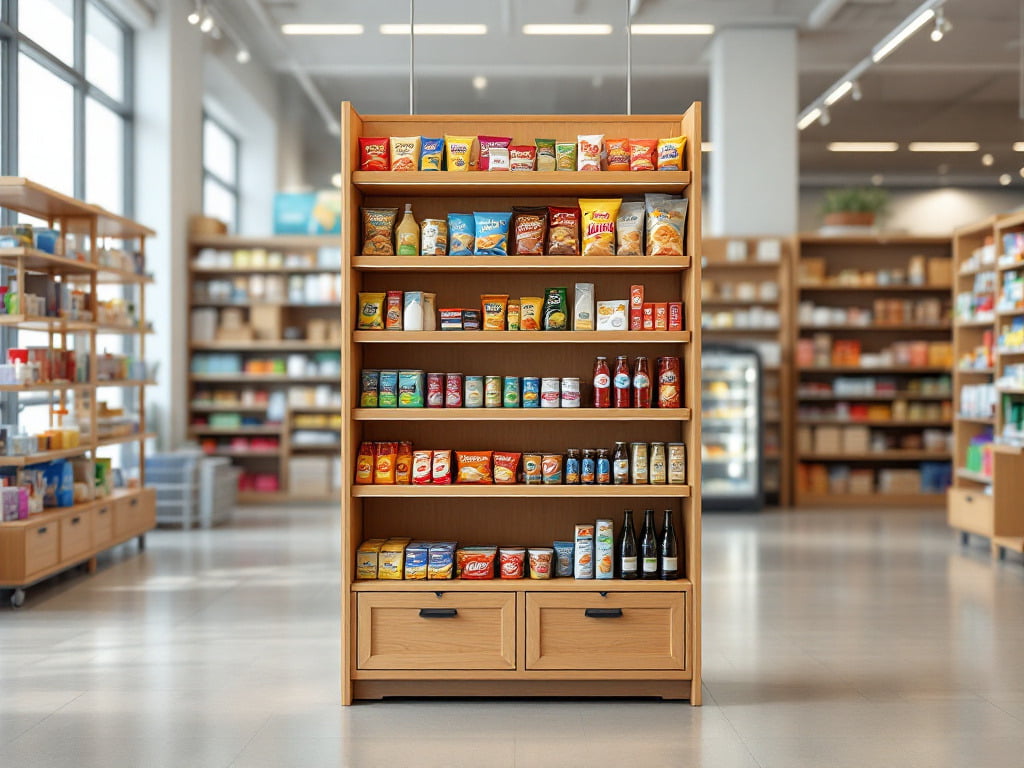
Counters
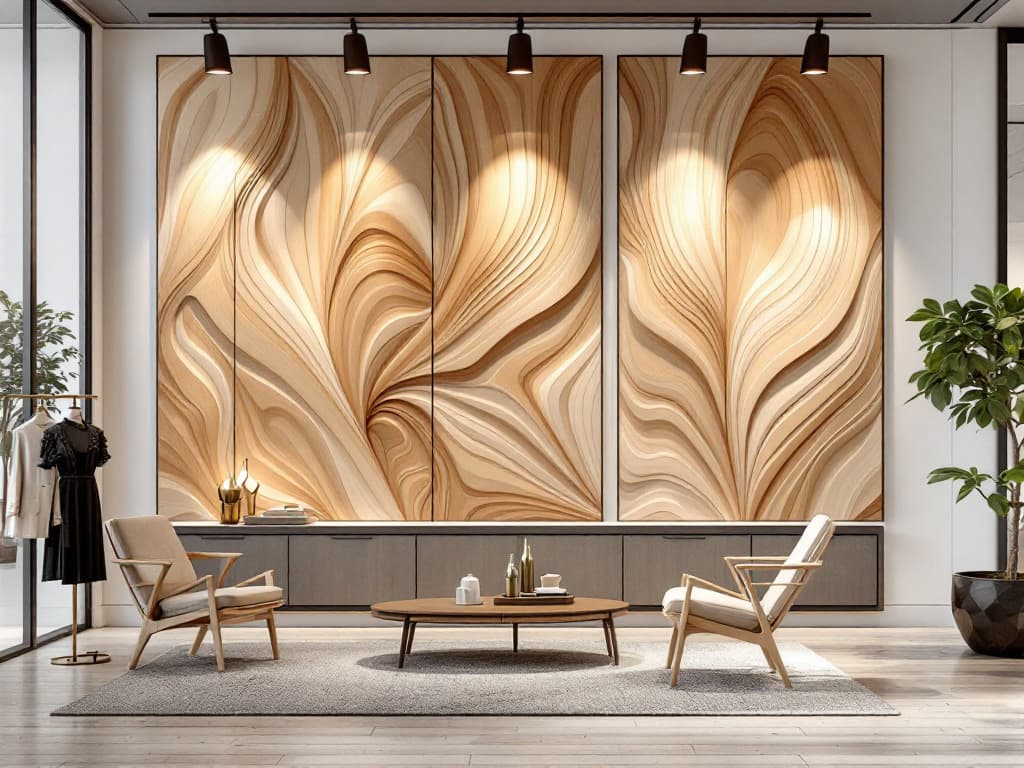
Panels
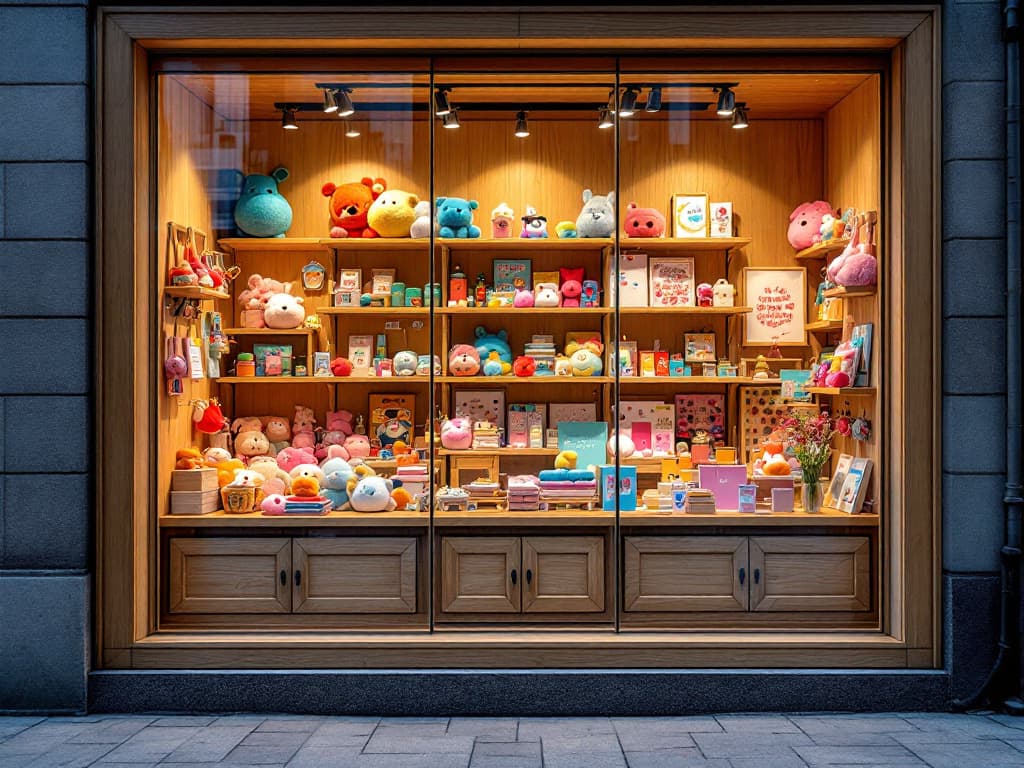
Display cases

Podiums
Product stands

Shelving units
Display boards
A variety of directions: the range of shop furniture by subcategory
Wooden furniture for retail shops divides into several functional subcategories, each with its own role on the floor. Shelving units are for compact, tidy displays. Shelves make use of the vertical plane and arrange products by level. Display cases create a focal zone for key items. Counters hold the checkout areas, information and impulse-buy goods. Incidentally, it is right at the checkout, where customers wait in the queue, that small items are placed for people to grab “while they’re at it” — and a well-thought-out checkout counter noticeably adds to the average basket.
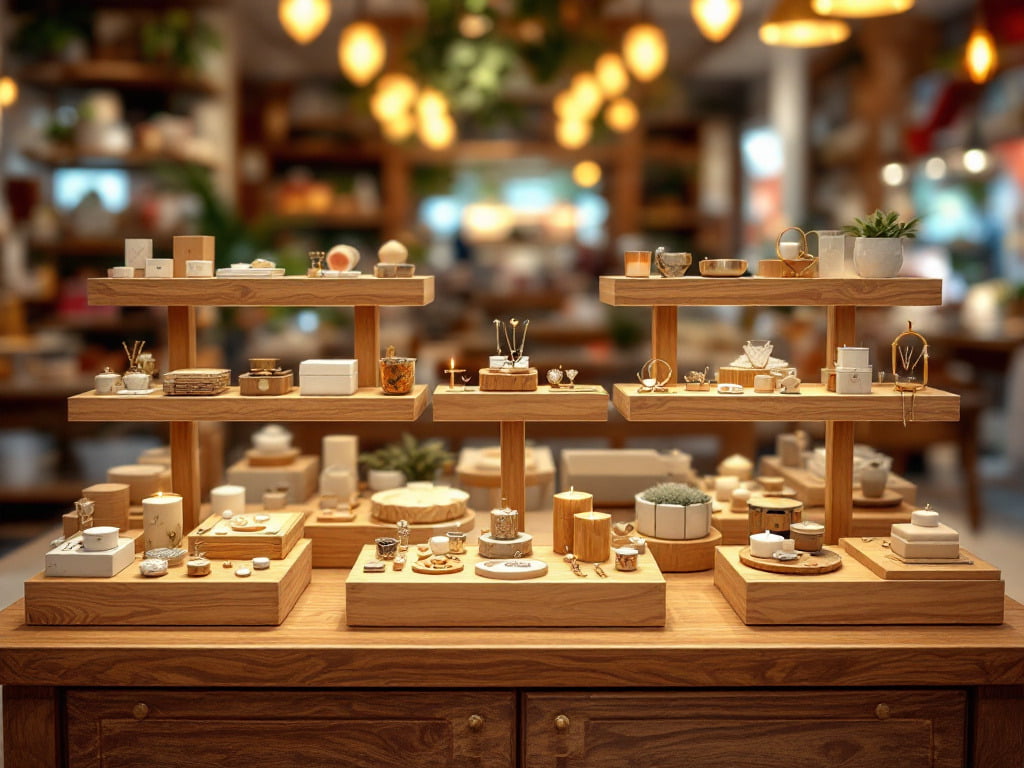
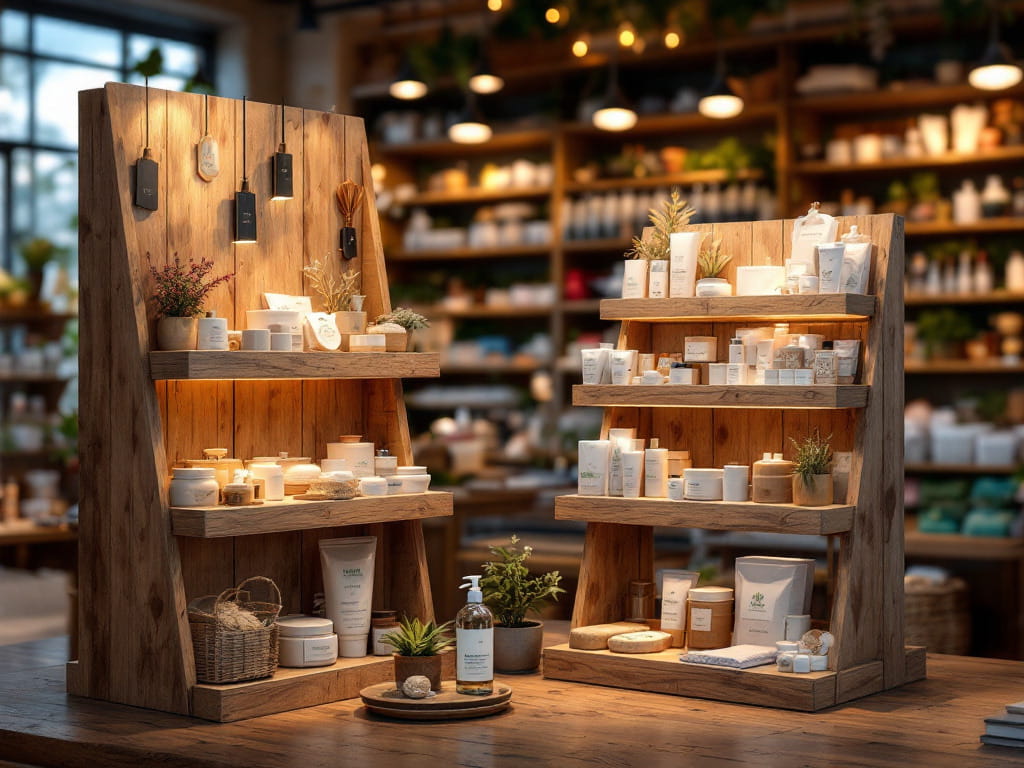
Display boards carry visual information and work in advertising layouts or for retail promotions. Podiums suit clothing, footwear and cosmetics shops — they single out a product and put the accent on it. Panels serve both a decorative and a functional purpose: hooks, holders and shelves are hung on them. Product stands are needed for the local presentation of small groups of goods or branded samples. Every such detail is a way to manage the customer’s attention: a podium and lighting draw the eye to a new arrival more effectively than any price tag.
Each subcategory is designed for its loads, product dimensions, accessibility requirements and display rules. A single shop usually runs several types of furniture at once, brought together into one system by design, materials and palette. This gives the sales floor a coherent, memorable look. A mismatch, by contrast, reads as clutter and cheapens the impression, which is why the fit-out is more often ordered as a set rather than topped up piece by piece from different sources.
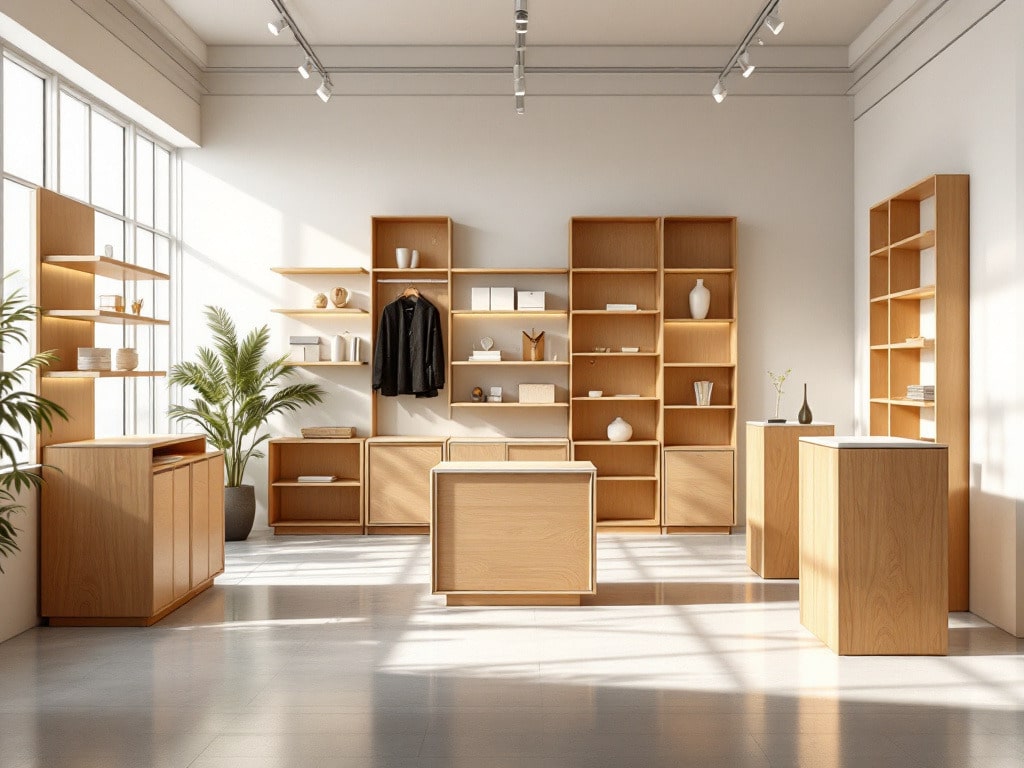
Wooden shelving units are versatile: they are adapted to goods of any category — groceries, electronics, clothing, household products. They fit easily into an interior while carrying heavy loads. Shelves are chosen by depth and width to match the packaging size and are often mounted as wall or counter modules. Correctly calculated shelf depth is no small matter: too shallow and it won’t hold the product, too deep and it steals floor space and hides goods in a second row, from where they simply don’t get picked up. Such details, unremarkable at first glance, add up to a noticeable effect on how much product leaves the shelves, and a competent manufacturer works them out in advance together with the customer.
Display cases are made both closed and open. For the premium segment — with lighting and decorative finishes that show off expensive goods to striking effect. Counters are made for cash registers, POS materials, receipts and catalogues, and are fitted with drawers, shelves and storage compartments. A closed, lit display case in a jewellery or cosmetics boutique not only protects the product but also creates an aura of value around it, raising the perceived worth of every item on show. Proper presentation often matters to sales no less than the product itself: the same item in a cheap versus a well-designed display case is judged differently by the customer.
Display boards are usually vertical and serve for advertising materials, brand information or temporary displays. Podiums are raised platforms for products: they make goods more visible and help pull together themed zones. Panels are fixed to walls or counters and hold hooks, holders and modules. Product stands single out individual groups of goods — from small platforms to elaborate constructions. All of these are tools for navigating the floor: they guide the customer along the right route and suggest what to pay attention to, without resorting to words. Well-built navigation made of furniture reduces the load on staff and makes shopping intuitive: visitors find what they need on their own and, along the way, notice what the shop stands to gain from showing.
All subcategories are made from wood with varying degrees of processing — with a gloss or matte coating, tinting, painting or engraving. Depending on the task, both simple forms and complex designer solutions are used. The choice of finish here is not only about looks: a matte surface glares less under retail lighting and doesn’t distract from the product, whereas gloss, on the contrary, adds a premium feel where that is appropriate.
The types of wood and sheet-material processing we use
Cutting
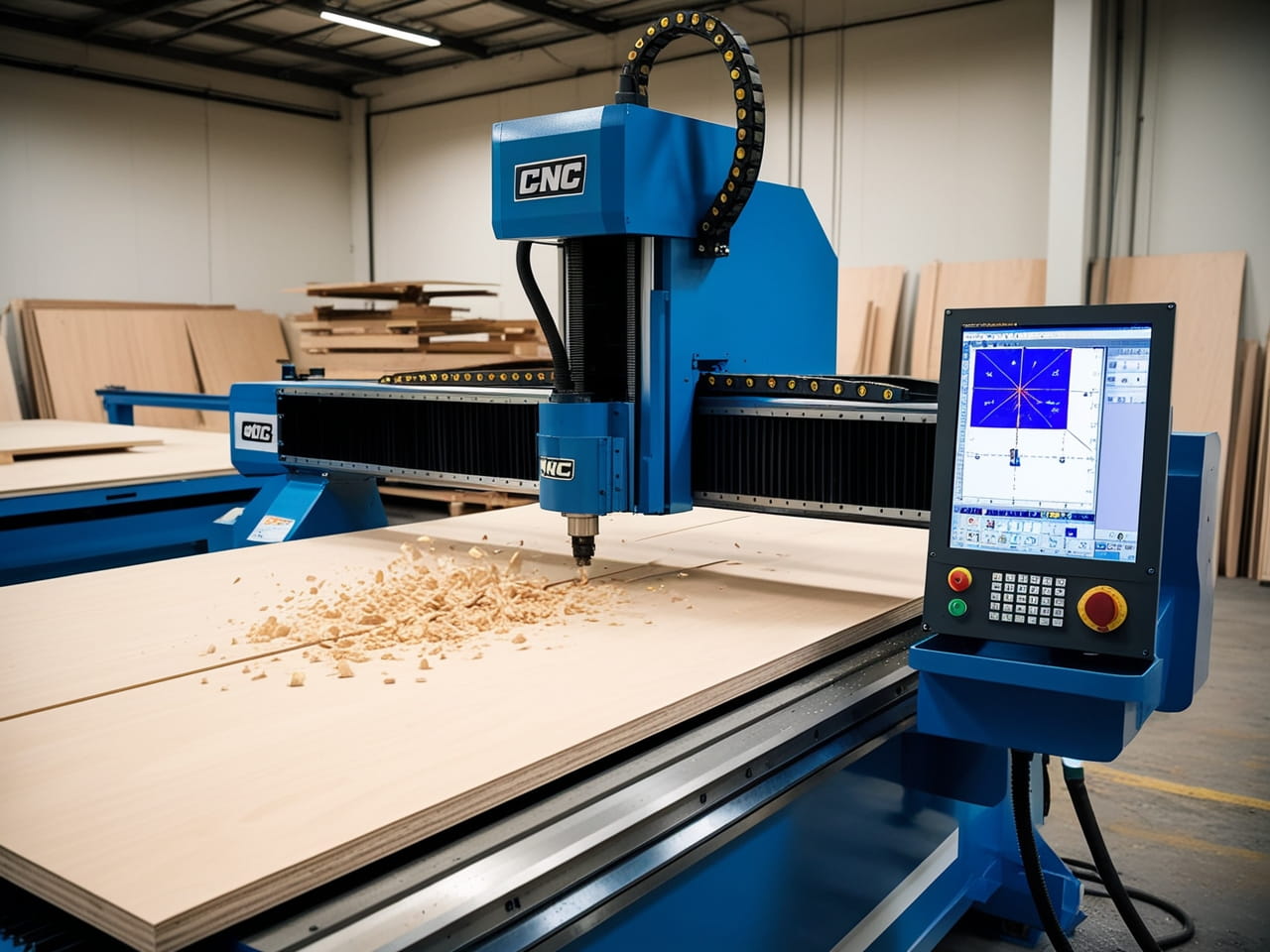
CNC

Cross-cutting

Drilling
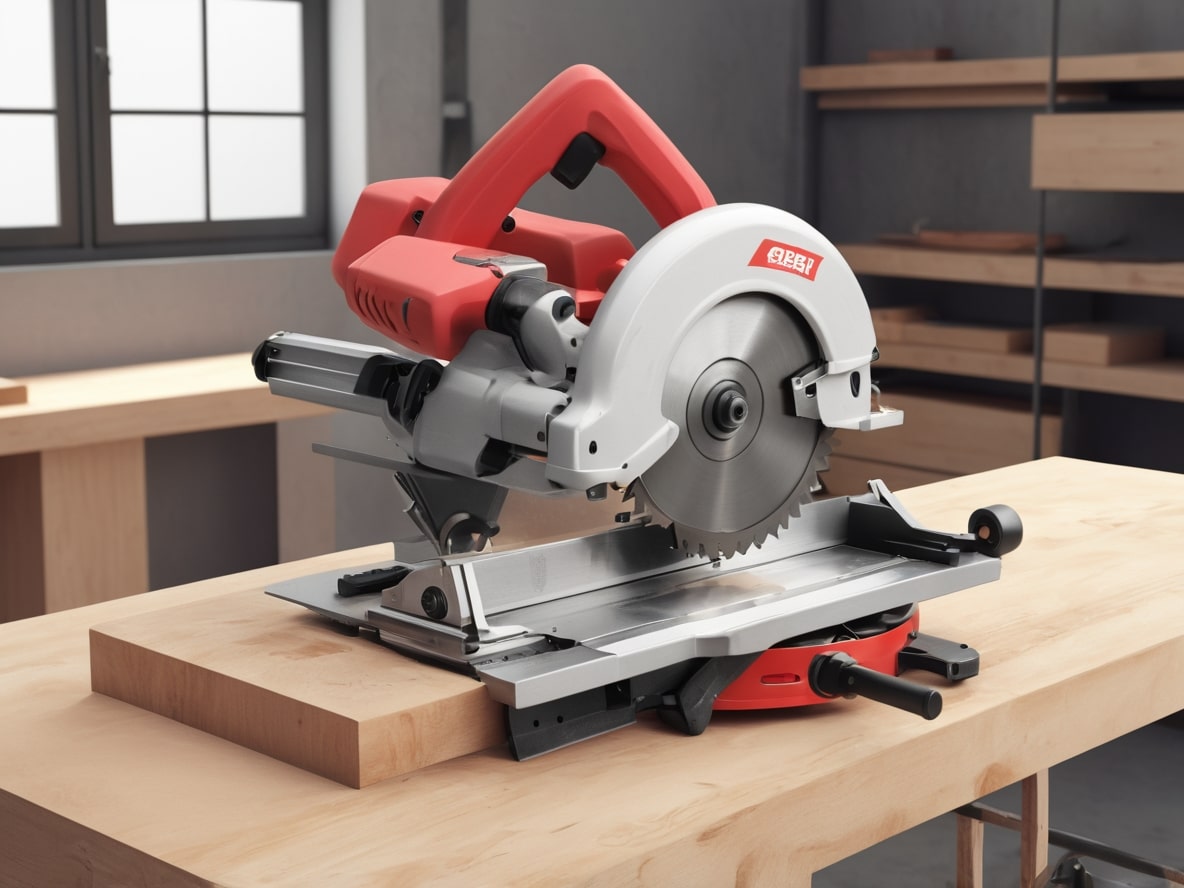
Sawing

Ripping

Machining
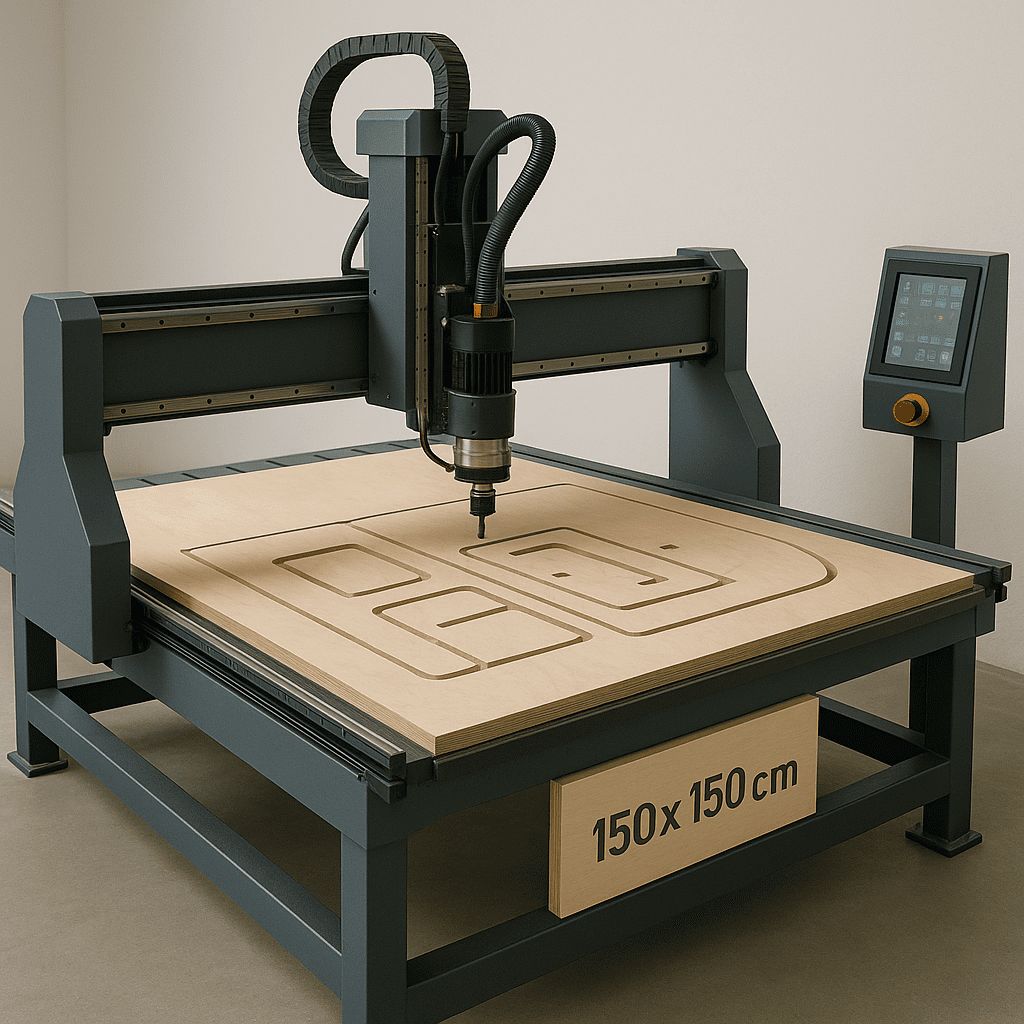
Cutting to size
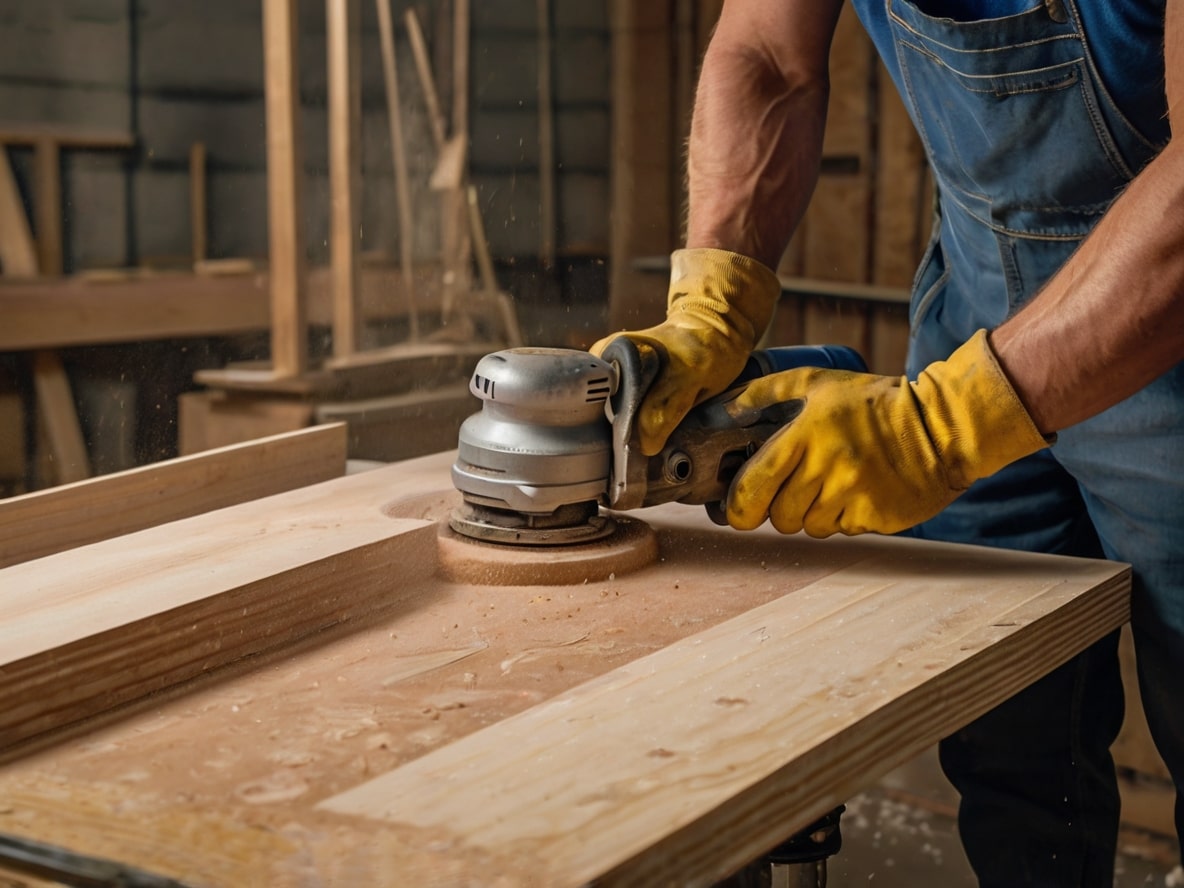
Sanding
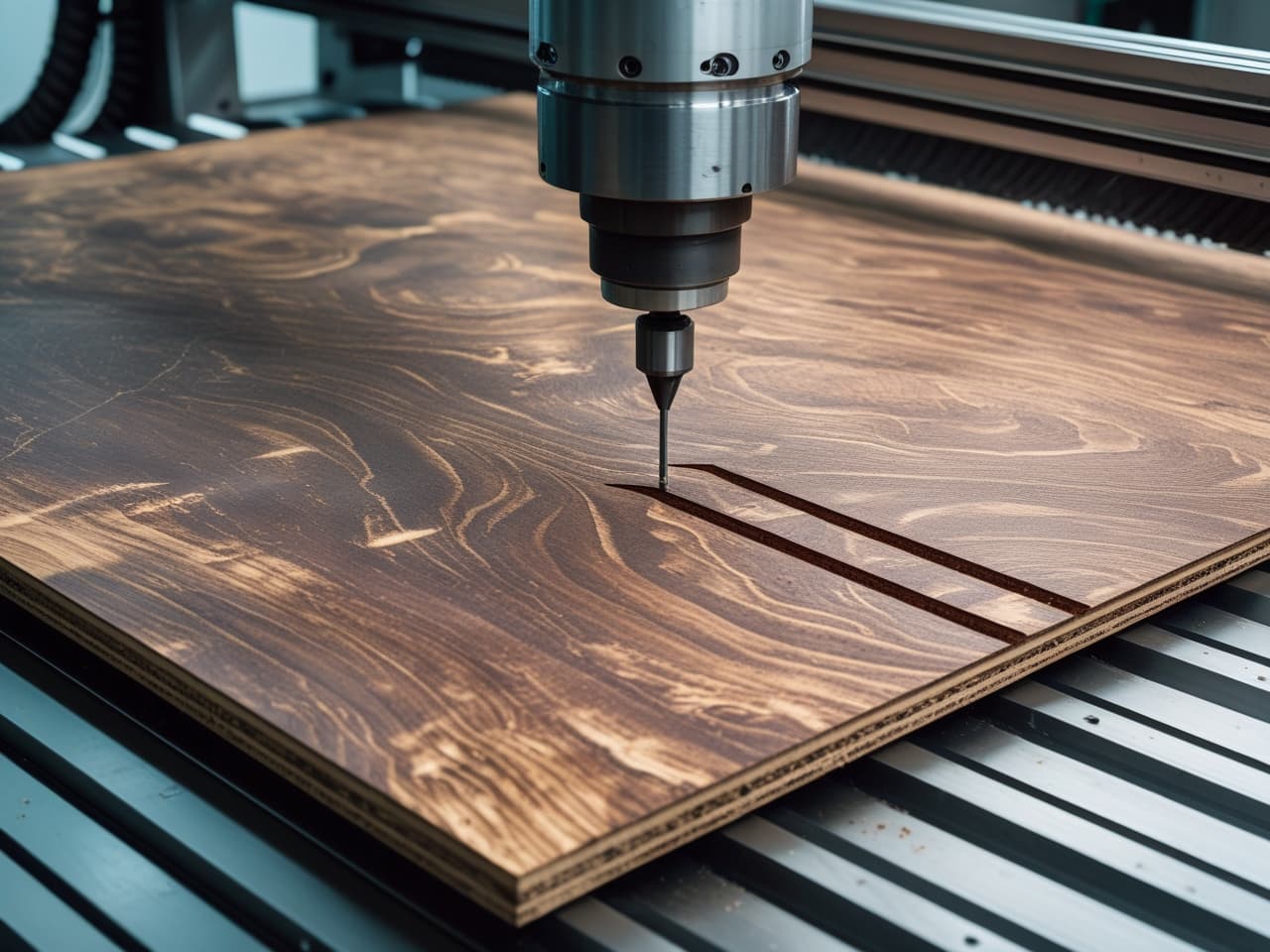
Grooving
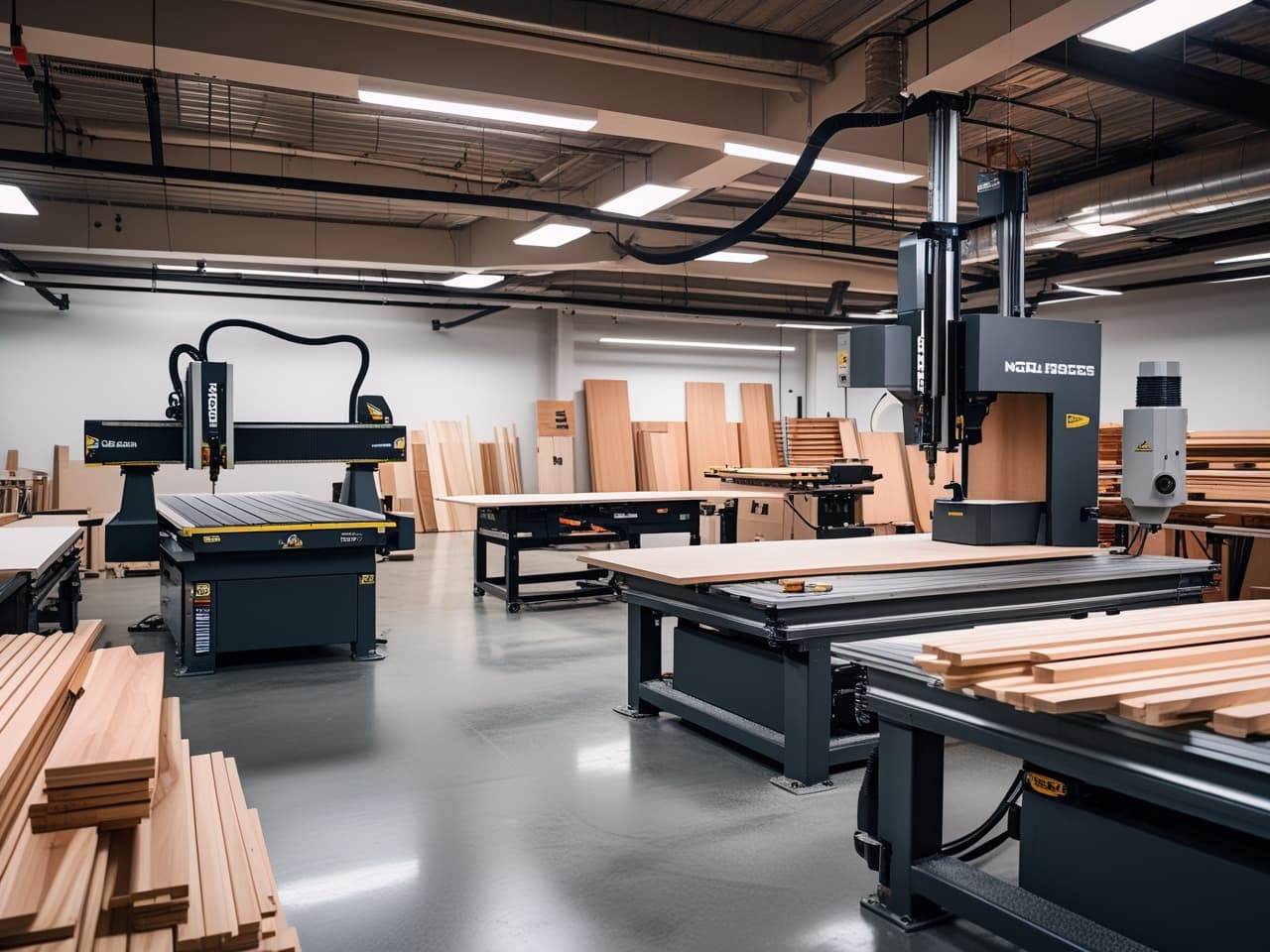
Milling

Painting
Working with timber: selection, processing, stability
In manufacturing furniture for retail shops, wood is both a material and a means of expression, visual and functional. For each project a species is chosen that best suits the intended use. For the structure, strong, deformation-resistant pine, birch and beech are used; for decorative finishes — oak, ash and walnut with beautiful grain. The logic is simple: where a part carries a load, strength matters, and where it is on show, the grain and a refined look matter — and combining the two in a single piece is a skill worth having.
At the TigerWood facility, timber undergoes preliminary drying — without it, a piece would shrink and warp soon after installation. Once dried, the boards go for processing: milling, sanding, gluing, assembly. To suit the customer’s wishes, natural or tinted lacquers, oil, wood stains and paints are applied. Drying cannot be skipped or hurried by fiat: an under-dried part will warp a display case or shelving unit right there on the sales floor, and the complaint will come in from a shop that is already trading.
Special attention goes to a safe finish. Retail furniture must be easy to clean and stand up to abrasion, cleaning agents and mechanical stress. The surface is made smooth or textured to fit the visual concept. In a shop, furniture is wiped down daily, and shelving units and display cases get bumped by trolleys and bags, so the finish is chosen with real-world loads in mind, not just how it looks in a catalogue photo. The difference between a pretty finish and a genuinely hard-wearing one shows up not at once but after six months to a year of use, and it is exactly this horizon that is kept in mind when choosing a coating.
At the preparation stage, the way furniture is fixed to walls, floors or other elements is also thought through. For display cases and shelving units in busy areas this is critical: a tall, unsecured shelving unit is a tipping hazard. All elements are checked for dimensions, load and stability. The timber is certified and comes from vetted suppliers that have passed environmental and sanitary inspection — and for furniture that comes into contact with food and cosmetics, that is no formality.
The production stages of woodworking and manufacturing
From idea to finished product: the stages of manufacturing shop furniture
Manufacturing furniture for retail shops goes through several key stages. The first is gathering data and discussing the brief: the customer supplies a specification or draws it up together with the engineers. The dimensions of the premises, the type of goods, visual preferences, loads and usage scenarios are all taken into account. This stage is invisible, but it is precisely what determines whether the furniture will fit the floor and be convenient to work with — a mistake here is the most expensive to fix later, when finished pieces already have to be remade.
Next, a drawing and a visualisation are prepared. Once approved, timber selection and part preparation begin. Blanks are processed by machine and by hand. Assembly is done by gluing or mechanically — depending on the design. Hardware, fastenings and decorative details are chosen individually for each project. The visualisation is especially valuable here: the customer sees the future furniture before work even starts and can make changes on paper rather than on a finished piece, when changes cost many times more.
At the finishing stage — sanding, painting, applying logos, lacquering. The pieces are kiln-dried, packed and prepared for transport. If the customer wishes, on-site assembly is also carried out. Every stage is accompanied by quality control and photo documentation. A photo report is convenient for chains and remote customers: they see the finished furniture before shipping and accept it without surprises, while any points of dispute are settled in advance rather than on receipt of the batch at the site.


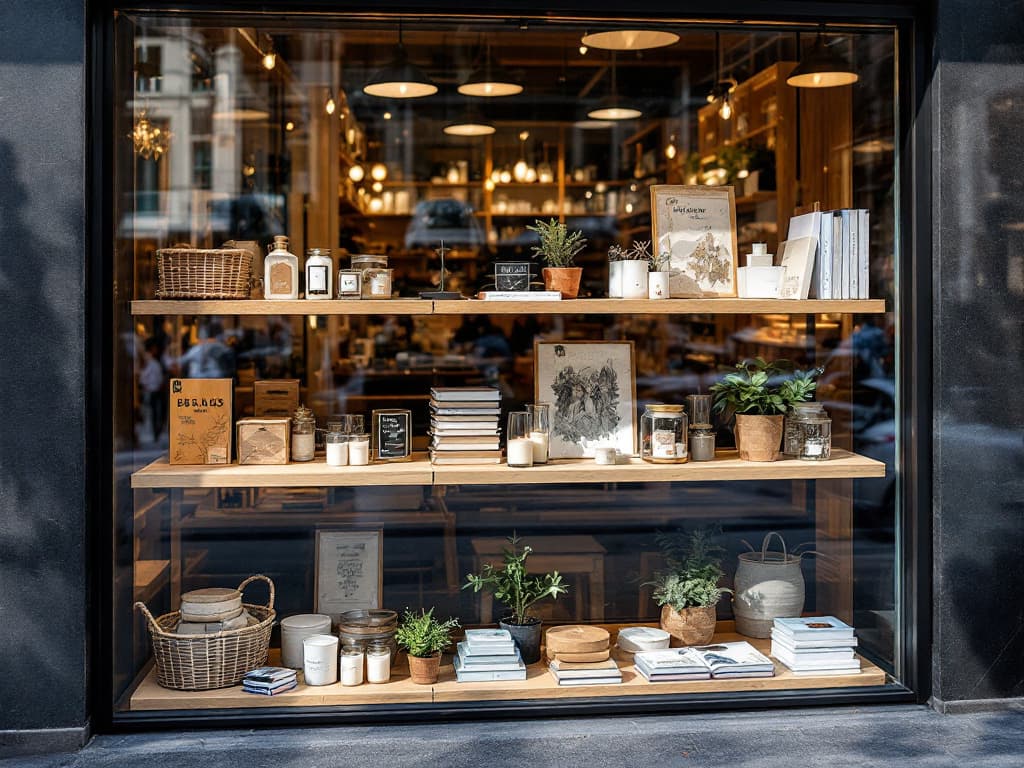
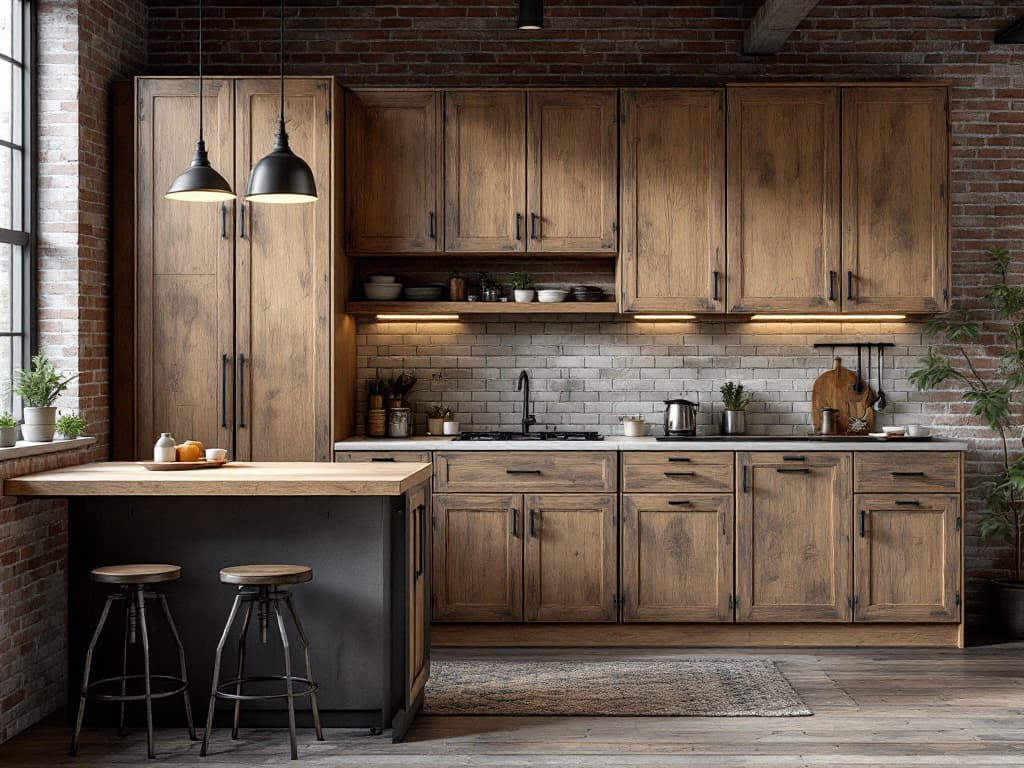
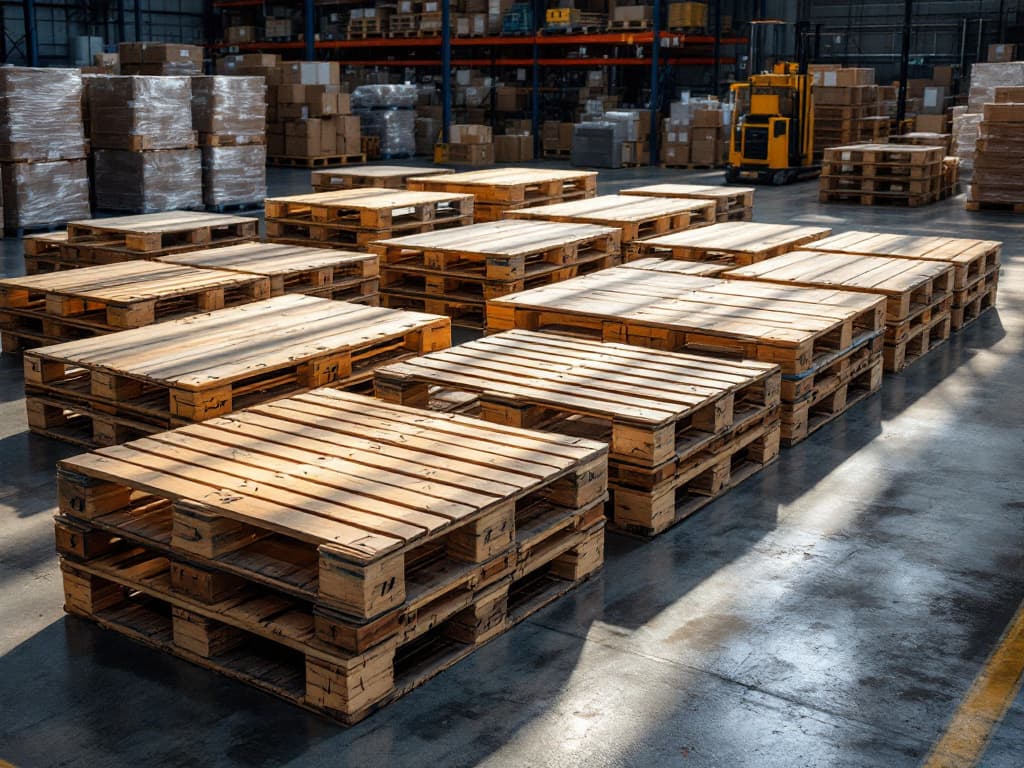
Furniture for retail shops is just one of the directions in TigerWood’s range. The production also makes products for warehouses, display and demonstration structures, furniture for catering and hotels, retail stands and packaging solutions. Each direction solves its own task, but they share a common basis — wood as the main material. For the customer this is a plus: a number of related needs can be covered with a single manufacturer, without piecing a supply together from different contractors and checking each one’s quality separately.
Such furniture logically complements the other categories. A retail chain needs, besides the sales-floor fit-out, warehouse furniture — shelving units, crates, pallets. For online order pick-up areas, tables and shelving units with pigeonholes are designed, also from wood. An all-in-one solution is especially valuable for companies that care about a unified style and a single contractor for everything. With the growth of online retail, the pick-up area has become part of almost every shop, and well-thought-out furniture here directly speeds up service and takes the load off staff during busy hours.
Also in demand are product stands, presentation elements, boxes and panels with fixings — all of which supplement the core retail furniture and pull together a finished look for the space. The shop-furniture category is closely linked to the other product lines and unites them into a single system. It is this systematic approach that delivers results: disparate items, even good ones on their own, won’t create the coherent impression for which a brand builds a unified style across all its outlets.

Examples of our work and partner projects
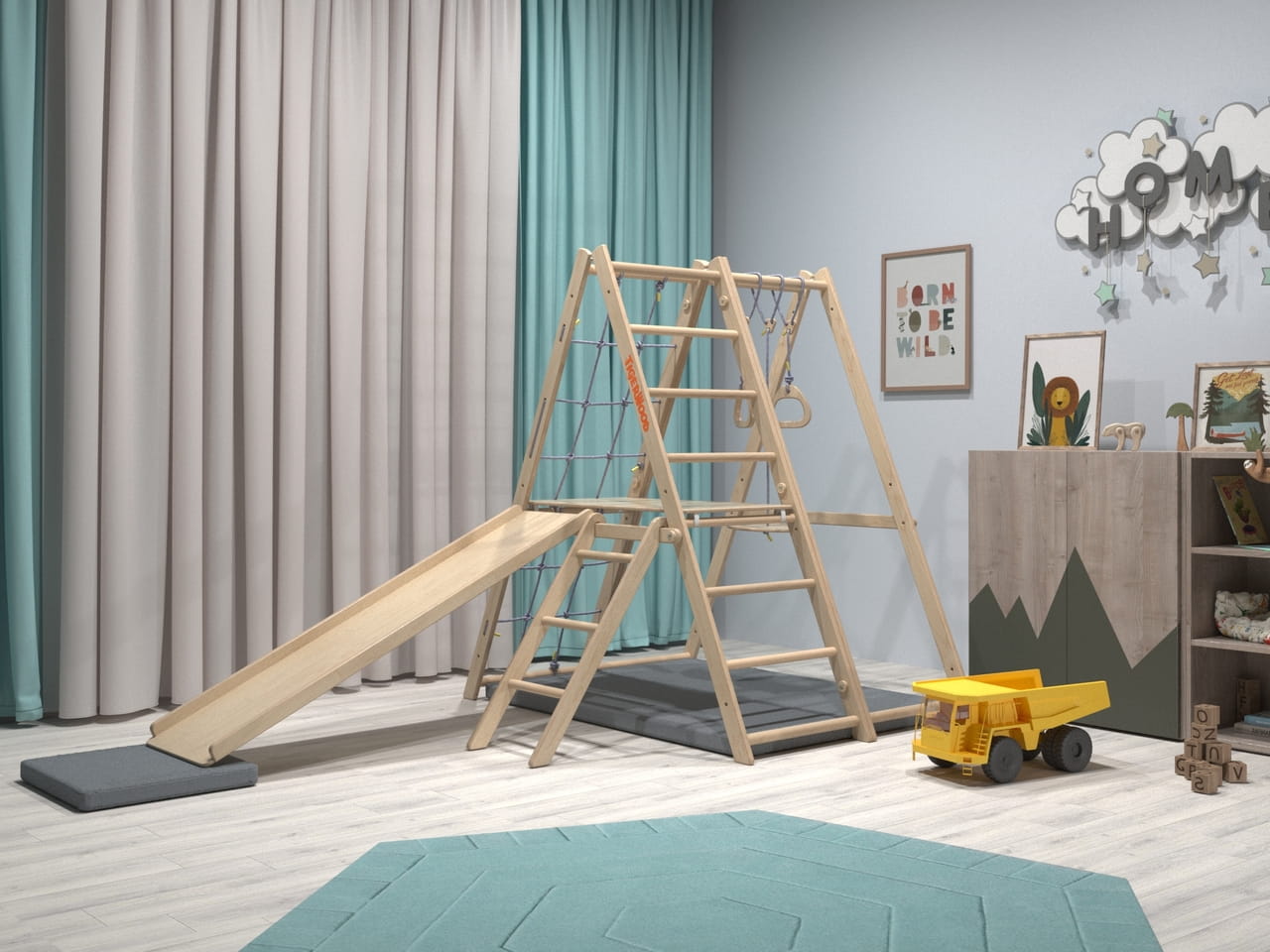
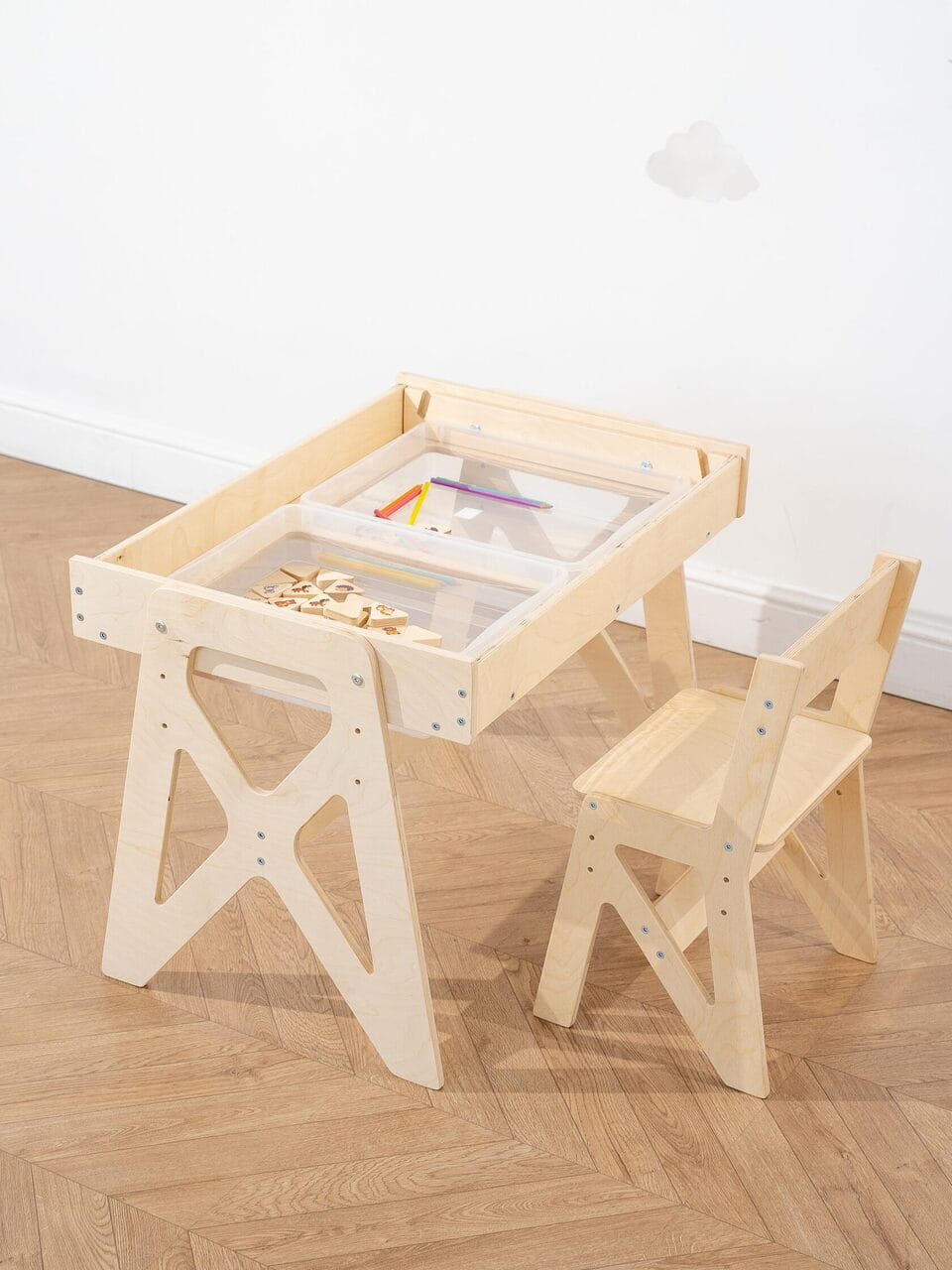
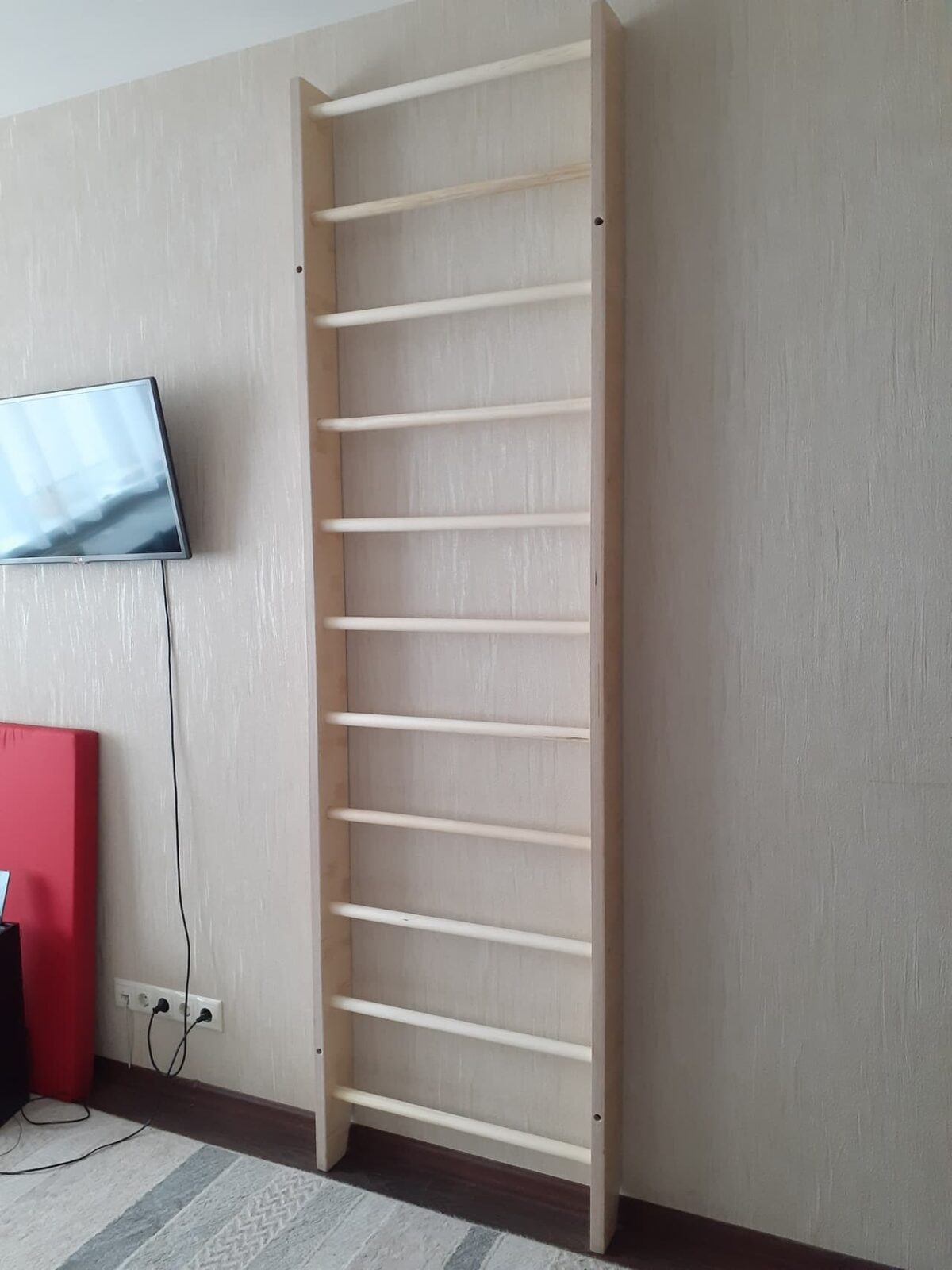

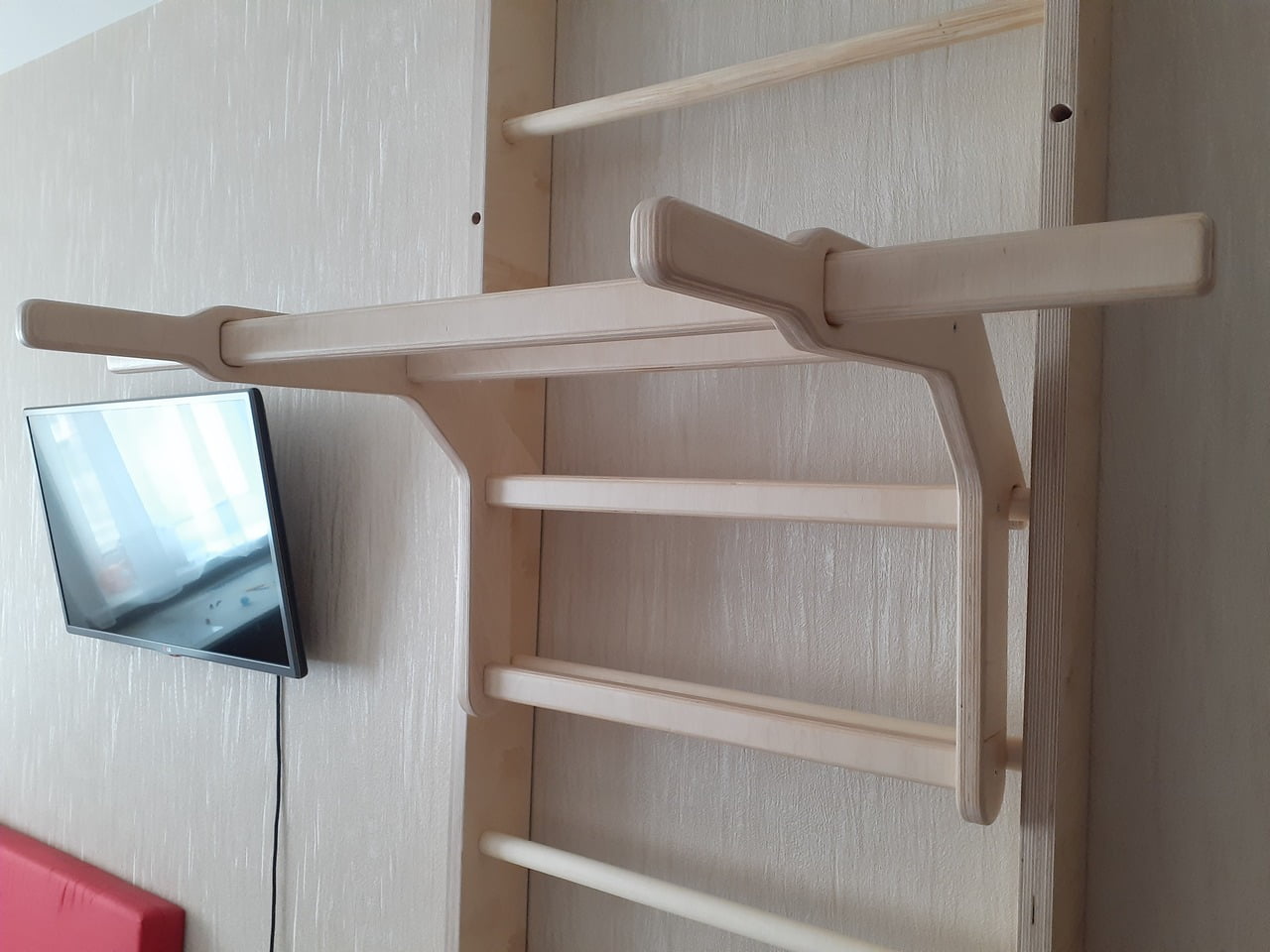
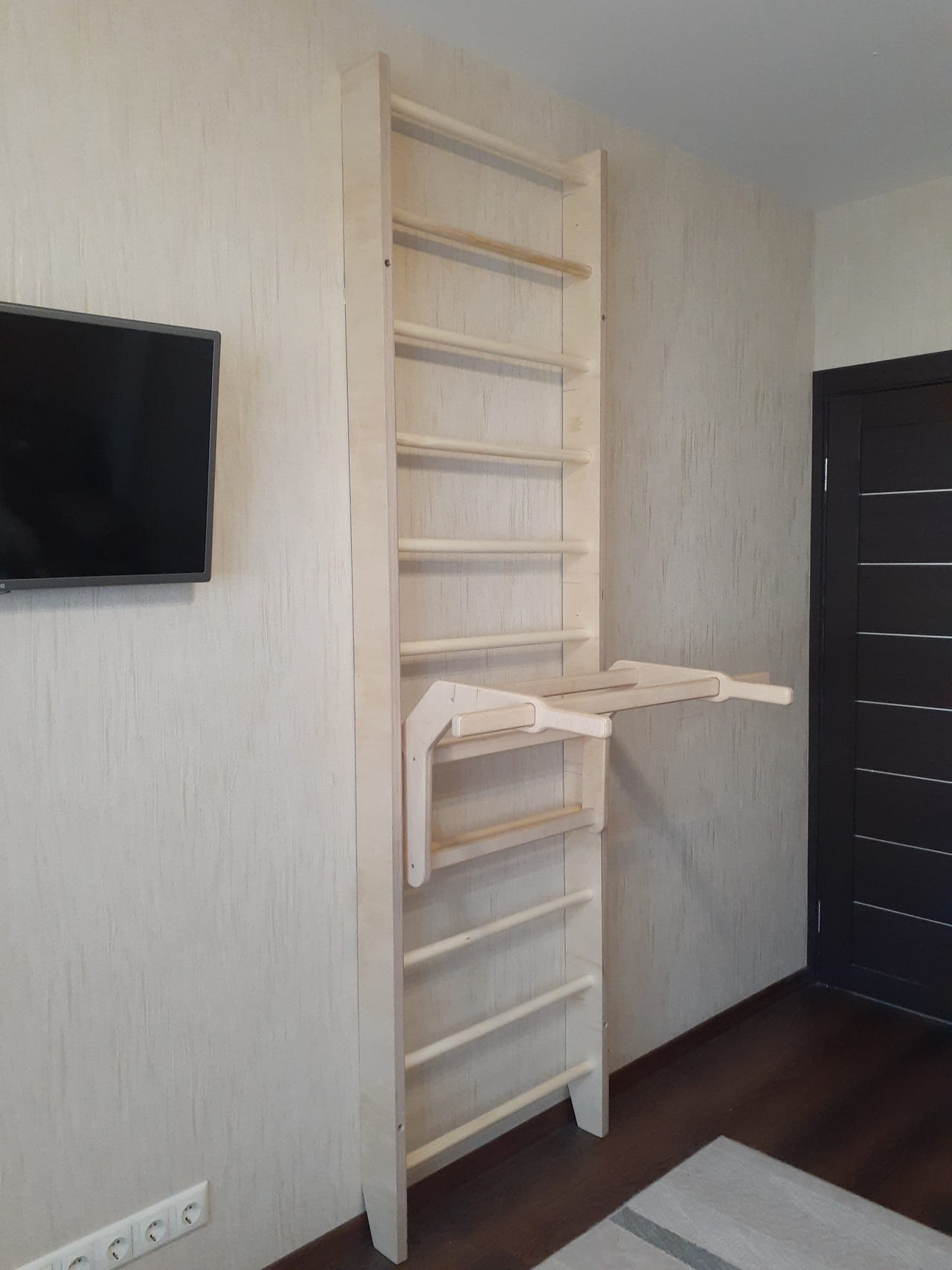


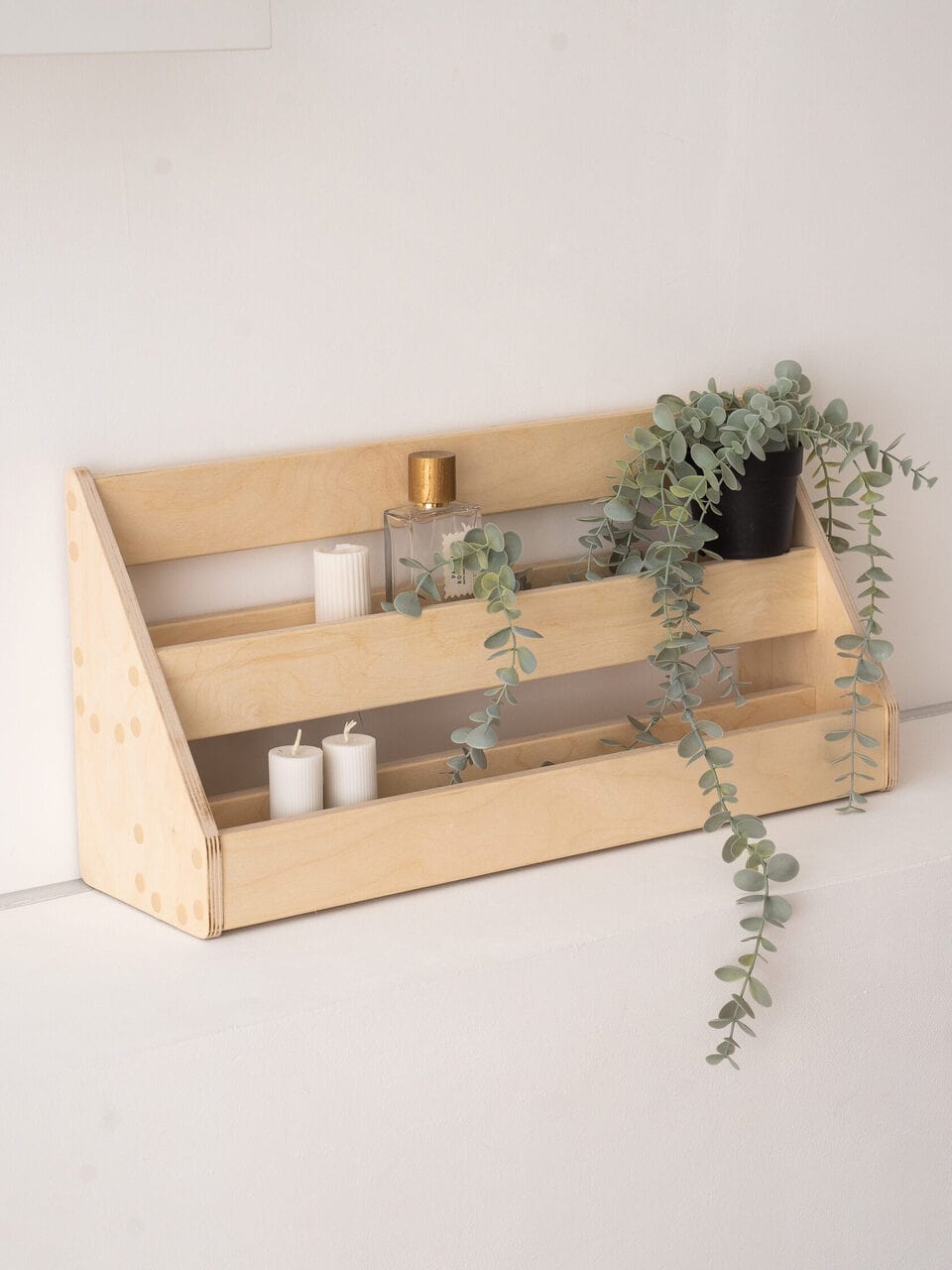
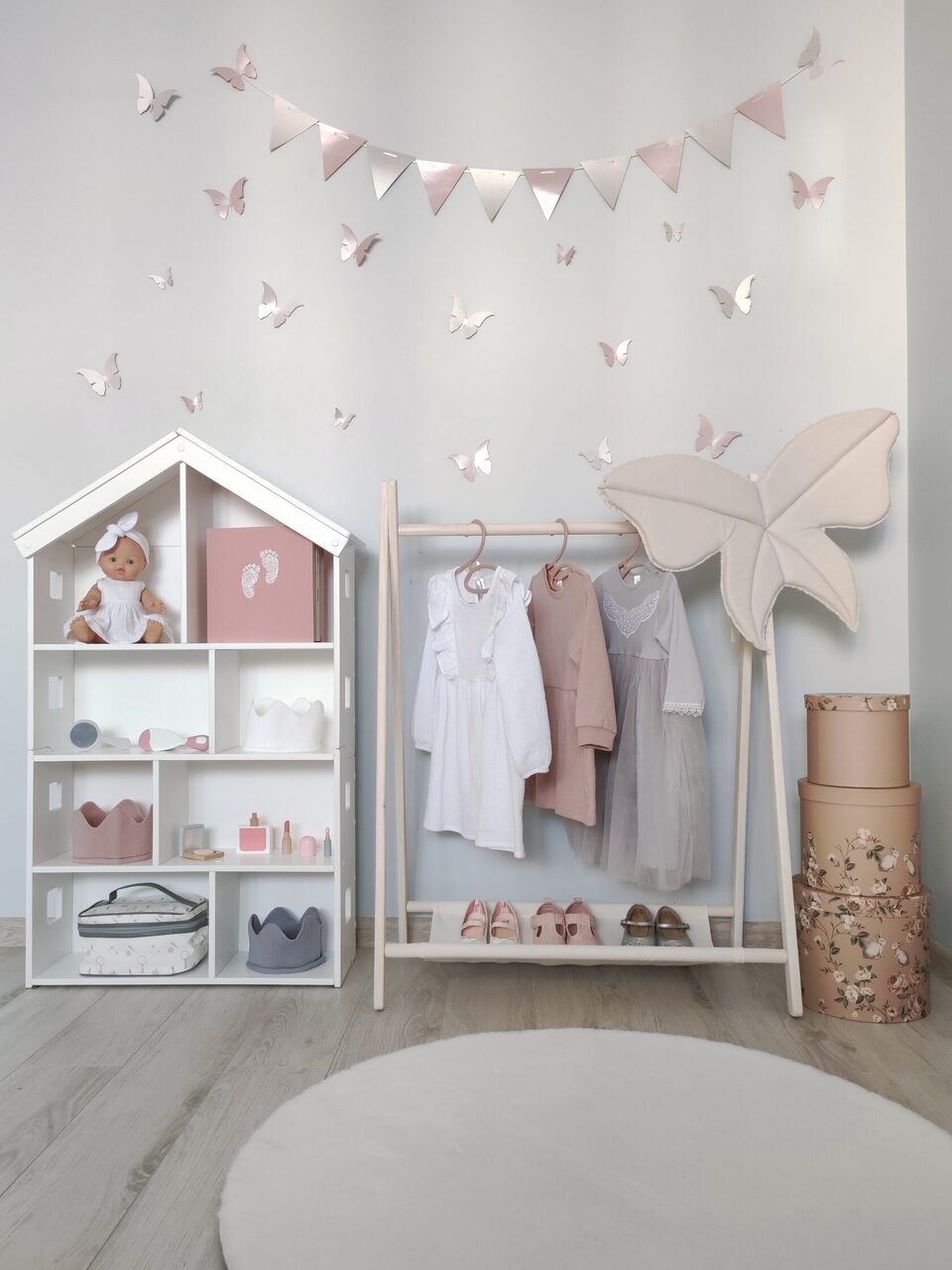
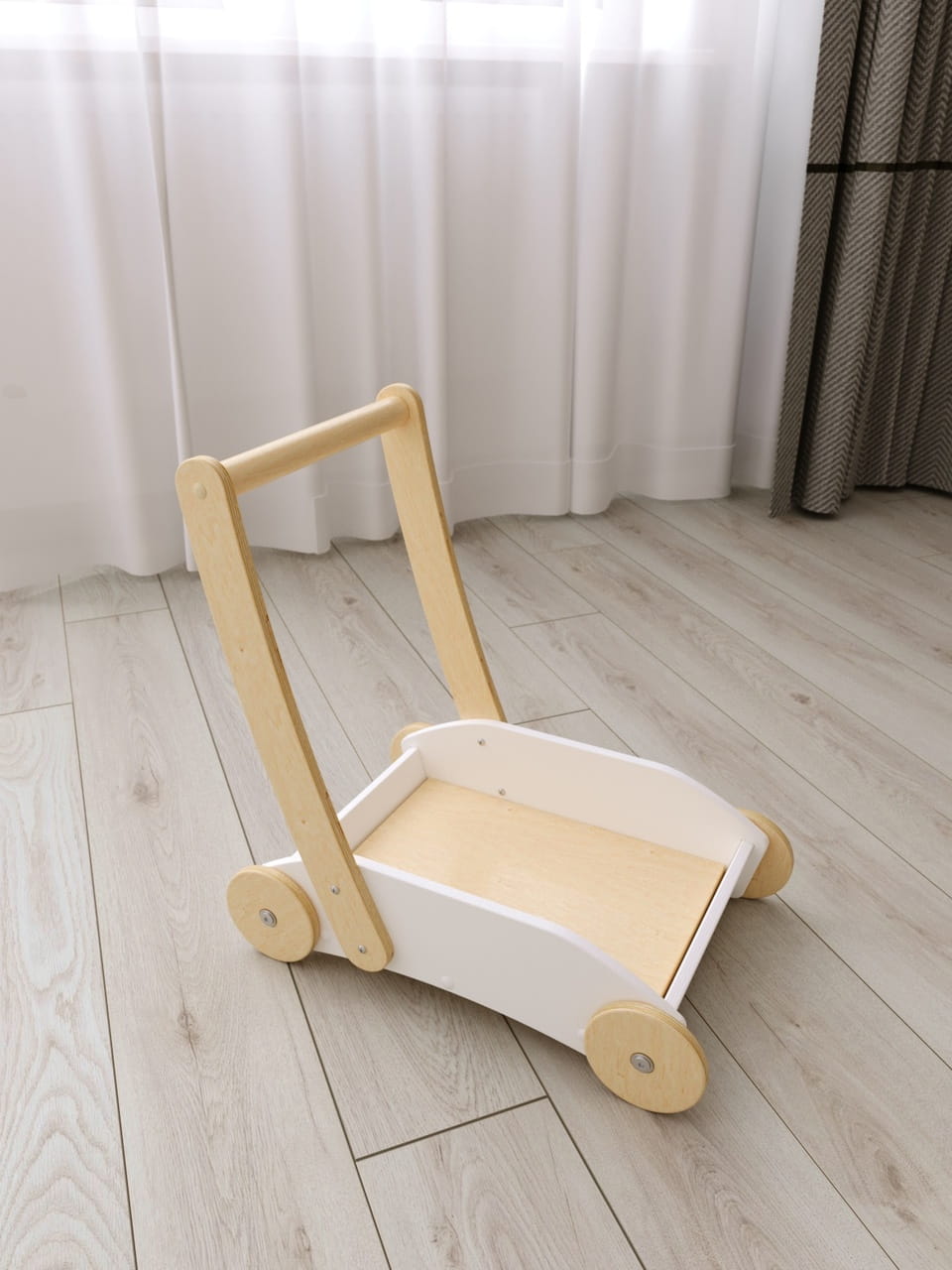

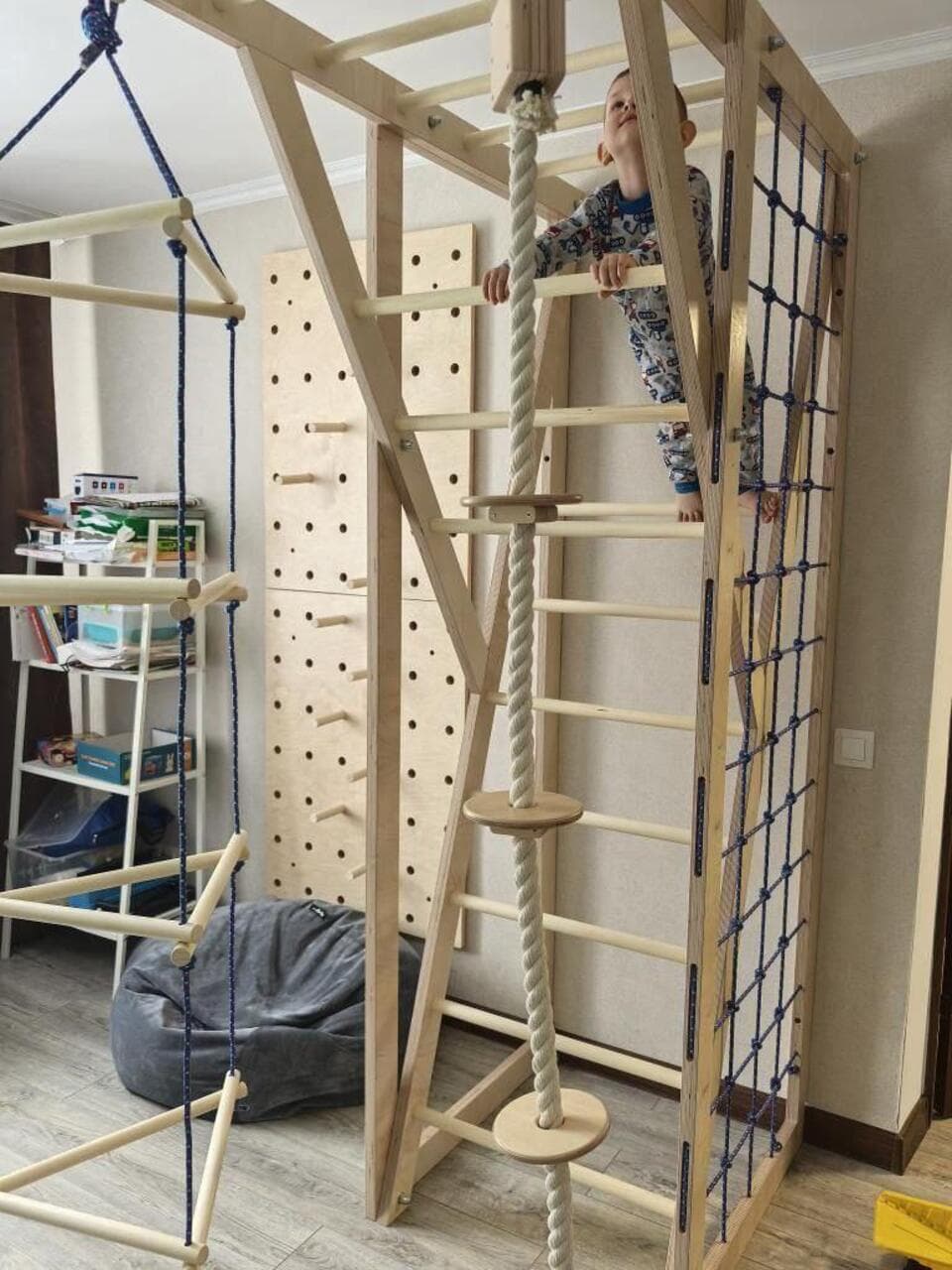
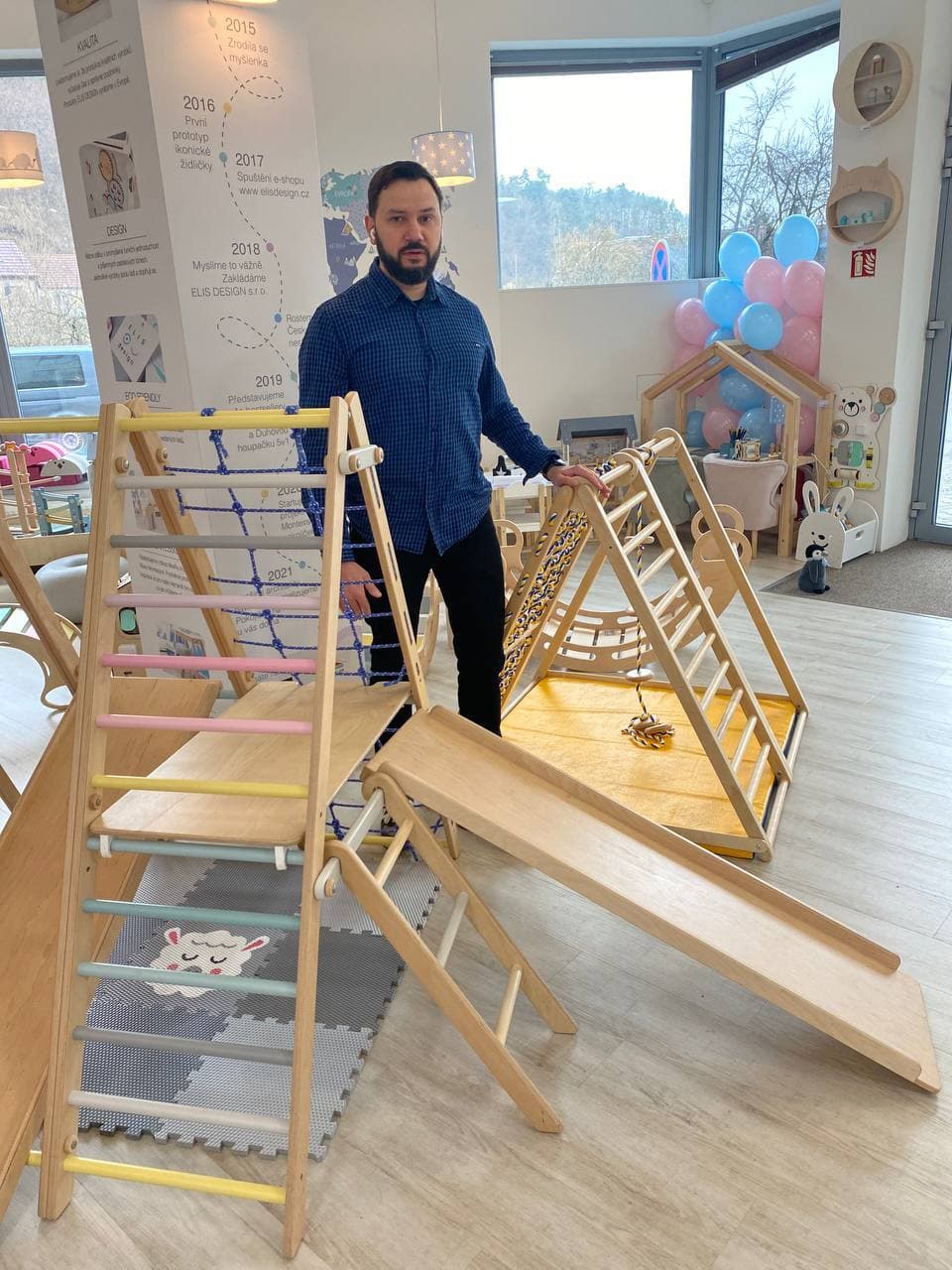
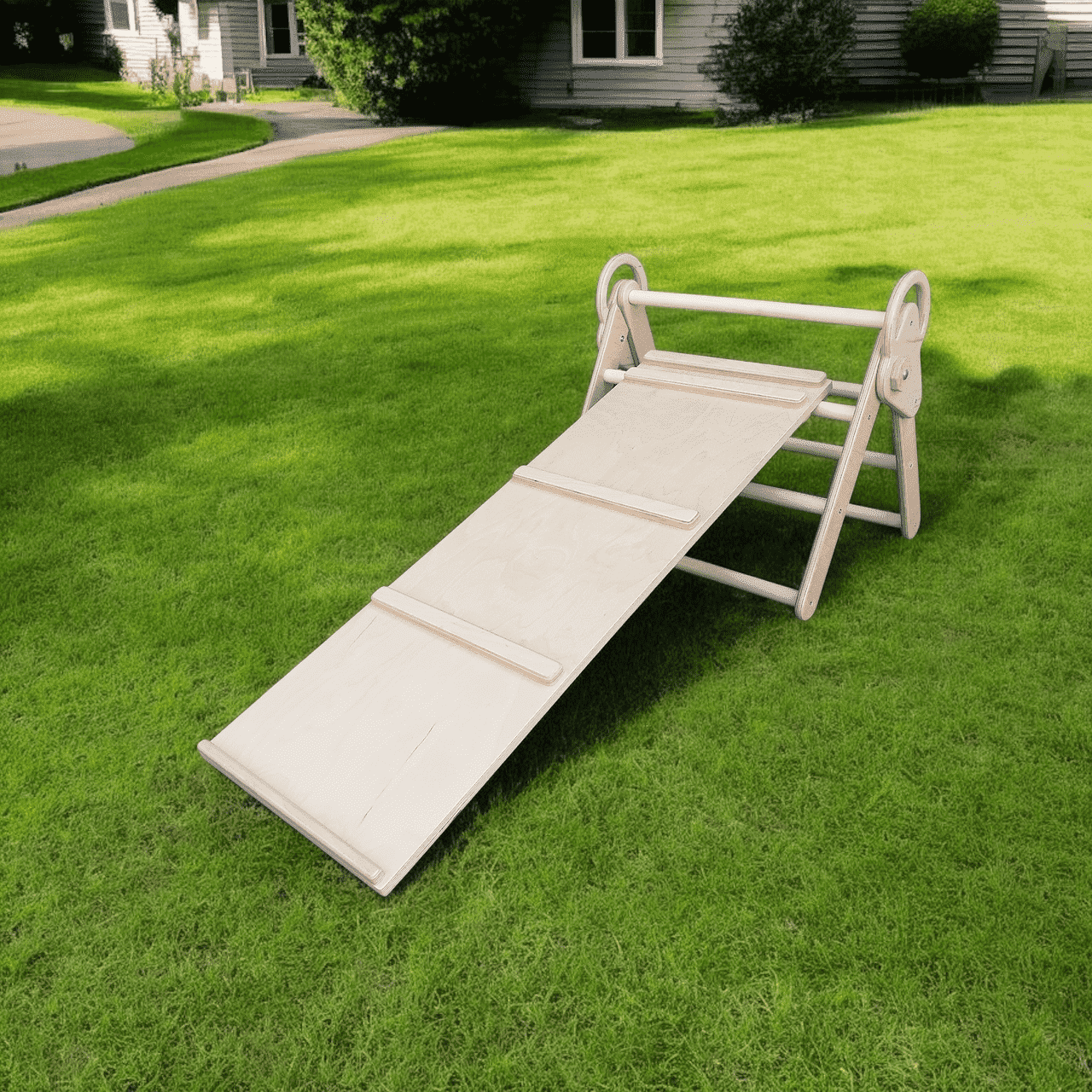
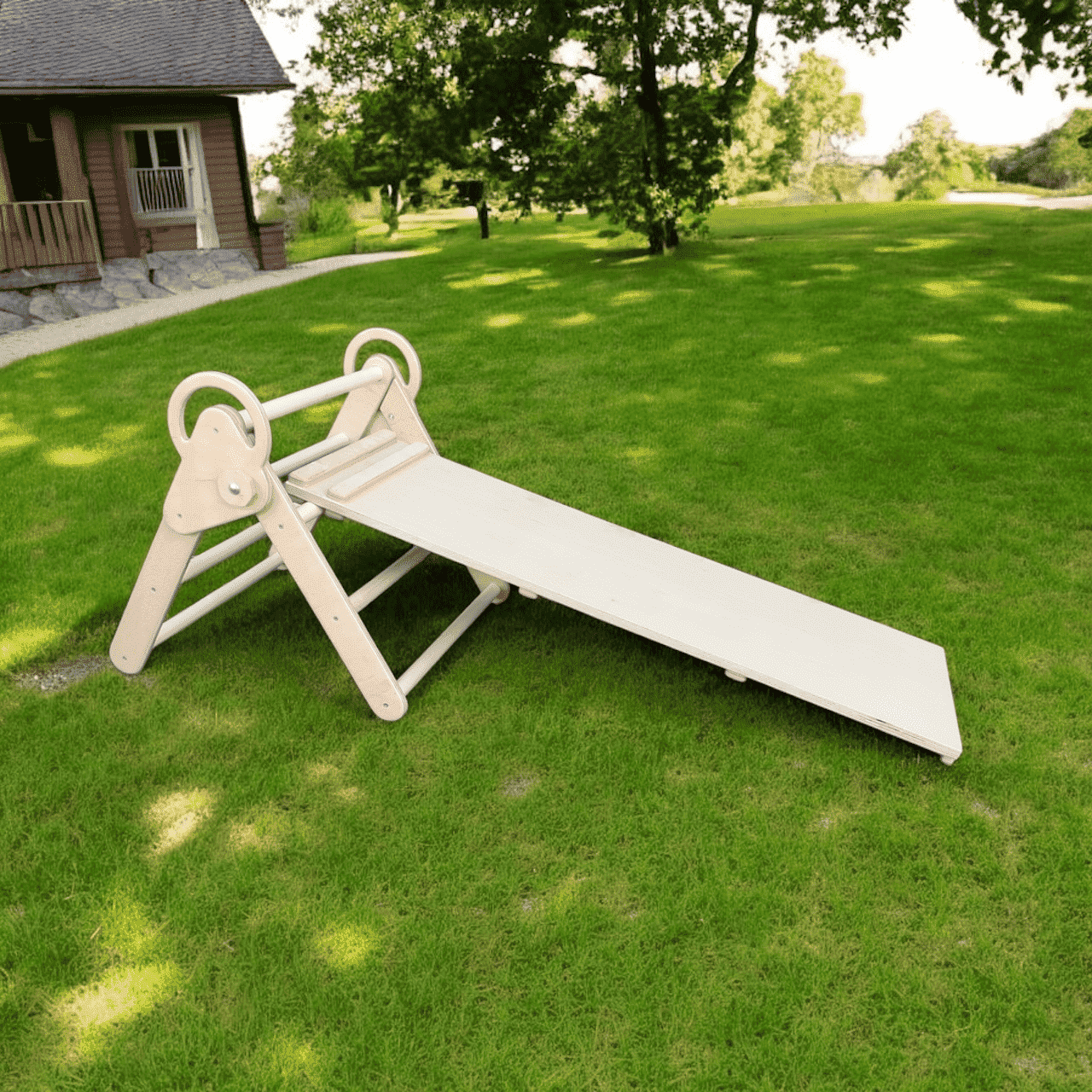
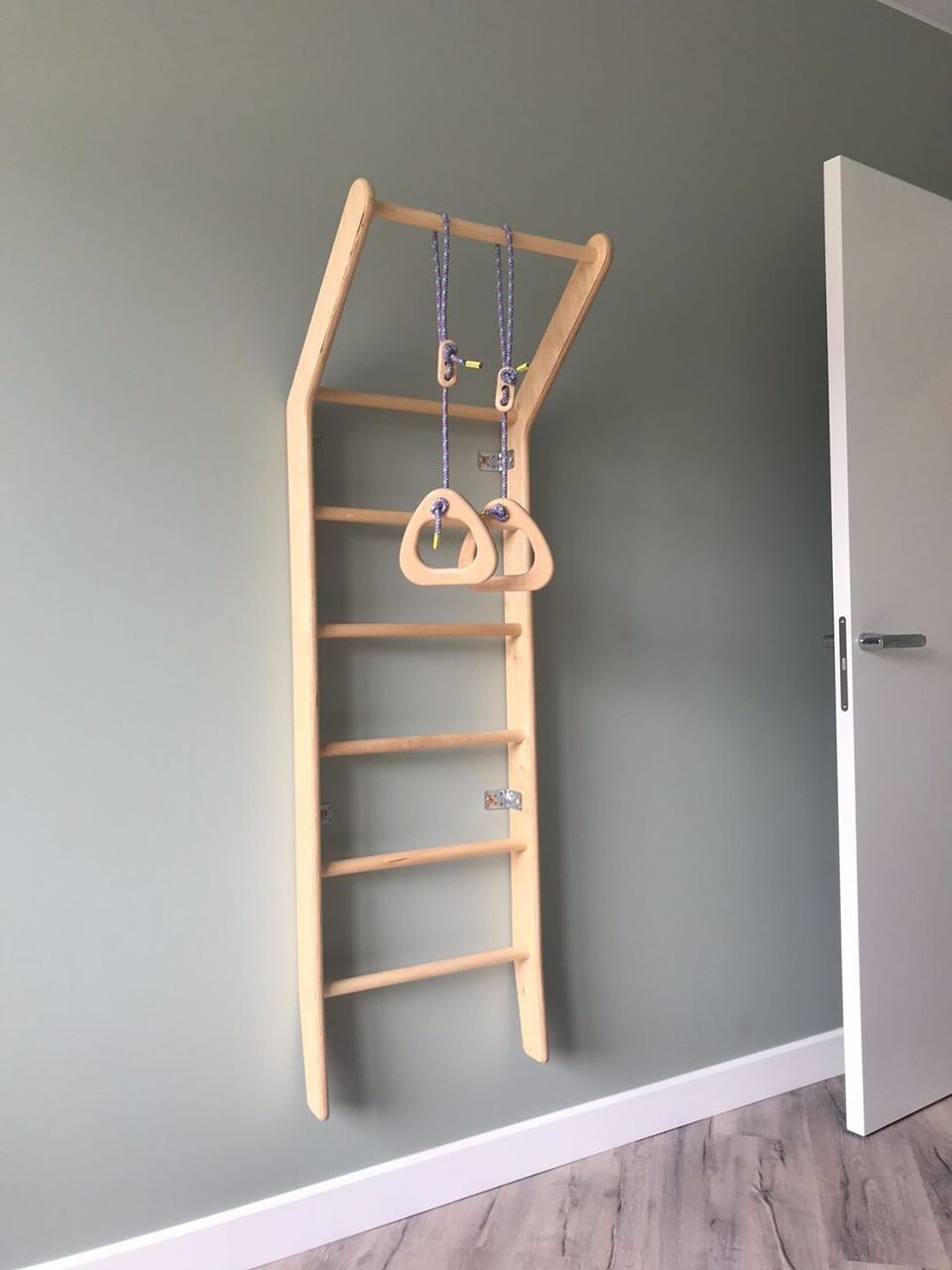
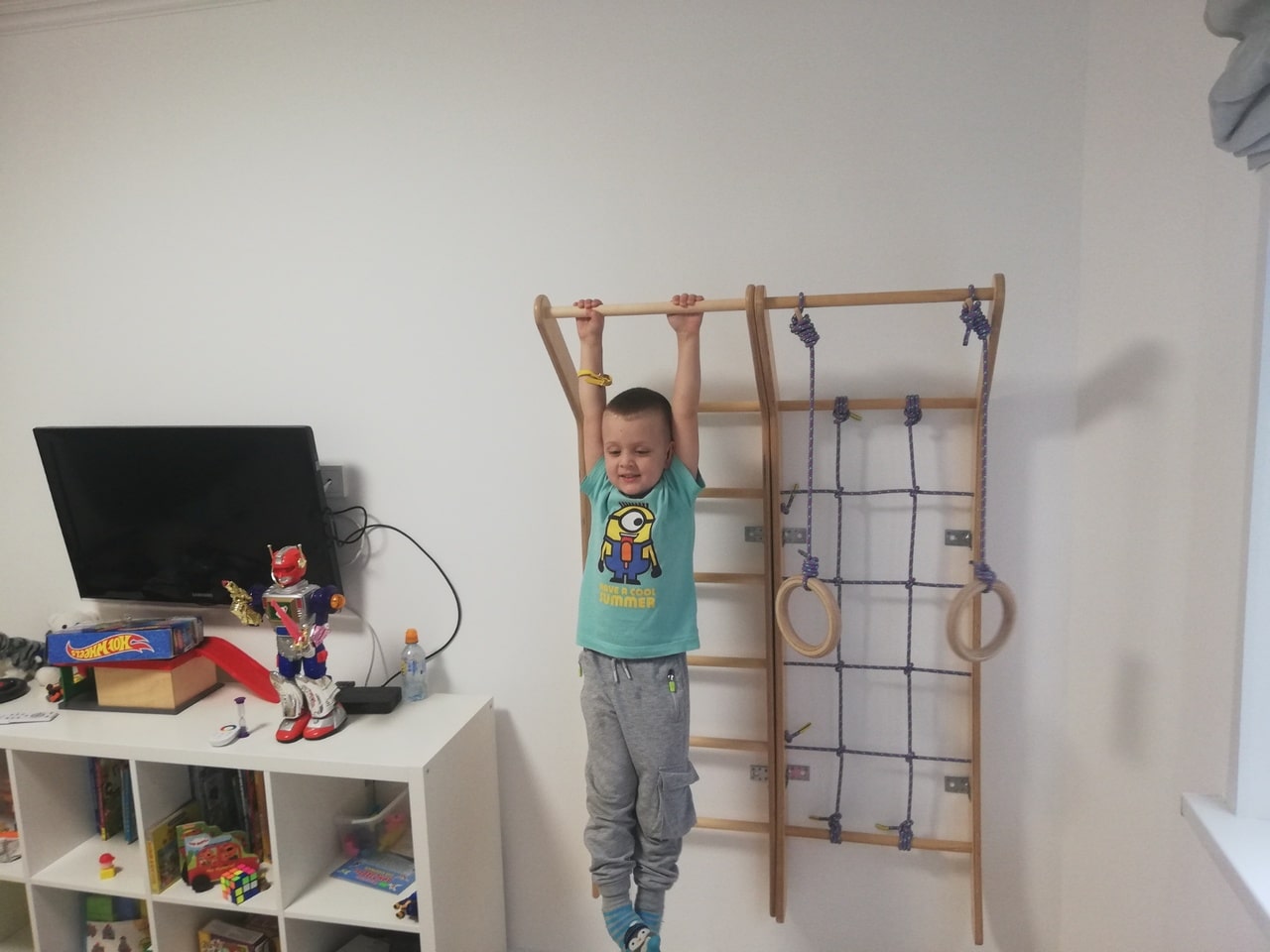
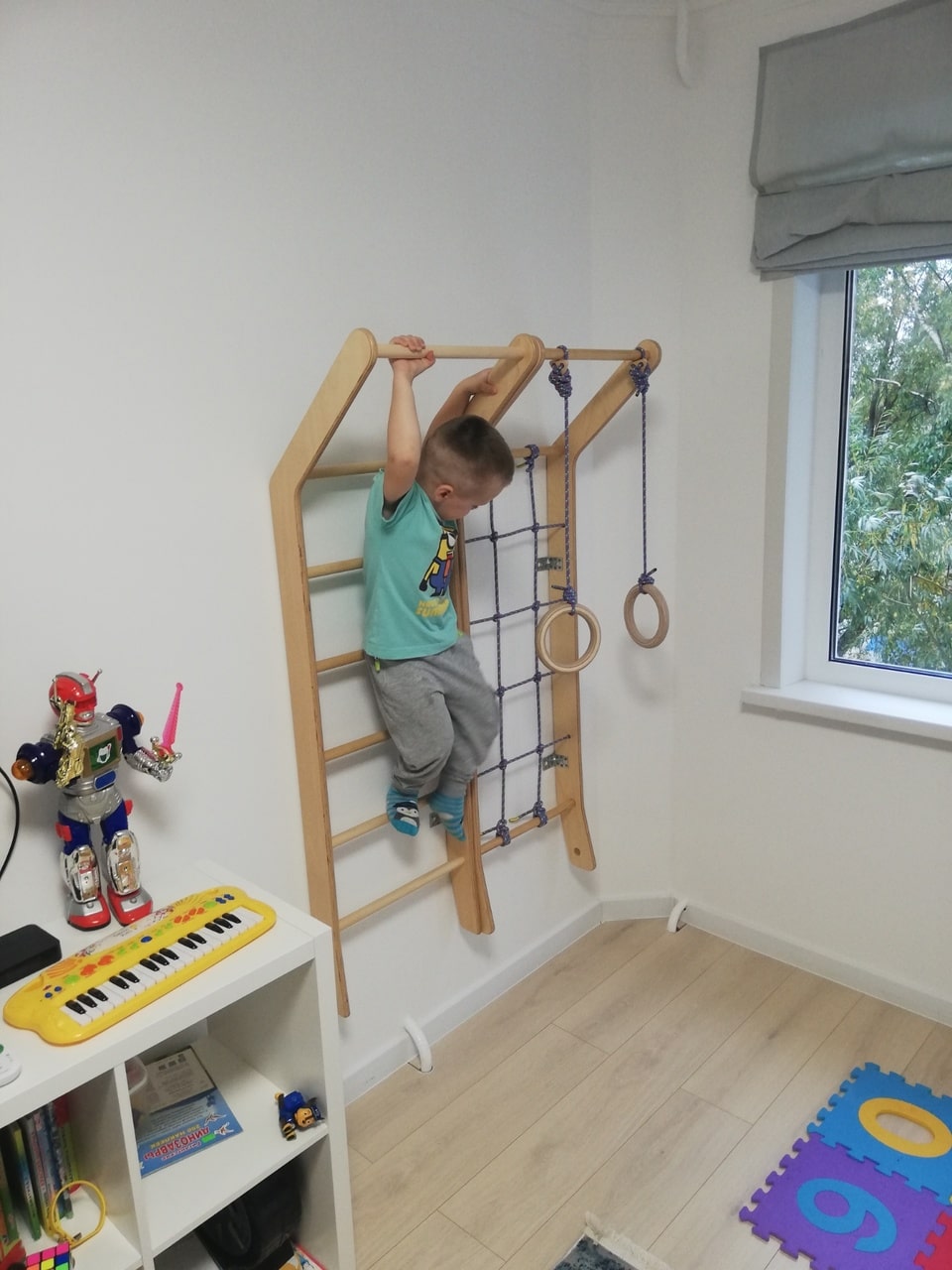

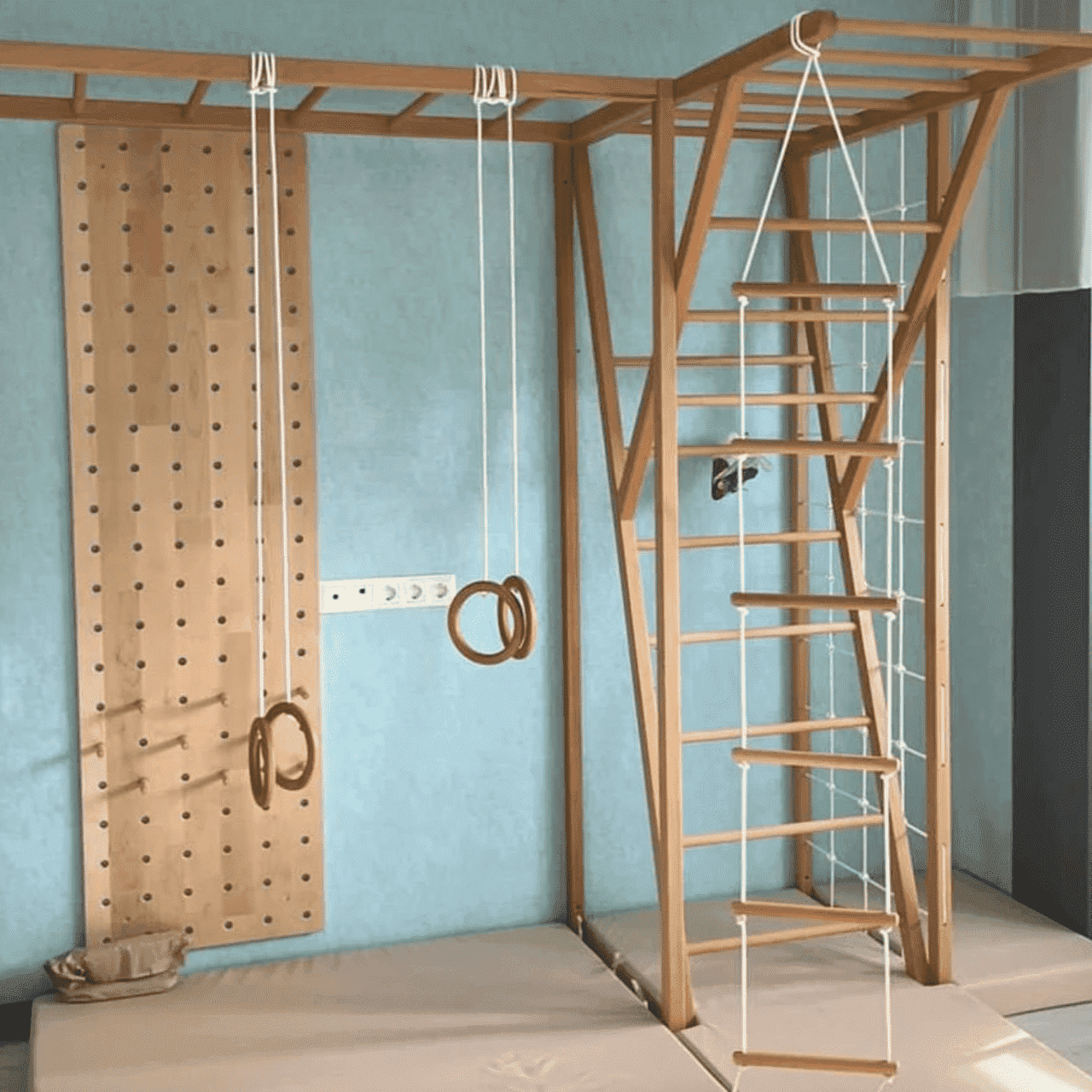
Proof of quality: examples of work with wooden shop furniture
At the TigerWood facility, projects for retail outlets of the most varied formats are created regularly. Among the tasks — display cases for jewellery and cosmetics boutiques, a reception counter for clothing shops, multi-tier stands for footwear and accessories. Large reconfigurable shelving units, modules with pull-out drawers and branded podiums have also been designed. The range of tasks here is huge: a jewellery boutique and a shoe shop have completely different requirements for display cases, and an off-the-shelf solution won’t truly suit either of them.
Among the typical tasks — furniture for farm-produce shops, where an eco-friendly look matters. For them, solid-wood shelves with a lively wood grain are made, with built-in lighting and labelling. There have also been projects with metal structures that blend organically with the wooden parts and add stability. In a farm shop, natural wood is part of the message: a customer who came for “honest” produce expects a fitting setting, and the lively texture of the shelves builds trust in the goods no worse than a price tag.
Also created were stands with branded printing, island displays for supermarkets, demonstration racks for alcohol and organiser counters with pigeonholes for paper products. To suit the task, furniture is fitted out not only with wood but also with glass, hardware, locks and milled logos. Locks, for instance, are essential for display cases holding expensive or excisable goods, while a milled logo turns an ordinary counter into a recognisable carrier of the brand right there on the floor.
Every project is documented, and where needed, sketches, drawings and prototypes are prepared. Our capacity allows us to run both small batches for individual shops and large batches for chains. A prototype is especially important ahead of a large run: the chain checks the convenience and appearance on a single sample, makes changes, and only then does the product go into production by the dozen — this rules out the risk of multiplying a mistake across the whole order. For a chain this is critical: fixing one prototype is easy, but remaking a hundred pieces already shipped out to outlets means both enormous costs and a halt to openings.
Who already works with us

Cabinet furniture makers
Joinery workshops

Interior designers

Architects

Private craftsmen and artisans

Online sellers

Advertising agencies

Set designers

Restorers

Toy manufacturers

Artists and sculptors

Construction companies

Exhibition equipment manufacturers

Educational institutions

Sports equipment makers

Wooden packaging manufacturers

Private customers

Shops and boutiques

Manufacturing enterprises

Restaurants and cafés
Wooden furniture for retail shops is ordered by companies from the most varied fields. The backbone is retail chains developing single-brand shops: clothing, footwear, cosmetics, accessories, home appliances, groceries. Boutiques and concept outlets that care about a unique look also work actively with wooden furniture. A chain and a boutique have different requirements: a chain needs repeatability across all outlets, a boutique needs one-of-a-kind character, and the production covers both poles, simply with a different process setup.
Wooden furniture is also in demand among manufacturers and distributors who create sales zones in partner shops: stands, counters, podiums, panels with logos. They become part of the outlet’s fit-out and perform an important branding function. Such a branded zone in someone else’s shop sets the product apart from competitors on the shared shelf and works as constant advertising for the brand right at the point of purchase, where the buying decision itself is made.
A separate category of clients is design firms, architectural studios and designers. They order furniture to custom sketches, realising interior design projects for retail premises. For them, a reliable manufacturing partner means being able to take on bold ideas, knowing the concept can be realised in a material rather than reduced to whatever was found in a ready-made catalogue. The ability to bring a non-standard idea to life in a material is, for a designer, a matter of professional reputation before their own client.
Among regular customers are companies working at marketing events, exhibitions and presentations. For them, mobile retail furniture is made that is easy to transport and assemble on site. Such furniture lives through constant assembly and disassembly, so its fixings and joints are reinforced: what is uncritical for a permanent outlet is here tested by dozens of set-ups at different venues. A weak joint on exhibition furniture will show itself by the third event, so its structure is designed with a margin precisely for this specificity.
In the end, the range of clients spans both small businesses and large companies developing retail across Europe and beyond. This spread — from a single outlet to an international chain — is exactly what speaks to the flexibility of the production: each client finds their own terms on volume, lead time and price, rather than a single template convenient only for large customers. For small businesses this opens access to the same quality as the chains enjoy, without having to order a truckload of furniture just to get an acceptable price and attention to the project.
Wooden shop furniture from idea to realisation
Field of application and key objectives
Wooden furniture for retail shops covers all the main zones of the floor — from product displays to display cases and the checkout. Its purpose is to make goods visible and accessible, bring order and visually support the corporate identity. The task goes beyond mere manufacturing: it matters to embody the idea to fit the brand’s concept while meeting technical and ergonomic requirements. In essence, retail furniture is a silent salesperson: it guides the customer, suggests what to pick up and shapes the impression of the shop before any contact with staff.
Structures and approaches
Wooden furniture is a broad range of structures: from wall-mounted shelves to complex lit modules. Shelving units and counters hold the goods, while display cases and podiums put the accent on new arrivals and seasonal items. Panels make economical use of the vertical plane. All structures are made to the customer’s needs — in the right dimensions, from a suitable material and with the required finish. It is the combination of these elements that lets you build a considered route across the floor: from an entrance focal zone with new arrivals to a checkout with impulse-buy goods.
Materials and technologies
For furniture, wood is used both as solid timber and in the form of panel materials — only after drying and processing. Surfaces are painted, lacquered, oiled or stained. Safe coatings, resistant to loads, cleaning and external influences, are a must. Structures are supplemented with metal, glass, plastic and branded elements. Combining materials expands the possibilities: a wooden frame with a glass display case and a metal edging looks both more expensive and more functional than a uniform structure.
Production stages
Every order travels the path from sketch to shipping. Development starts with a specification. Then timber is selected, blanks are made, parts undergo sanding, assembly and finishing. The finished furniture is packed and delivered to the customer’s address, with installation and assembly if required. Such a full cycle under one roof does away with inconsistency: parts fit together without adjustment, and responsibility for the result is not diluted between contractors, as happens when an order is pieced together from several workshops.
Volume and capabilities
Our capacity allows us to handle both one-off custom projects and volume orders for chains. We deliver across Europe and beyond. The customer receives products tailored to their requirements for functionality, design and lead times. For a chain, repeatability is especially important: the furniture in a new outlet must match the ones already open, otherwise the format loses the recognisability for which the chain is built — and standardising the models is exactly what solves this.
Materials for retail furniture
Retail furniture operates in high-footfall conditions, so the choice of material determines durability, price and appearance alike. Shelving units bear the weight of goods, display cases take the knocks of trolleys and bags, surfaces are washed daily. Below are the main materials from which shop furniture is made, with their strengths and what to look at when ordering.
| Material | Strengths | Where it’s used | What to look for |
|---|---|---|---|
| 🌳 Solid wood (oak, beech, ash) | Strength, prestige look, lively grain | Premium display cases, eco-shops, counters | Price, weight |
| 🪵 Plywood | Strength, light weight, holds loads | Shelving units, frames, podiums | Edge finishing |
| ⬜ MFC | Ready-made décor, palette, price | Carcasses, shelves, panels | Emission class, edge banding |
| 🟤 MDF | Smooth painted surface, milling | Fronts, branded elements | Durable coating |
In practice, frames and load-bearing shelving units are made from plywood and solid wood, carcasses and shelves from MFC, and branded fronts and shaped parts from MDF. Solid wood is chosen where status and natural texture matter: premium boutiques, eco-shops, farm stores. Wood is often combined with glass and metal to gain both reliability and a striking look. The key point is the edge and the protection of the ends: in a busy area it is the corners and edges that wear out first, so they are covered and reinforced.
Merchandising and shop zones
Furniture in a shop is a sales tool, and it is designed by the laws of merchandising. Goods at eye level sell better than on the bottom and top shelves; the entrance zone sets the mood and is usually given over to new arrivals and promotions; the checkout area works for impulse buys. Shelving units, display cases, podiums and counters are arranged so as to lead the customer along the right route and hold their attention on key items.
Each zone gets its own furniture. For focal displays — podiums and open, lit display cases; for the core range — roomy shelving units; for expensive goods — closed display cases; for small items at the checkout — compact organisers. Smart placement directly affects revenue: it increases both the number of items sold and the average basket, whereas a poor layout, on the contrary, hides goods and confuses the customer. That is why bespoke furniture is designed together with the logic of the floor, not separately from it. A good shelving unit put in the wrong place works worse than an average one placed wisely — one more argument for tackling furniture and layout together.
Branding and corporate identity in retail furniture
Furniture for retail shops is one of the most visible carriers of corporate identity. Corporate colours, logos and signature shapes applied to shelving units, counters and panels work for brand recognition right at the point of sale, where the buying decision is made. Below are the main ways to build identity into retail furniture.
- 🎨 Corporate colour — painting fronts and elements in the corporate palette to a sample.
- 🔤 Logo — milling, engraving, printing or applied 3D lettering.
- 💡 Lighting — an accent on display cases and podiums, highlighting the brand zone.
- 🧩 Signature shape — recognisable outlines of counters and stands to match the brand’s style.
- 🏷️ Unified system — all floor elements in a shared design, materials and colour.
Branding is especially important for chains and for manufacturers placing sales zones in other people’s shops. A branded counter amid a shared shelf sets the product apart from competitors and works as constant advertising. For a chain, a unified style across all outlets is the foundation of recognisability: the customer should feel they have walked into a familiar shop, no matter what city they are in. That is why brand elements are made repeatable and standardised, so every new outlet matches the others down to the smallest detail.
Finish, lighting and safety
The finish of retail furniture is responsible for both looks and resistance to daily use. Matte surfaces glare less under bright retail lighting and don’t distract from the product, while gloss adds a premium feel where appropriate. The coating must comfortably withstand frequent cleaning, cleaning agents and mechanical stress — from the touch of hands to the knocks of trolleys. A smooth finish without deep pores is also more hygienic: dust that is hard to clean out doesn’t lodge in them.
A separate topic is the integration of lighting. Built-in LED lighting for display cases and podiums shows off goods to advantage, and in jewellery and cosmetics shops it directly affects the perception of value. Safety is just as important: rounded corners, no protruding parts, tip resistance of tall shelving units and secure fixing to the wall or floor. On a floor crowded with people and children, these details prevent injuries and remove the risk of complaints, so they are built into the design in advance.
Lead times, volumes and cost of shop furniture
The exact price and lead time are quoted after a calculation: everything depends on the material, the complexity of the design, branding, volume and the availability of drawings. But the general logic is transparent, and it is useful to understand it in advance — especially when the equipment is needed for an outlet’s opening, where lead time often matters more than price. Below are guideline figures for typical shop-furniture orders: they don’t replace a calculation, but they show how volume and complexity affect the outcome.
| Order type | Approx. lead time | Min. batch | What affects the price |
|---|---|---|---|
| 📚 Shelving units and shelves (standard) | 7–14 days | to be agreed | Material, run size, load |
| 🪟 Lit display cases | from 2 weeks | from 1 pc. | Glass, lighting, finish |
| 🏬 Turnkey outlet fit-out | from 3 weeks | per project | Number of items, unified style |
| 🎨 Custom design project | from 3–4 weeks | from 1 pc. | Engineering, sample, branding |
The price is influenced most by the complexity of the design, branding and additional elements — glass, lighting, locks, milled logos. Run size works the other way: a set of identical shelving units for a chain is priced at a lower rate than one-off pieces, since the modules are standardised and cut more economically. The saving here is not on strength but on planning: standard modules, chain-wide standardisation and a project agreed in advance remove unnecessary costs and rework.
How to order shop furniture wholesale
The ordering process requires no engineering background — it is enough to describe the outlet’s format and show a plan or a reference, and anything missing will be clarified at the production stage. Usually the path from enquiry to finished furniture fits into a few clear steps.
- 📝 Send the floor plan, the shop format, the type of goods, the corporate identity and, if you have one, a reference.
- 📋 Agree on the materials, construction, branding and number of items, and receive a project and a quote.
- ✅ Approve the project and, if needed, produce a sample or prototype.
- 🏭 Start production: cutting to size, processing, assembly, finishing, branding, quality control.
- 🚚 Take delivery of the packed furniture, with installation and arrangement on the floor if needed.
This procedure suits both a single outlet and a shop chain. It is easier for regular partners: with proven models, it is enough to repeat the order for a new outlet, and the batch goes into production while keeping the unified style. In the end, ordering shop furniture becomes a predictable process with clear lead times, price and a result that fits the concept precisely and withstands the real loads of the sales floor.
Myths and reality about shop furniture
There are plenty of misconceptions around retail furniture that cost owners dearly. The first myth — “any furniture will do, as long as it holds the goods.” In reality, equipment designed without regard for merchandising hides products and lowers sales, while inconvenient shelving units slow down the staff. The second myth — “the cheaper the better.” Cheap furniture quickly loses its looks under the flow of customers, and replacing it mid-season costs more than the initial saving and disrupts trade.
The third myth — “design is secondary, customers don’t care.” On the contrary: the setting shapes the first impression and the level of trust in the shop, while wooden furniture adds perceived value to the goods. The fourth myth — “furniture is the same for all shops.” A jewellery boutique, a grocery supermarket and a shoe shop require different equipment in terms of strength, construction and presentation. The fifth — “a rush order for an opening costs the same.” Urgency breaks the schedule and calls for reconfigurations, and drying and finishing can’t be sped up, so the fit-out is ordered in advance.
Understanding these nuances makes the choice calmer and more profitable. Shop furniture is about combining merchandising, strength and corporate identity, not about hunting for the cheapest option. When equipment is designed for a specific format and sales logic, it works for revenue every day, lasts a long time and doesn’t let you down at the height of trade, while the money saved on rework pays back the considered approach.
Logistics, installation and maintenance
Well-made furniture is not hard to ruin in transit, so packaging is thought through separately. Display cases, glass and front surfaces are cushioned and protected, and large structures are shipped disassembled as a set of parts with fastenings and an assembly diagram. This reduces the risk of damage and makes it easier to carry into the premises and up to the floor. On request, installation and arrangement on the floor are possible — convenient before an opening, when deadlines are tight and everything must be assembled right on time.
Delivery covers all of Europe and beyond, and the format is chosen to suit the volume and geography: from a freight company to a dedicated vehicle for a full outlet fit-out. For a chain, the logistics are set up once and then repeated for each new shop. Maintenance is also worth planning: tightening fastenings, refreshing the finish and replacing individual elements extend the service life, while a modular design lets you change a part rather than the whole piece — a big advantage for heavily used equipment.
Furniture for different retail formats
Retail comes in dozens of formats, and each has its own equipment. A jewellery or cosmetics boutique needs closed, lit display cases and a premium finish that shows off expensive goods. A grocery or farm shop needs roomy shelving units and shelves with a lively wood grain that build an image of naturalness. A clothing or footwear shop needs podiums, mirrors, counters and open modules for try-ons. A discounter or supermarket needs the sturdiest, most low-maintenance island displays for a huge flow of customers.
A separate story is pop-up outlets, corners and exhibition zones. For them, mobile furniture is made: light, quick to assemble and disassemble, with reinforced fixings for repeated set-up. Such furniture lives in constant transport, so the structure is designed for dozens of assemblies without losing its looks or rigidity. Equipment of the same purpose for a permanent outlet and for a mobile corner is prepared differently, and this difference is built in at the design stage.
Understanding the format helps you avoid overpaying and making mistakes. An expensive premium display case in a discounter is excessive, while a flimsy mobile counter won’t survive the flow of a supermarket. A good manufacturer clarifies the format, the type of goods, the footfall and the corporate identity right away, and then selects the material, construction and finish to match. As a result, the boutique, the supermarket and the pop-up corner each get exactly the equipment that works at their pace and for their tasks, rather than disappointing after a season.
Working with the floor plan and drawings
Furniture goes into a specific space, so the accuracy of the plan here matters no less than the construction. Ideally there is a floor plan with dimensions and the positions of entrances, columns, display cases and the checkout area — then the layout and dimensions are calculated precisely, without dead zones or cramped aisles. But a detailed description of the format with measurements is a perfectly workable start, and anything missing will be clarified by the production engineer at the design stage.
It helps to attach the corporate identity and a reference: logo, corporate colours, examples of similar shops. This removes the main source of disputes — a divergence in how each side pictures the fit-out. When the brief is complete, the project, the quote and the launch run smoothly, and the finished furniture stands on the floor exactly to plan and in the corporate style, rather than turning out to be a surprise during arrangement right before the opening, when the time to fix anything has already run out.
All-in-one fit-out and working with chains
The main convenience of a turnkey order is the ability to fit out an entire shop with a single manufacturer. Shelving units, display cases, counters, podiums, panels, the checkout area and branded décor in agreed materials and a unified style give a coherent look without any mismatch. The customer doesn’t have to reconcile supplies from different workshops, match shades and work out whose delay derailed the opening. A single point of contact and a single responsibility for the whole set means fewer risks and less routine hassle.
For chains, repeatability is especially important. When a chain opens a new outlet, the equipment must match the ones already operating exactly — otherwise the format loses the recognisability for which the chain is built. Production for a chain standardises the models and draws up process sheets, so that launching a batch for the next shop takes minimum time and reproduces the quality without deviation. A refined item is then reproduced almost automatically to a single standard, and the opening of the tenth shop goes as predictably as the first.
Our capacity allows us to work both with a single small outlet and with a large order for a nationwide chain. For a one-off outlet, a custom project and a fit to the space matter more; for a chain — batch consistency, lead times and a unified style. One manufacturer covers both requests, simply with a different process setup. Such reach is convenient for a growing business: you can open the first outlet as a custom project and then roll the successful solution out to new shops without changing supplier or losing the quality you’re used to.
Wholesale shop furniture: the full picture
Bringing it all together, the picture is clear. The production designs equipment for the format and sales logic, selects durable materials, cuts precisely, processes, assembles reliable structures, applies a durable finish and branding, and checks every piece for strength and safety. At every step it is not chance at work but technology and control, which is why the furniture withstands the loads of the floor and works for revenue. For the customer this means predictability on the three main questions: how much it costs, when it will be ready and how it will fit the space.
A single outlet and a nationwide chain, a standard set and a custom design project, a permanent shop and a mobile corner — all of this fits into one manageable process. The products ship across all of Europe and beyond, packed with protection for display cases and front surfaces, and arrive in sellable condition. Little remains — send the floor plan and describe the format, and from there the project, the quote and the launch run smoothly, with clear lead times and shop-furniture quality that works for sales rather than against them. And feedback on the first delivery is taken into account in the next: successful decisions on models, materials and branding are locked in as a standard, and fitting out new outlets in the chain goes even faster and more precisely than the opening of the first.
What timber is used in the manufacture of shop furniture?
Dense species are used — pine, birch, beech, oak — as well as plywood, MFC and MDF. The material is chosen to suit the task: strong bases for load-bearing shelving units, beautiful grain for showcase display cases, painted MDF for branded fronts.
Can furniture be ordered to a custom project?
Yes, products are made to custom sketches and drawings, and a design can be developed from scratch for specific needs. It is enough to send the floor plan and a reference — a unique solution will be put together for the outlet’s format and corporate identity, rather than a standard set from a catalogue.
How long does production take?
Lead times depend on volume and complexity: standard shelving units are made in one to two weeks, while lit display cases and large chain sets take longer, on average from 7 to 30 working days. The exact date is given after the project and the calculation. A fit-out for an outlet’s opening is best ordered in advance.
Do you deliver to other cities?
The finished furniture is shipped across all of Europe and beyond — by freight companies or courier service, depending on the volume. Large structures are shipped disassembled where necessary, and display cases and glass are packed with reinforced protection.
What elements can be built into the furniture?
Often added are lighting, logos, pull-out drawers, fixings, holders, advertising panels and locks for display cases. All these elements strengthen both function and branding — from convenient product presentation to corporate-identity recognition right there on the floor.
Can the furniture be painted in the brand’s corporate colours?
Yes, the coating can be done in any colour from the palette, including the brand’s corporate shades. The colour is matched to a sample, so the furniture aligns exactly with the corporate identity and the rest of the floor’s fit-out, rather than being off by a couple of tones.
Is the furniture supplied disassembled?
Yes, on request the furniture is supplied disassembled — as a set of parts with fastenings and a diagram for self-assembly. This is convenient for delivery to remote outlets and for carrying up to a floor where an assembled structure simply wouldn’t fit.
Is the furniture inspected before dispatch?
Yes, every piece undergoes quality control: geometry, strength, stability and finish are checked. On request, photo documentation is done before shipping, so the customer, especially a chain or a remote one, can see the finished furniture before receiving the batch.
Are wholesale orders available?
Yes, we handle large orders for shop chains, including replicating products to a single standard. The models are standardised and entered into process sheets, so every new outlet receives equipment that matches the others down to the smallest detail.
Can changes be made to a finished project?
Yes, at the approval stage changes are possible — to dimensions, finish, colour and construction. That is exactly why the project and the visualisation are approved before launch: changes on paper are free and quick, whereas remaking a finished piece costs many times more.
We’re always here to help — choose the way that suits you best to get in touch
Call us, message us on a messenger or reach out via social media — we’ll respond promptly!
We work across all of Europe
Useful information and articles
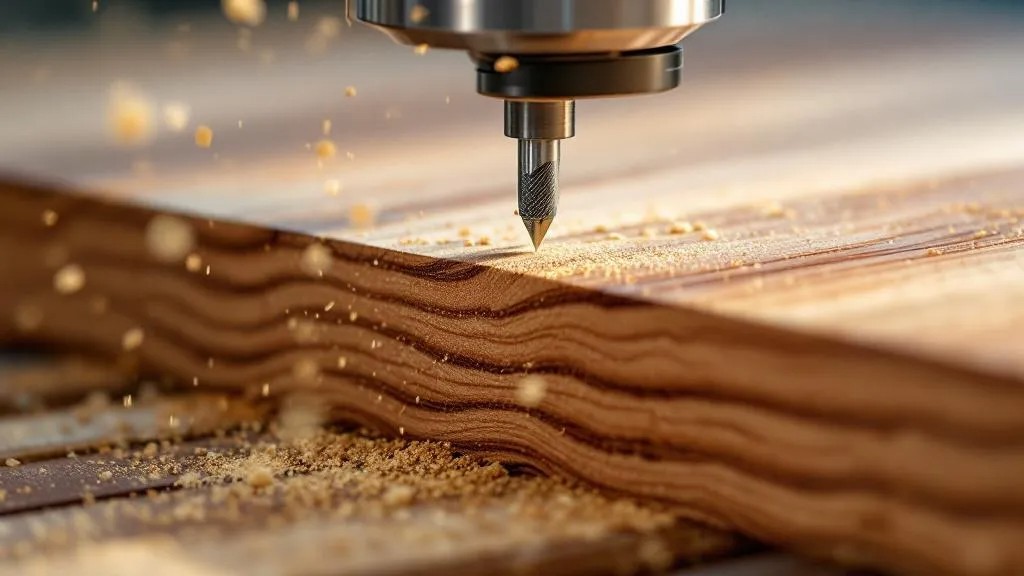
The Specifics of Radius Milling for Creating Rounded Edges on Wooden Products
The Specifics of Radius Milling for Creating Rounded Edges on Wooden Products Radius milling, or edge rounding, is one of the most sought-after and critically important stages in producing high-quality wooden
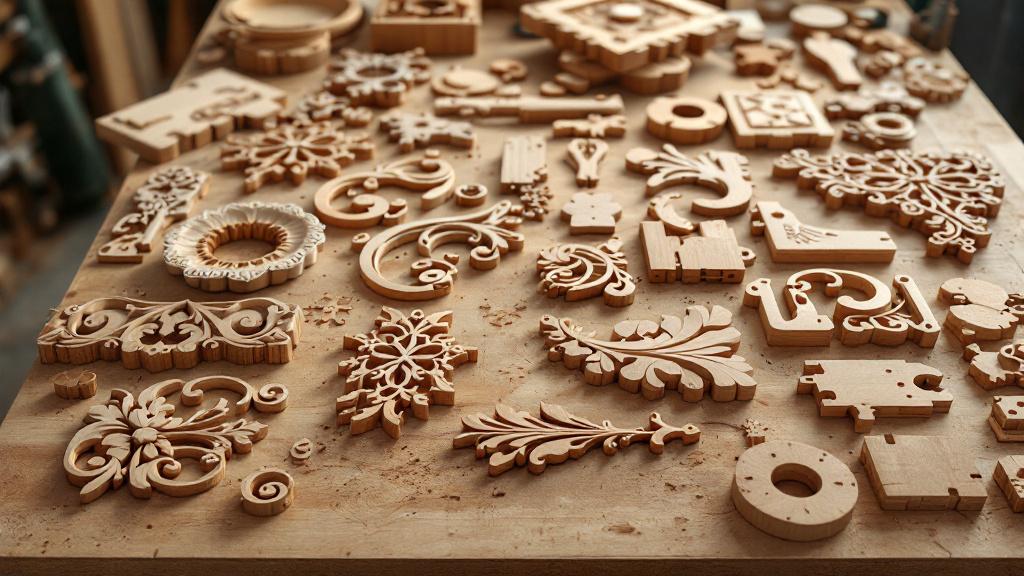
The Role of Milling in Making Decorative and Functional Wooden Parts
The Role of Milling in Making Decorative and Functional Wooden Parts Wood is a material that people have been using for thousands of years. It is valued for its natural
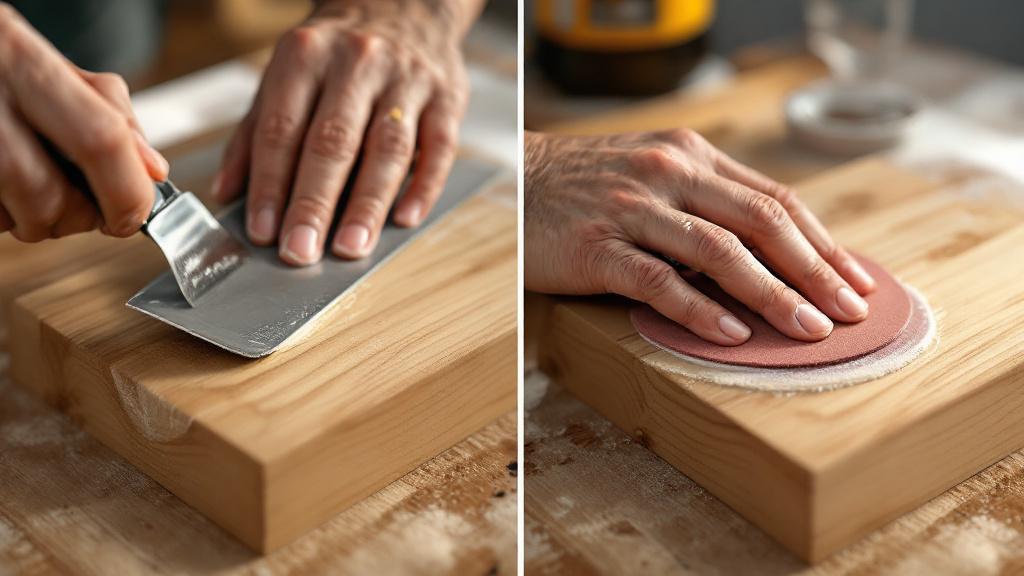
Stages of Filling and Sanding Wooden Products: Creating a Flawless, Even Surface
Stages of Filling and Sanding Wooden Products: Creating a Flawless, Even Surface Woodworking is not merely a mechanical process but a true craft, in which every stage is decisive for the

The synthesis of wood and metal: technological aspects of combining wood and aluminium to create durable products
The synthesis of wood and metal: technological aspects of combining wood and aluminium to create durable products In the field of professional woodworking, the search for the ideal material often leads