
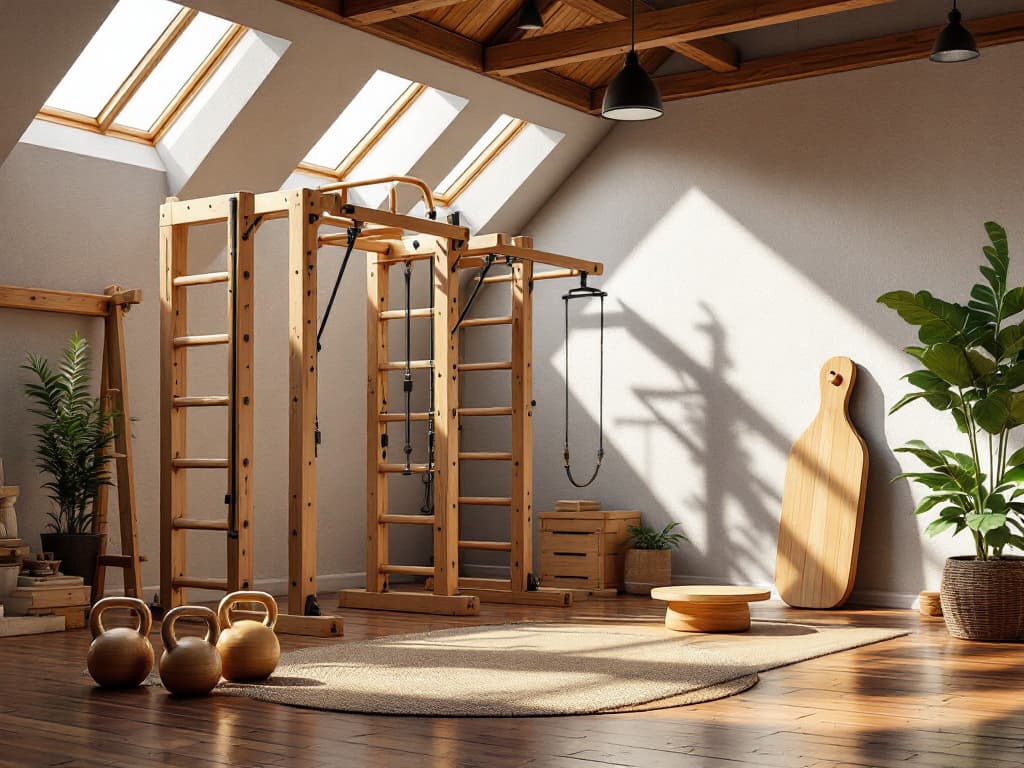
Wooden wall bars
Wooden wall bars are a piece of exercise equipment for the home, the gym, schools and sports clubs, used to train strength, flexibility and coordination. They are made from natural timber and board materials — plywood, MDF, particleboard and melamine-faced chipboard — to both standard and bespoke designs, and supplied wholesale to gyms, children’s facilities, retailers and the public sector. Below we cover the types of wall bars available, the materials they are made from, how production and safety control work, and how to place a wholesale order for your facility.
Manufacturing of wooden wall bars
Wooden wall bars are one of the most versatile pieces of equipment: they are used for gymnastics and fitness, for building strength, and also in rehabilitation. Essentially it is a vertical frame with rungs for pull-ups and exercises that build strength and coordination, which can be extended with a pull-up bar, a climbing rope or parallel bars. A wooden unit is not only sturdy and functional but also pleasing to look at — a clear advantage for a sports club, fitness studio or educational institution, where the equipment is on view to everyone.
TigerWood places special emphasis on these products and supplies units built to take a serious load. The technology is followed strictly — the equipment is engineered both for a person’s weight in motion and for a long service life. The units are built to the client’s requirements so they fit the interior of the specific gym rather than clashing with it. Natural materials and eco-friendly finishes make them safe for health, which matters especially where children train.
The equipment works not only on fitness but also on recovery — it is often used in rehabilitation, where a measured, controlled load is needed. Wall bars develop flexibility, coordination and strength all at once. In recent years such products have increasingly been installed at home too: a compact frame against the wall replaces a small gym, which broadens demand from professional facilities to ordinary apartments.
What matters to our clients and partners

Professional team
Experienced craftsmen, engineers and CNC operators. Thorough quality control at every stage

Flexibility and a tailored approach
We adapt to any task: we work from your drawings or develop the cutting and machining program ourselves

End-to-end approach
We offer the full range of woodworking services — from sawing to painting and assembly

Wide delivery coverage
We work with clients across many European countries. We help with logistics and packaging

Fast lead times
Large-scale production and streamlined processes let us complete even complex orders quickly

Modern equipment
We work with panel saws, CNC machines, routers and sanding machines
Advantages and specifics of manufacturing wooden wall bars
Manufacturing wall bars has its own specifics that set it apart from other sports equipment. First of all — the material: hardwoods such as oak and ash are used, giving the structure high strength. Unlike metal and plastic, wood wins on eco-friendliness, durability and appearance. Wooden wall bars have a living texture and a natural shade, so they fit organically into any interior style — from a classic gym to a modern studio.
The second feature is flexible configuration to suit the task. The height and spacing of the rungs, the width of the frame and other parameters are selected individually. Additional fittings for a pull-up bar, rope or rings are built into the structure, along with the mounting method — floor-standing or wall-mounted. This turns a simple frame into a multifunctional unit that adapts to both a children’s club and an adult gym.
A separate — and the key — topic is safety. Every set of wall bars is tested for strength and load stability, because people, including children, hang and jump on it. The wood goes through a full processing cycle: drying, sanding and a protective finish, which remove splinters, extend service life and protect the unit from moisture and wear. A smooth surface and reliable joints are not cosmetic here but a direct condition for the equipment not becoming a cause of injury.
Types of wall bars for gyms and the home
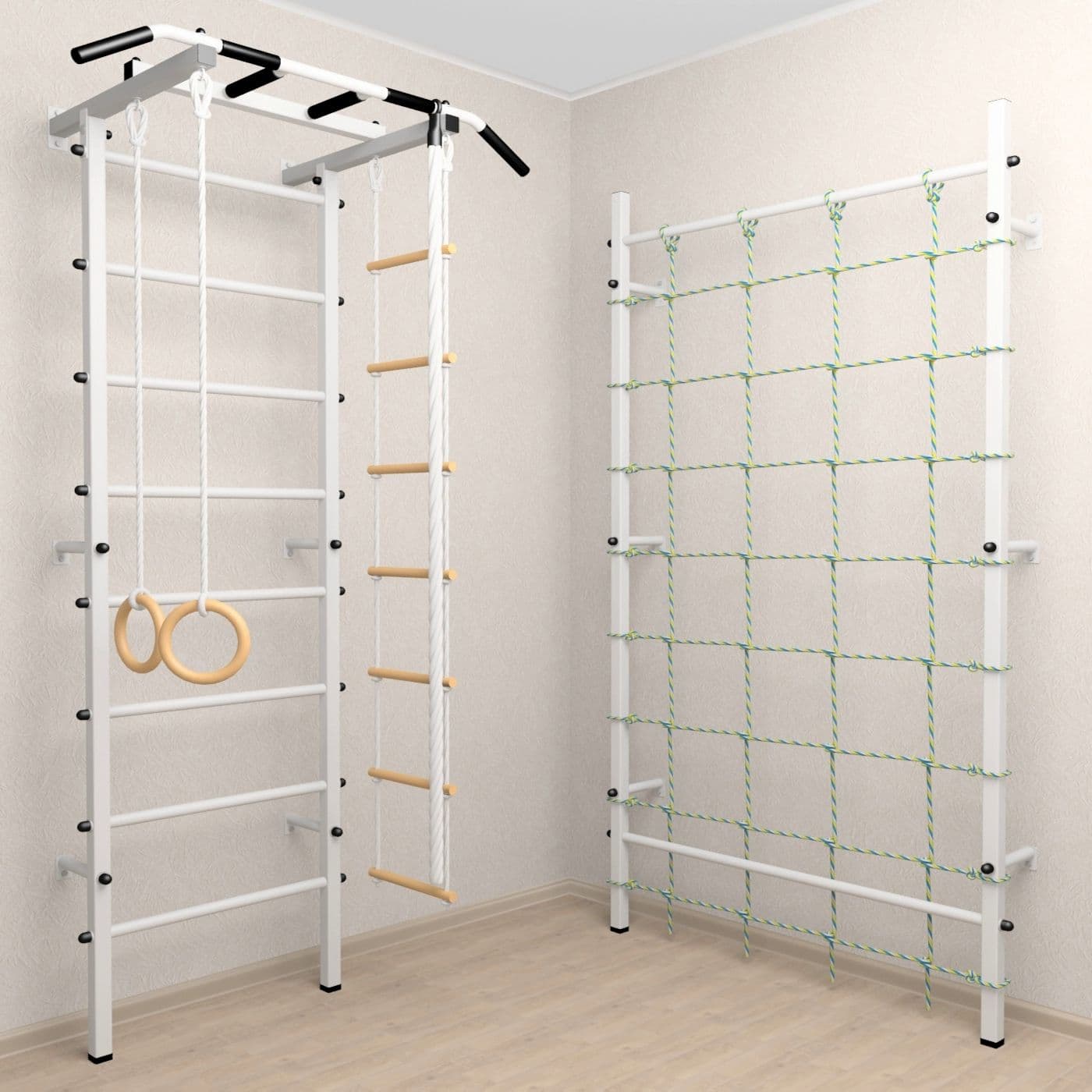
Floor-standing wall bars
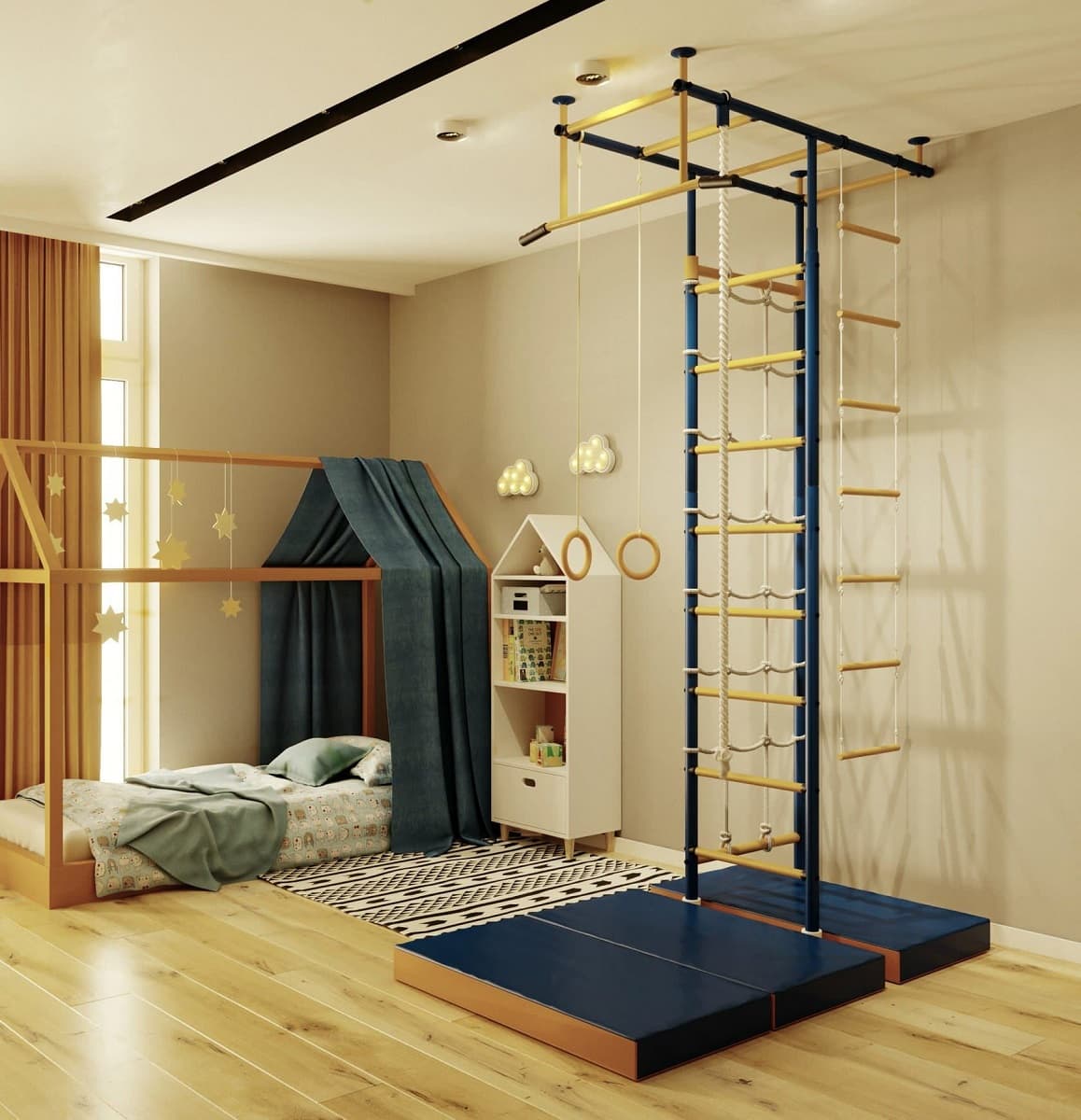
Children’s wall bars
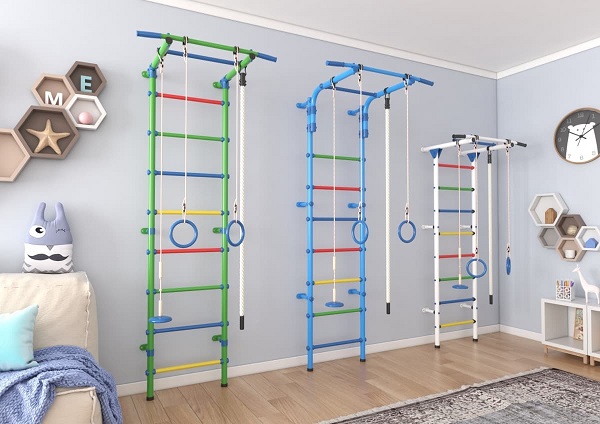
Wall-mounted wall bars
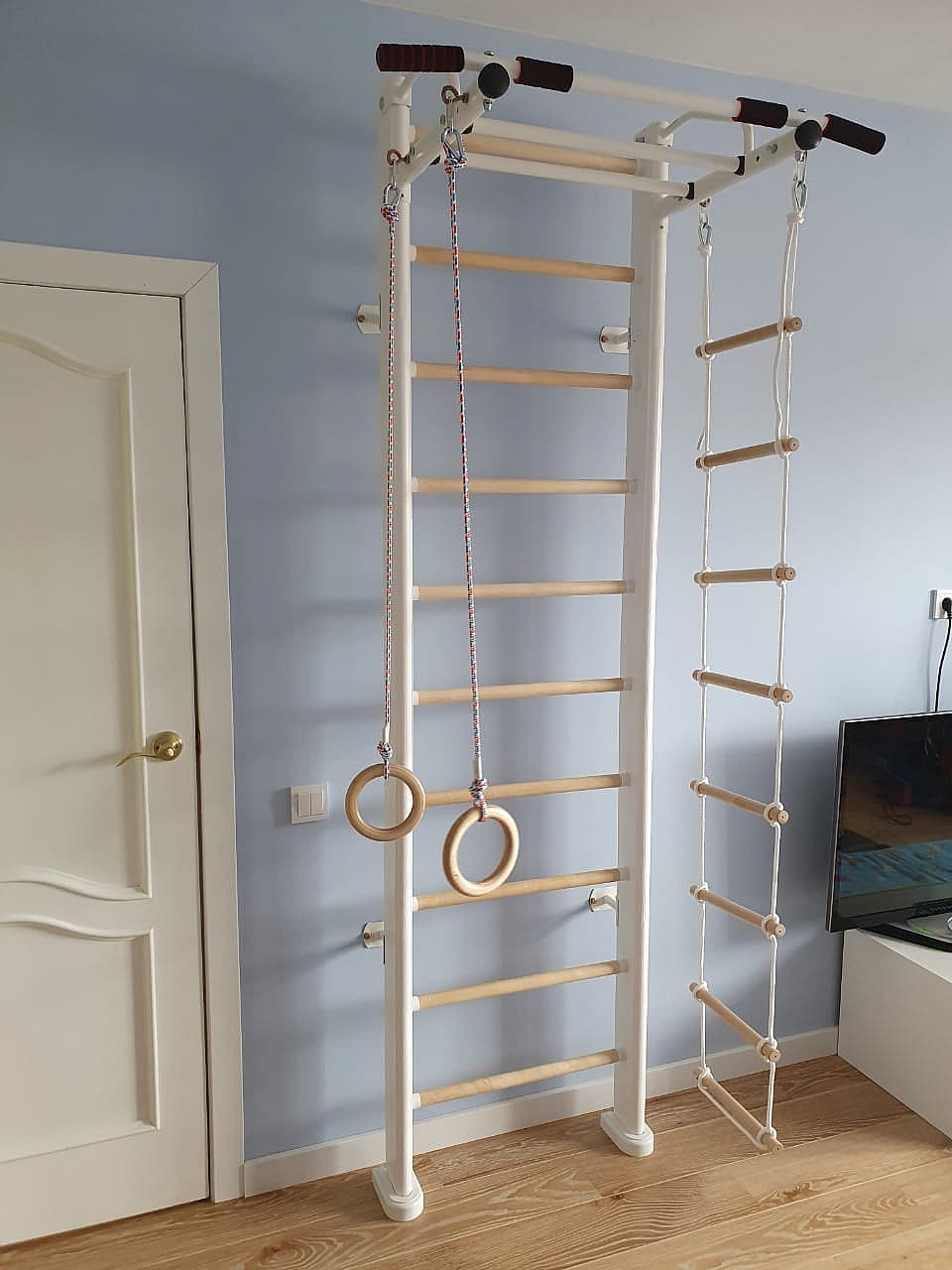
Universal wall bars
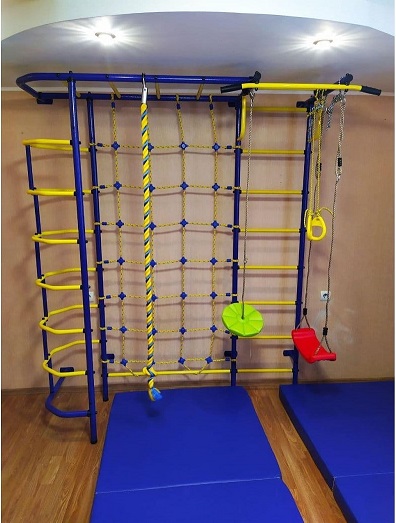
Tension-mounted wall bars

Professional wall bars
A wide range of wooden sports products in our catalogue
Besides wall bars, TigerWood offers other sports equipment made from wood-based materials that will interest a wholesale buyer. The range includes gymnastic parallel bars, pull-up bars, mats with wooden elements, playground complexes, balance boards and trainers. Each item is developed for its specific use and safety requirements, so it is not a generic blank but a piece of equipment for a particular task.
The range covers different scales — from a small gym to a large sports centre or educational institution. All products are made from the same materials — plywood, MDF, particleboard and melamine-faced chipboard — meaning a single standard of quality and durability across the whole line. On top of that, the products are tailored to individual requests, which sets the offering apart from suppliers with a rigid, off-the-shelf catalogue.
Wholesale buyers get a complete solution: several types of equipment, united by material and technology, can be ordered at once. This simplifies logistics — everything ships in one delivery — and cuts costs through scale. Combined with well-tuned production, this approach makes cooperation profitable both for retailers and for large buyers who equip entire facilities.
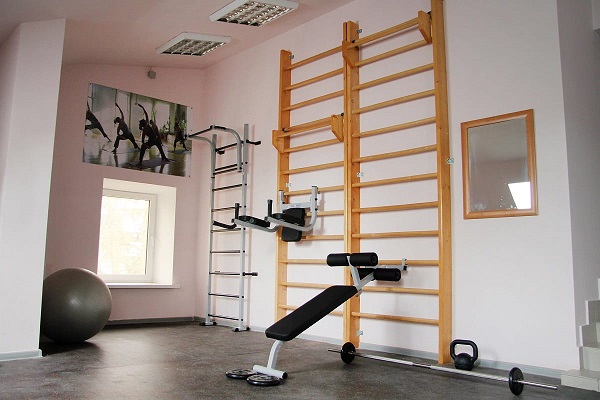
Our approach to working with wood when creating sports wall bars
Work on the equipment starts with selecting and preparing the material. For its wall bars, TigerWood uses only proven wood-based boards — plywood, particleboard, melamine-faced chipboard and MDF from reliable suppliers. Every batch is inspected on arrival: checked for defects, moisture content and density. For equipment that holds a person’s weight, this initial control is critical — a weak or damp board will later fail under load.
Next the material goes into precise machining: cutting, sanding, drilling holes for fasteners and routing contours. Modern equipment maintains high component accuracy, which removes play during assembly and adds strength to the structure. Surfaces are coated with compounds against moisture, fungus and damage, so the unit lasts a long time even in a high-traffic gym where it is used all day.
Working with the material also has an environmental side. Safety norms and environmental standards are strictly observed so the equipment is safe for health — especially in children’s and sports facilities where children train. The materials are certified and meet the regulations, meaning they contain no harmful substances or allergens, and such wall bars can be safely installed even in a kindergarten or school.
It is this end-to-end approach to working with wood that produces wall bars meeting high standards of quality and safety. For a wholesale client this is the key point: they buy equipment for years ahead, and what matters to them is the durability and usability of the unit, not one-off savings that turn into replacements and complaints within a season.
The types of wood and sheet-material processing we use
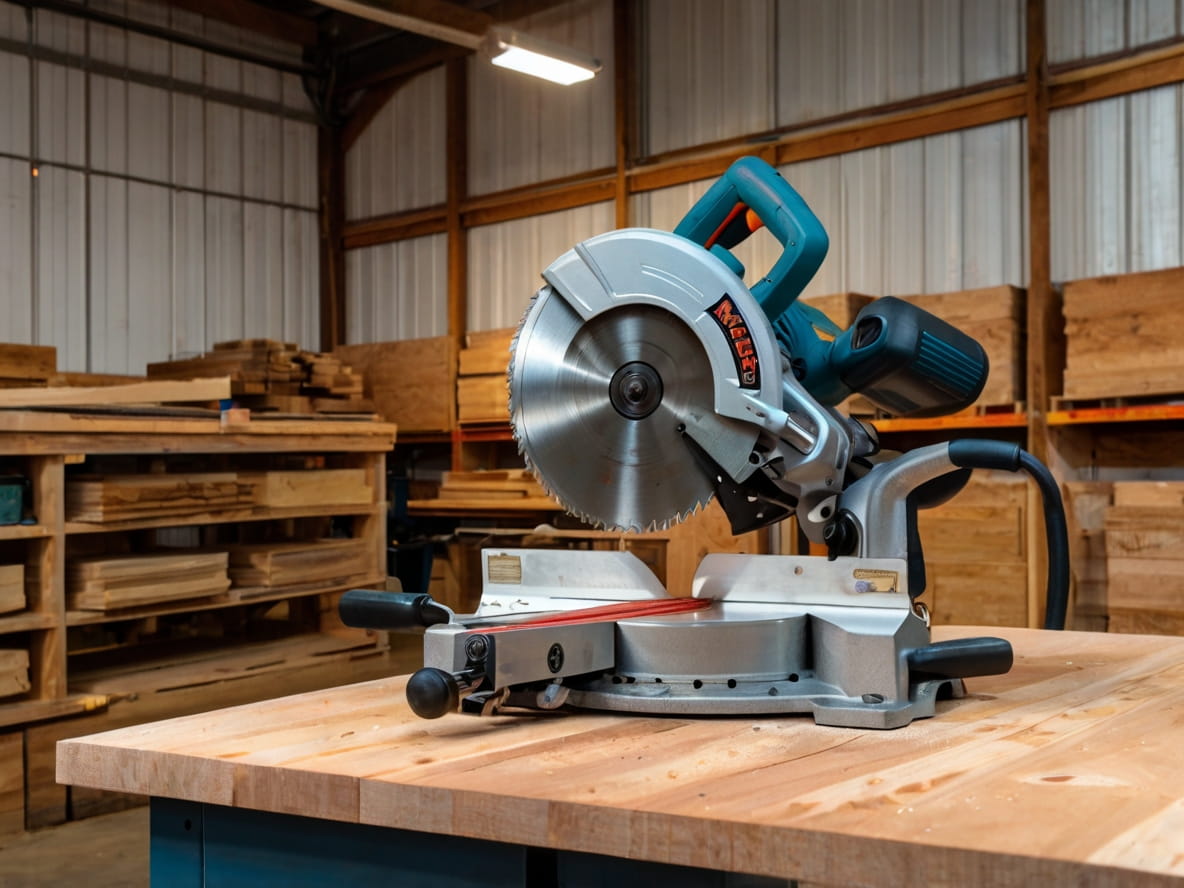
Cutting
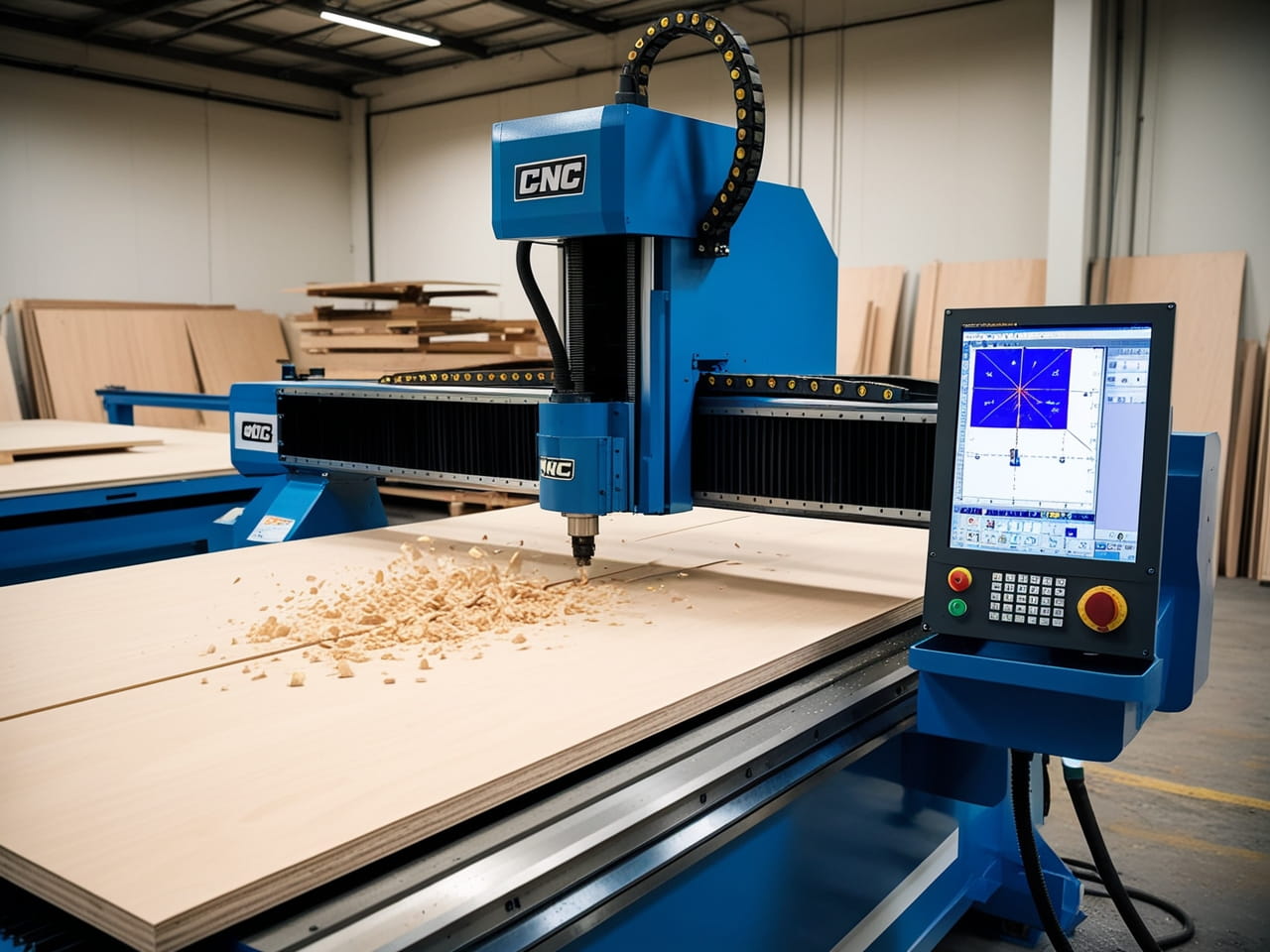
CNC

Cross-cutting

Drilling
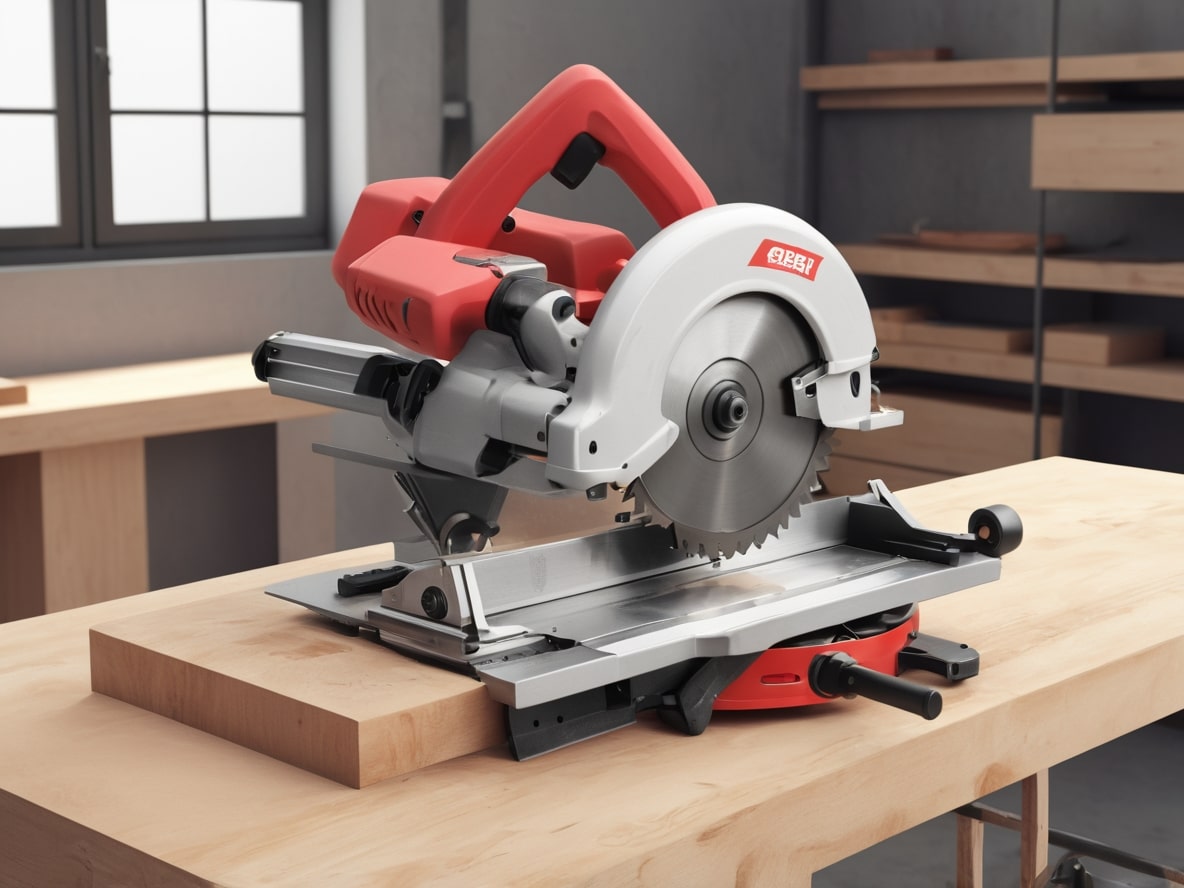
Sawing

Ripping

Machining
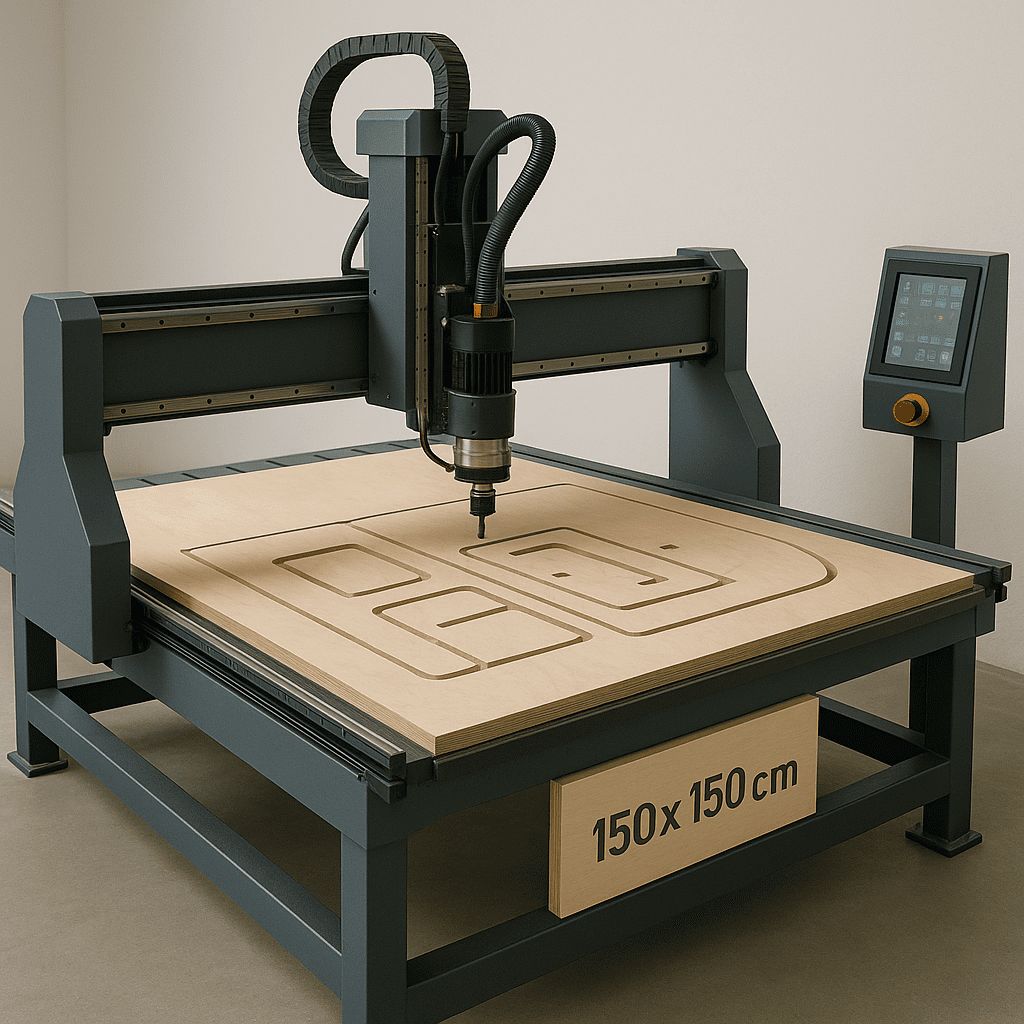
Cutting to size
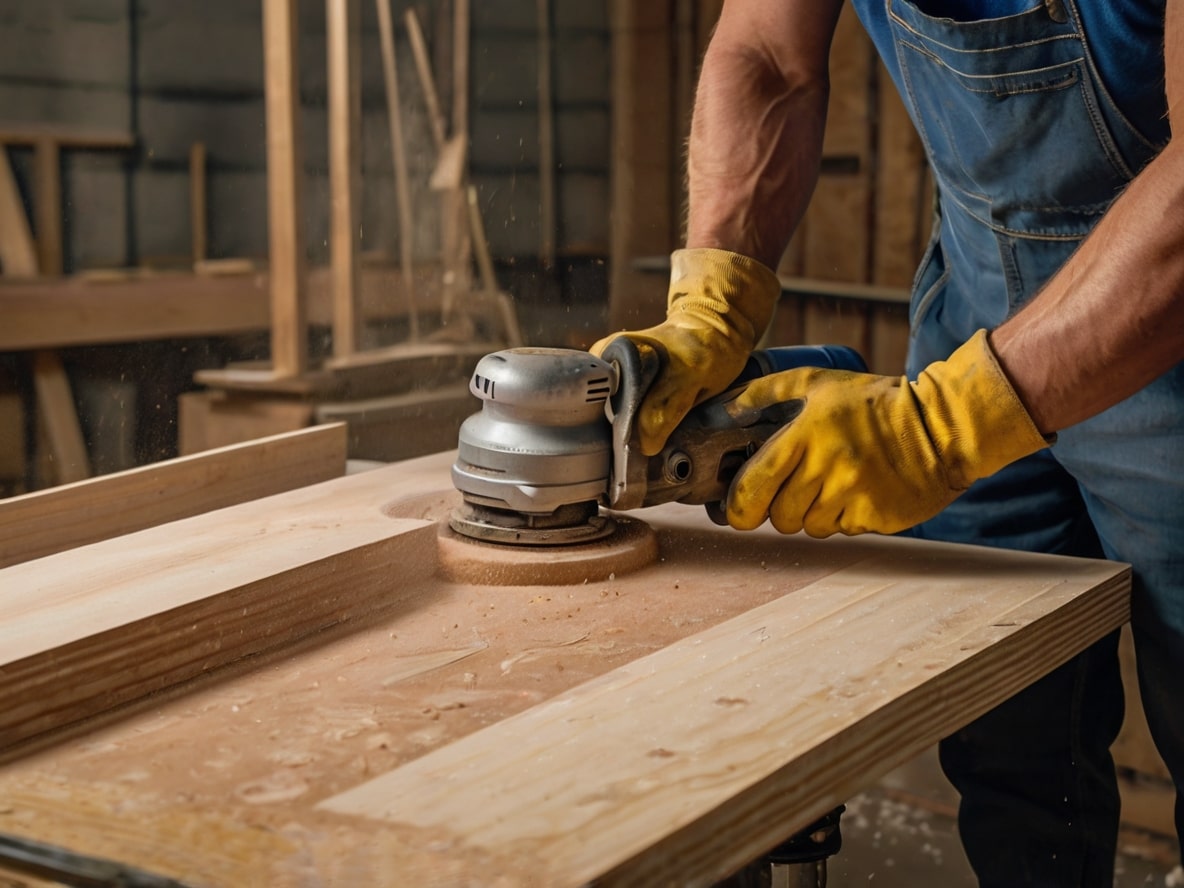
Sanding
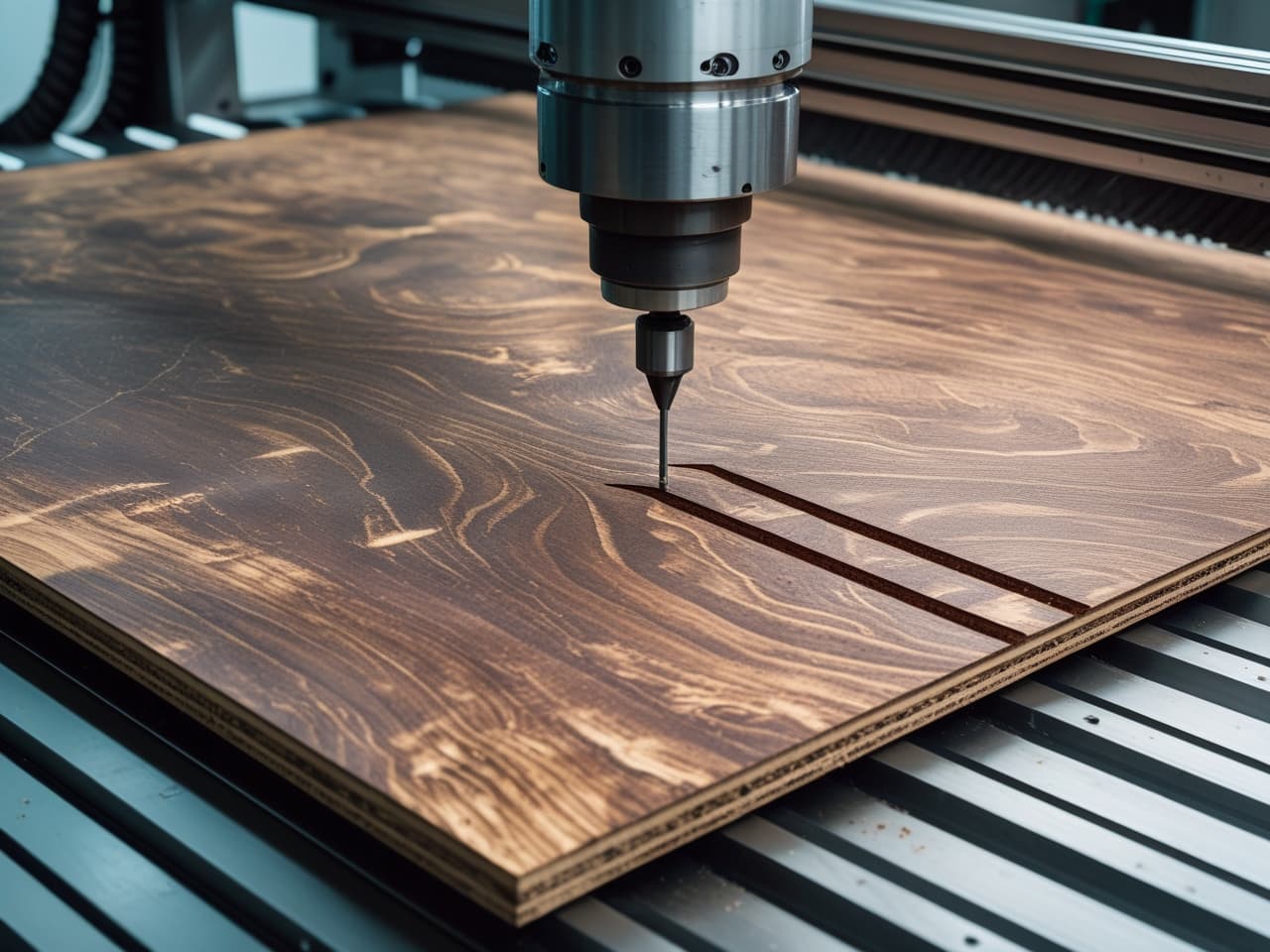
Grooving
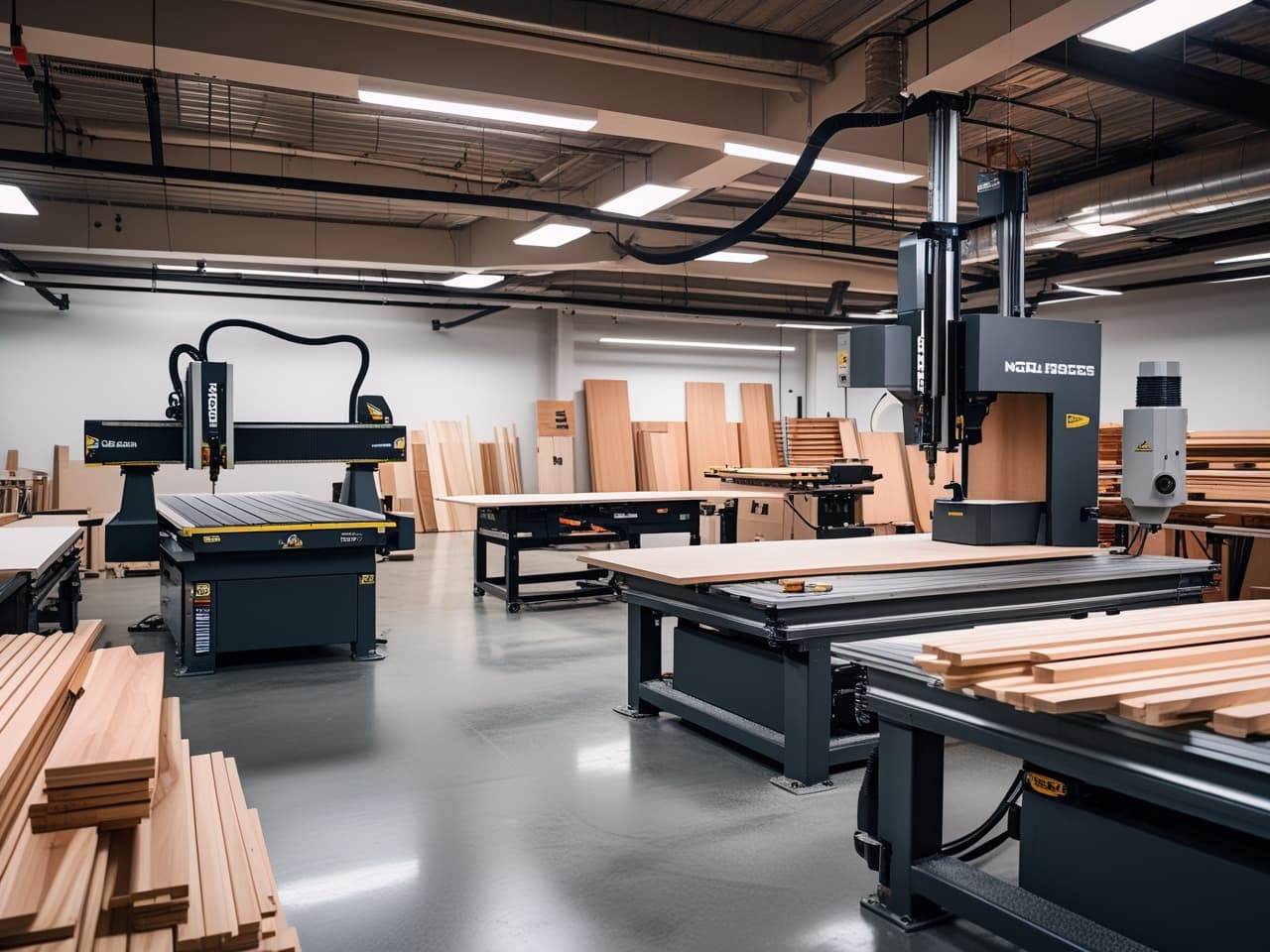
Milling

Painting
The manufacturing process of wall bars at TigerWood
Manufacturing a set of wall bars starts with design and technical documentation, which incorporates both the client’s requirements and safety regulations. Once the project is approved, the material is prepared — the boards are cut and machined into the structural elements. This preparatory stage sets all the subsequent accuracy, so it is not skipped for the sake of speed.
Next comes machining: cutting and routing the parts to the specified sizes and shapes. Everything here rests on precision: if the elements match the drawing, assembly goes smoothly and the structure comes out strong. The surfaces are then sanded to remove roughness — on equipment gripped by hand, smoothness matters not only for looks but so as not to leave a splinter.
Then comes assembly: the rungs, ladder elements and additional accessories — ropes, gymnastic rings — are mounted. Fasteners are selected for the load and operating conditions, because it is the joints that take on the weight and the jerks during exercise. The finish is treatment with protective compounds and lacquers that provide moisture and wear resistance, so the unit does not give way under daily use.
After assembly, all wall bars undergo quality control: strength, stability and compliance with technical requirements are checked. The finished unit is packed with transport in mind so it reaches the client intact anywhere across Europe. Thoughtful packaging is no trifle here — a large-format unit is easily damaged in transit, and breakage means missed deadlines and returns.
The production stages of woodworking and manufacturing
Why choose TigerWood for wholesale supply of wall bars
TigerWood stands out in the sports equipment market through a comprehensive approach and an understanding of how wholesale supply works. With wall bars, attention is paid not only to the material and assembly but also to tailoring to the client’s needs — whether a retailer, a large supplier or an on-site contractor. Such a client gets not an abstract product but a solution built around their way of working.
A particular strength is the modern board-processing technology that gives the products accuracy and strength. Plus flexible terms: you can take standard models or order equipment to custom sizes and design. This suits those who work across several segments at once — from budget school wall bars to premium models for fitness studios — and do not want to look for a separate contractor for each segment.
Logistics and support are another important point. Supply is organised across all of Europe, so a wholesale client can count on stable, on-time receipt of the products rather than surprises with deadlines. Such a system reduces risks and boosts the efficiency of the partner’s business: the equipment arrives by the required date, and the facility opens on schedule.
Finally, the products comply with safety and environmental norms — for sports equipment this is essential. Such compliance adds confidence for clients who work with government and commercial customers that impose strict requirements. With wall bars that meet the regulations, it is easier to pass acceptance on a public contract and not risk missing the handover of a facility.
What sports goods are made from wood
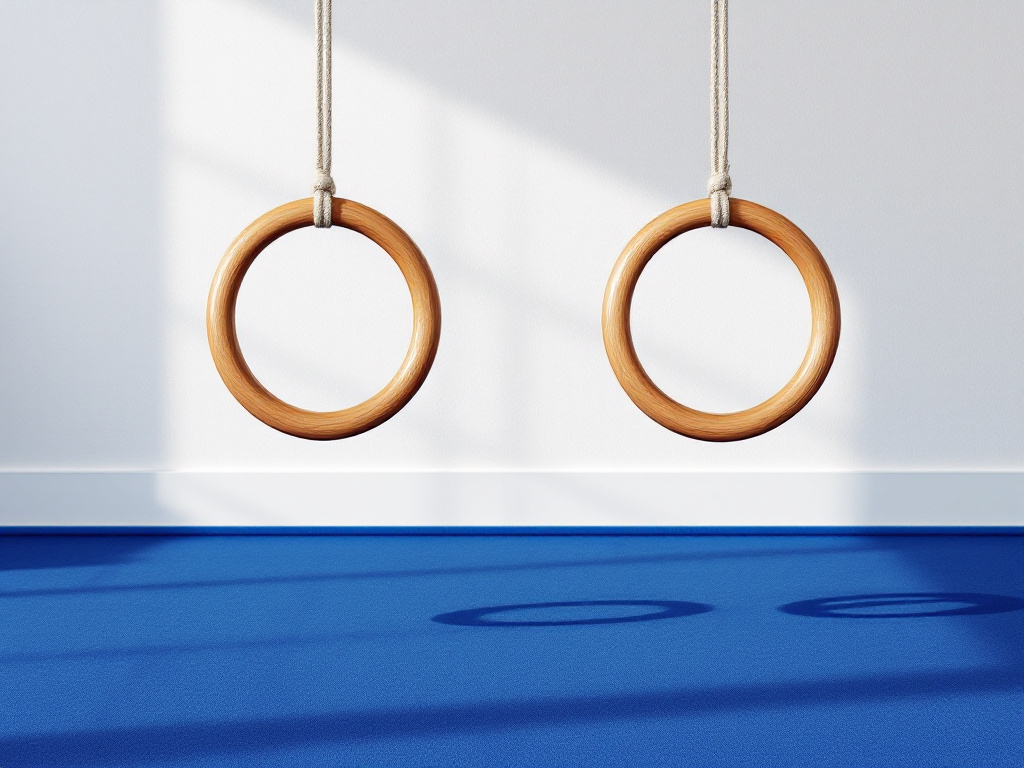
Gymnastic rings
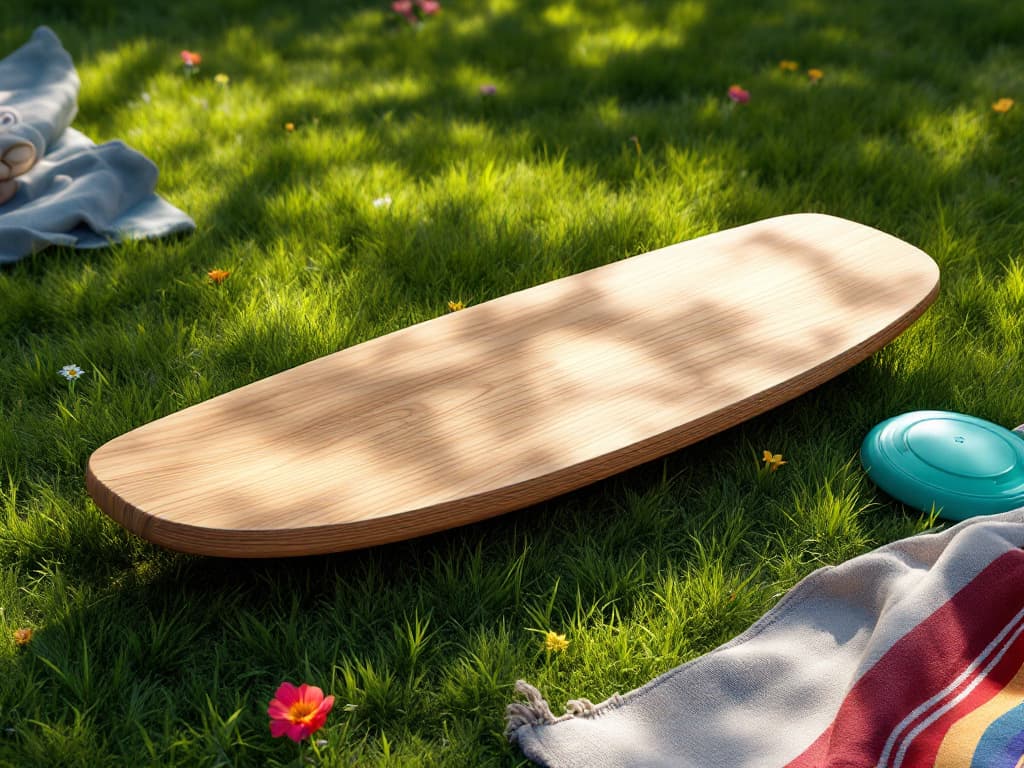
Balance boards
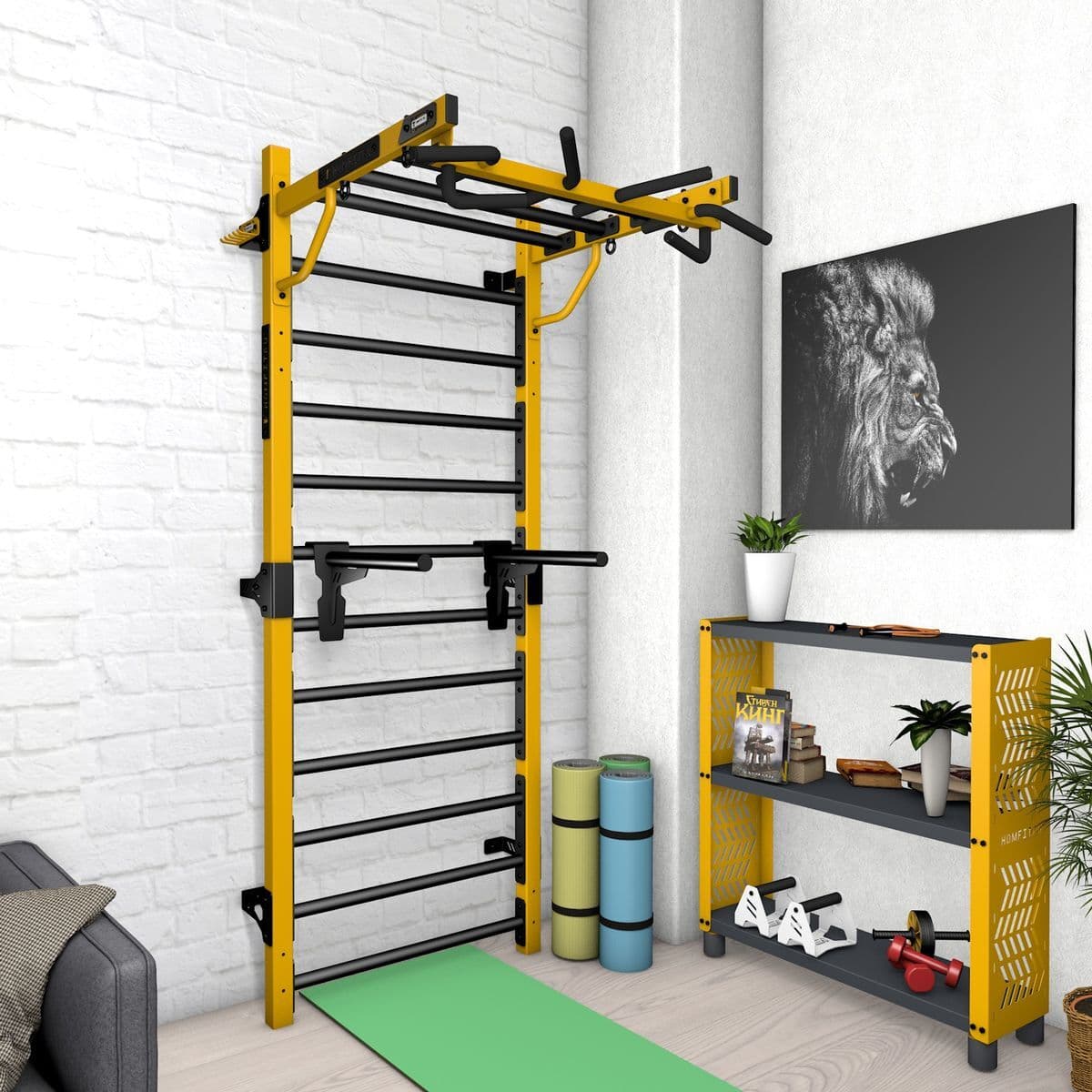
Wall bars

Fitness goods
Push-up bars
Training goods
Wooden solutions for any segment: an overview of our other product categories
Wall bars are not the end of the TigerWood range — alongside them come many other categories for the sports, domestic and commercial spheres. Each is developed for its own specifics and the demands of wholesale buyers. Popular directions include children’s furniture, wooden interior decor, goods for outdoor recreation and the garden, and kitchen, office and warehouse furniture, so several needs can be covered with a single manufacturer.
Each category has its own technology, but the approach is shared — quality wood-based boards and end-to-end control at every stage. Clients from different industries, from retail chains to private producers, are offered individual solutions that account for safety, ergonomics and appearance. Thanks to a single standard, a customer can extend cooperation into new directions without re-checking quality each time.
In the sports section, besides wall bars, there are other trainers, benches, gymnastic complexes and accessories. All of them are designed for intensive use in gyms, educational institutions and on playgrounds. Each item is taken both on its own and as part of a complete fit-out — when a facility is equipped as a whole in a single style, rather than buying equipment one piece at a time from different suppliers.

Examples of our work and partner projects
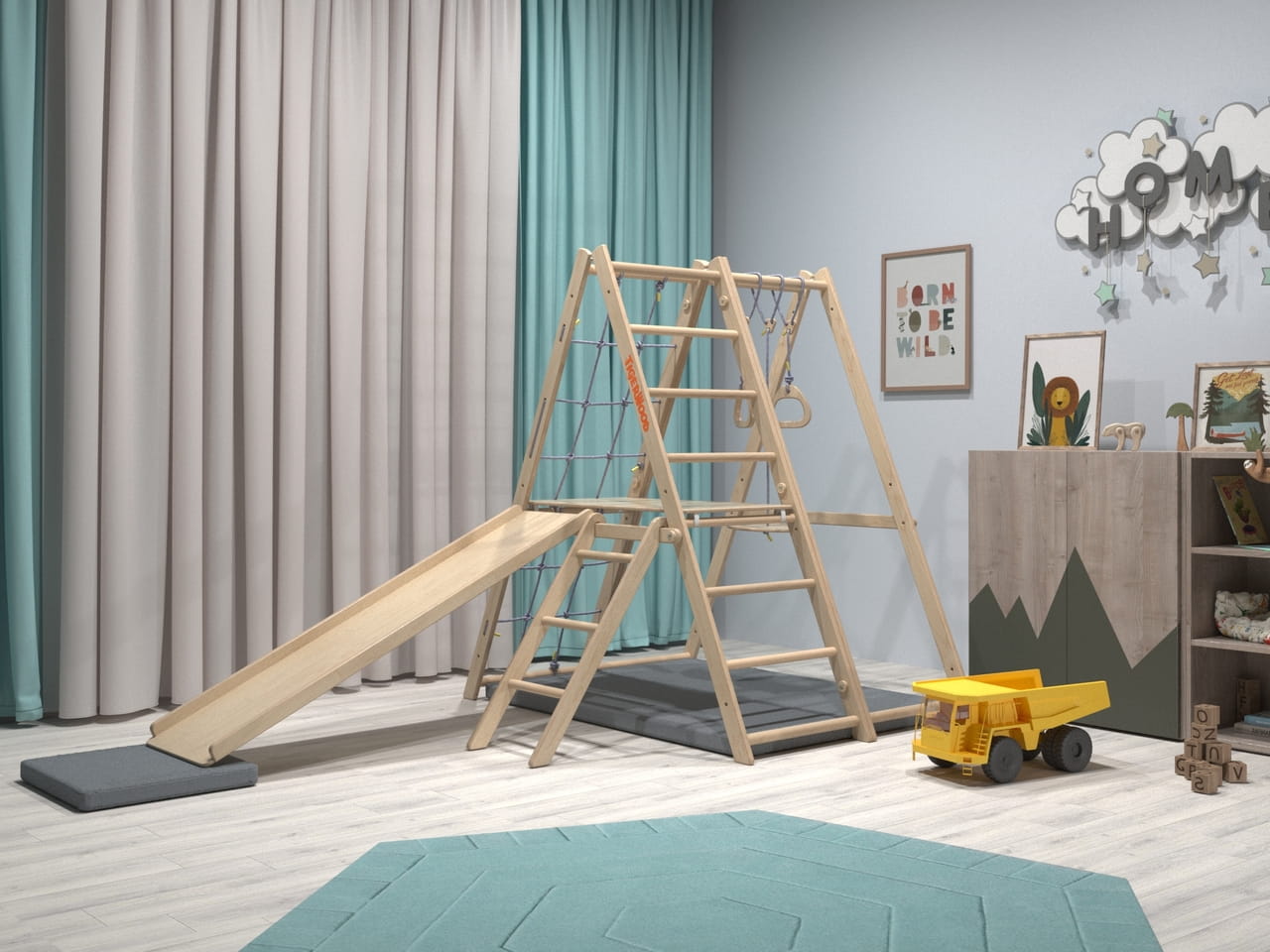
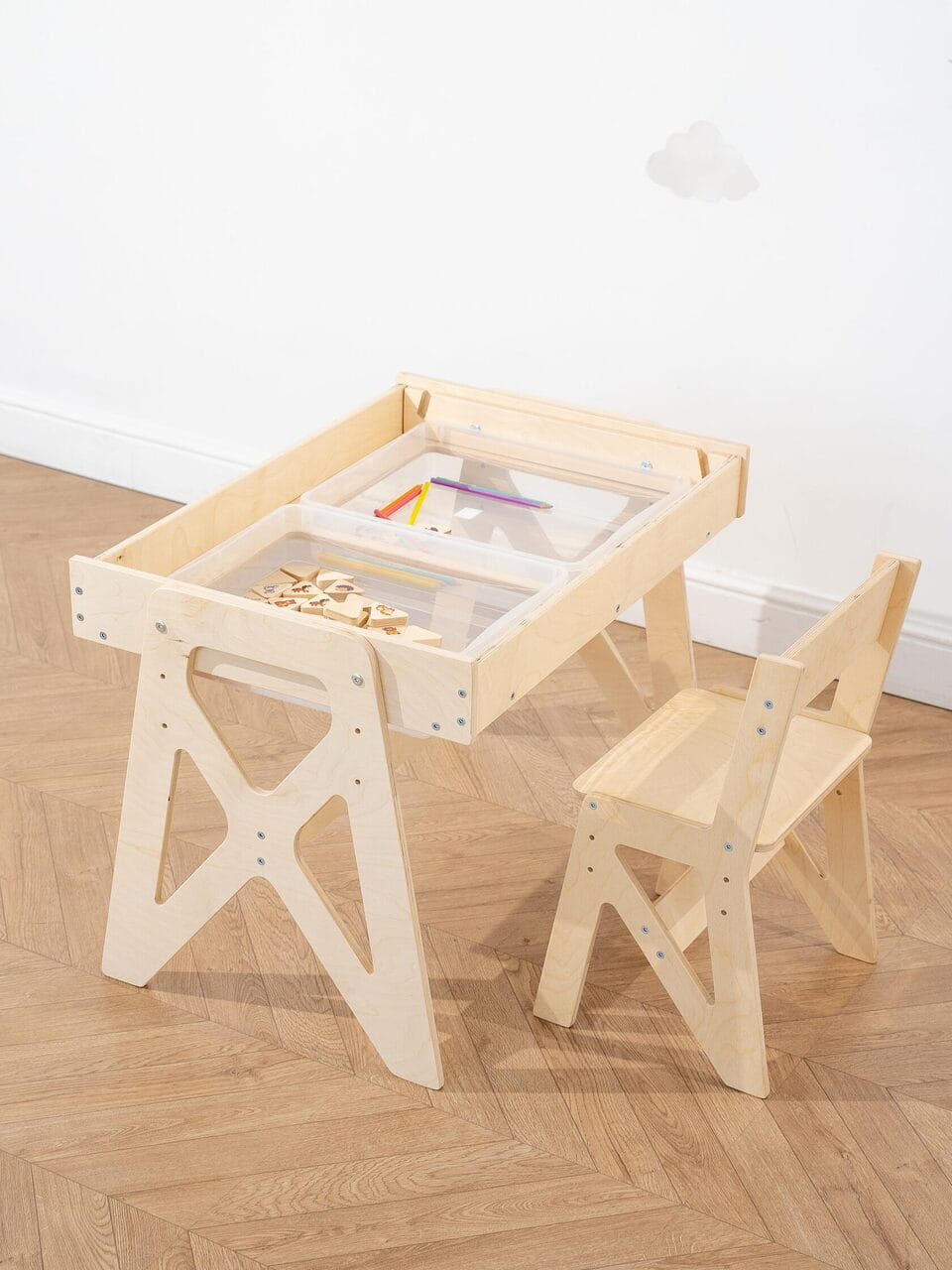
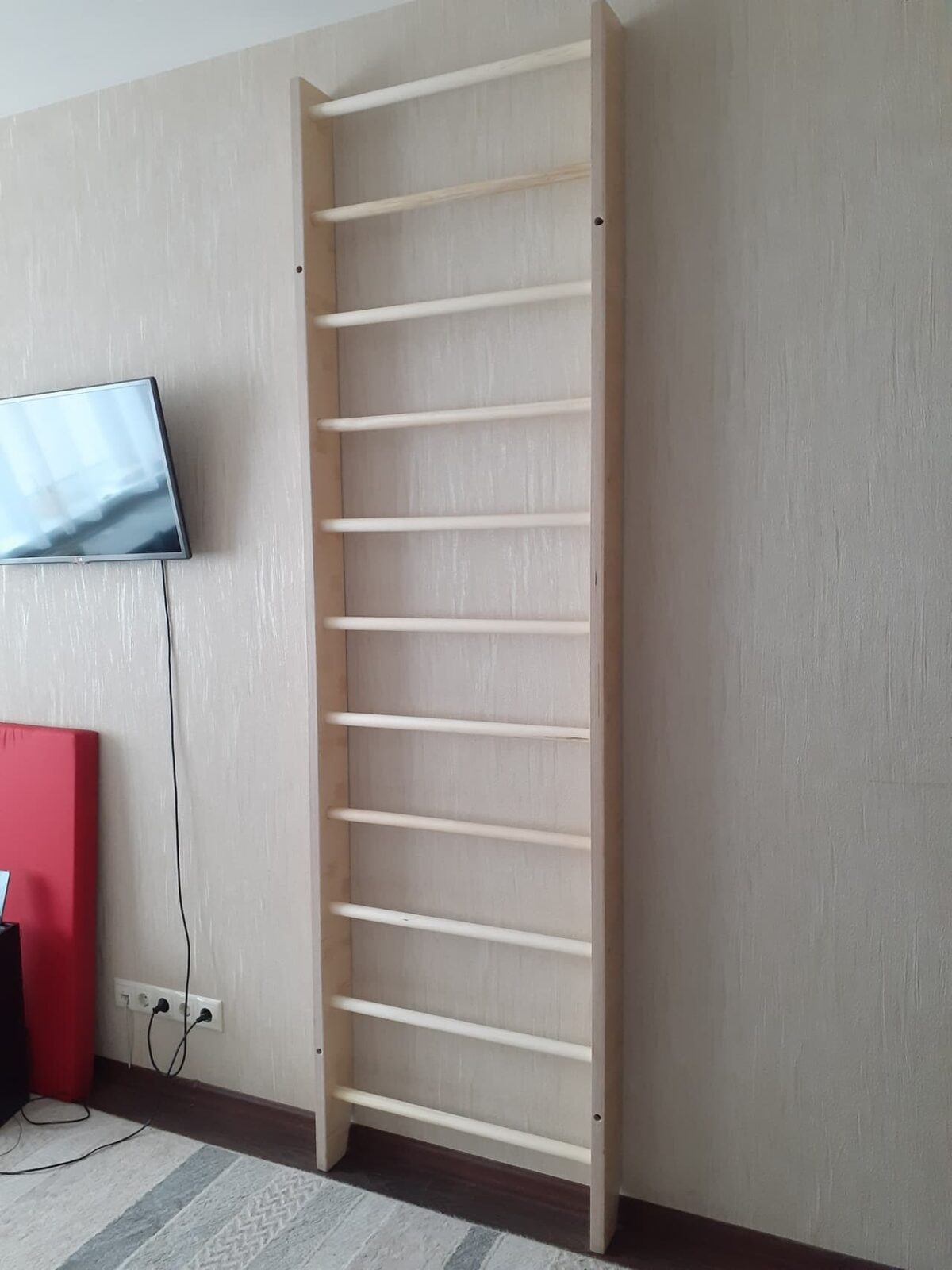

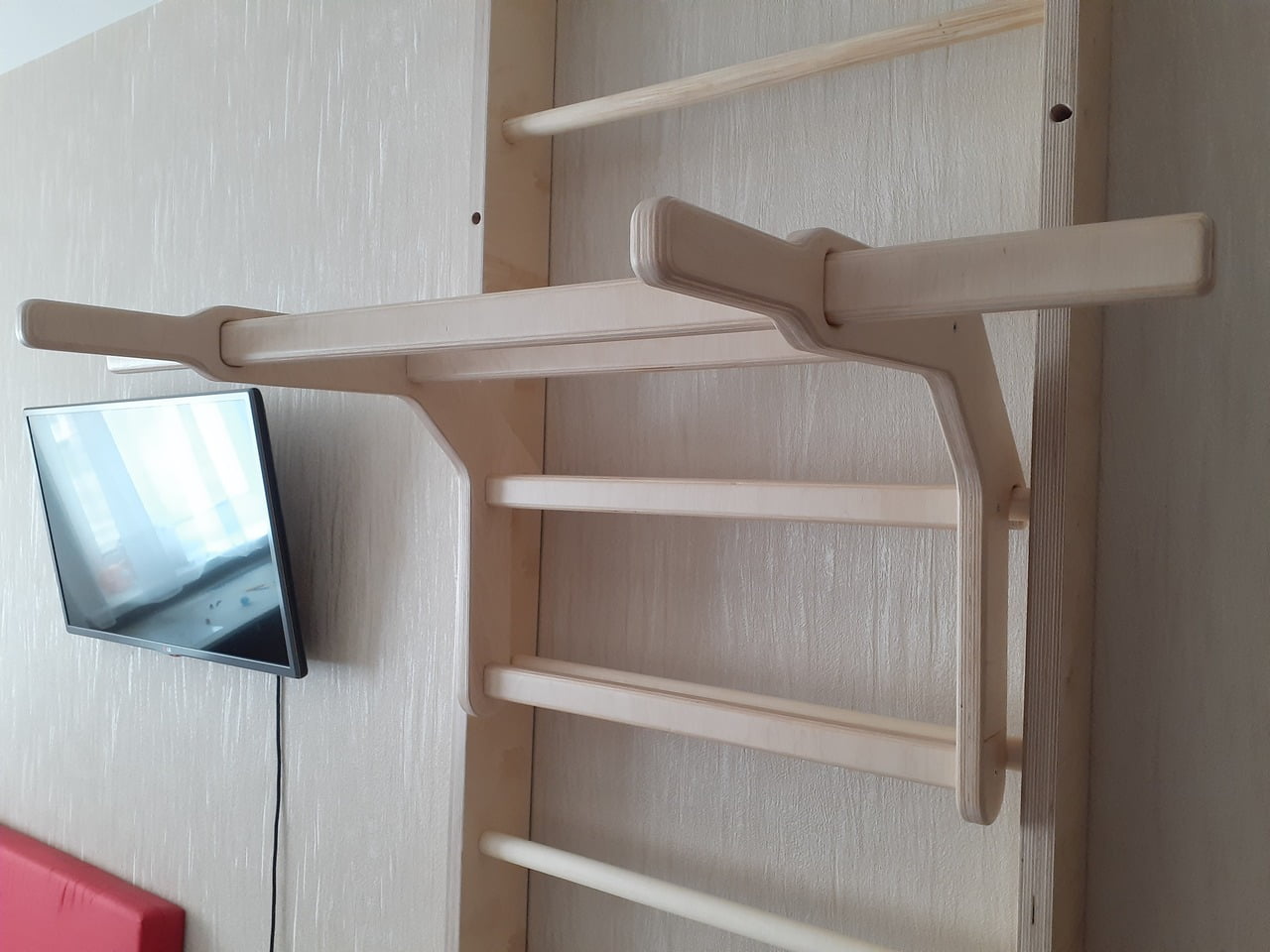
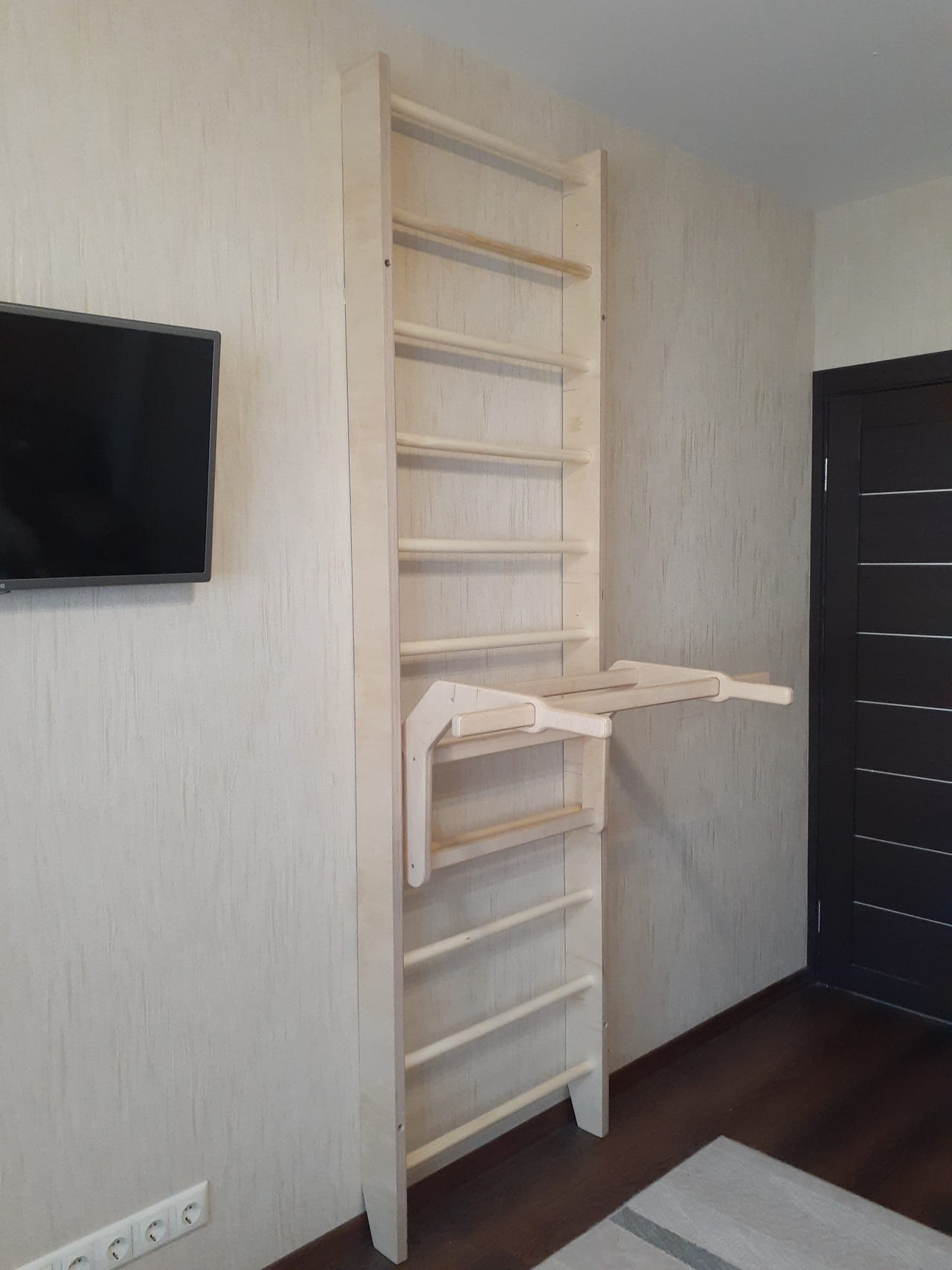


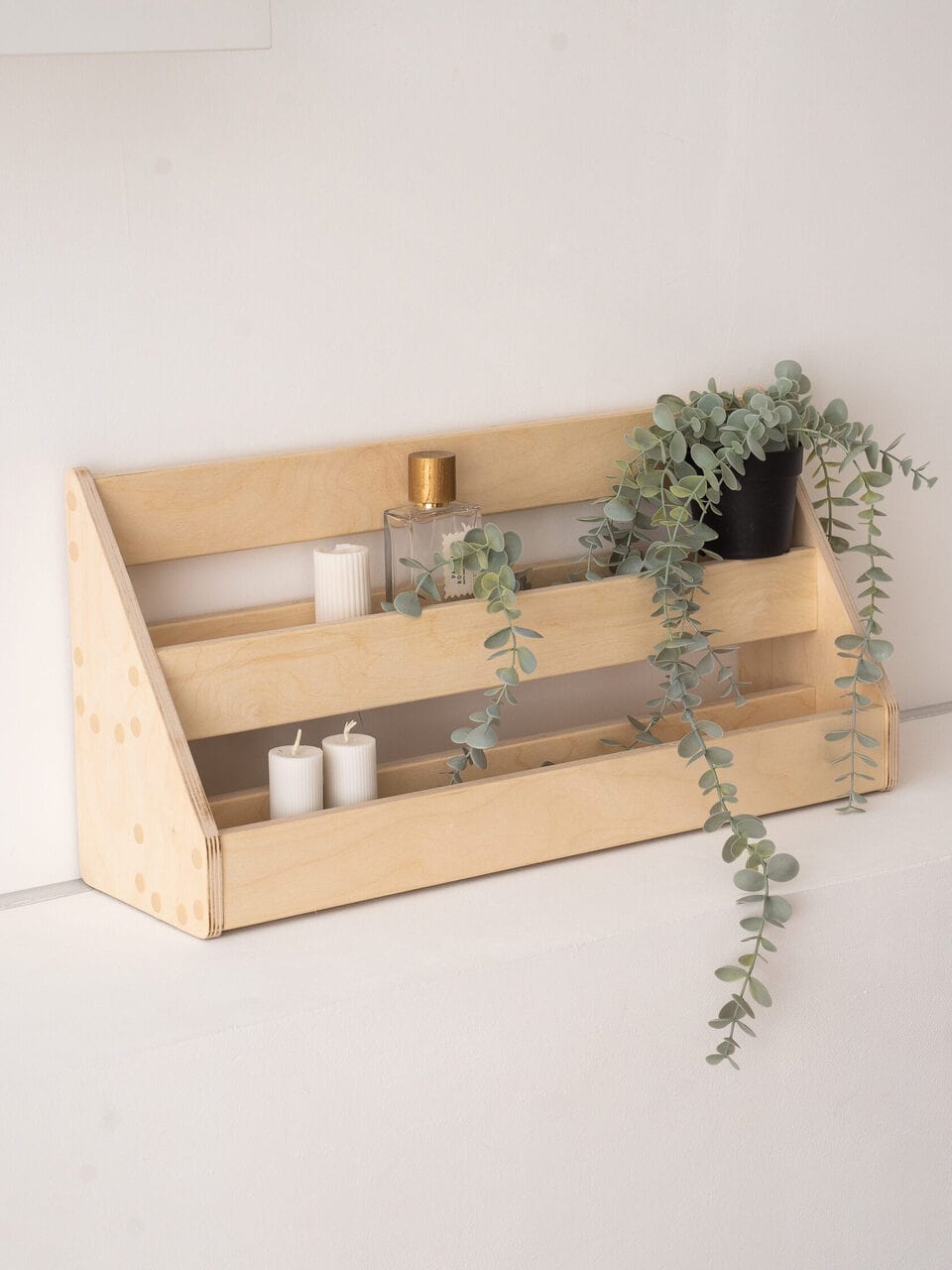
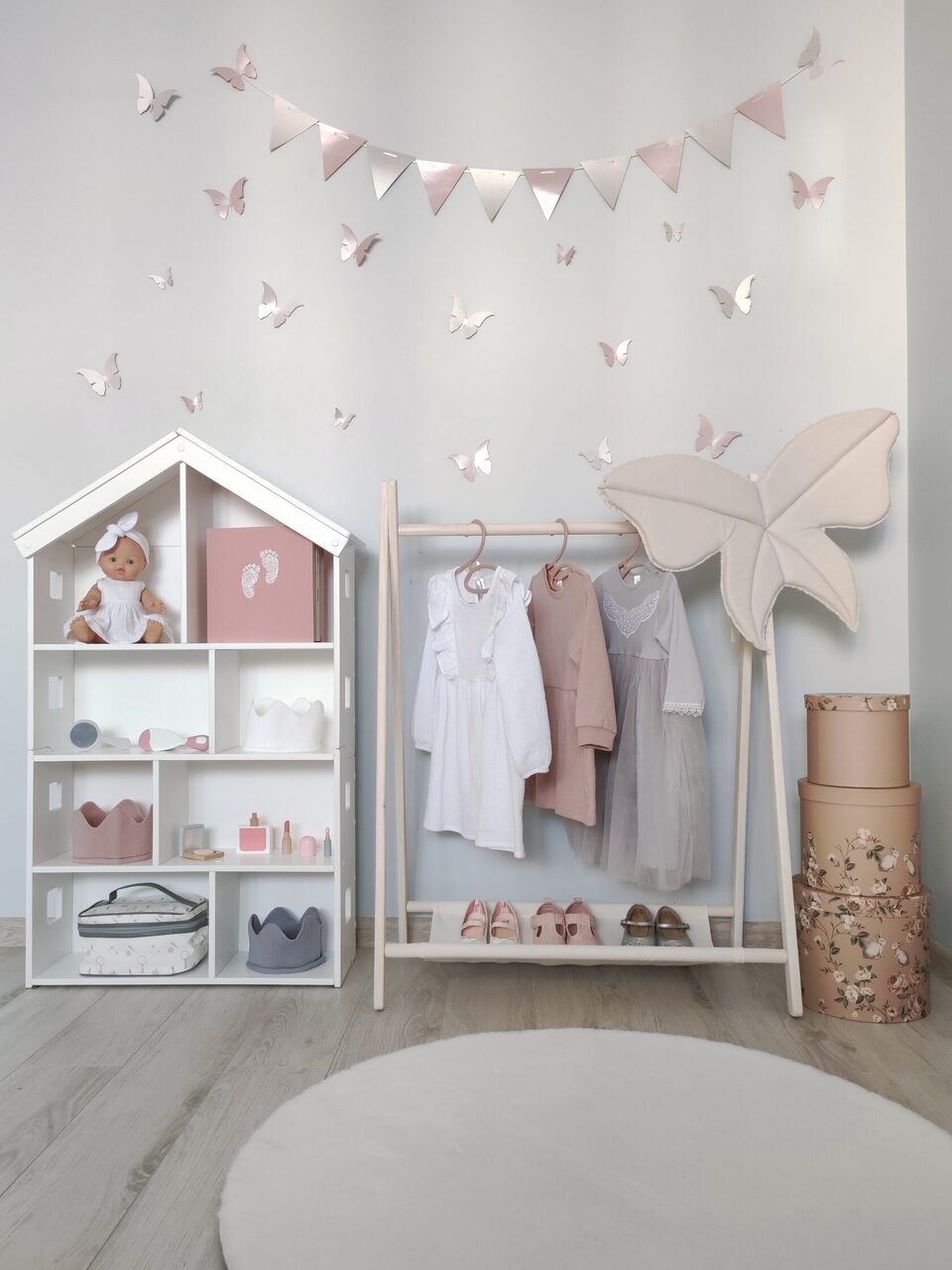
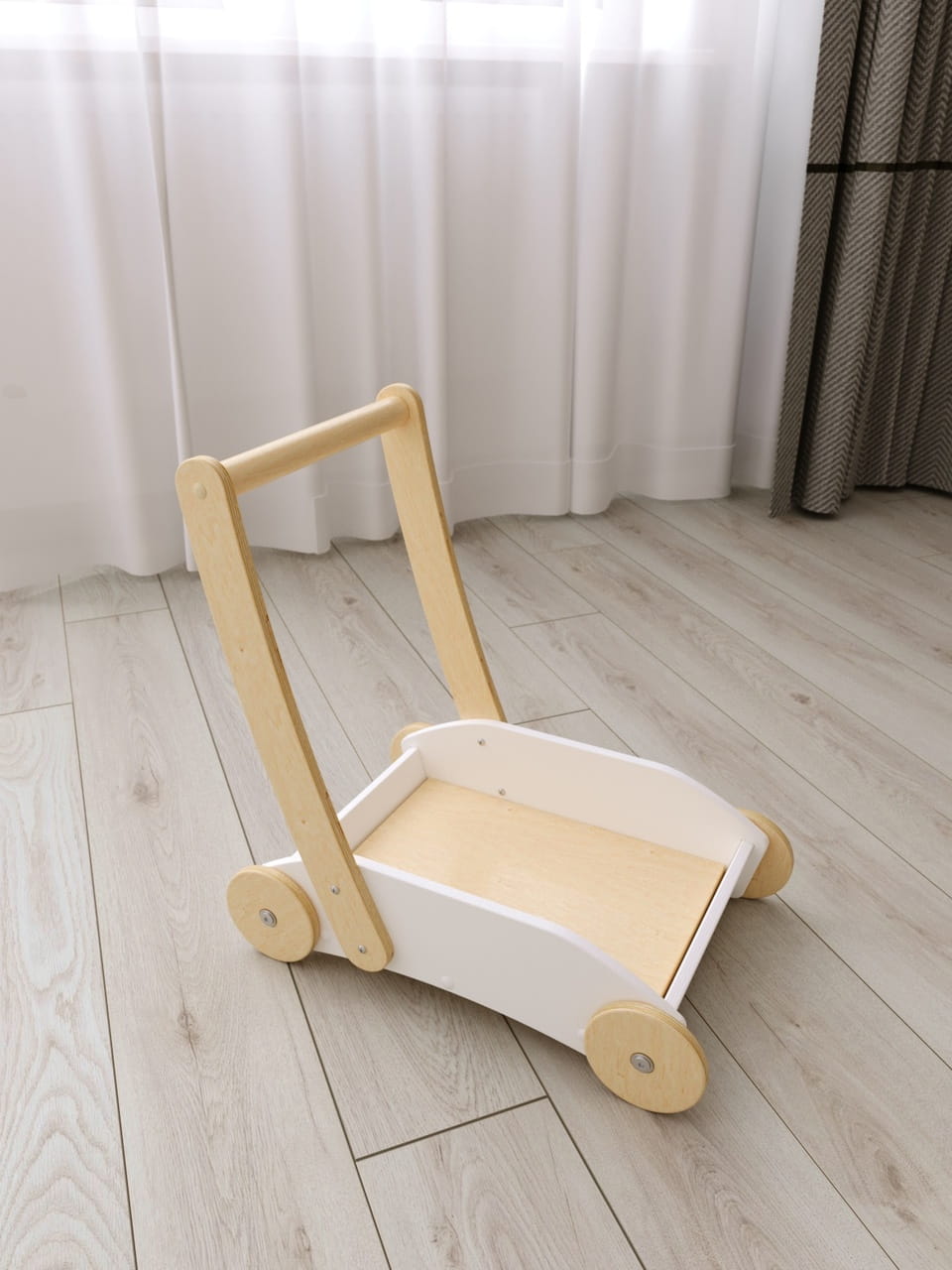

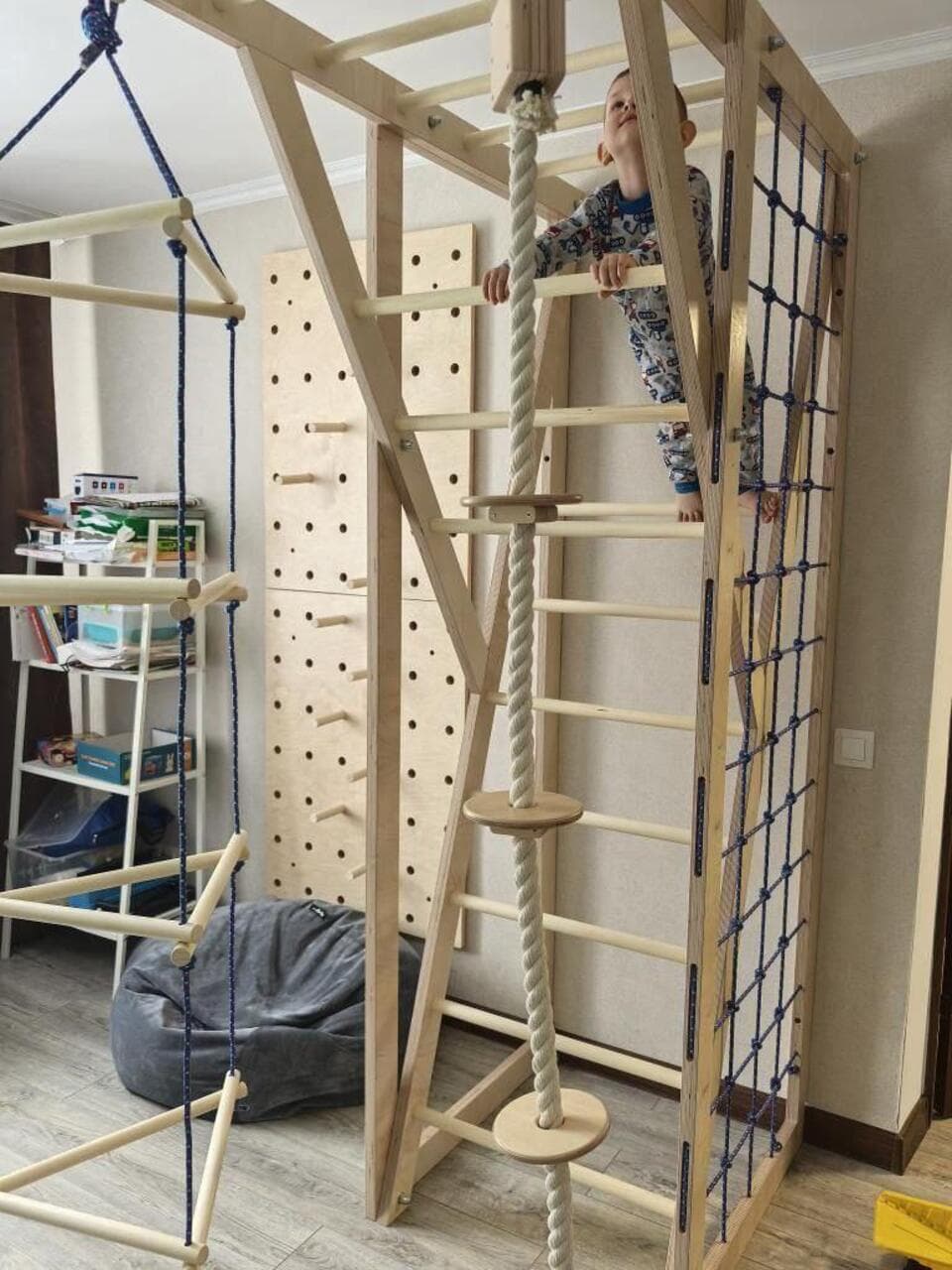
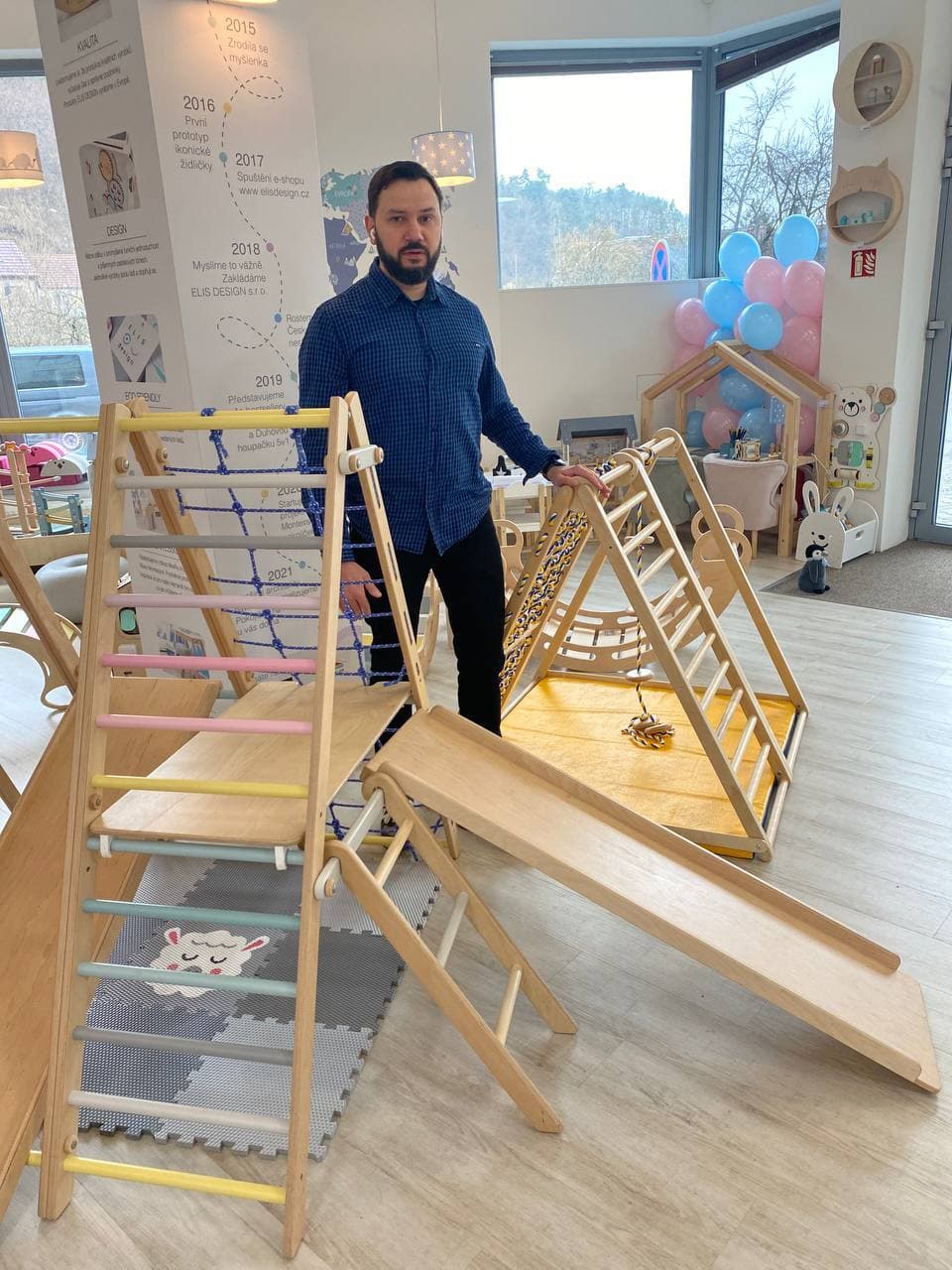
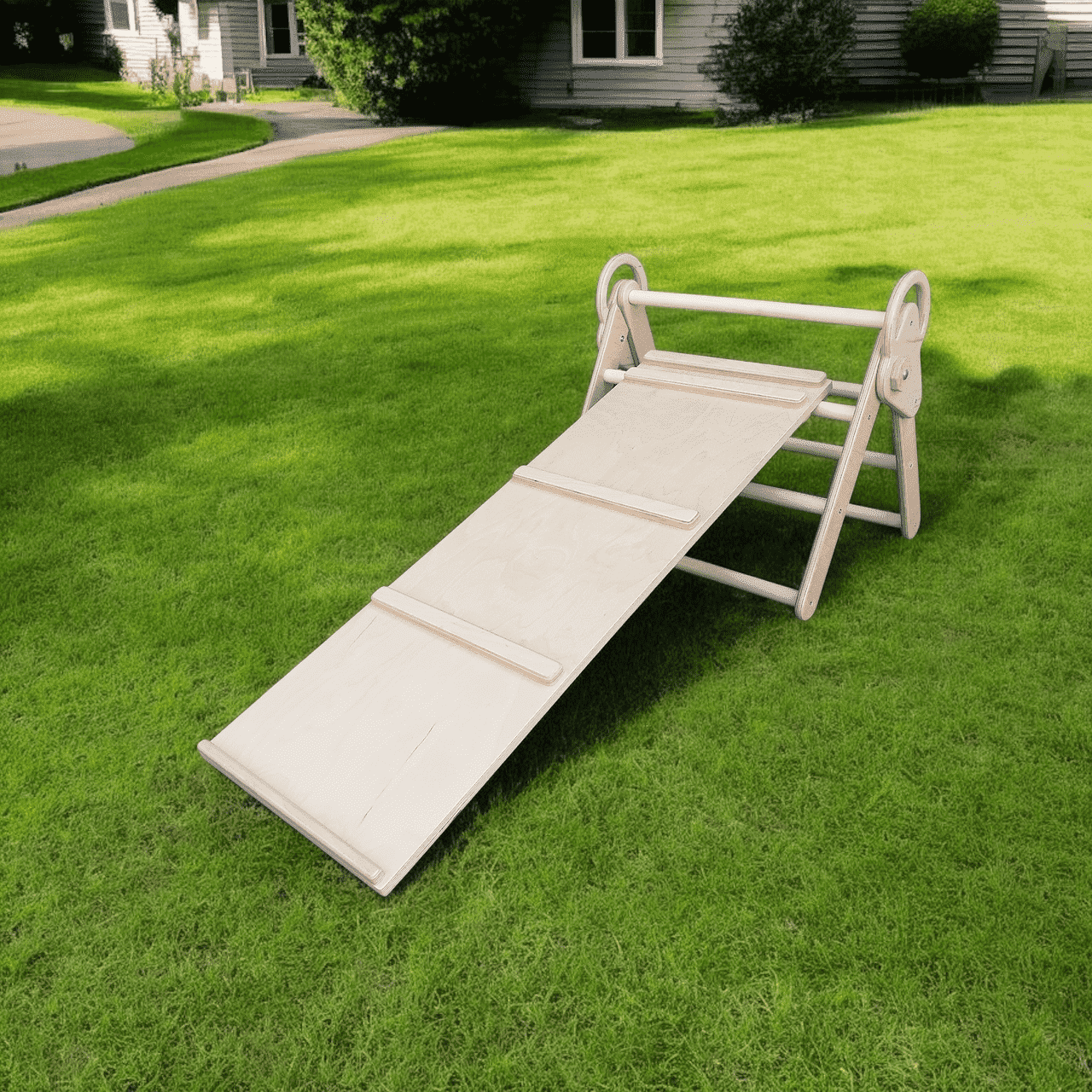
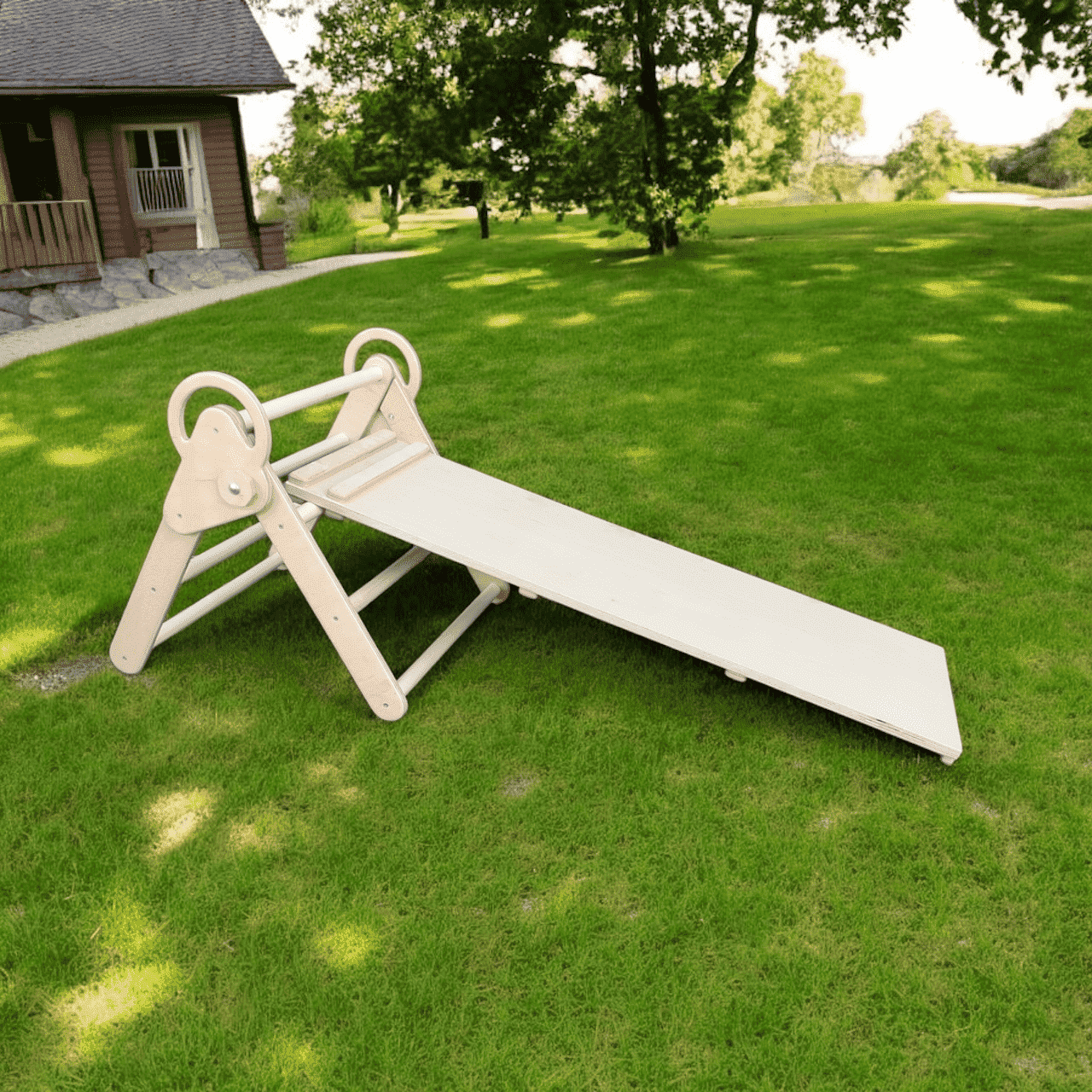
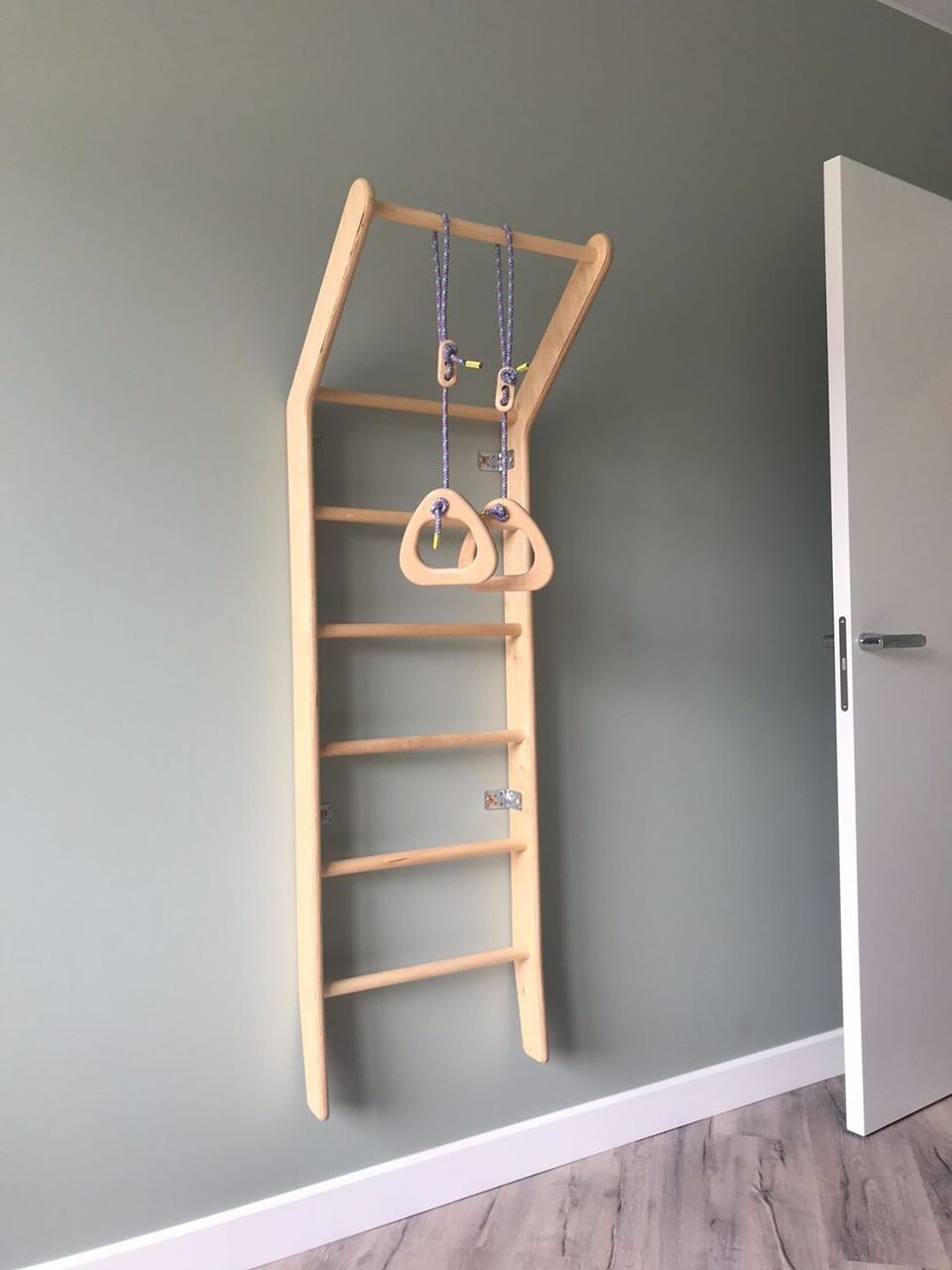
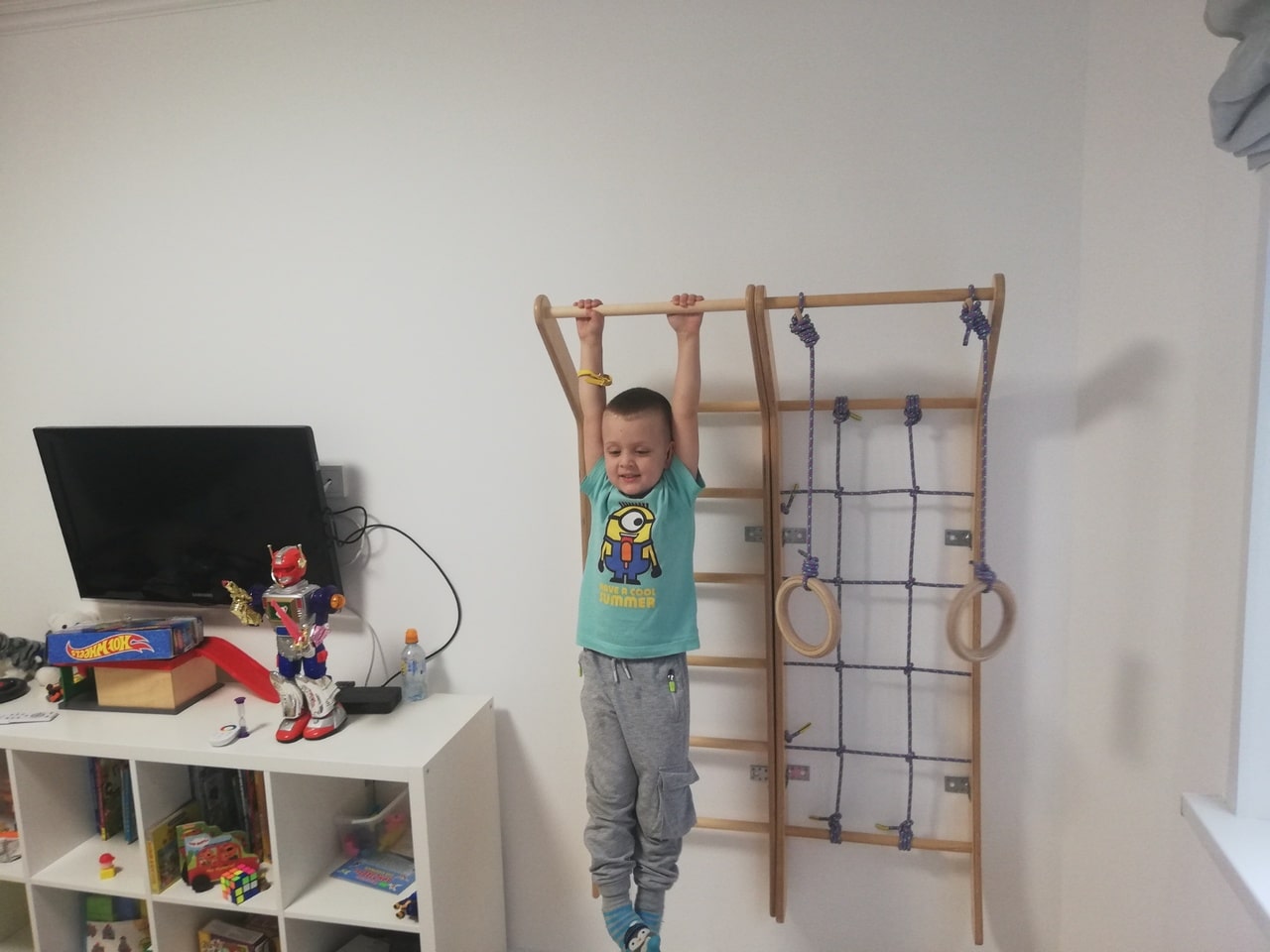
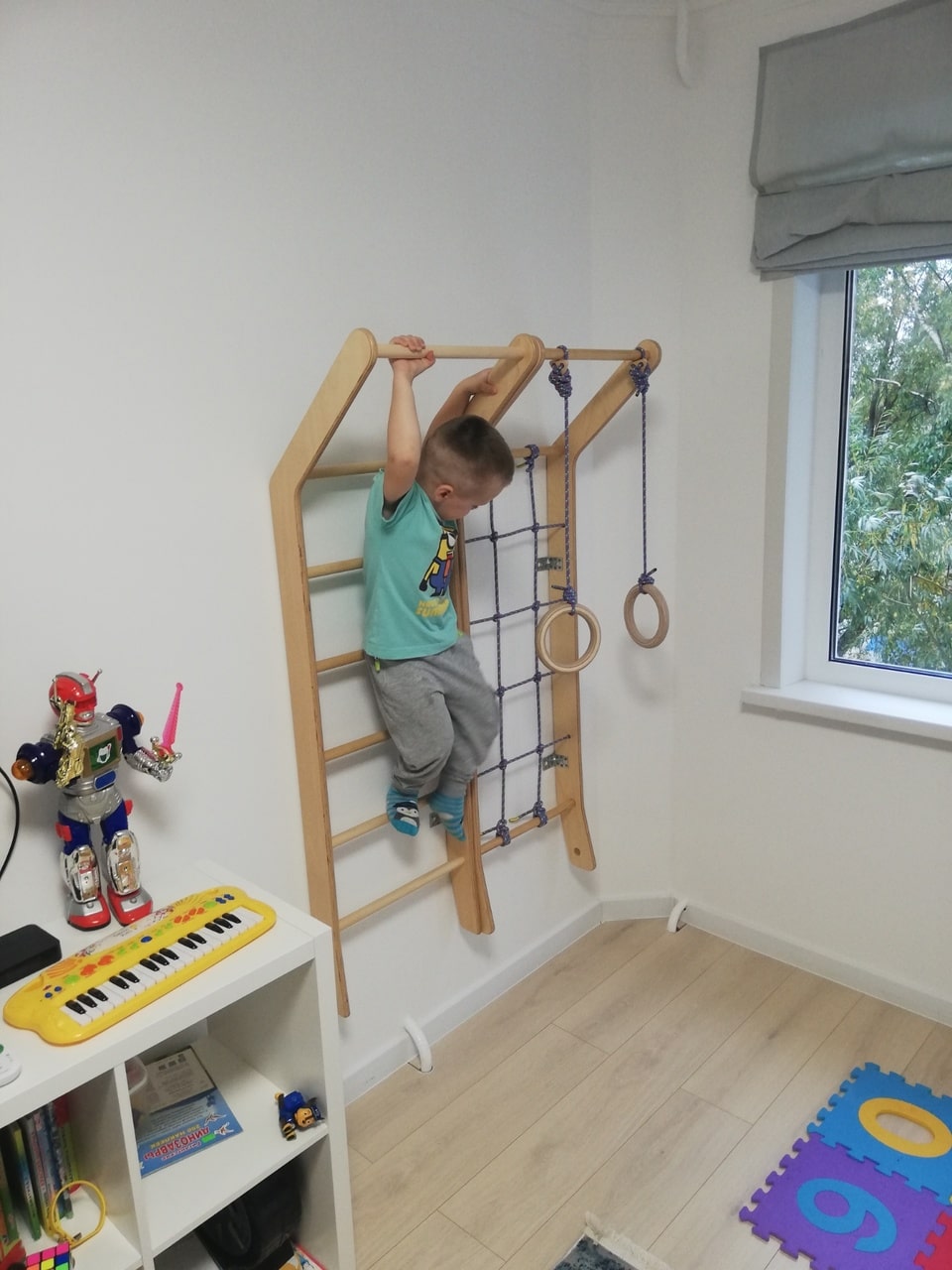

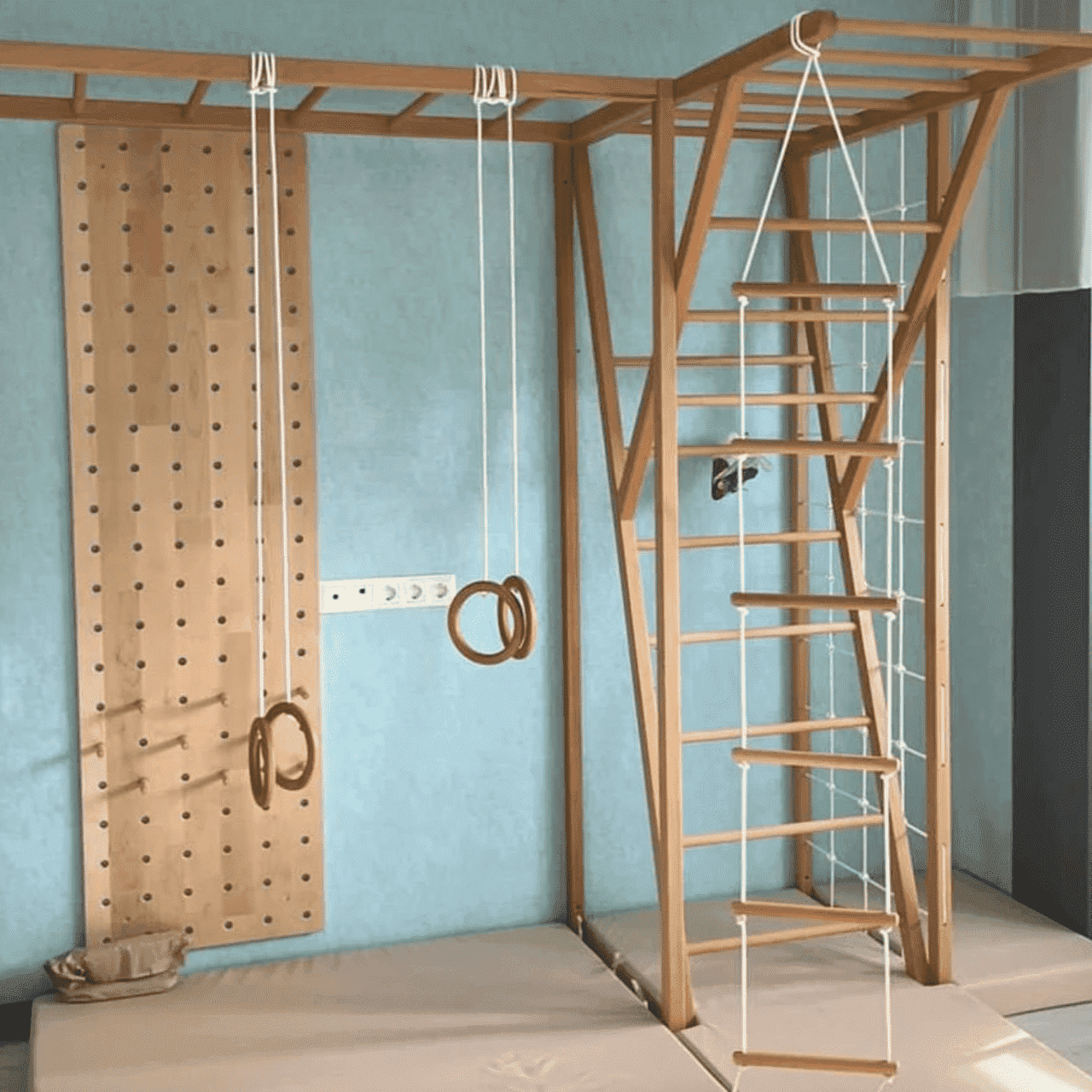
Wall bars: examples of completed products and installations
Completed wall bar orders clearly show how varied such projects can be. The portfolio includes dozens of large batches for government institutions, private schools, children’s sports centres, fitness clubs and retail chains working with sports equipment. Each of these customers came with their own requirements but went through one and the same proven technology.
Among the projects are supplies of wall bars for several sports complexes in Berlin, Warsaw and Prague. The products also went to equip private sports clubs and educational institutions in other European countries, including Austria. Such geography calls for well-tuned logistics and the ability to work with orders of different scale.
Each batch is built to the client’s specification: dimensions, permissible load, and requirements for design and mounting method are all taken into account. The products are finished in branded packaging, checked at final control and shipped with transport in mind. Orders are handled both to standard drawings and to individual layouts — a standard suits a school, while a fitness studio often wants something of its own.
Who already works with us

Cabinet furniture makers
Joinery workshops

Interior designers

Architects
Private craftsmen and artisans

Online sellers

Advertising agencies

Set designers

Restorers
Toy manufacturers
Artists and sculptors

Construction companies

Exhibition equipment manufacturers

Educational institutions

Sports equipment makers

Wooden packaging manufacturers

Private customers

Shops and boutiques

Manufacturing enterprises

Restaurants and cafés
TigerWood’s circle of customers is broad: trading organisations, specialist sports equipment shops, distributors, regional representatives across Europe, as well as companies equipping children’s centres, gyms and educational institutions. Each has its own purchasing specifics, and both the volume and the terms are adapted to it, rather than handing everyone a single price list.
The key customers are business structures that need quality products at a competitive price. For them, stability of supply, the option of customisation and compliance with certification matter. A separate strand is work with contractors on public contracts to equip sports facilities and schools — there the requirements for documents and safety are especially strict, and equipment that meets the regulations helps pass acceptance without delays.
Many work with TigerWood on an ongoing basis, regularly reordering batches to replenish the range in their shops. Among the buyers are also project organisations that build wall bars into large integrated facilities — kindergartens, gyms, leisure centres. For such projects it is convenient that the equipment can be ordered in a single style with the rest of the fit-out and on one delivery schedule.
Everything about the manufacture and wholesale of wall bars: a detailed overview
Construction and safety
Wall bars are a multifunctional piece of equipment that combines compactness, reliability and versatility. Wood-based materials with high strength and stable geometry go into production. Plywood and MDF work in load-bearing and decorative elements, while particleboard and melamine-faced chipboard go into structural and facing parts. This distribution keeps a balance between strength and price: where load is needed, a strong material is used; where appearance matters, a neat facing.
All products are designed with an eye to technical standards and sanitary norms — this is critical when the equipment is installed in a children’s facility. The customer receives products that are safe for health and built for intensive use. For a school or kindergarten, compliance with norms is not a formality but a condition for the equipment being accepted for installation and cleared for use at all.
Materials and technology
Production capacity allows orders of any volume to be taken — from a single unit to a large batch for a chain. A dedicated cutting and machining scheme is calculated for each product. CNC routers, sanding machines, presses for gluing and equipment for paint-and-lacquer finishes are all in use. Such a fleet gives both precision and repeatability, without which a serial order loses its point.
Processing goes in steps: preparation and drying of the material, panel cutting to size, sanding, forming, assembly, painting and packaging. At each step there is a check, so production errors are cut off along the way rather than surfacing in the finished item. It is this step-by-step control that keeps quality even across the whole batch.
Individual approach and logistics
Any client can place a custom order — for the room’s dimensions, the design, the age of those training and the required configuration. At the project agreement stage, TigerWood provides technical support: it helps choose the height, the set of accessories and the mounting method. This reduces the risk of getting the parameters wrong and ending up with equipment that does not fit the gym or is unsuited to the load.
Logistics is built around the client’s conditions. Shipment goes from the central warehouse, and delivery is possible across all of Europe. Delivery times and the safety of the products in transit are guaranteed — for a large-format unit this matters especially, since damage on the road disrupts both deadlines and the opening of the facility.
Cooperation on B2B terms
The main focus is on wholesale buyers geared towards long-term work. For them there are flexible terms, price lists and discounts for large purchases. Orders can also be assembled for contractual obligations and public procurement, where precise volumes, deadlines and a package of documents matter. For a regular client this gives predictable terms, and for a one-off buyer, a clear starting point.
The result: wall bars from TigerWood are a quality piece of equipment for a wide circle of professional clients, from retailers to government institutions. One and the same manufacturer covers both a shop’s request for popular models and a public buyer’s certification requirements, adapting the volume, configuration and supply terms to each.
Wood species and materials for wall bars
The material in wall bars is chosen for the load: the equipment holds a person’s weight in motion, and weak wood is unacceptable here. Load-bearing elements — the rungs and uprights — are made from strong species and quality plywood, while facing and decorative parts come from board materials with a neat surface. This distribution keeps a balance of strength and price. The table below shows which material is more appropriate where.
| Material | Properties | Where used |
|---|---|---|
| 🌳 Oak | Very strong, wear-resistant | Rungs, load-bearing joints |
| 🌲 Ash | Strong and springy | Rungs, grip handles |
| 🟫 Birch plywood | Holds its shape, high bending strength | Load-bearing uprights, sides |
| 🟫 MDF | Even surface, stable geometry | Decorative and facing parts |
| ⬜ Particleboard / MFC | Neat appearance, affordable price | Structural and facing elements |
The rungs are the most critical part of the equipment: they are what people grip and where the main load falls. That is why they are made from hardwoods such as oak and ash, which do not work loose or crack from constant use. Ash is also springy and pleasant to grip, which matters when people hang on a rung for long stretches. Load-bearing uprights and sides are often built from birch plywood — it is strong in bending and holds the frame’s geometry.
Whatever the material, all the wood is dried and calibrated in advance. Wall bars often stand in a gym with fluctuating humidity, and sometimes in an unheated space, and without drying the frame will warp over time and the rungs will crack. That is why the blank is brought to the required moisture content, boards with knots in loaded zones are rejected, and only then is it sent for cutting — in this equipment, a knot in the wrong place becomes a potential breaking point.
Configuration and accessories for wall bars
A frame with rungs on its own is the base, but true versatility comes to the unit from add-on elements. Thanks to them, a single unit turns into a small sports complex: you can do pull-ups, work the abs, climb and stretch on it. The set of accessories is chosen for the audience and the task — a children’s club needs one set, an adult gym quite another.
- 🏋️ Pull-up bar — an add-on bar for pull-ups and upper-body exercises.
- 🪢 Rope and rope ladder — climbing, developing grip and coordination.
- 💍 Gymnastic rings — strength exercises and work on all muscle groups.
- 🤸 Sit-up bench — an add-on board for core exercises.
- 🧗 Parallel bars — dips and triceps exercises that complement the frame.
Modularity is a great convenience both for the buyer and for the seller. The client takes a basic unit and then builds it up as their needs grow, without changing the whole set. The seller, in turn, gains a reason for repeat sales: a pull-up bar, rings or a rope can always be added to the frame. It is important that the accessory mounts are rated for the load and fit the frame without alterations, so they are thought through as early as the design stage.
For children’s wall bars the configuration is separate — bright, safe elements, slides, a climbing section and rings at a convenient height. For an adult gym the emphasis is on strength accessories and a safety margin. In rehabilitation, gentle loads and handrails matter. One and the same basic set of wall bars covers completely different scenarios through different configurations, and that is what makes it such an in-demand piece of equipment.
Safety and standards for wall bars
Wall bars are equipment on which people hang, climb and fall, so safety is built into every detail rather than checked at the very end. It comes down to several things: a strong frame and reliable fixing to the wall or floor, quality fasteners in the joints, smooth rungs without splinters, and correct geometry with no sharp corners. For equipment used by children, the requirements are doubly strict.
- 🔩 Reliable fixing — fixing to the wall or a tension system that rules out tipping over.
- 🤲 Smooth rungs — a sanded grip without splinters and with a comfortable diameter.
- 🧪 Safe finish — compounds without harmful fumes, especially for children’s facilities.
- 📏 Correct rung spacing — calculated for the age and height of the users.
- 📋 Standards compliance — designed to the norms for approval on facilities.
The fixing is a critical joint. A tall frame without reliable fastening can topple onto a child, so floor-standing units are made stable, wall-mounted ones are fixed to a solid wall, and tension-mounted ones are wedged between floor and ceiling. Fasteners in load-bearing points are fitted with a safety margin and so they can be tightened during servicing. The finished unit is tested under load, not merely inspected.
Compliance with technical and sanitary norms is a mandatory condition for children’s and educational institutions. Without the necessary documents and certificates, the equipment simply will not be accepted for installation, and the facility will not pass acceptance. That is why wall bars for schools and kindergartens are designed strictly to the norms, and the materials are certified, free of harmful substances and allergens. This protects both the health of those training and the customer from problems with the handover of the facility.
Children’s wall bars
The children’s segment is one of the largest for wall bars, and it has its own rules. At home, such a unit replaces a whole sports ground for a child: climbing, hanging and simple exercises develop strength, coordination and the vestibular system right in the apartment. But precisely because it is equipment for children, higher safety requirements apply to it — a child uses it unpredictably, and the structure must forgive clumsy movements.
For children’s wall bars everything is thought through: rounded corners, smooth rungs of a diameter comfortable for a small hand, a safe finish without harmful fumes, and reliable fixing to the wall. The height and step spacing are matched to the child’s height, and the configuration is made playful — with rings, a rope, a climbing section or a slide. Such equipment not only trains but also engages, and an engaged child exercises more willingly and more regularly.
In the children’s segment, wood beats metal on several counts at once. It is warm to the touch, does not turn icy or burn the palms, is softer on impact and looks friendlier than a cold metal structure. For a child’s room or a kindergarten this matters both practically and aesthetically: wooden wall bars fit into the interior and do not look intimidating. That is exactly why parents and children’s institutions increasingly choose wood, even when a metal equivalent would have cost less.
Types, sizes and mounting of wall bars
Wall bars are distinguished above all by the mounting method — this determines both installation and stability. Floor-standing ones rest on their own base, wall-mounted ones are fixed to a solid wall, and tension-mounted ones are wedged between floor and ceiling without drilling. The choice depends on the room and on whether the wall can be drilled. The table below gives a guide to the types and their features.
| Type | Mounting | Where suitable |
|---|---|---|
| 🧱 Wall-mounted | Fixing to a solid wall | Gym, home with strong walls |
| 🏗️ Tension-mounted | Wedged floor-to-ceiling, no drilling | Rented housing, plasterboard |
| 🦵 Floor-standing | Stable base | Gyms where wall fixing is not allowed |
| 🧒 Children’s | Wall-mounted or floor-standing, low | Home, kindergarten, sports club |
| 🏆 Professional | Reinforced, higher load | Gyms, clubs, public sector |
The standard height of a unit is roughly 2.2–2.8 metres to fit most ceilings, with the width and rung spacing chosen for the audience. But as soon as the room is non-standard — a low ceiling, a niche, a children’s format — custom sizes come into play, and the equipment is designed for the specific location. It then fits the space exactly rather than hanging short or jamming, and installation goes without alterations.
Wall bars to an individual project
When the standard format does not fit, wall bars are made to an individual drawing — for a non-standard ceiling, the age of those training, the gym’s corporate style or a special set of accessories. The specialist starts from the room’s dimensions, the mounting method and the load, and then selects the material and configuration. The fuller the input — dimensions, wall type, audience, desired elements — the more accurate the result and the easier the later installation.
How to order wall bars wholesale
A wholesale order follows a clear chain, and the fuller the initial data, the more predictable the timing and price. At the start the task is discussed: what type of wall bars is needed, for what facility, in what quantity, with or without branding and by what date. This is also where it is decided whether a standard model will do or a bespoke drawing is needed. Then come calculation, project approval, a sample if required, production and delivery.
- 1️⃣ Enquiry — type of wall bars, facility, quantity, configuration, branding, deadline.
- 2️⃣ Project and calculation — selection of material, sizes and mounting, a sketch, an estimate.
- 3️⃣ Sample — for a large batch, production of a trial item for approval.
- 4️⃣ Production — cutting, machining, assembly, safe finishing, quality control.
- 5️⃣ Packaging and delivery — packing for transport and dispatch to the required region.
Wholesale is more advantageous than retail thanks to the unit cost: a large run is more rational in cutting, and logistics is easier to plan as a single delivery. For chains and contractors, repeatability matters: a new batch arrives the same as the previous one, which is critical when equipment is added to an already fitted-out facility or when a chain equips several outlets to a single standard.
Flexibility on run sizes helps when entering a new segment or testing demand. A small batch can be launched without freezing the budget, to gauge how the product sells. Timing depends on type and volume: standard models ship in a few days, while custom structures need time for design and a sample. For a facility opening or seasonal demand, it is wiser to place the order in advance, with a margin for production and delivery.
Wood versus metal in wall bars
Wall bars are made from both metal and wood, and the wooden ones have weighty advantages. Wood is warm to the touch, does not turn icy in winter or burn the palms, is pleasanter to grip and softens impact better. A metal rung slips when sweaty and chills the hands, whereas a wooden one gives a reliable, comfortable grip. For equipment gripped constantly, that is a tangible difference in exercise comfort.
Metal wins at extreme loads and in a damp environment, where absolute resistance to moisture matters. But in a gym, at home and especially in a children’s facility, wood is friendlier: it does not rattle, does not rust when the finish is damaged, and looks warmer. A wooden unit is also repairable — a worn rung is replaced, a loosened joint is tightened, whereas a fatigue crack in metal often means replacing the whole element.
Aesthetics also play for wood. Wooden wall bars fit into the interior of a gym, studio or apartment and look like a furnishing rather than an industrial structure. For a fitness studio and a child’s room this is a clear plus: you don’t want to hide the equipment. Together, the naturalness, the warm grip, the repairability and the appearance explain why wooden wall bars remain more popular than metal ones in most domestic and educational scenarios.
Caring for wooden wall bars
The service life of wall bars is set in production, but simple care extends it. Wood lasts a long time if it is minimally looked after: wipe off moisture, do not leave the unit in damp, and once a season check the fasteners and tighten the joints. The rungs and mounting joints wear the most, so they are watched first, and at the first signs of play or abrasion the problem is dealt with immediately.
The grip on the rungs polishes over time from hands — this is normal, but if roughness or burrs appear, the surface is re-sanded and re-coated. The protective finish is also renewed periodically, especially in a high-traffic gym or a damp room. Such preventive care takes minimal time yet pushes back a serious repair and keeps the equipment safe — there will be no splinters on a smooth rung.
Repairability is an important merit of wooden wall bars. A loosened joint is tightened, a worn rung is replaced, a weakened wall fixing is restored — and the unit is back in service. With such care, wall bars last for many years, and the investment in a quality product pays off through a long life and fewer replacements. For a gym with a flow of people this is direct saving: the equipment does not have to be renewed every season.
Where wall bars are used
The field of application for wall bars is wider than it seems at first glance. At home, a compact frame against the wall replaces a small gym and suits both adults and children. In schools and kindergartens the unit is a basic element of the PE hall, used by a stream of children. In fitness studios and CrossFit boxes it is valued for bodyweight work. And in rehabilitation centres it is used to restore mobility under a specialist’s supervision.
For the home, compact and often tension-mounted models are chosen, which install without drilling a solid wall — handy in rented housing. Such equipment solves several tasks at once: it keeps an adult in shape, develops a child and takes up little space. Wood here also fits into an apartment’s interior, which cannot be said of a garish metal structure that you want to keep out of sight.
For institutions and gyms, strength, compliance with norms and a margin for intensive use come to the fore. School wall bars withstand the load of a whole class, so they are made reinforced and to standard. In a fitness studio, aesthetics also matter — the equipment works on the image of the space. In rehabilitation, gentle loads and comfortable handrails are needed. One and the same basic structure covers all these scenarios through configuration, which explains the steady demand for wall bars across very different segments.
Quality control of wall bars
The quality of a set of wall bars is decided not at the final inspection but at every step of production. Board moisture is checked on arrival, defective material is rejected before cutting, and after assembly the joints are tested for strength. For equipment that holds a person’s weight in motion, this is fundamental: a hidden defect here turns not into a complaint but into a risk of injury, so control is strict and end-to-end.
Repeatability is checked separately — especially for serial orders for chains and public contracts. Items are compared not only against the drawing but also with one another: dimensions, rung spacing, finish shade and grip smoothness must match across the whole batch. It is precisely because of this that wall bars in an equipped facility look like a single set rather than a collection of similar but different units, and are equally safe in use.
The chain is closed by a check of safety and presentation: smooth rungs without splinters, reliable joints, a stable frame, intact packaging. Wall bars checked at every stage cost more upfront than no-name equivalents, but are noticeably more advantageous in terms of the result — fewer complaints, longer service life, easier acceptance on site. Quality control here works as insurance for both the customer’s investment and the health of those who train on the equipment.
Wall bars for turnkey fit-out of facilities
One of the conveniences of ordering from a single manufacturer is the ability to equip a facility as a whole rather than assembling the equipment piecemeal. Wall bars, parallel bars, benches and gymnastic complexes from matched materials and in a single style give a coherent look to the gym without a mishmash. The customer does not have to reconcile supplies from different workshops and adjust incompatible fittings — one point of contact answers for the whole set and its timing.
The clearer the initial data, the more accurate the result. Ideally there is a room plan with dimensions, ceiling heights and a description of the audience. But a detailed description with measurements and photos is also a working start, and the specialist will clarify what is missing. When the brief is complete, calculation, approval and production go without extra revisions, and the finished wall bars go into the facility on schedule and in a single style, rather than turning out a random assortment of units.
A comprehensive approach saves both money and time. A batch from one workshop costs less than scattered purchases, delivery goes as a single shipment, and the warranty and subsequent servicing stay in one pair of hands. For a public-contract contractor this also simplifies the paperwork: certificates and compliance with norms are issued for the whole set at once, which speeds up acceptance of the facility and reduces the risk of delays at handover. For a large project where deadlines are tightly tied to the contract, such coordination on documents and supply saves no less than a discount on the equipment itself.
The benefits of exercising on wall bars
The popularity of wall bars is explained by how much they give in minimal space. It is a trainer for bodyweight work, meaning it develops functional strength rather than isolated muscles. Pull-ups, hangs, leg raises, climbing and stretching engage the back, arms, abs and legs, strengthen the grip and improve posture. One compact unit covers a whole range of exercises that would otherwise require several machines.
For children the benefit is even more noticeable. Climbing and hanging at an early age develop coordination, the vestibular system and fine motor skills, form correct posture and simply provide an outlet for energy. Regular exercise on wall bars reduces the impact of a sedentary lifestyle, which reaches children ever earlier because of gadgets. At the same time a child sees the equipment as a game rather than a duty and exercises willingly, which is especially valuable for forming a habit of movement.
A separate field is rehabilitation and therapeutic exercise. On wall bars, joint mobility is restored, the muscular corset is strengthened and posture is worked on under a specialist’s supervision, with a measured load. Here smoothness and predictability of movement matter more than intensity. It is precisely this versatility — from children’s development through fitness to recovery — that makes wall bars a piece of equipment that stays in demand for decades and does not go out of fashion like many trainers. On top of that, exercising on it needs neither a membership nor expensive equipment — just the unit itself and your own bodyweight, which makes this format accessible to practically everyone.
Myths about wooden wall bars
Several persistent misconceptions live around wooden wall bars. The first myth — “wood is weaker than metal and will break quickly.” In reality, hardwoods and quality plywood hold a serious load, and a sound design matters more than the material itself: correctly assembled wooden wall bars are more reliable than a crookedly welded metal set. The second myth — “a wooden rung is bound to give a splinter.” A sanded and coated grip is smooth, and over time it only polishes with the hands.
The third myth — “wood cannot be installed in a damp gym.” It can, if it is treated: drying and a protective finish let the unit stand even in a gym next to showers. The fourth myth — “wooden wall bars need complex care.” Care is minimal: wipe off moisture, occasionally tighten the fasteners and renew the finish. The fifth — “wood is dearer for no reason.” Measured against service life and repairability, it is often more advantageous: a worn rung is replaced rather than the whole unit thrown out.
Understanding these nuances makes the choice calmer. Wooden wall bars are not about fragile aesthetics but about reliable equipment that, with the right material, assembly and care, serves for years and is pleasanter to use than cold metal. When wall bars are chosen for the task, protected at every stage and given minimal care, they hold the load, are safe and create in the gym that warm atmosphere for which wood is chosen. And this choice is ever less seen as a compromise for the sake of looks: in strength and reliability, well-made wooden wall bars are no worse than metal, and in grip feel and how they fit an interior they clearly surpass it.
Wall bars under your own brand
For a shop, distributor or chain, wall bars are also a product under their own label. A logo is applied to the unit, corporate colours are maintained, the packaging is designed in the brand’s style — and an anonymous product turns into an item under its own name. This makes it possible to stand out from competitors who sell identical no-name equipment and to build recognition for your own trademark.
Working under someone else’s brand is also convenient in that it takes production worries off the reseller. The items are made to agreed standards and with the required styling, so the product can go straight onto the shelf or into a marketplace listing without further work. A single point of responsibility for the whole batch frees the buyer from the role of dispatcher — there is no need to reconcile supplies and work out whose element turned out defective.
The option to start with a small batch makes this format accessible even to beginners. A seller launches branded wall bars on a platform, tests demand and scales up the volume without immediately investing a large budget in stock. And stable quality and repeatability from batch to batch protect the label’s reputation: the buyer gets exactly what they saw in the description and leaves good reviews, on which sales rest.
What materials are used in the manufacture of wall bars?
The basis is plywood, particleboard, melamine-faced chipboard and MDF; load-bearing joints are made from stronger materials and facing from neat board materials. All the raw material goes through processing and control at every stage, so the equipment comes out strong and safe under a person’s weight.
Can wall bars be ordered to individual parameters?
Yes, wall bars are made to individual sizes, colour, shape and configuration — for the ceiling height, the gym’s floor area and the set of accessories. The project is agreed before production starts, so the customer sees in advance exactly what they will get, with no surprises at the end.
What is the minimum order quantity?
The minimum quantity is discussed individually and depends on the model and the batch. Trial batches are also available — handy when you need to assess quality or test demand before a large purchase, without committing a big budget straight away.
Is there delivery across Europe?
Yes, delivery goes across all of Europe. Specific terms and timing are discussed at the conclusion of the contract, taking into account the region and the dimensions of the order, so that a large-format unit arrives on time and undamaged.
How is the product packaged?
Packaging is chosen for transport: rigid fixings, film, cardboard boxes, and for especially large items — wooden crating. Such protection guards the unit from knocks on the road, reduces breakage and, as a result, the number of returns and reworks.
Can the product be ordered with the client’s logo or brand?
Yes, a logo, corporate elements and the customer’s style are applied to the unit — by agreement. This lets a shop or chain sell wall bars under their own brand, and on a corporate facility maintain a single design in corporate colours.
Is there a warranty on wall bars?
The warranty applies to the whole range, and the specific terms and duration depend on the model. In essence, the manufacturer answers for the equipment not failing under normal use, rather than shedding its obligations right after shipment.
How is quality control carried out?
Control is built into every stage — from acceptance of the raw material to the final packaging. This end-to-end approach cuts off defects in production rather than letting them surface at the customer’s end. For equipment that holds a person’s weight, this is fundamental: a hidden defect here is more dangerous than in ordinary furniture.
Can samples be obtained before a wholesale purchase?
Yes, samples are provided on request — especially for non-standard and custom orders. It is a sensible step before a large purchase: it is easier to approve a finished sample than to decide from a photo and risk the whole batch.
What are the production lead times?
The lead time depends on volume and complexity — usually from 5 to 20 working days. The exact date is given when the order is placed. Standard models go faster, while custom structures need time for design and approval, so for seasonal demand it is better to place the order in advance.
We’re always here to help — choose the way that suits you best to get in touch
Call us, message us on a messenger or reach out via social media — we’ll respond promptly!
We work across all of Europe
Useful information and articles
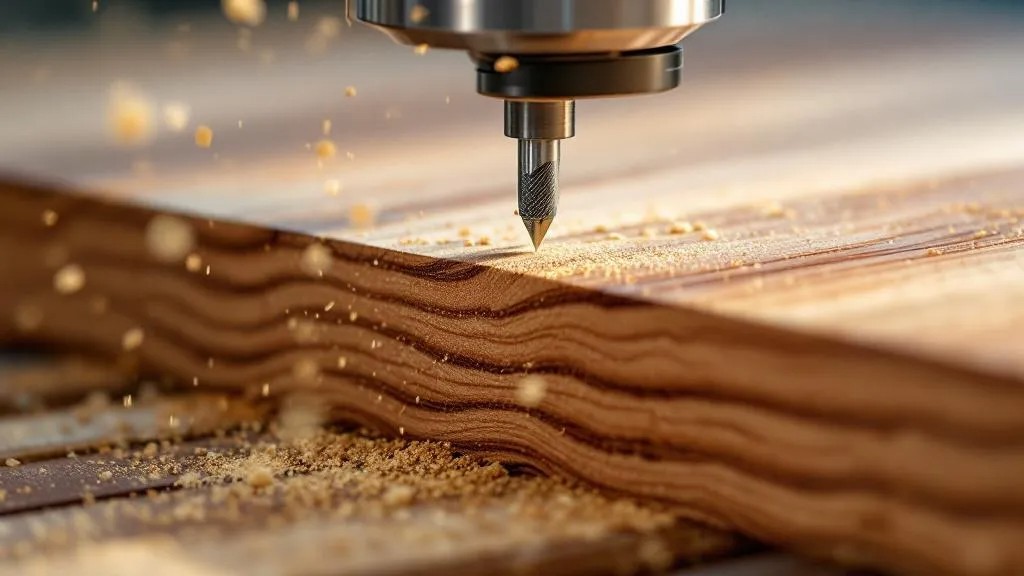
The Specifics of Radius Milling for Creating Rounded Edges on Wooden Products
The Specifics of Radius Milling for Creating Rounded Edges on Wooden Products Radius milling, or edge rounding, is one of the most sought-after and critically important stages in producing high-quality wooden
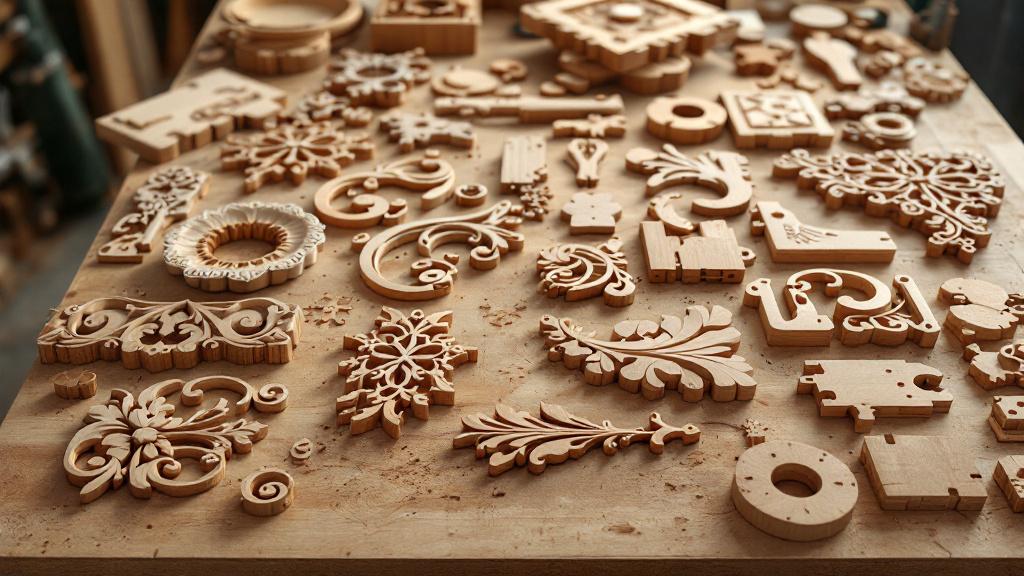
The Role of Milling in Making Decorative and Functional Wooden Parts
The Role of Milling in Making Decorative and Functional Wooden Parts Wood is a material that people have been using for thousands of years. It is valued for its natural
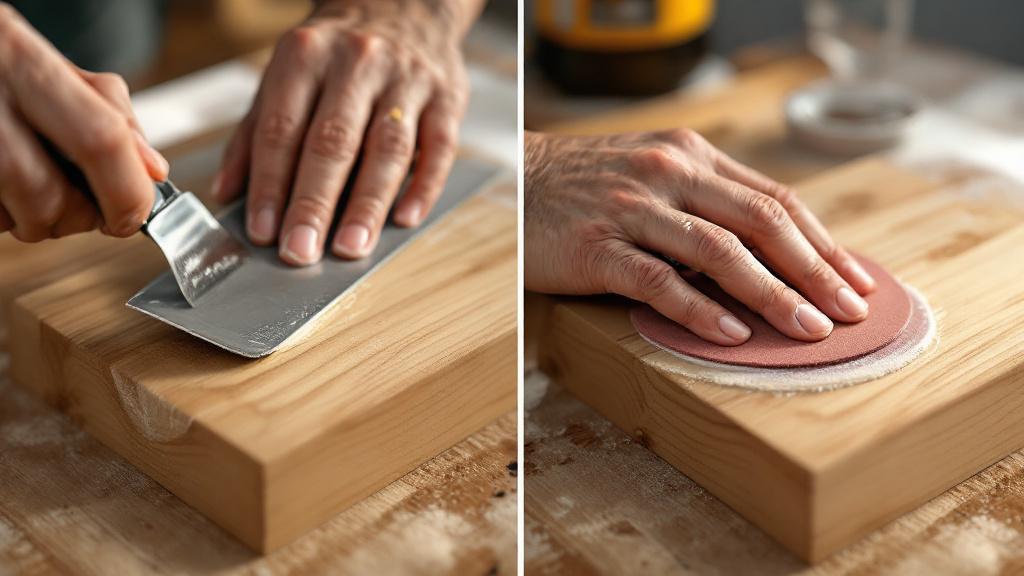
Stages of Filling and Sanding Wooden Products: Creating a Flawless, Even Surface
Stages of Filling and Sanding Wooden Products: Creating a Flawless, Even Surface Woodworking is not merely a mechanical process but a true craft, in which every stage is decisive for the

The synthesis of wood and metal: technological aspects of combining wood and aluminium to create durable products
The synthesis of wood and metal: technological aspects of combining wood and aluminium to create durable products In the field of professional woodworking, the search for the ideal material often leads