
A revival phenomenon: why wood is edging out cardboard
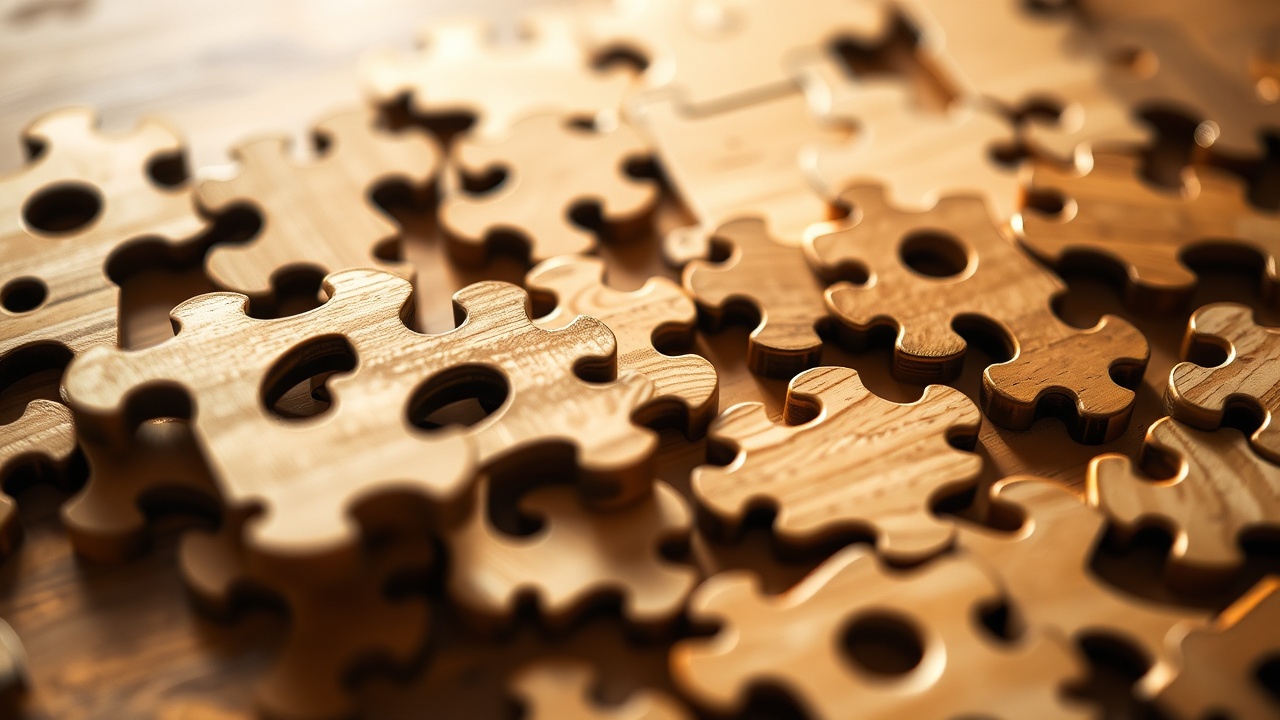
The board-game and hobby industry is going through a genuine renaissance, and wooden puzzles have taken over the vacant niche between classic model-making and the meditative assembly of mosaics. Unlike mass-produced cardboard versions, wooden pieces offer a completely different tactile experience. The grainy texture, the distinctive scent of wood scorched by the laser cut and the pleasant weight of every piece create the feeling of working with something solid and high-quality. This is no longer mere children’s fun, but a fully fledged object of interior art that you would happily leave out on the living-room table.
Today’s adult is overloaded with digital noise. Constant notifications, endless scrolling and hours at a monitor bring on cognitive fatigue. Against this backdrop, wooden puzzles act as an effective tool for a digital detox. The search for the right piece demands total concentration, much like meditation. The brain switches from multitasking mode into deep focus, letting the nervous system recover after the working day.
Technological progress has played its part too. The introduction of high-precision laser machines has made it possible to create pieces of incredible complexity. Where wooden puzzles were once crude and simple, today the gaps between elements are fractions of a millimetre. This ensures a perfect, click-into-place fit that lovers of mechanical satisfaction prize so highly. Each piece becomes a small feat of engineering rather than just a chunk of pressed paper.
The aesthetic dimension has reached a new level thanks to high-quality UV printing. The inks penetrate deep into the structure of the wood, keeping their vibrancy for decades. This turns the finished work into a proper picture that can be varnished and mounted on the wall. Many manufacturers have begun collaborating with contemporary artists, moving away from the tired landscapes of cottages and kittens towards intricate surrealism and abstraction.
The market sets its own rules, and today we see a clear split into segments: from budget sets to collector’s editions housed in boxes of precious wood. Buyers have grown more demanding about the details: packaging, a storage pouch and even spare pieces in the kit are becoming an industry standard. The trend’s popularity comes from the desire to own something that holds value in itself, quite apart from the process of assembly.
Geometry and figural pieces: the magic of shaped elements
The main thing that sets modern wooden puzzles apart from classic ones is the presence of figural pieces, the so-called “whimsies”. These are elements cut in the shape of recognisable objects: animals, plants, symbols or themed items that match the scene in the picture. If you are assembling an image of a forest, inside you are sure to find pieces shaped like foxes, hares, trees and birds. This turns the assembly into a captivating quest within a quest.
The difficulty of such puzzles often has nothing to do with the number of pieces. A 200-piece wooden set can be harder to assemble than a 1,000-piece cardboard one. This is because the edges of the pieces have no standard tabs and blanks. Winding cut lines, false joins and sharp corners make the brain work differently, calling on spatial thinking at full power. Often a piece that looks like part of the background turns out to be a fragment of the central object.
Designing the cutting pattern is an art form in its own right. Designers use specialised software to create a unique pattern for every set. In a quality puzzle you will not find two identical pieces. This rules out the chance of accidentally slotting in the wrong element, which so often happens with cheap cardboard versions. Each fragment is as unique as a fingerprint and belongs in one precise spot.
For experienced puzzle lovers there are sets with heightened cutting complexity. They use:
- Deceptive edges: pieces around the perimeter have uneven cuts that mimic internal joins.
- Cut-through openings: empty spaces remain within the assembled panel, forming an openwork pattern.
- Layering: some pieces are fixed on top of others, creating a 3D effect.
- Puzzles within puzzles: where a separate figure is first assembled from a group of small pieces and then inserted into the main field.
This approach makes assembly non-linear. You can start by finding all the figural elements, study them, and then gradually weave them into the overall canvas. It adds a gaming thrill and makes you examine every piece under a magnifying glass, marvelling at the fineness of the laser work.
Analysing popular themes: what people are choosing today
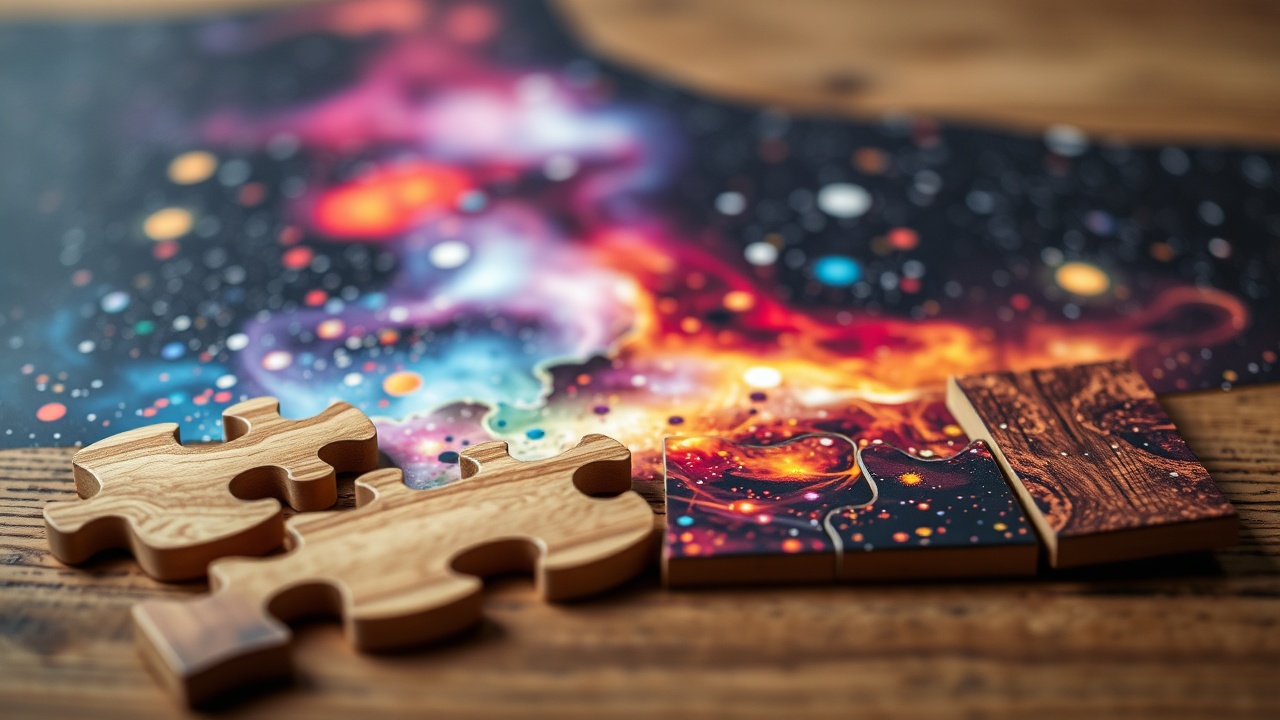
If you analyse the sales of the largest marketplaces and specialist shops, you can notice a shift of interest away from classic realism towards a decorative style. Animal themes rendered in a bright ornamental technique have long remained market leaders. This is not just a photo of a wolf or an owl, but an intricate kaleidoscope of patterns, where every feather or tuft of fur is a separate block of colour.
The audience, however, is beginning to tire of the same old “mandalas in the shape of animals”. There is growing demand for deeper, more conceptual themes. Adult connoisseurs look for scenes that resonate with their interests, be it science, architecture or classical painting. World maps are gaining popularity, from antique navigational charts to modern political ones with highly detailed cities.
It is interesting to watch the growing interest in engineering and technical themes. Engine diagrams, blueprints of legendary aircraft or cutaways of ancient castles appeal to a male audience that used to be sceptical about puzzles. Here the precision of the lines and the chance to study how an object is built during assembly play an important role. It is a blend of aesthetics and an educational element.
| Theme category | Target audience | Assembly characteristics |
|---|---|---|
| Animal art (ornamental) | Beginners, children and adults | Bright colours, easy to navigate by the patterns |
| World architecture | Travellers, aesthetes | Many single-tone pieces (sky, walls), high difficulty |
| Abstraction and surrealism | Artists, seasoned puzzlers | Calls for an intuitive approach, above-average difficulty |
| Space and astronomy | Dreamers, science lovers | Deep dark tones, gradients, use of glitter in the print |
The nostalgia trend cannot be ignored either. Themes reminiscent of illustrations from old books, vintage pin-up art or retro posters strike a real chord with the over-30 audience. Such puzzles are often bought as gifts, because they stir emotional attachment and fond memories. Manufacturers are actively licensing the images of well-known illustrators, turning a puzzle into exclusive merchandise.
Seeking unconventional designs: breaking away from templates
For those who have already assembled dozens of standard sets, the moment comes to hunt for something truly unique. The market answers this demand with the appearance of signature collections. Unconventional themes often lie in the realm of contemporary digital art, or of classics that were once too risky to transfer onto wood because of the difficulty of colour reproduction.
One line of exploration is scenes with a double meaning or hidden images. For example, a picture that looks like a woodland landscape under one light but reveals hidden silhouettes under another (or from a different viewing angle). This is achieved through a complex layering of paint or the use of glow-in-the-dark elements. Assembling such a puzzle turns into a detective investigation.
Another intriguing layer is micro-worlds. Scenes depicting life inside a drop of water, the structure of a microchip or a detailed cross-section of an anthill. Such images force the brain to keep switching between scales. It is a challenge for the eyes and the attention, since the repeating small elements create a visual noise in which you have to find logic and system.
Where should you look for such novelties? It is worth paying attention to:
- Crowdfunding platforms (Kickstarter, Indiegogo), where independent designers launch limited series.
- Local workshops that do not work for the mass market but make puzzles to individual order or in small runs.
- Collaborations between manufacturers and museums or contemporary art galleries.
- Foreign brands from countries with a strong woodworking culture (Japan, Scandinavia).
Originality can also show in the shape of the panel itself. Round puzzles, hexagons or puzzles with uneven, “torn” edges that have no clear boundary make the task considerably harder. The absence of a frame removes the usual point of reference, forcing you to build the picture from the centre outwards, which completely changes your strategy.
Materials and quality: how not to be disappointed by your purchase

The quality of a wooden puzzle depends directly on the material used. Most often, top-grade birch plywood is used. It has the necessary density and does not delaminate when cut. On the market, however, you will also come across products made of HDF (high-density fibreboard). Although HDF is cheaper, it lacks that real wood texture and can give off an unpleasant chemical smell when you open the packaging.
When choosing, it is worth paying attention to the thickness of the pieces. The optimal figure for an adult puzzle is 4 to 6 millimetres. Pieces like this sit pleasantly in the hand, they are sturdy and do not bend. Pieces that are too thin (3 mm or less) can break, especially in the narrow parts of figural cuts. It is also important to check the quality of the sanding: the reverse side should be free of burrs and scorch marks (dark laser traces) that get on your hands.
Printing is a critically important aspect. There are two main methods: direct UV printing onto the wood and gluing on a paper layer. Direct printing is far more durable. It does not peel over time and is not afraid of moisture or sunlight. To check this, just look at the edge of a piece: if you see a clear line between paper and wood, that puzzle will not last long. The ink should sit directly on the wood fibres.
A quality-check list before assembly:
- No sharp scorched smell (a light campfire aroma is acceptable).
- A clean reverse side with no soot marks.
- Pieces fit snugly together with no play.
- Image sharpness: no blurring or pixelation in the artwork.
- All the stated figural elements (whimsies) are present.
Some premium brands use veneer from precious woods (oak, walnut, cherry) for the finishing layer. This gives the product a refined look and makes it an excellent gift. Such puzzles cost more, but their tactile qualities and visual depth justify the investment for true connoisseurs.
The psychology of the hobby: why it is so addictive
Assembling puzzles is a classic example of an activity that puts a person into a state of flow. As defined by the psychologist Mihaly Csikszentmihalyi, this is a state of complete immersion in the process, when time slows down and outside distractions disappear. To reach flow, a task has to be difficult enough not to be boring, yet achievable enough not to cause frustration. Wooden puzzles are ideally balanced for this purpose.
Every piece you find triggers a small release of dopamine, the hormone of joy and reward. This creates a positive feedback loop. You set yourself a micro-goal (find the wolf’s ear) and get the result at once. In a world where the results of our work are often deferred or intangible, puzzles give an instant sense of completion and control over the situation.
For many, it is also a way to connect socially. Assembling a large puzzle with the whole family or with friends encourages unhurried conversation. Unlike board games with a competitive element, puzzles bring people together around a shared goal. It is a great way to spend an evening without gadgets, discussing everyday matters while searching for the right fragments. Solving a complex visual task together strengthens emotional bonds.
There is a cognitive aspect too. Regularly working with small pieces and complex shapes trains the neural connections responsible for visual perception and short-term memory. For older people it is excellent prevention against age-related changes in the brain. Constantly matching shape and colour activates both hemispheres, maintaining cognitive flexibility.
Puzzles as an interior element: from hobby to decor
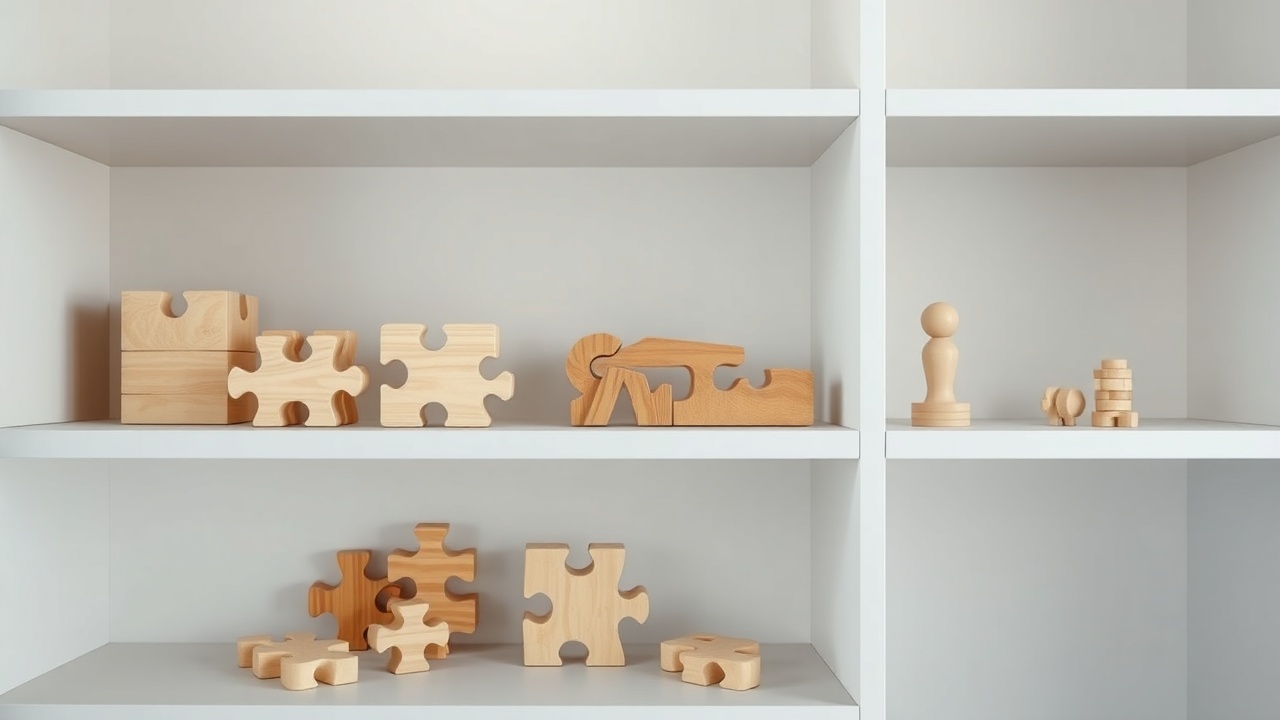
Unlike cardboard puzzles, which after assembly often go straight back into the box, wooden masterpieces are increasingly becoming part of the home’s decoration. Thanks to the rigidity of the base, they are easier to fix to the wall. Modern manufacturers even include special adhesive kits or films in the set, allowing you to preserve the integrity of the picture without traditional PVA glue, which can warp the wood.
The aesthetic of natural wood fits into most modern interiors, from Scandinavian style and loft to eco-design. An assembled puzzle showing an intricate ornament or a reproduction of a painting looks like an expensive wall panel. Especially striking are pieces where the edges are not rectangular but follow the contours of the object (a lion’s head or the map of a continent, say). This creates movement on the wall and draws the attention of guests.
For a puzzle to become a full-fledged decorative element, a few tips are worth bearing in mind:
- Lighting: Directional light (spotlights or wall lamps) will emphasise the wood texture and the depth of the pieces.
- Frame: You can use deep box frames (shadow box) to create distance between the glass and the puzzle, highlighting its thickness.
- Composition: Several puzzles from the same series, placed side by side, can create a single themed gallery.
- Background: If the puzzle has openwork cut-outs, the wall colour will show through it, which can be played on to interesting effect through contrast.
Some enthusiasts go further and embed their assembled puzzles into tabletops under a pour of epoxy resin. This turns the hobby into the making of functional furniture. Such an approach requires resin-working skills, but the result is genuinely exclusive and durable.
The future of the industry: augmented reality and customisation
The wooden-puzzle industry is not standing still, actively adopting modern technology. One of the most promising directions is the integration of AR (augmented reality). Imagine: you have finished assembling an image of a constellation, you point your smartphone camera at the puzzle, and the stars on the screen begin to move, turning into animated myths. This expands the boundaries of the product, turning it into a multimedia experience.
Customisation is another powerful trend. Today you can already order a puzzle based on your own photograph, but in a wooden version with a unique set of figural pieces tied to a specific person’s story. In a puzzle made from a family photo, for instance, you might hide pieces shaped like a beloved dog, the keys to a first home or a wedding date. This makes the gift as personal and treasured as possible.
The environmental aspect will also play an ever-greater role. Consumers consciously choose wood as a renewable resource. Companies are switching to recycled timber and biodegradable, plastic-free packaging. In future we will see even more experiments with materials: the use of cork, pressed bamboo or even wood composites with added natural scents (the aroma of pine, coffee or vanilla).
The advance of neural networks lets designers create an endless number of unique scenes that were once impossible to draw by hand. This means the market will fill with ever more complex, detailed and unusual images, satisfying the demands of even the most discerning collectors. Wooden puzzles have stopped being merely a trend, they have become a new classic in the world of intellectual leisure.





