
Designing the protective envelope: why a standard box is not enough

Delivery to marketplace warehouses under the FBO (Fulfillment by Operator) model is a long journey made up of many stages of transshipment, sorting and storage. When goods leave the production line, they enter an aggressive logistics environment where they are subjected to static and dynamic loads. Packaging design should begin not with the choice of an attractive look, but with an analysis of the physics of the process. A standard four-flap box often cannot cope with the task if its strength characteristics do not match the weight and fragility of the contents. It is important to understand that a box is not just a shell but an engineered structure designed to distribute pressure.
The main problem when transporting goods to FBO warehouses is repeated stacking. The boxes at the bottom of the pallet experience colossal pressure from the tiers above. If the corrugated cardboard has low resistance to edge crush, the walls begin to deform, which leads to the whole pallet “toppling” and the contents being damaged. Packaging designers must take into account the ECT (Edge Crush Test)value, which determines how much load the edge of the cardboard can withstand. For heavy loads, the use of five-ply cardboard in grades P-32 or P-33 is not a luxury but a technical necessity that helps avoid crushed corners.
Another critical aspect is the “air pockets” inside the packaging. If the goods do not fill the entire volume of the box, the walls lose their support and bend more easily under external pressure. When designing the protective details, you should aim for the internal fixing elements to create additional ribs of rigidity. These can be inserts, dividers or foam cradles that transfer the load from the outer shell to the base of the pallet, bypassing the product itself. Correctly calculating the geometry makes it possible to reduce the requirements for the thickness of the outer cardboard without losing overall structural strength.
The geometry of the box also affects stability in transit. Boxes that are too tall and narrow are prone to tipping over, even if they are tightly packed onto a pallet. An optimal ratio of sides helps to distribute the centre of gravity evenly. When designing packaging for FBO, it is worth orienting toward modular dimensions that are multiples of the standard euro pallet (800×1200 mm). This eliminates gaps between boxes on the pallet, which is critically important for preventing the load from shifting during sharp braking or turns of the lorry.
Internal fixing and cushioning: working with kinetic energy
When a lorry carrying goods for FBO hits a pothole in the road, a brief surge of kinetic energy occurs inside every box. If the goods are not rigidly fixed, they begin to move and strike the walls of the packaging. The designer’s task is to dampen this energy and prevent the object from moving. Using cushioning materials requires an understanding of their density and their ability to recover their shape. Expanded polystyrene, foamed polyethylene and honeycomb cardboard work in different ways, and the choice among them depends on the fragility of the specific item.
Foam inserts made of foamed polyethylene (PE foam) are considered among the most effective for complex electronics or fragile items. They have excellent damping properties, absorbing impacts, yet they do not crumble like cheap expanded polystyrene. When designing a foam cradle, it is important to provide gaps for gripping the product by hand while ensuring a snug fit at the critical points — the corners and protruding parts. The greater the contact area between the cushion and the product, the more evenly the pressure is distributed on impact, reducing the risk of cracks or chips.
For heavier and less fragile goods, honeycomb cardboardis an excellent fit. Its structure resembles a bees’ honeycomb, which provides incredible compressive strength at minimal weight. Honeycomb cardboard is used to make U-shaped profiles and protective corners that are installed inside the main box. This creates a kind of “exoskeleton” that protects the product from external impacts. The beauty of honeycomb cardboard lies in its eco-friendliness and ease of disposal, which is becoming an ever more important requirement for modern warehouses and end consumers.
Comparative table of fixing materials
| Material | Cushioning effectiveness | Compressive strength | Cost |
|---|---|---|---|
| Air cushions | High (for light loads) | Low | Low |
| Foamed polyethylene | Very high | Medium | Medium |
| Honeycomb cardboard | Medium | Very high | Medium |
| Bubble wrap | Medium | Low | Minimal |
Nor should we forget such simple but effective means as kraft paper or paper fillers. However, their use in FBO logistics calls for caution: paper tends to crumple and settle under its own weight during vibration. What looked tightly packed at the sender’s warehouse may arrive at the marketplace warehouse with a huge void inside. That is why paper fillers are better used only for light accessories that do not require serious impact protection.
Choosing corrugated cardboard: technical parameters and plies
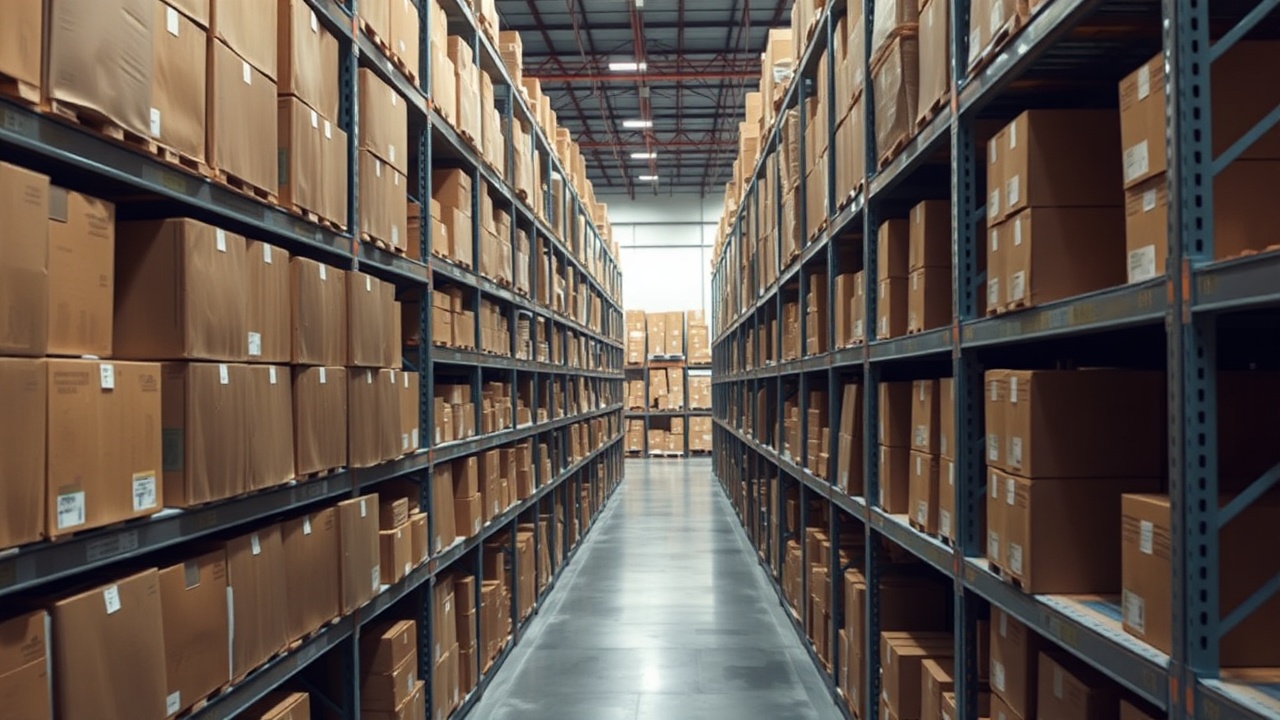
Corrugated cardboard is the main structural material in the world of logistics. Its effectiveness depends directly on the flute profile (the height and pitch of the wave). For forming boxes for FBO, the most commonly used profiles are B (fine flute) and C (medium flute). The B profile better resists flat crush and print looks better on it, while the C profile has better cushioning properties thanks to its greater wave height. They are often combined in five-ply cardboard (the BC profile, for example) to unite the advantages of both types.
The most important parameter when choosing cardboard is the quality of the flat layers — the liners. Liners can be made of cellulose (kraft liner) or of recycled material (test liner). Kraft liners are considerably stronger; they withstand humidity and mechanical loads better. If the journey to the FBO warehouse is long and storage conditions may change, using boxes with an outer layer of cellulose is an essential condition for the safety of the load. Recycled cardboard absorbs moisture from the air faster, losing up to 50% of its strength as ambient humidity rises.
The number of cardboard plies should match the weight category of the goods. There is a golden rule: goods weighing more than 10 kg should be packed in five-ply corrugated cardboard. Three-ply cardboard (grades T-22, T-23, T-24) is suitable for light and medium-heavy loads, but only provided there are no voids inside the box. Designing the packaging details should include calculating the vertical load. If you plan to stack boxes on top of one another in 5–6 rows, you need to choose a cardboard grade with a safety margin of at least 30% above the calculated static load.
- Grade T-23: suitable for goods up to 15 kg provided there is good internal fixing.
- Grade T-24: a reinforced option for goods up to 20 kg.
- Grade P-32: five-ply cardboard for heavy loads (up to 30–40 kg).
- Grade P-33: premium-level protection for industrial equipment and heavy electronics.
The geometry of palletising and load distribution
Delivery to FBO almost always involves forming pallets. Mistakes at the stage of loading boxes onto the pallet are the most costly of all, since they can lead to the damage of an entire batch at once. Designing the process should take into account the “brickwork rule”: each successive layer of boxes should overlap the joints of the previous one. This creates a monolithic structure that does not fall apart when the vehicle body tilts. If boxes are simply stacked in columns on top of one another, any vibration will turn the pallet into a wobbly structure held together only by stretch film.
The edges of the pallet are a high-risk zone. It is here that boxes most often take hits from forklifts or other loads. Designing the protection should include the use of cardboard protective corners along the entire height of the pallet. Corners made of pressed cardboard 3–5 mm thick not only protect the corners of the boxes from being crushed by the stretch film but also significantly increase the overall rigidity of the structure, allowing pallets to be stacked on top of one another if the warehouse rules permit it.
The distribution of weight within the pallet must be symmetrical. The heaviest boxes are always placed at the bottom, the lightest on top. This seems obvious, but in practice it is often ignored, which leads to the bottom packages being crushed. The centre of gravity of the pallet should be as low as possible and as close to the centre of the pallet as possible. If the load is shifted to one side, the risk of tipping over in transit increases many times over. When designing the stacking scheme, you should avoid boxes overhanging the edges of the pallet — that is a guaranteed way to end up with damage, because the overhanging edges have no support and take all the hits during loading operations.
The choice of the pallet itself also plays an important role. For FBO the standard is euro pallets (1200×800 mm). The use of damaged, rotten or non-standard pallets is inadmissible. When designing the logistics, you need to bear in mind that the base must withstand not only the weight of the load but also the dynamic impacts when moved by a pallet truck. A broken board in the pallet base can cause the entire structure to skew, so that the bottom boxes experience critical pressure on one of the corners, which inevitably leads to deformation of the goods inside.
Climate protection and sealing: the fight against moisture

FBO warehouses are vast spaces where it is not always possible to maintain an ideal microclimate. In addition, during delivery the goods may be in the vehicle body amid sharp temperature swings, which leads to the formation of condensation. Packaging design should include protection against moisture, especially where textiles, paper products or electronics are concerned. Condensation can soften corrugated cardboard, turning a rigid box into a shapeless mass that cannot bear a load.
The first line of defence is quality stretch film. However, it is worth understanding the difference between “wrapping for fixing” and “wrapping for protection”. To seal a pallet reliably, you need to use film at least 20–23 microns thick and apply at least 5–6 overlapping layers. Particular attention is paid to the top of the pallet: using a protective polyethylene “cap” prevents moisture from getting into the pallet structure when loading in rain or snow. The film should fit snugly against the base of the pallet, literally “tying” the load to the wood.
Inside the boxes, to combat excess humidity it makes sense to use desiccants — sachets of silica gel. This design decision is critically important for sea freight or long-term storage in regions of high humidity. Silica gel absorbs moisture from the air inside the box, preventing the appearance of mould, unpleasant odours or corrosion of metal parts. The amount of silica gel is calculated on the basis of the packaging volume and the expected time in transit.
For goods sensitive to odours and dust, it is recommended to use individual packaging in shrink film or zip-lock bags before placing them in the transport box. This creates an additional barrier that preserves the marketable appearance of the item even if the outer container is damaged. In FBO logistics the appearance of the primary packaging (the one the customer sees) is decisive for the buyout rate. Designing multi-layer protection makes it possible to deliver goods to the consumer in “factory” condition, with no traces of warehouse dust.
Labelling and information support as protection
Damage is not only physical harm but also logistics errors that cause goods to be deemed sub-standard or to be lost. Designing the labelling system is part of the strategy for reducing losses. Labels must be legible, wear-resistant and placed where they are hard to damage in transit. Using thermal transfer printing is preferable to direct thermal printing, since such labels do not fade in the sun or darken from heat, which often happens in warehouses.
Handling symbols (“Fragile”, “This way up”, “Keep dry”) are the international language of logistics. Despite the automation of many processes, the human factor at the loading and unloading stages remains significant. Bright, contrasting markings make staff treat the load more carefully. Designing the box artwork should include clearly defined zones for these symbols. It is important that the symbols are applied to at least two side faces of the box, so that they remain visible whatever the position of the packaging on the sorter belt.
Modern technologies make it possible to integrate impact and tilt sensors into the packaging. This design decision is justified for very expensive equipment or unique goods. Indicator stickers change colour if the box has been dropped from a height above the permissible limit or has been turned over. The presence of such an indicator disciplines the staff of logistics services: they understand that any careless handling will be recorded and the damage cannot be concealed. For FBO this also serves as weighty proof when resolving disputes over the acceptance of goods.
Checklist for correct labelling for FBO
- The label is placed on a flat surface and does not run over folds or flaps.
- The barcode is not covered with tape (glare hinders scanning).
- Handling symbols comply with ISO or international standards.
- The text is printed in a contrasting colour (black on white).
- Each box bears a unique identification code (if required by the system).
Testing and prototyping: the method of trial and error

No theoretical calculation can replace real-world testing. Designing the protective details should end with a stage of prototype testing. The simplest and most effective method is the Drop Test (drop test). The packed goods are dropped from a certain height (usually 80–100 cm) onto different edges, corners and faces. If after a series of drops the internal structure has kept its integrity and the goods remain functional, the design can be considered successful.
Besides drops, there are vibration tests that simulate a long journey in a truck. In laboratory conditions the packaging is placed on a vibration table that reproduces the frequencies typical of an engine running and of driving over uneven road surfaces. Vibration is dangerous because it causes “fatigue” in materials: screws can loosen, contacts can come away, and cardboard can gradually wear through at the points of contact with the product. The design should anticipate such scenarios, adding pads of soft materials at the places of possible friction.
A stacking test makes it possible to understand how many tiers of load the packaging can withstand in reality. A weight several times heavier than its own is placed on the box and left for several days. This simulates the storage conditions at an FBO warehouse. If the walls of the box have begun to “bulge” or sag, the design of the rigidity ribs needs to be reconsidered or the cardboard grade increased. It is important to bear in mind that the air humidity during the tests must match the real operating conditions, since dry cardboard is much stronger than damp cardboard.
Using packaging simulation software makes it possible to reduce the number of prototyping iterations. Specialised programs calculate the optimal cardboard cutting layout and model the behaviour of the structure under load. However, the final word always belongs to the physical test. An engineering approach to packaging design implies that we prepare for the worst-case scenario in the logistics chain, thereby ensuring maximum protection of the goods.
Analysing complaints and continuous improvement
Reducing damage is a continuous process. Even perfectly designed packaging can fail because of a change in conditions at the marketplace or a change in the supplier of the cardboard raw material. Working with feedback from FBO warehouses and analysing returns from buyers is an invaluable source of data for refining the design. If reports frequently mention “damage to the left corner”, then it is precisely that node that needs reinforcing in the next batch of packaging.
Sometimes designing the details requires changing the product itself in order to reduce damage. This is called Design for Logistics. For example, if a protruding plastic part constantly breaks in transit, it may be worth making it removable or changing its geometry to make it more streamlined. This comprehensive approach, affecting both the product and its shell, gives the best results over the long term. Reducing the damage rate by just 1–2% at the scale of the large turnover of FBO pays back any expenditure on design and quality materials.
The economics of packaging design should be built on a balance between the cost of materials and the cost of potential losses. There is no sense in packing a cheap plastic basin in an expensive five-ply box with PE-foam cradles. However, for electronics, cosmetics in glass or complex equipment, saving on packaging is a direct route to losses. The professional approach is to find that “golden mean” where the packaging is reliable enough to deliver the goods intact, yet does not inflate the cost of logistics to unacceptable levels.
Ultimately, designing the details to reduce damage in FBO delivery is an expression of respect for the end consumer. Receiving goods in perfect packaging, the buyer comes to trust the brand, which leads to repeat purchases and positive reviews. In the world of marketplaces, reputation is built on the little things: on the absence of crushed corners, on clean film and on the reliable fixing of every part inside the box. Investment in quality packaging design always comes back in the form of lower costs and greater customer loyalty.





