
The psychology behind the popularity of customizable products
Today’s market for craft supplies is enjoying a period of rapid growth, driven by a deep human need for self-expression. Customization is far more than a marketing tool — it is a powerful engagement trigger. When a buyer purchases a blank rather than a finished item, they subconsciously accept the role of co-creator. Behavioural economists often call this the IKEA effect: people value the fruits of their own labour far more highly than identical items bought ready-made. The act of finishing an object to your own taste creates an emotional bond, turning a standard object into a one-of-a-kind artefact.
The market for blanks taps into the desire for individuality in an age of mass production. Amid a glut of look-alike goods, the ability to change a product’s colour, texture or detailing becomes a decisive factor in the buying decision. Buyers are looking not just for an object but for an experience. A blank offers a safe space to experiment: the basic structure is already there, the risk of making a fatal mistake is minimal, yet the final result depends entirely on the maker’s imagination. This lowers the barrier to entry into crafting for those who lack professional skills but still want to surround themselves with original, hand-finished pieces.
The therapeutic dimension of the process matters too. Working with physical materials — wood, fabric, ceramics — lets you shift your attention from digital noise to tactile sensation. Craft blanks become a tool for meditation. Sellers who understand this need offer not just a product but the chance to slow down and focus on making something. In their marketing campaigns, the emphasis shifts from product specifications to the feelings a person experiences while transforming it.
Social approval also plays a significant role. A finished piece posted on social media draws more reactions when the maker’s personal contribution is visible. Customization lets you adapt an object to a specific interior or lifestyle, making it more functional and aesthetically valuable. In this way the blank becomes the link between the industrial quality of the base and the soulfulness of handwork. This hybrid nature guarantees steady demand for decades.
For commercial success, blanks must have certain qualities. First and foremost, that means the quality of the surface and its readiness for further work. If a wooden box is poorly sanded or a T-shirt’s fabric is too thin, the creative process turns into a battle with defects, which destroys the positive experience. Top sales go to the brands that pay attention to the details: clean joints, no knots, tight fibre weave. Care taken at the base-production stage earns the loyalty of a buyer who will come back for a fresh dose of inspiration.
Finally, it is worth noting the trend towards sustainability and conscious consumption. Many blanks are made from natural materials that are easy to recycle or that biodegrade. Buyers feel that they are not merely consuming but investing time in creating something durable. Customization extends the life cycle of objects: an item you have tired of, or that has been damaged, can be refreshed using the same principles of working with blanks. This shapes a community of conscious makers for whom the quality of the base is priority number one.
Wooden bases: a timeless classic in a modern reading
Wood remains the most sought-after material in the hobby-goods industry. Its popularity stems from its versatility: timber can be painted, scorched, engraved, varnished or waxed. The greatest demand is for pieces made of lime, birch and pine, as well as high-quality birch plywood. Lime is prized for its softness and lack of pronounced grain, which makes it ideal for carving and painting. Pine, meanwhile, draws attention with its natural pattern, which shows up strikingly under brushing — artificial ageing by combing out the soft fibres with a metal brush.
The best sellers in the wooden-blank category are functional interior pieces. These include kitchen accessories (cutting boards, trivets, spice boxes), storage systems (boxes, stationery organisers, jewellery chests) and decorative panels. A special place is held by blanks for children’s toys: dolls’ houses, construction sets and animal figures. Parents increasingly choose unpainted wooden toys so their child can colour them in with safe acrylic paints, developing fine motor skills and imagination.
When choosing wooden blanks for resale or your own creative work, you need to pay attention to the assembly method. Quality pieces are put together using tongue-and-groove joints with minimal glue, which guarantees strength and durability. Where plywood is concerned, cleanliness of the cut is critical. Laser machines allow for high detail but can leave scorch marks on the edges. Professional manufacturers carry out additional sanding to spare the maker hours of surface preparation. A smooth, tactile surface is what ensures that paint goes on evenly and without blotches.
- Boxes and chests: a base for decoupage, painting and inlay.
- Kitchenware: requires food-safe varnishes and oils after decorating.
- Wall clocks: kits that include a wooden dial and a clock movement.
- Panel blanks: round and rectangular bases for mosaic or Resin Art.
- Tea houses: a popular gift segment that calls for detailed work on the facades.
Interest in wooden blanks is also fuelled by the popularity of the Scandinavian style (hygge). Clean shapes, natural materials and the chance to add a personal touch make such products ideal for creating a homely feel. Sellers often offer sets that already include sandpaper, primer and basic paint colours, making the product as beginner-friendly as possible. This turns an ordinary piece of wood into a full-fledged educational and entertainment product.
The development of CNC machining has opened the way to complex assembly models that consistently take top spots on the marketplaces. These can be mechanical 3D puzzles that, once assembled, turn into kinetic sculptures. Such blanks appeal to a male audience and to teenagers, widening the boundaries of traditional handicraft. Here wood acts not only as an attractive material but also as a reliable structural element able to withstand mechanical loads.
Textile minimalism: a canvas for everyone
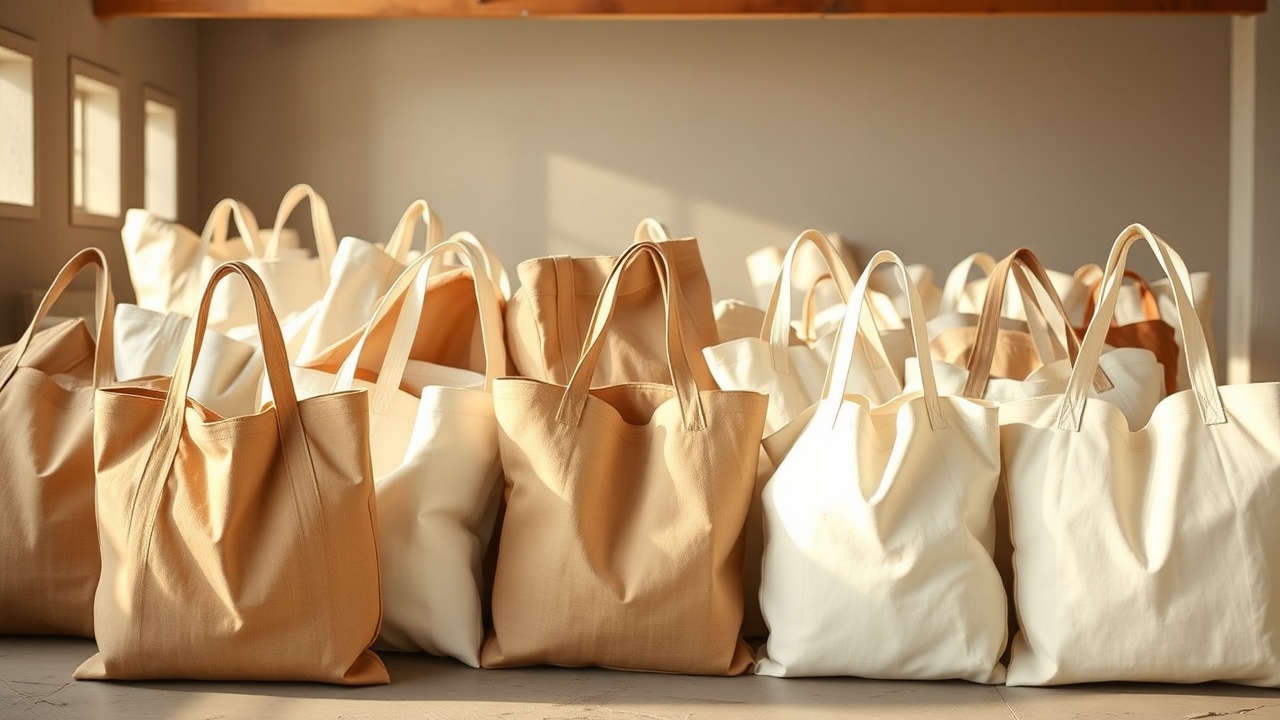
Textile blanks are perhaps the most democratic segment of the customization market. White and beige T-shirts, tote bags, cushion covers and cosmetic bags made of heavy cotton or linen are the ideal base for creativity. The main advantage here lies in ease of use: working with fabric requires no special conditions — a set of textile markers or acrylic paints is enough. Tote bags of coarse calico have become a genuine hit in recent years thanks to the trend towards sustainability and the move away from plastic bags.
The quality of a textile blank is determined by the material’s weight and the neatness of the stitching. For bags, the optimal weight is considered to be 210 to 280 g/m², which lets the item hold its shape and withstand repeated washing. It is important that the fabric be pre-shrunk — treated with steam or hot water to prevent shrinkage after the maker applies a design. Sellers who skip this step often face returns, because a finished work of art can distort after its very first wash.
The table below compares popular textile bases for customization:
| Type of blank | Material | Popular techniques | Target audience |
|---|---|---|---|
| Tote bag | Cotton, linen | Painting, embroidery, tie-dye | Students, eco-activists |
| T-shirt | Single jersey | Screen printing, markers | Young people, families |
| Cosmetic bag | Canvas, Oxford | Appliqué, rhinestones | Beauty bloggers, makers |
| Cushion | Hopsack, gabardine | Patchwork, photo printing | Homemakers, designers |
The Tie-Dye technique (knot dyeing) has given fresh momentum to sales of white knitwear. This approach requires no artistic skills, and the result is always unpredictable and unique. Sellers successfully move kits consisting of a T-shirt, a set of dyes, rubber bands and gloves. Such an all-in-one approach turns ordinary clothing into a creative project you can complete in a single evening. Customizing clothing lets people feel like designers of their own wardrobe without spending huge sums on branded items.
Embroidery on ready-made items also stays at the top. Blanks with a pre-printed outline or water-soluble stabiliser simplify the process for beginners. Particular attention is worth paying to accessories — caps, bucket hats and backpacks. These items are harder to work with because of their shape, yet they are exactly what is in demand among youth subcultures. Textiles offer boundless scope for weaving personal creativity into contemporary fashion.
Nor should we forget the homeware segment. Kitchen towels, napkins and tablecloths made of natural fabrics make an excellent gift when adorned with hand-painting or a monogram. In this case the blanks should be as understated as possible, with no superfluous decorative elements, so as not to clash with the future design. Using linen, with its characteristic texture, adds a premium feel to the piece, allowing such blanks to be sold in a higher price bracket.
Ceramics and glass: from hobby to professional art
Ceramic and glass blanks represent a more complex but extremely promising segment. Here we see two main directions: items that require high-temperature firing, and pieces for cold decorating. Blanks of fired white clay (bisque) are popular with those who have access to muffle kilns in pottery studios. The mass market, however, is geared towards glazed ceramics and glass, which can be painted with special bake-on paints in an ordinary oven.
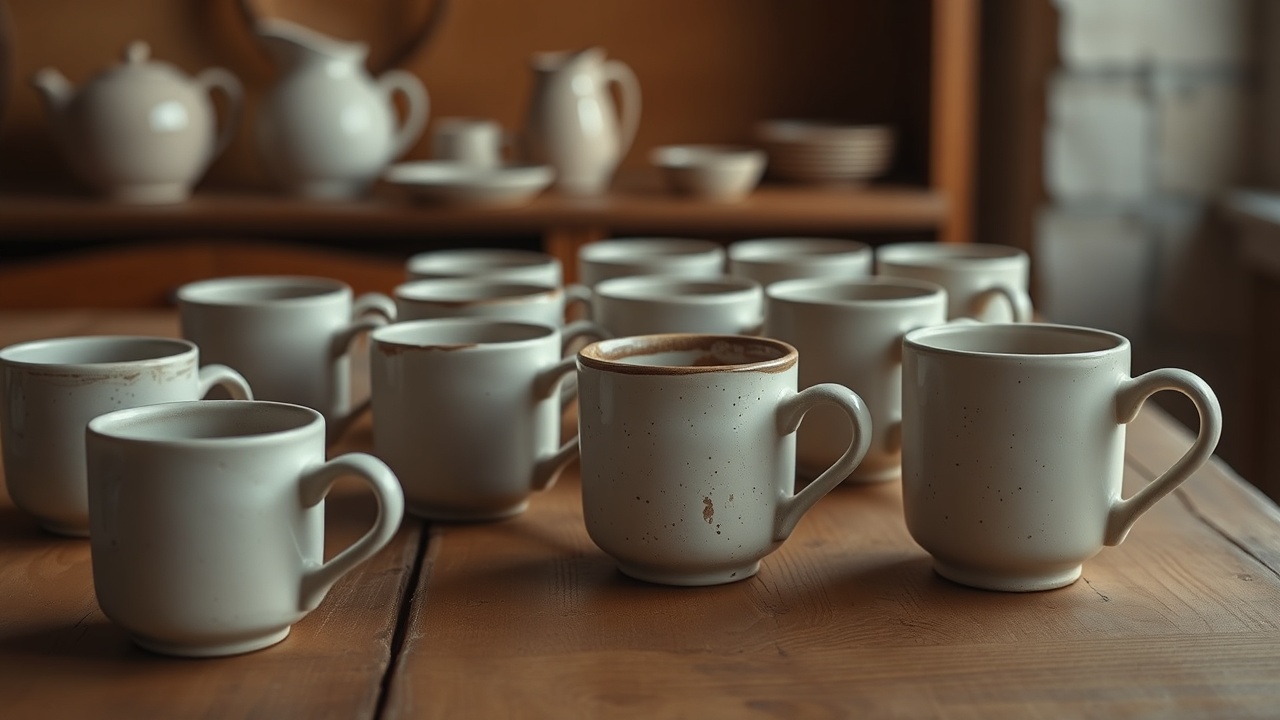
White mugs in classic shapes, wide-rimmed plates and understated vases are the “gold standard” of homeware categories. Customizing tableware appeals through the chance to create a unique object for everyday use. It is important that the forms be ergonomic and well made: no chips, no air bubbles in the glass, no glaze runs. Glass blanks such as unusually shaped bottles or geometric terrariums are in demand for stained-glass painting and for creating interior compositions.
Blanks for making mosaics attract particular attention. These can be wooden or plastic bases with raised edges, into which pieces of smalt or broken ceramic are laid. Such kits are often positioned as an anti-stress activity. Working with hard, cold materials calls for patience, but the result looks like a fully fledged art object. Sellers who include grout for the joints and special nippers create a product with high added value.
In the glass segment, blanks for fusing at home (using special microwave kilns) are popular. These are small pieces of coloured glass, backing bases and decorative elements (millefiori). This direction appeals through its technical nature and the shine of the final result. Glass is a temperamental material, so quality packaging when shipping such blanks becomes the decisive factor in a seller’s success on a marketplace.
Ceramic blanks for painting are often used for educational purposes. “Paint your own plate” kits are popular in schools and kindergartens. For adults, the market offers more refined options: porcelain figurines or minimalist tableware. The main trend here is a move away from excessive decoration in favour of simple lines, which the maker can enhance with gilding or fine dot-painting. Purity of the base colour (a perfect white or cream) is the key selection criterion for professional artists.
Jewellery bases and findings: a construction set for making accessories

The handmade-jewellery market is impossible without quality findings and bases. Blanks for earrings, rings, brooches and pendants let anyone feel like a jeweller. The main trigger here is the chance to obtain an expensive-looking accessory for little money, investing only a little time. Buyers value bases made of hypoallergenic materials: surgical steel, rhodium-plated brass or sterling 925 silver. In an era of conscious consumption, jewellery alloys of dubious composition are quickly losing ground.
A popular direction is making jewellery from epoxy resin. Here the blanks take the form of hollow frames (settings) or silicone forms (moulds). Settings can have all kinds of geometry — from classic ovals to futuristic polyhedra. All the maker has to do is fill the form with resin plus dried flowers, glitter or pigments. This direction shows consistently high sales thanks to the low cost of the materials and the striking result, which is easy to photograph for a portfolio.
Modular jewellery systems that resemble a construction set also hold their lead. These are bases for bracelets with interchangeable charms, or rings with inserts that can be swapped to match an outfit. Here customization happens at the level of assembling ready-made elements. Sellers win through a vast range of small parts, letting the customer endlessly add to their collection. It is important to ensure the compatibility of all elements, which calls for strict dimensional control when producing the bases.
- Brooch bases: pins with platforms for mounting stones, beads or fabric.
- Ear wires: earring hooks with clasps of various types (English, French, loop).
- End caps and crimps: essential for a neat finish when assembling necklaces and bracelets.
- Cabochon settings: frames for gluing in flat decorative elements.
- Memory wire: a base for rigid bracelets that holds its shape.
In recent years, interest in men’s jewellery has grown. Bases for cufflinks, tie clips and leather bracelets have become an in-demand niche. The male audience prefers rougher textures, matte finishes and minimalist design. Customizing such items often comes down to engraving or the use of inserts of fine wood and stone. Sellers who offer bases in gift cases target the personal-gift segment.
For successful sales in this category, macro photography is critically important. The buyer must be able to see the tiniest details: the quality of the carving, the reliability of the clasps and the shine of the finish. The text description should contain precise dimensions in millimetres, since an error of 1–2 mm can make a blank unusable with the stones or beads the maker already has. Jeweller’s precision in the product description correlates directly with a low return rate.
Paper goods and scrapbooking: preserving memory through creativity
Scrapbooking and making handmade notebooks is an industry built on the aesthetics of memory and on tactile sensation. Blanks for albums, planners and cards are in demand all year round, peaking during the holiday periods. The base here is paper and card of various weights. Especially prized are blanks of archival card, which does not yellow over time and contains no lignin, guaranteeing that photographs will be preserved for decades. This is an important argument for buyers who are creating family heirlooms.
Blanks for planners (Bullet Journal) have become a niche of their own. These are notebooks with heavy dot-grid paper, stripped of any internal content beyond the ruling. The buyer designs their own calendar grid, habit trackers and to-do lists. The success of such blanks rests on paper quality: it must be dense enough (from 100 to 160 g/m²) so that marker and fineliner ink does not show through on the reverse. Covers of eco-leather or kraft card provide space for external customization — embossing, painting or stickers.
The table sets out the key paper parameters for different types of blank:
| Purpose | Weight (g/m²) | Texture | Features |
|---|---|---|---|
| Card base | 250–300 | Matte or linen | Holds its shape, does not crack at the fold |
| Album pages | 180–240 | Smooth or watercolour | Withstands décor and glue |
| Notebook inner block | 80–120 | Dot-grid or blank | Pleasant to write on, no glare |
| Decorative backing | 120–160 | Printed or embossed | Complements the main design |
Kits for making hand-cast paper are gaining popularity. In this case the blank is the pulp (shredded fibre) and a special frame with a mesh. The buyer goes the whole way from liquid mass to a finished sheet studded with flower petals or threads. This is the highest degree of customization, where the very material is created. Such products appeal to fans of eco-style and calligraphy. The papermaking process is perceived as a magical act, which makes these kits an excellent option for an experience gift.
Card blanks (cardstock) let you quickly create professional greetings. They can have die-cut windows, three-dimensional elements (pop-ups) or built-in shakers. Using blanks saves time on the technical part of the work, letting the maker focus on composition and décor. Sets grouped by colour palette make selection far easier for beginners, ensuring a harmonious result even without any experience in colour theory.
Interior forms in concrete and plaster: clean lines and style

Industrial style and minimalism have brought a new category to the market — blanks of plaster and concrete. These are candle holders, planters for succulents, jewellery trays and decorative figurines. The popularity of these materials is explained by their affordability and by the fashion for natural, “earthy” textures. Plaster blanks are sold in pure white, which makes them the ideal object for painting, gilding with metal leaf, or pouring in coloured wax when making candles.
Producing such blanks requires quality silicone moulds and vibrating tables to remove air bubbles. Buyers value the smoothness of the surface and the crispness of the edges. Plaster of grade G-16 and above provides strength comparable to stone. A special direction is concrete blanks with added pigments that create a marble effect (the “terrazzo” technique). In this case customization can consist of a final sanding and a varnish coat that brings out the depth of the colour.
Customizing plaster items is often linked to the technique of decoupage or acrylic painting. The material’s porous structure absorbs paint beautifully, which makes it possible to create smooth gradients and transitions. Many makers use such blanks as a base for learning: on inexpensive plaster it is easy to practise new techniques before moving on to more costly materials. Sellers often offer sets of several pieces of differing height, creating ready-made interior groupings.
Candle-making as a business and a hobby is an active consumer of plaster planters. The buyer acquires a form, wax and a wick, creating a complete product for home use or for sale. The blanks must be pre-treated with a water repellent so that the wax is not absorbed into the walls of the vessel. This is an important technical nuance that sets a professional blank apart from an amateur’s handiwork. Informing the customer about such preparation increases trust in the brand.
Wall panels of plaster that imitate bas-reliefs or botanical casts are another growing segment. The maker can paint in the details, emphasising the relief, or leave the piece monochrome, playing on light and shade. Such blanks become the centrepiece of an interior. The ability to choose the colour scheme yourself lets you fit the décor into any room — from a nursery to a formal office. Plaster and concrete are materials that forgive mistakes and allow you to repaint a piece again and again.
All-in-one “Do It Yourself” kits: a ready-made creative solution
The pinnacle of the evolution of blanks is the DIY (Do It Yourself) kit. These include absolutely everything needed to create a finished item: from the base to the last bead or brush. The popularity of such kits stems from the time they save the customer — there is no need to hunt for consumables across different shops. The best-selling categories include paint-by-numbers, diamond mosaics, kits for sewing felt toys and sets for making terrariums.
The secret to a kit’s success lies in a detailed instruction sheet. It must be clear even to a child, with step-by-step photos or a QR code linking to a video tutorial. Customization here is limited to the bounds of the offered design, yet the buyer still feels like a creator. To make the product stand out from competitors, manufacturers add elements of variability to the kits: for example, several décor options or the ability to choose a scent for a candle. This creates a sense of personalisation within a mass-market product.
Logistics and packaging play a decisive role. All the components must be securely fixed so that paints do not spill and fragile parts do not break in transit. Using transparent windows in the box lets the buyer immediately assess how richly it is filled. DIY kits are often bought as a gift, so the design of the outer packaging must be attractive and require no additional wrapping. Betting on the aesthetics of unboxing (the unboxing experience) significantly increases the chances of positive reviews.
- Paint-by-numbers: blanks on canvas with a stretcher frame, the leaders of the gift segment.
- Kits for making resin jewellery: include moulds, resin and dried flowers.
- Assembly roomboxes: interior models of rooms in miniature with working lighting.
- Wool-felting kits: shape blanks and special needles included.
- Cosmetics-making kits: bases for soap or lip balms with natural oils.
Pricing in this segment depends on the complexity and exclusivity of the components. Kits for adults are becoming ever more complex and expensive, using quality materials: genuine leather, fine wood, professional paints. This lifts the “blanks” category to the level of intellectual leisure. For children, brightness and speed of result are what matter, so the blanks must be as easy to assemble as possible.
Market analysis shows that buyers are inclined to make repeat purchases if their first experience with a kit was a success. Brands build whole series of products united by a common theme or style. Customization through collecting becomes an additional incentive. A person who once built a miniature coffee shop is highly likely to want to add a flower shop or a bookshop from the same series.
Packaging as part of the product: the final touch of customization
In the world of customization, packaging has ceased to be merely a protective shell. It is now a full-fledged blank for creativity in its own right. Buyers who make handmade goods to sell need a worthy presentation for their pieces. Kraft boxes, tubes, cotton pouches and wooden crates are the bases a maker customizes for their own brand. Applying a logo with a stamp, using branded ribbons or wax seals turns standard packaging into part of an authorial statement.
The trend towards sustainability dictates a move away from excess plastic. Blanks of recycled card (kraft) enjoy steady demand thanks to their neutrality and versatility. They serve as the ideal backdrop for bright décor. Packaging sellers who offer wholesale batches of blanks in various sizes occupy an important niche in the value chain of handmade goods. The quality of the card, the tightness with which the flaps close and the precision of the die-cut — that is what the professional maker looks at when choosing.
Customization of the packaging by the buyer matters too. For example, boxes with clear lids allow the contents to be shown off, while fillers of wood wool or tissue paper add a premium feel. The ability to buy blanks for tags, labels and stickers in a single style with the main packaging is a much-valued service. The maker gets a ready-made solution for the visual identity of their brand while spending minimal effort on it.
An interesting direction is packaging that is itself an object for creativity. For example, colour-in boxes, or packaging that can be turned into a toy once the main product has been removed. This adds extra value to the product and encourages loyalty. In the age of social media, beautiful and unusual packaging becomes a free marketing tool: buyers are happy to share the unboxing process, drawing attention to the brand.
The use of natural fillers — sisal, raffia, dried lavender — makes it possible to engage different senses, including smell. Blanks for scenting parcels (sachets, aroma stones) also form part of the customization arsenal. In this way, creating a coherent product image begins with the choice of a quality base package and ends with the small details that produce a “wow effect” in the end consumer.
Success strategies: how blanks capture the top of the sales charts
For a craft blank to become a best seller, it must meet three criteria: a quality base, an on-trend shape and the potential for easy customization. Top sellers constantly analyse trends in interior design and fashion, adapting their products to what the audience wants. The rise in popularity of houseplants, for example, led to a boom in blanks for planters and stands. The growth of home-coffee culture made wooden trays and ceramic cup-and-saucer sets for painting sought after.
An important factor is building a community around the product. Brands that share customization ideas, run competitions for finished pieces and post free master classes sell considerably more. A blank on its own can look dull, but in a maker’s hands it comes alive. Showing various versions of the final result — from minimalism to baroque — widens the target audience and takes away the fear of the “blank page” for beginners.
The scalability of a blanks business is achieved through the automation of production and quality control. Moving from hand-sawing to laser cutting, or from casting in homemade moulds to industrial injection-moulding machines, makes it possible to lower costs and keep prices competitive. It is important, however, to preserve the sense of the product’s “soul”, avoiding overly obvious signs of the mass market. Using natural materials and eco-friendly packaging helps maintain the image of a craft product.
Seasonality plays an important role in managing the range. Blanks for Christmas-tree ornaments, Easter eggs or Halloween décor should appear on sale 2–3 months before the holiday, so that makers have time to decorate them and put their finished work up for sale. Sellers who offer pre-orders for seasonal novelties gain the advantage of working capital and guaranteed sales. Analysis of past periods helps to calculate stock levels accurately.
In the end, customization works as a trigger because it gives a person both control and the right to make mistakes at the same time. A blank is a promise of a future masterpiece — a promise the buyer makes to themselves. By providing quality bases, tools and inspiration, sellers become partners in the creative process. It is precisely this partnership, founded on respect for the maker’s labour and attention to the details of the material, that secures craft products their steady place at the top of the sales charts on any trading platform.





