
The economic trap of your first machine

Many entrepreneurs entering the marketplaces with products made of wood, plastic or metal make the same strategic mistake. Seeing demand grow, they start counting potential profit and conclude that their own CNC (Computer Numerical Control) machine will pay for itself in six months. The logic seems simple: why pay a contractor a mark-up when you can produce it yourself at the cost of materials? In practice, however, this arithmetic shatters against the harsh reality of production management.
Buying the machine is only the tip of the iceberg. A first-time seller often overlooks the cost of renting suitable premises that meet fire-safety regulations and have enough electrical capacity. An ordinary socket in a garage will not always handle the peak loads of an industrial spindle. Contract manufacturing removes the need to hunt for floor space, install ventilation and clear paperwork with regulatory authorities. You pay only for a finished product that matches your drawings.
The second critical point is the freezing of working capital. Instead of investing a notional hundred thousand euros in raw materials, a wider range or marketing, the entrepreneur “buries” that money in hardware. A machine does not generate profit on its own; it merely demands constant servicing. If marketplace sales dip, the machine turns into a liability that keeps eating money for rent and security, whereas a contract partner will simply stop receiving orders from you without any penalties.
On top of that, technology never stands still. A machine bought today may become obsolete in three years, or fail to cope with new tasks if you decide to change niche. Contract facilities constantly renew their equipment fleet to stay competitive. By working with them, you effectively gain access to the very latest technology without having to foot the bill for it alone.
The talent shortage and the human factor
Finding a qualified CNC operator is no easy task. This is not just someone who presses the “Start” button. A skilled specialist must understand cutting parameters, select the right tool for a given material, be able to adjust the control program and carry out basic maintenance. The salaries of such craftsmen keep climbing, and competition for them among large factories is fierce.
By hiring an employee for their own mini-workshop, a seller becomes dependent on a single person. If the operator falls ill, goes on holiday or decides to quit at the peak of the season, production grinds to a halt. A contract manufacturer has a pool of interchangeable staff. Staffing problems are the factory owner’s headache, not yours. You act as a client who cares about a result delivered on the agreed date, not about the process of finding a sober machinist on a Monday morning.
Nor should mistakes be forgotten. Beginners inevitably ruin blanks, break expensive router bits and sometimes damage the machine’s own assemblies. At a contract facility the risk of scrap is built into the price, yet professionals produce it far less often. You receive a batch of quality goods, while all the intermediate fiascos stay on the contractor’s side. That saves your nerves and lets you focus on sales analytics.
Hidden costs of tooling and fixtures
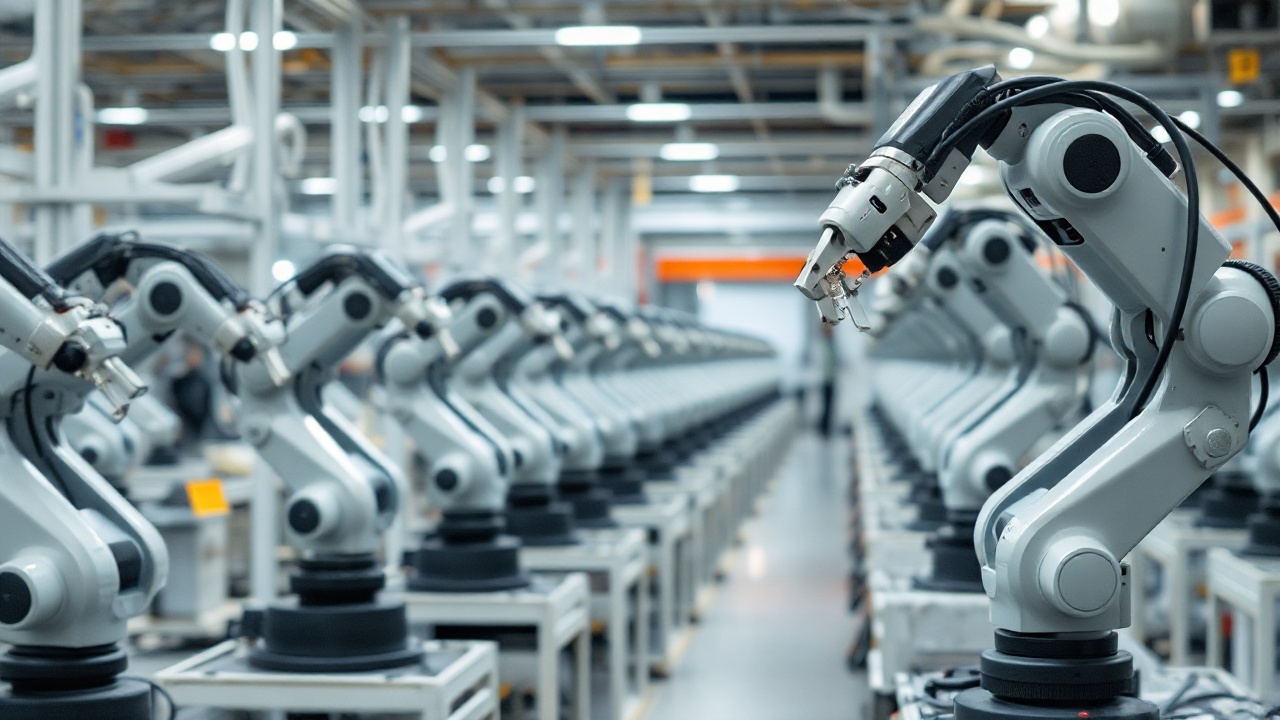
Buying the machine is only the start of the spending. Work requires a huge list of consumables: collets, router bits, drills, cutting fluids (coolant). A good cutter for hardwood or aluminium can cost several hundred euros, and it breaks instantly if set up incorrectly. Building up a stock of quality tooling takes time and deep technical know-how that a seller usually does not possess.
A contract manufacturer buys tooling in bulk, which substantially lowers its cost per unit of output. They have established links with suppliers and know which brands last longer and which are simply a waste of money. For a seller, trying to get to grips with steel grades and grind geometry is a distraction from the core task: selling and scaling the business.
Besides cutting tools, you need fixtures: clamps, vacuum tables, jigs for quick part changeovers. Making or buying these devices costs time and money. With outsourcing, you simply hand over a 3D model or a drawing, and the contractor’s engineers decide themselves how to hold the part and which tool to machine it with. That is a professional approach that rules out makeshift workarounds.
Scalability: from 10 to 10,000 units
The main problem with in-house production is limited capacity. If your product takes off on the marketplace and orders grow fivefold, your single machine physically cannot deliver the required volume, even running three shifts. Expanding your own workshop is a slow process: buying new equipment, finding premises, hiring people. By the time you scale up, the trend may have passed and competitors may have seized your niche.
Contract manufacturing lets you scale instantly. A large contractor may have 20–30 identical machines. For them, increasing your output is a matter of reshuffling priorities and schedules. You flexibly manage your stock levels, ordering exactly as much product as the market demands at any given moment.
| Comparison criterion | Own machine (in-house) | Contract manufacturing |
|---|---|---|
| Initial investment | Very high (six figures) | Zero |
| Time to launch | Months (installation, commissioning) | Days (send the drawing) |
| Liability for defects | On the business owner | On the contractor |
| Scalability | Tightly limited by the fleet | Virtually unlimited |
| Focus of attention | Production processes | Marketing and sales |
Quality and control: a professional approach
In CNC production, quality depends not only on the hardware but on the control system. Large workshops have quality-control (QC) departments that use precision measuring instruments: gauges, micrometers, video measuring systems. Achieving such accuracy in a small in-house workshop is extremely costly and difficult. You risk receiving a batch with dimensional deviations, which leads to returns on the marketplaces and a drop in your store rating.
Working under a contract with a contract manufacturer, you specify tolerances and technical requirements. If a part fails to meet the design documentation, you simply refuse the batch and do not pay for it. This creates a healthy market distance. When production is your own, you are often inclined to turn a blind eye to minor defects (“it’ll do”), which in the long run ruins the brand’s reputation.
Professionals can also suggest design optimisation. An experienced process engineer will advise how to alter a part to cut its machining time without losing functionality. That directly lowers the cost price. A seller working on their own machine often fails to see these opportunities, being buried in routine and lacking a broad technological outlook.
Legal nuances and the environment
Running your own production imposes a mass of obligations towards the authorities. Disposing of chips, spent oil and coolant requires contracts with specialised companies. Noise and vibration can trigger neighbours’ complaints if the workshop is within a city or in an office building. Every inspection by the labour inspectorate or the fire and safety authority at a production site carries the risk of fines and a suspension of operations.
- Fire safety: the need to install fire-suppression and alarm systems.
- Occupational safety: employee training, workplace assessments, keeping instruction logs.
- Environmental compliance: reporting on emissions and production waste.
- Energy consumption: electricity limits and high tariffs for legal entities.
Outsourcing removes these questions entirely. Your company remains a “clean” trading structure. All the risks tied to industrial safety are borne by the contractor. In the eyes of investors, or when selling the business, a model based on contract manufacturing often looks more attractive, because it is easily transferable and less risky.
Flexibility in experimentation and R&D

Launching a new product is always a risk. At the prototyping stage you may need to change the design five times. If you have your own machine, you spend your operator’s time, which could have gone into series production. And if the machine is specialised (for wood only, say) and you decide to try metal, you will have to find an outside contractor anyway.
Contractors often have access to different technologies in one place: laser cutting, bending, CNC milling, anodising or painting. You can create complex combined products without investing in five different types of machine. This lets you run quick hypothesis tests on the marketplaces. Found an in-demand niche — you order a batch; it did not land — you simply change direction without having to sell off unwanted equipment.
Developing new models (R&D) is also more effective when outsourced, because contract offices have a trained eye. They have seen hundreds of projects and know which solutions work and which do not. This collective experience cannot be bought together with a machine; it is built up over years of practice on a variety of orders.
Focus on what matters: sales and brand
Ultimately, a seller’s success on the marketplace depends on the ability to work with traffic, content, reviews and positioning. Production is a separate, complex business with its own specifics. Trying to sit on two chairs at once, an entrepreneur often loses on both fronts. Time spent buying cutters and repairing spindles is time stolen from marketing.
Contract manufacturing turns making the product into a predictable service. You know precisely the delivery date and the final unit cost. That lets you build accurate financial models and plan marketing activities. Reliable supply is the key to a high spot in the marketplace listings, and outsourcing to a dependable partner secures that stability far better than a temperamental machine in a garage.
By choosing the outsourcing path, you are buying not merely parts, but time and expertise. In today’s economy the winners are not those with the most machines, but those who react to market changes fastest and manage supply chains effectively. Leave production to the professionals, and keep for yourself the most interesting and profitable part — building and growing a successful brand.
Checklist for choosing a contract partner
- An in-house design department to check your drawings.
- An equipment fleet suited to your requirements for precision and materials.
- A transparent pricing system and clear shipping deadlines.
- The ability to produce a pilot sample before launching a series.
- Positive case studies of working with other sellers or large companies.





