
The legal framework: the Toy Safety Directive 2009/48/EC as the core regulation

When it comes to manufacturing or importing children’s products, the key document is the EU Toy Safety Directive 2009/48/EC , implemented through the harmonised EN 71 standards. This framework sets strict requirements that simply cannot be ignored. Wooden toys such as busy boards and shape sorters fall squarely within its scope. The core aim of the legislation is to eliminate any risk to a child’s health arising from the chemical composition, mechanical strength and flammability of the product.
It is important to understand that certification is not a mere formality of obtaining a piece of paper, but a comprehensive assessment of both the production process and the product itself. The regulation divides toys into age groups, and the requirements for products intended for children under three are considerably stricter than for older age ranges. For wooden shape sorters this is critical, since they are often positioned as developmental aids for the very youngest children.
The conformity assessment procedure involves reviewing the technical documentation, testing samples in an accredited laboratory and, in some cases, ongoing surveillance of production. For series production, the certificate or EU Declaration of Conformity can remain valid for several years. For a one-off batch, the documentation is drawn up only for the specific quantity of items on the invoice.
Wood is considered an eco-friendly material, but that very fact is what makes experts pay close attention to the accompanying components: adhesives, varnishes, paints and hardware. The regulation requires testing not only the solid wood, but every decorative coating for heavy metals and volatile organic compounds. Any deviation from the limits leads to a refusal to issue the certificate.
It is worth bearing in mind that busy boards often contain elements which formally may not be considered toys in the usual sense (sockets, switches, door chains). Yet once they are fixed to a play panel, they become part of the toy and must meet toy safety standards. That means no sharp edges, secure fastening and no risk of trapping little fingers.
Skipping certification or using forged documents carries administrative liability. Fines for companies can be very substantial, and the goods may be seized. What is more, marketplaces today rigorously check that valid certificates are on file with the relevant authorities, blocking product listings that lack verified documentation.
Choosing the wood and requirements for surface finishing
The material is the foundation of any wooden toy. Busy boards and shape sorters are most often made from birch plywood, beech, oak or lime. Each of these types of wood has its own peculiarities during certification. Softwoods, for example, can exude resin, which is unacceptable for children’s products, as the resin is sticky and can trigger allergic reactions. That is why preference is given to hardwoods with a dense structure.
The moisture content of the wood is a key technical parameter. If the wood is over-dried, it can crack and form sharp splinters. If the moisture content is too high, the toy will warp over time or may even develop mould. The safety standards state that surfaces must be smooth, with no burrs or cracks. Every part of a sorter and the base of a busy board must go through multi-stage sanding.
When ordering a batch, it is important to pay attention to the grade of the wood or plywood. Only “Extra” or B/BB grades are acceptable for toys. Knots that could fall out and leave a hole with sharp edges are not permitted. Any surface defect is a potential injury risk, and the laboratory will certainly record it during testing.
Edges and corners are a separate focus of attention. All edges of the wooden components must be rounded. The radius of the rounding is strictly regulated. Even if the design of a sorter calls for cubic shapes, its edges must be blunted so that a child cannot suffer a serious injury on impact. On busy boards, the edges of the base are often covered with a protective trim or carefully milled.
Surface finishing can be done with oil, wax or a water-based varnish. If a toy is marketed as “natural” and uncoated, it must still be perfectly sanded. However, the absence of a coating makes wood hygroscopic – it absorbs saliva, dirt and sweat, which makes it harder to keep clean. That is why most manufacturers prefer certified finishes that are safe for chewing.
The comparison table below shows popular materials used to make toys:
| Material | Advantages | Certification challenges |
|---|---|---|
| Birch plywood | Affordability, strength | Formaldehyde emission (requires class E0 or E1) |
| Beech | Hardness, attractive grain | High price, difficult to machine |
| Lime | Lightness, softness | Dents easily, needs protection |
| Oak | Durability, premium look | Heavy parts (a risk if dropped) |
Mechanical strength and physical properties
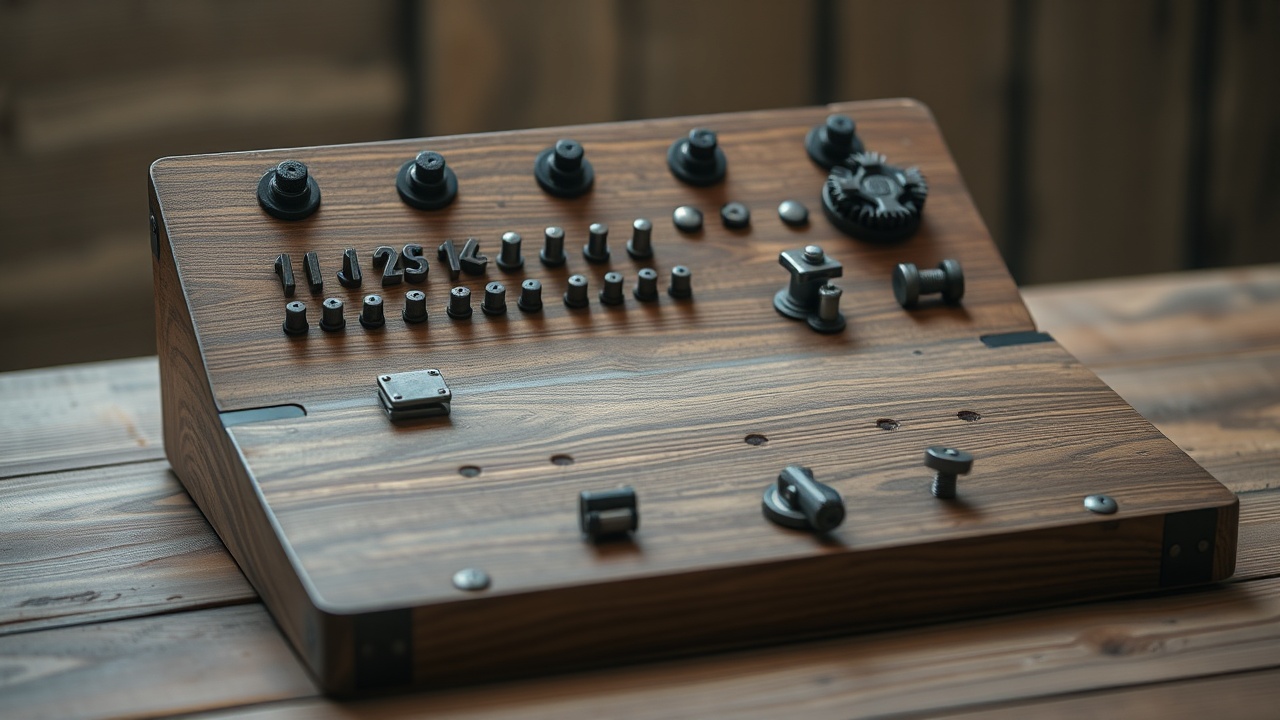
Mechanical strength testing is the most dramatic and demanding stage of certification. Laboratory rigs simulate various stresses: drop from a height, tension, compression and torsion. For sorters, it is essential that the parts do not shatter when dropped onto a hard floor. If a splinter flies off a block, this counts as a critical non-conformity with the safety requirements.
On busy boards, every attached element is tested for pull-off force. Small children have surprising strength when they set out to break something off. If a button, bead or gear detaches under a force of less than 90 Newtons (around 9 kg) and at the same time fits inside the small-parts cylinder, the toy will fail certification. The risk of choking is the most serious concern in the category of products for the earliest ages.
The small-parts cylinder is a special measuring device that mimics a child’s upper airway. If a part of a sorter or an element of a busy board fits entirely inside this cylinder, it is prohibited for children under three. For sorters, this means that all the inserts must be large enough that a child cannot swallow them or choke on them.
The geometric shape of the openings in sorters is also checked. A child must not be able to push a finger into an opening in a way that leaves it trapped. The same applies to gaps between moving parts on busy boards. If the design includes hinges, levers or wheels, the distance between them and the body must be either less than 5 mm or more than 12 mm, so that a little finger cannot become caught in the “danger zone”.
Cords and chains, which are common on activity panels, are tested for length. A cord that is too long (more than 220 mm) can form a loop that poses a strangulation hazard. If the design calls for a long cord, it must have a device that automatically releases under a certain load. These are subtle details that designers often forget, but that certification experts always keep in mind.
The stability of a busy board, if it is a free-standing floor model, is also critical. It must not topple over when a child tries to lean on it or pull it towards themselves. For wall-mounted models, the instructions set out clear requirements for the fixings needed to ensure a secure hold on a vertical surface.
Chemical and toxicological safety
Although wood is a natural material, auxiliary chemical substances are used in making toys. The first thing plywood is tested for is formaldehyde emission. Only plywood with an emission class no higher than E1 – and ideally E0 – is permitted for children’s products. In the laboratory, samples are placed in special chambers where the concentration of harmful vapours in the air is measured at set intervals.
Paints and varnishes are the second source of danger. They must be intended specifically for toys and come with the appropriate documentation from the manufacturer (a safety data sheet, MSDS). During certification, toys are tested for the migration of heavy metals into a model medium (simulating saliva and gastric juice). Such metals include antimony, arsenic, barium, cadmium, chromium, lead, mercury and selenium.
The permitted limits for chemical substances are extremely low. Lead, for example, must be virtually undetectable. This is because children often put toys in their mouths. If the paint on a sorter starts to flake or peel on contact with moisture, this is not only a mechanical defect but also a chemical risk, as particles of the coating end up inside the child’s body.
The smell of a toy is also assessed. There is a scale that rates odour intensity in points. A wooden toy may have the natural aroma of wood, but it must not smell of chemicals, solvents or of a “burnt” note after laser cutting. A strong odour indicates that the coating has been poorly dried or that low-quality compounds have been used, which can irritate a child’s mucous membranes.
For busy boards that use metal and plastic elements, checks are made for electrostatic charge (if there are battery-powered electrical components) and for the absence of toxic plasticisers (phthalates). Phthalates are often found in cheap soft plastic or rubber, from which wheels or buttons may be made. These substances can accumulate in the body and affect the hormonal balance.
The list of chemical parameters tested:
- Content of free formaldehyde in an aqueous extract.
- Level of migration of harmful substances into the air.
- Presence of a specific odour (no more than 2 points).
- Absence of leachable toxic compounds on contact with water.
- Concentration of heavy metals in the decorative coating.
Specific aspects of certifying busy boards with electronics

Modern busy boards are often fitted with LEDs, sound modules and simple electrical circuits. In this case, two further sets of requirements are added to the Toy Safety Directive: the EMC Directive 2014/30/EU (electromagnetic compatibility) and the RoHS Directive 2011/65/EU (restriction of hazardous substances in electronic products). This significantly complicates and adds to the cost of the certification process.
The electronic components in toys may only be powered by batteries or rechargeable cells with a voltage of no more than 24 Volts. Using a mains adapter plugged directly into a 220V socket is strictly prohibited for portable toys. The battery compartment must close in such a way that a child cannot open it without a tool (a screwdriver) or without performing two independent movements at once.
LEDs must not be too bright, so as not to damage a child’s eyesight. In the laboratory, the level of illuminance and flicker is measured. Sound modules also undergo testing for sound pressure level. A busy board must not make sharp, frightening sounds, and the volume must stay within the decibel limits set for the relevant age group.
All the wiring inside a busy board must be securely insulated and fastened. Exposed contacts are not permitted, even if the voltage is very low. Soldering must be done neatly, without the use of lead-based solder (in line with the RoHS Directive 2011/65/EU). This requires a high standard of assembly discipline and component control from the manufacturer.
An interesting point: if a busy board features a “household” socket and plug for practising motor skills, they must under no circumstances be capable of connecting to the real mains supply. Manufacturers often make them purely mechanical or use them to power a weak LED running off a battery. The instructions must clearly state that this is an imitation.
The presence of electronics requires the manufacturer to add the crossed-out wheelie bin symbol to the marking. This indicates that the toy must not be disposed of together with household waste, because of the electronic components and batteries. This detail is often overlooked when the packaging artwork is designed, which leads to remarks from the supervisory authorities.
Marking and packaging to EU standards
The marking is the product’s passport, and it must be available to the consumer before the moment of purchase. Under the Toy Safety Directive 2009/48/EC, the marking must be accurate, verifiable and easy to read. It is applied either to the toy itself, to a label, or to the packaging. For wooden toys, laser engraving on the back of the item is often used, or a paper sticker is attached.
A mandatory element is the mark of conformity for products placed on the market (CE). Its absence is a direct route to heavy fines and a sales ban. The CE mark must have the correct proportions and be at least 5 mm in size. Alongside it, the marking must state the name of the toy, the country of manufacture, the details of the manufacturer and importer (where applicable), and the trademark.
The intended age is critically important information. This is usually a graphic symbol in the form of a circle with a crossed-out face of a child and an age indication (for example, 0-3). For sorters with small parts or busy boards with elements that could be dangerous to infants, this is a mandatory requirement. The main material of manufacture must also be stated (for example, “wood, metal, textile”).
The instructions for use must be in the official language(s) of the country where the product is sold. For wooden toys, it is important to spell out the care instructions: do not wash under running water, wipe only with a damp cloth, keep away from heating appliances. This is not only protection for the manufacturer against unfounded quality claims, but also a safety requirement.
The packaging must ensure the toy is kept safe during transport and storage. Wood is sensitive to changes in humidity, so quality packaging in shrink film or sturdy cardboard protects the wood from swelling or drying out. If the packaging is itself part of the play (for example, a sorter box), it is subject to the same safety requirements as the toy itself.
Do not forget the date of manufacture. The service life of wooden toys is often stated as “unlimited” provided storage conditions are met, but the production date must be marked clearly (month, year). This helps trace batches of goods in the event of quality claims about the materials in a particular delivery.
The stages of obtaining a certificate of conformity
The first step is preparing a technical description of the product. You must clearly set out what your sorter or busy board is made of, which paints have been used, and what age it is intended for. As a manufacturer, you will need to compile a technical file based on the harmonised EN standards. For an importer, the basis will be the contract and the description from the overseas factory.
The second stage is choosing the certification body and accredited laboratory. It is important to check the accreditation status with the national accreditation body. “Cheap” certificates from dubious outfits are often annulled within a few months, which leads to products being blocked on marketplaces. A professional body will request samples from you for testing and will assess the state of production.
The sampling is documented by a special report. You cannot simply bring “any” specimen; the expert must select samples from serially produced goods or from an arrived batch in the bonded warehouse, in the case of imports. The number of samples depends on the complexity of the item and the number of test reports that need to be drawn up.
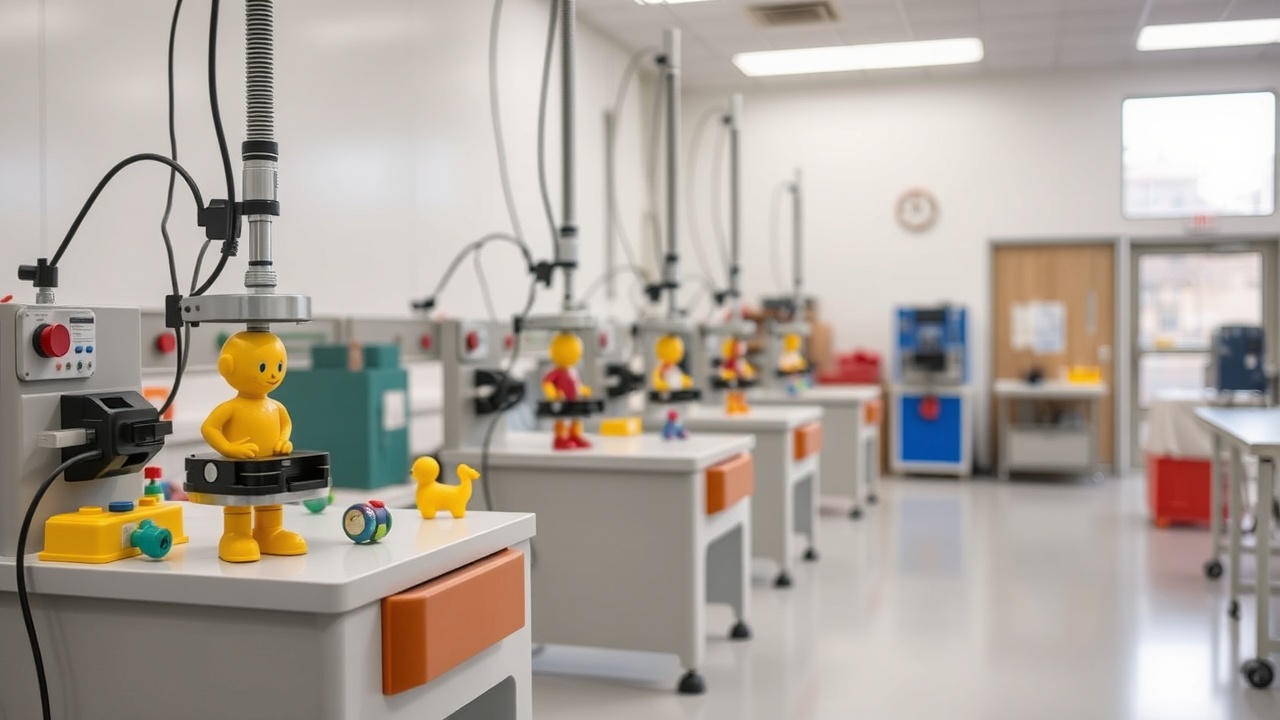
Laboratory testing takes from two to four weeks. During this time the toy is broken, burned (a check of the flame spread rate), soaked in solutions and analysed in a gas chromatograph. A test report is drawn up on the results of each test. The report is the foundation of the certificate. If the report records a non-conformity on even a single point, the certificate will not be issued.
After the tests have been passed successfully, the certification body registers the document in the official register. From that moment the certificate is deemed valid. You are issued a paper document, but legal force rests with the electronic register entry itself. It is advisable to always keep a scanned copy of the certificate and all test reports to hand, to present to inspecting authorities or customers.
A checklist for preparing for certification:
- A technical description (data sheet) of the product has been prepared.
- Safety data sheets are held for the paints, varnishes and adhesive.
- The marking artwork complies with the requirements of Directive 2009/48/EC.
- A conformity assessment route has been chosen (per batch or per series).
- Samples are ready to be handed over to the laboratory (defect-free).
- The contract with the accredited body has been signed.
Risks when working with suppliers and factories
When ordering a batch of toys from a third-party factory (especially at an overseas plant or through contract manufacturing at home), there is a risk that the actual quality will not match what was declared in the samples for certification. A factory may use a certified paint for the samples and then substitute a cheaper equivalent in the main batch. This is a critical control point for the buyer.
To minimise the risks, the contract with the manufacturer must set out liability for the products’ compliance with the requirements of Directive 2009/48/EC. If a spot check or surveillance inspection reveals that the composition of the materials has changed, all the liability and losses must fall on the manufacturer. It is useful to carry out periodic audits of production, even once the certificate is already in hand.
Another risk is design changes made without notice. On a busy board, one part may be swapped for another (for example, a plastic roller for a metal one) without any thought that this changes the safety parameters (weight, edges, electrostatics). Any significant change to the design requires an addendum to the certificate or the issue of a new document.
Importers should be wary of “manufacturer’s factory certificates”. International certificates such as CE or ASTM issued in another jurisdiction are not automatically valid; testing must still be carried out to the harmonised EN standards. Do not believe intermediaries who promise “recognition” of foreign test reports where none applies – in many cases it is legally impossible.
The problem of “grey” laboratories is still relevant. If you are offered a certificate within 2-3 days without providing any samples, it is a fraud. Such certificates are exposed at the very first automated check by the accreditation system. In the end you lose money, time and your reputation with the large retailers, who carefully check the legitimacy of documents.
Storing wooden toys in a warehouse also affects their safety. If the warehouse is a damp basement, the wood will absorb moisture and mould can take hold. On inspection, such products will be deemed unsafe on microbiological grounds. Controlling storage conditions is a continuation of responsibility for the product’s safety after it has been certified.
Cost and timescales: what makes up the budget
Certification is an investment in the legality of the business. The bulk of the costs consists of laboratory testing. The price of a single report can vary depending on the number of parameters. A complex busy board with electrics may require 3-4 reports under different regulations, which substantially increases the final sum.
Paying for the certification body’s services includes the experts’ work in analysing documents and the registration in the register. If a route involving a visit to the production site is chosen, the budget must allow for the expert’s travel costs. For many small businesses the best option is per-batch certification, but as they scale up, a “series” certificate valid for 3 or 5 years turns out to be more cost-effective.
The lead time for processing depends on how busy the laboratories are. In the “high season” (before the New Year holidays) the queues for testing can stretch to 1.5-2 months. Under normal conditions the process takes around 3-4 weeks. It is important to plan this stage well in advance, so that the goods do not sit in the warehouse as dead stock while you wait for the coveted register entry.
Remember the annual surveillance audit if the certificate is issued for a series for a term of more than a year. The surveillance audit costs money (usually 50-70% of the price of the initial certification) and involves either repeat testing of samples or an inspection of production. Missing the surveillance audit leads to the automatic suspension of the certificate, which would make sales unlawful.
Cutting corners on certification often backfires. An attempt to combine toys that are too different into a single certificate (for example, wooden puzzles and soft bears) will lead to a refusal, because these are different product groups with different test methods. Sensible grouping of products helps optimise costs without breaking the law. Sorters of different shapes, for instance, but from the same material and the same producer, can be combined into a single document.
Ultimately, holding a transparent and honest certificate is a powerful marketing tool. Today’s parents are becoming ever more discerning and often ask to see the documents before buying. A QR code on the packaging that leads straight to the register entry significantly boosts trust in the brand and justifies the investment in proper certification.





