
The mechanics of recognition: why a logo on the product changes the game
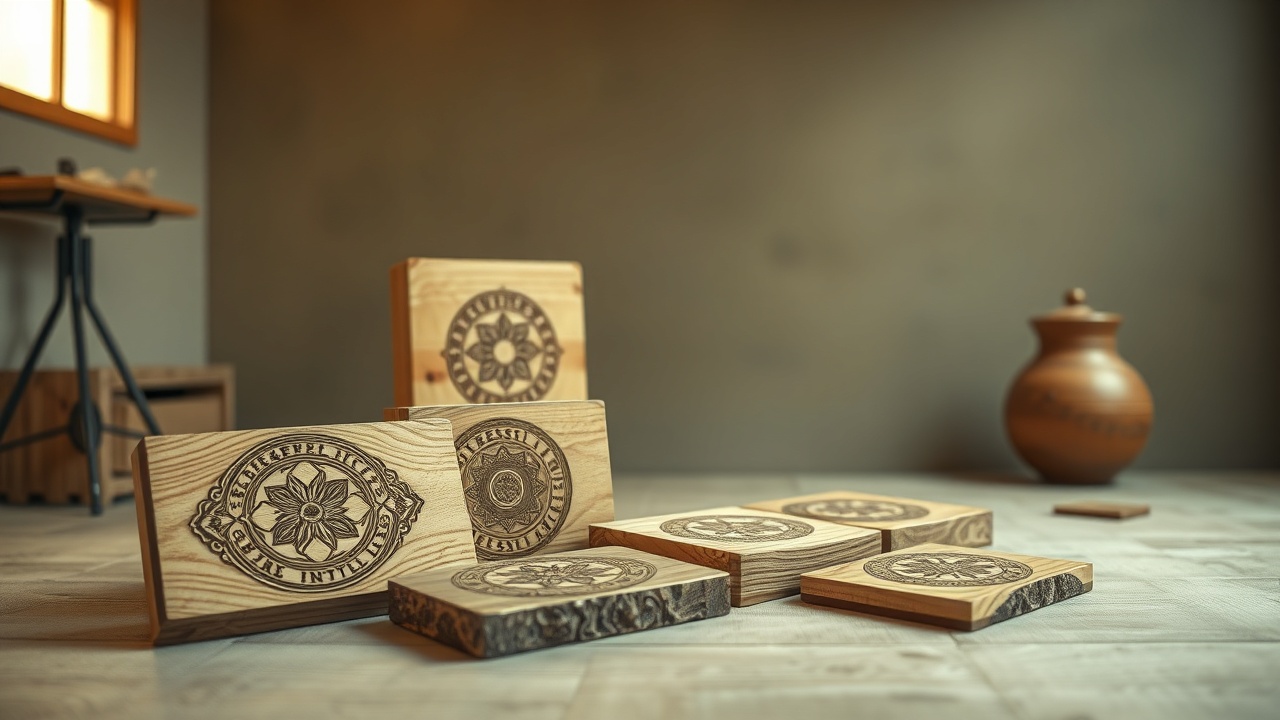
In an oversaturated market, where thousands of sellers offer identical goods from China, visual differentiation becomes a question of business survival. When a buyer scrolls through a marketplace feed, their eye is caught not by the price, which is roughly the same for everyone, but by the details that create a sense of quality. Laser engraving is the very tool that moves a product out of the no-name category and into that of a branded product without colossal investment in industrial design.
The psychology of perception works simply: the presence of a logo on the item itself, and not just on the cardboard box, is read by the consumer as a sign of the manufacturer’s accountability. If a brand is willing to put its name on metal, wood or plastic, then it is confident in the durability of the thing. This subconscious trust converts into clicks on the product listing and, ultimately, into buyouts of orders. Engraving creates added value that, in the customer’s eyes, significantly exceeds the actual cost of the application procedure itself.
It is important to understand that on marketplaces there is a battle for CTR (click-through rate). A listing showing a product with a neat, clearly visible logo looks more professional than a “bare” sample. This makes it possible to justifiably raise the price by 10–15%, warranted by belonging to a brand. At the same time, the cost of a single laser operation can amount to mere pennies when it comes to serial production.
Laser application does not rub off, fade or peel away, unlike stickers or pad printing. This guarantees that even a year after use your logo will still remind the owner of where the purchase was made. This works on LTV (lifetime customer value) and word of mouth: when the buyer’s friends see a quality item with a logo, it will be easier for them to find your shop by searching for the brand name.
Laser technology makes it possible to work with microscopic precision. This opens up opportunities for branding even very small parts — from bag hardware to compact electronics. The more sophisticated and elegant the application looks, the higher the status of the product. In a world where visual content rules sales, the laser becomes an artist’s brush in the hands of the entrepreneur.
In addition, engraving helps to protect content. Competitors copying your photos becomes pointless if the product in the shot proudly bears your registered trademark. This is a legal and technical barrier that cuts off unscrupulous resellers at an early stage, preserving the uniqueness of your storefront.
The technological advantages of the laser over the alternatives
If you compare the laser with other personalisation methods, such as screen printing, UV printing or embossing, laser processing wins on the sum of factors: speed, durability and the absence of consumables. The process involves only a directed beam of high-energy light, which either vaporises the top layer of the material or changes its colour. There is no need to buy paints, printing plates, solvents or special moulds, which radically lowers the barrier to entry for small businesses.
The flexibility of the process is striking: to launch a new batch there is no need to wait for printing plates to be made. It is enough to load a vector file into the software, set the focal distance and the power. This makes it possible to run A/B tests, changing the size or position of the logo on different batches of goods in order to find the option most attractive to the buyer. Responsiveness is a key success factor in today’s e-commerce reality.
Two main types of laser used in branding are worth singling out:
- Fiber lasers — ideal for metals and some types of plastic. They give the sharpest, most contrasting mark and are capable of working at enormous speeds.
- CO2 lasers — best suited to organic materials: wood, leather, paper, glass and acrylic. They gently burn the surface, creating a deep relief or a shade pleasing to the eye.
The eco-friendliness of the method is also becoming an important marketing advantage. Since no toxic inks are used in the process, goods with engraving are easier to position as environmentally friendly or “green”. In an era of conscious consumption, this can be a decisive factor for a certain share of the audience, especially in the niches of home goods, children’s toys or accessories made from natural materials.
The precision of the laser eliminates defects associated with paint “runs” or colour misalignment. The beam strikes exactly where the computer directs it. This minimises production losses and guarantees that every unit is identical in a batch of ten thousand pieces. The buyer receives exactly what they saw in the renders or the professional photos in the listing.
Another important aspect is the possibility of engraving on ready-made items of complex shape. Whereas flat printing requires a smooth surface, the laser (especially with the use of rotary axes) easily handles cylindrical objects such as thermoses, pens or perfume bottles. This broadens the horizons for expanding the range without changing the technology fleet.
The economics of the process: why it is cheap
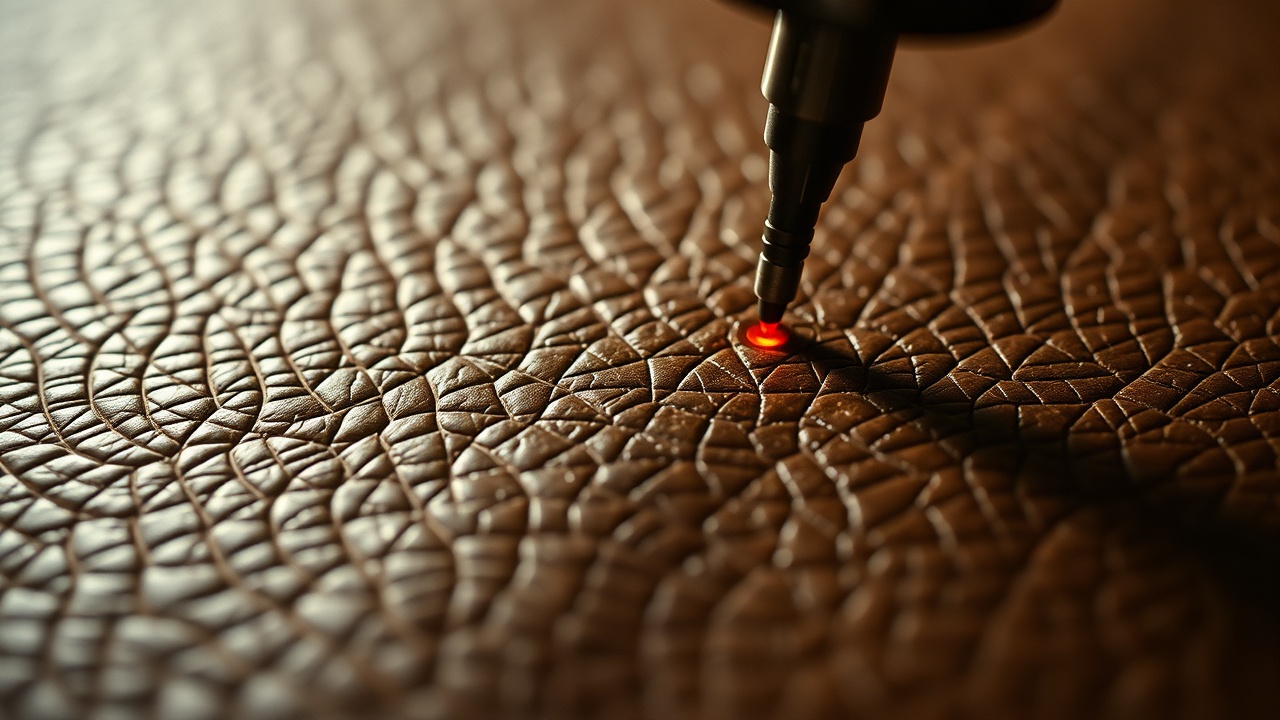
When we talk about “the cheapest method”, we mean not only the cost of a single operation but the total cost of owning the process. If you delegate the task to a contractor, the price of engraving one item in a bulk batch can be anywhere from €0.05 to €0.30. With an average product margin on marketplaces of around €4–6, these costs are practically imperceptible, but the profit in the form of recognition is enormous.
If, however, the business decides to buy its own machine, the economics become even more attractive. Modern desktop fiber markers cost about the same as a professional laptop. With an emitter lifespan of 100,000 hours, the depreciation cost of the equipment per unit of output tends toward zero. The main costs are electricity (like an ordinary kettle) and the wages of an operator, who can pack the goods at the same time.
Let us compare the costs in a table to see clearly the difference between the popular branding methods:
| Application method | Preparation (plates/moulds) | Consumables | Durability | Minimum run |
|---|---|---|---|---|
| Laser engraving | €0 (digital artwork) | None | Lifetime | From 1 pc. |
| Screen printing | From €25 | Ink, screens | Medium | From 50–100 pcs. |
| Pad printing | From €40 | Ink, pads | Low/Medium | From 100 pcs. |
| Embossing | From €65 (magnesium die) | Foil (optional) | High | From 100 pcs. |
The table shows that the laser is the only method that requires no paid preparatory stages. This makes it ideal for start-ups that want to test a niche with minimal risk. You can order 10 test samples, apply the logo and see how the market reacts, without investing tens of thousands in prepress preparation.
In addition, the absence of intermediaries in the form of print shops shortens the logistics chain. You can engrave the goods directly at the warehouse before dispatch to the marketplace. This saves time, which in business is often dearer than money. Speed of response to demand is your competitive advantage.
Nor should the possibility of personalisation be forgotten. For the same money, the laser makes it possible to apply not only a logo but also individual inscriptions (“To my beloved husband”, “For the best boss”). Such a product sells at retail for two to three times more than the standard one, even though the time spent on engraving is the same. This is a direct path to increasing profit without expanding the product matrix.
Materials and their characteristics: where the laser performs best
Not every material reacts to laser radiation in the same way, and understanding these nuances will help you avoid defects and achieve an aesthetic result. Metals — the favourites of laser marking. On anodised aluminium, stainless steel and titanium the laser leaves a clear mark whose colour can be varied from light grey to deep black (through the process of annealing or the creation of an oxide film). This looks expensive and solid.
Wood and plywood give a pleasant burning effect when engraved. Depending on the species of wood, the result can range from dark brown to almost black. On soft species (pine) the engraving comes out deeper, on hard ones (oak, beech) more detailed and contrasting. This is an ideal solution for kitchenware, children’s construction sets and eco-accessories.
Working with leather and faux leather requires care, but the result is worth it. The laser vaporises the thin top layer, creating an embossed image. On natural leather it produces a “branding” effect that is highly prized in the premium segment. However, bear the smell in mind: after processing, leather items need a brief airing.
Plastic — the trickiest category. Some types of plastic (ABS, for example) engrave superbly, changing colour. Others may melt or release harmful gases (like PVC, which is categorically forbidden to process with a laser). To work with plastics, specialised additives are often introduced into the material during moulding, which make the laser mark contrasting.
Glass and ceramics acquire micro-cracks under the action of the laser, which creates a frosted effect. This looks very refined on glasses, bottles or tiles. It is important to use the right settings so as not to cause the whole item to crack because of the temperature difference. Experienced craftsmen often use a damp paper napkin when engraving glass, for gentle heat removal.
Textiles — a niche that is only just being explored. With a laser you can make “distressing” on denim or burn intricate patterns into fleece and dense fabrics. This is far faster and cheaper than embroidery, while giving a unique visual effect that is hard to reproduce by other methods.
Logo design for engraving: how not to ruin the item
Laser engraving is not full-colour printing; it has its own laws of composition. The main rule: the logo must be vector-based. Raster images (photographs) can be engraved too, but for branding a product listing it is better to use clear lines and shapes. The more laconic the design, the more expensive it looks on the finished item.
Thin lines can get lost on coarse materials, while fonts that are too bold can turn into an indistinct blot on small parts. The ideal option is a simplified version of your main logo, adapted for monochrome execution. Remember that the laser most often gives a single colour (although colour engraving is possible on metals, it is a complex and expensive process).
Observe the rules of “free space”. Do not try to fill the entire available surface with the logo. A small, neatly placed mark in a corner or in the centre often looks more stylish and on-brand than a huge inscription across the whole side. Minimalism now dominates in product design, and laser engraving fits perfectly into this trend.
- Check the legibility of the font when reduced to real dimensions.
- Avoid gradients that are too fine (dots) — they can look like dirt.
- Take the texture of the material into account: on wood with a coarse grain, small text will be illegible.
- Use negative space: sometimes a burned background around the letters looks more interesting than the letters themselves.
An important point is placement. Think about how the buyer will hold the product. The logo should be visible but not get in the way of use. On a knife handle, for example, it is better to place it closer to the guard, and on a thermal mug — at eye level or in the lower third. Correct positioning is 50% of success in the visual perception of a brand.
Before launching a print run, be sure to make a few test samples on rejected items or offcuts of the same material. See how the contrast changes under different lighting. What looks good on a monitor screen may look completely different on matte black plastic or shiny chrome.
The impact of branding on marketplace ranking
The algorithms of Wildberries, Ozon and Amazon do not read the presence of engraving directly, but they are very sensitive to user behaviour. A product with a logo has a higher CTR and Conversion Rate (CR). When the system sees that your listing is clicked more often and the product is bought more readily, it raises you in the search results. Branding is an indirect but powerful lever of SEO promotion.
Another factor is reviews. Buyers love to photograph beautiful things. Quality engraving often becomes the subject of macro photography in reviews. Such “live” photos with your logo work better than any professional advertising. They create social proof that the product is original and of high quality, which is extremely important for new buyers.
A branded product is harder to swap during returns. Cases where unscrupulous buyers or warehouse staff swap an expensive item for a cheap equivalent are not rare. Engraving that cannot be removed without damaging the item serves as a kind of seal. This simplifies the process of appealing and defending your rights as a seller before the marketplace administration.
Building a loyal community around a brand is impossible without identifying the product itself. If you sell “just a massager”, you will be forgotten five minutes after the purchase. But if the massager bears your branded mark, you become, in the customer’s eyes, a manufacturer that also has other products. This encourages visits to the brand shop, which is extremely beneficial, since you gain sales without additional spending on attracting traffic.
Using engraving also makes it possible to fight price dumping effectively. You can create a “set” or a unique configuration in which every element is branded. It will be hard for the buyer to compare your price with that of a neighbour who has “almost the same, but without the inscriptions”. You create a unique selling proposition (USP) literally out of nothing, using only light and software.
A practical guide: how to introduce engraving into your business
The first step is an audit of your range. Single out the top positions that bring in 80% of the profit. It is with these that branding should begin. There is no need to try to apply a logo to everything at once. Start with what most often ends up in the shot and what buyers are inclined to show off to others.
The second step is choosing a contractor or equipment. If your turnover does not yet allow you to hire an in-house operator, find a laser cutting and engraving workshop in your city. Agree on partnership terms: with regular orders the price will be considerably below retail. If, however, your sales volume exceeds 500 units a month, it is time to think about buying your own compact marker.
Checklist for launching the engraving process:
- Prepare the logo in .ai, .eps or .dxf formats.
- Determine the exact application coordinates on each type of product.
- Run tests of laser power and speed for each material.
- Create a jig (fixture) for quickly securing the product on the work table.
- Train an employee in the basic safety rules for working with a laser.
The third step is updating the content. As soon as the first batch with engraving is ready, take new photographs. Be sure to include macro shots of the logo. In the product description, state that this is an original branded product and warn against counterfeits. This will increase the value of the offer in the eyes of a discerning customer.
The fourth step is gathering feedback. Keep an eye on the reviews. Do buyers mention the logo? Do they like the quality of execution? Sometimes customers themselves suggest ideas: for example, they may ask to add a graduated scale to a branded mug or a ruler to the body of a tool. Listen to your audience, and the laser will become the tool for bringing these wishes to life.
Scaling and the long-term brand strategy
Laser engraving is only the beginning of the journey in building a strong brand. However, it is the fastest and cheapest way to lay the foundation. Over time, as recognition grows, you will be able to move on to more complex forms of customisation: ordering bespoke moulds, using unique material colours. But even at a high level, the laser remains an indispensable tool for limited series and collaborations.
Imagine you are releasing a limited edition of a product to mark a holiday or event. The laser makes it possible to do this instantly. You are not tied to the huge print runs of print shops. Flexibility is what allows small and medium-sized businesses to beat lumbering corporations. Use this advantage to the full.
In the long term, investment in recognition pays off many times over. A brand is what remains when the product in the warehouse runs out. It is an intangible asset that increases the value of your company. And if this asset can be started with an inexpensive laser unit or a contract with a local workshop, then it would be foolish to miss such an opportunity.
To conclude this review, it is worth noting that the world is moving toward personalisation. The mass production of faceless things is becoming a thing of the past. People want to feel a connection with the creator of the product, they want to own things that have a name. Laser engraving is your way of saying to the buyer: “This item was created by us, we are proud of it and we put our signature on it.” This is the magic of branding, available to everyone today.





