
The differences between MDF and particleboard: advantages and areas of application
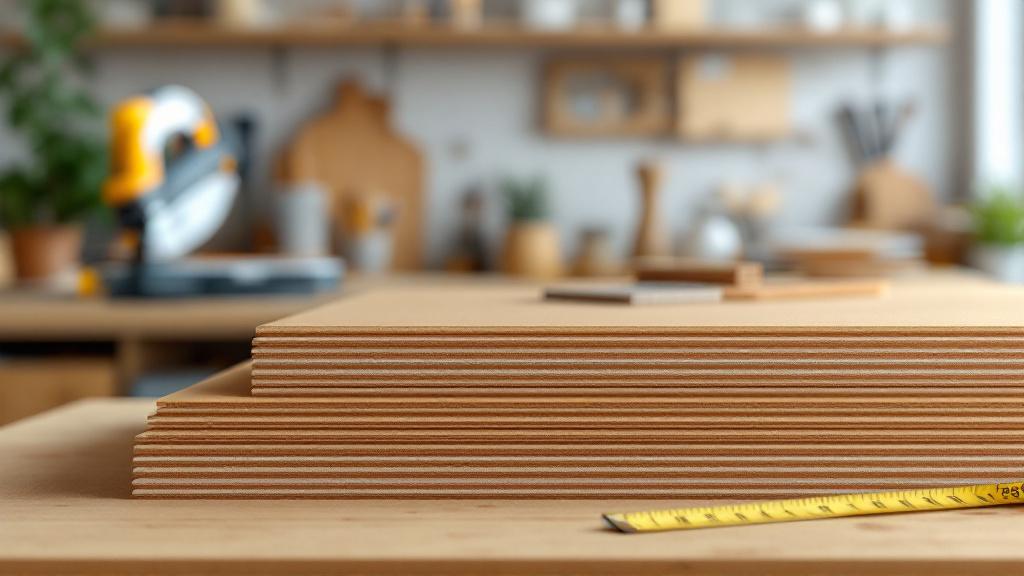
In woodworking and the manufacture of wooden products, the choice of material is always an important stage that determines the end result, the quality and the durability of the product. MDF and particleboard are two of the most popular materials for making furniture, doors, decorative elements and cabinet structures. But even though they look similar and belong to the same group of wood boards, there are many significant differences between them. Understanding these differences helps you choose the optimal material for specific tasks and achieve the best results in production.
In this article we will take a detailed look at what MDF and particleboard are, how they are made, how they differ in structure and technical characteristics, and we will also examine their strengths and areas of application specifically in woodworking. Everything is set out in plain, clear language — so that it is understandable and interesting even without a technical background.
What are MDF and particleboard?
Before delving into a comparative analysis, it is useful to understand how these materials are created, what they consist of, and why their properties differ.
MDF — medium-density fibreboard
MDF is a board made from very finely ground wood fibres. To picture the production process, imagine that the wood is “broken down” into the tiniest particles — like the finest wood dust, which is then thoroughly mixed with synthetic binders, usually adhesive resins.
After this, the mixture is pressed at high temperature and pressure, resulting in a dense and very uniform board. The surface of MDF turns out smooth and even, without knots, cracks or large inclusions — which is exactly why this material is so highly valued in furniture manufacturing.
A special feature of MDF is that its fibres are evenly distributed throughout the board, and this gives several important advantages:
- the material lends itself easily to milling and to creating complex shapes and patterns;
- the surface requires no additional levelling before painting;
- a product made from MDF is strong and resistant to deformation.
Particleboard — a chipboard panel
Particleboard is made differently: its basis is not fine fibres but large wood chips, shavings and coarser wood particles. These chips are also mixed with adhesive resins, but because of the particle size the board’s structure turns out less dense and more non-uniform compared with MDF.
When pressed under pressure and temperature, the chips bind into a board. The surface of particleboard is not as smooth as that of MDF — it is often covered with laminated film or veneer, or painted after thorough preparation.
Particleboard is a more affordable and budget-friendly material, more often chosen for making functional products where the exterior finish does not play a key role.

Structural and technical differences between MDF and particleboard
Now let us focus on the details — it is precisely they that explain why MDF and particleboard behave differently in work and why manufacturers choose one material over the other depending on the task.
1. Uniformity and density of the material
- MDF consists of the tiniest wood fibres, thoroughly pressed together. Therefore the density is the same throughout the board, and the surface is perfectly even, with no voids or inclusions. This structure makes MDF easy to process — cut lines are clearly visible on it, and router bits pass through easily and create a clean contour.
- Particleboard is formed from large wood particles that, during pressing, do not always lie evenly. Because of this the surface turns out rough, with small irregularities, and the board itself is less dense. At the junctions of the chips small voids or micro-cracks can be found.
2. Strength characteristics and wear resistance
- MDF shows high mechanical strength. Thanks to its dense structure, it is resistant to chipping and cracking and is able to withstand significant loads. This is very important, for example, when making doors or fronts with cut-outs and complex shapes.
- Particleboard is less strong. The board’s edges are especially vulnerable to damage and can crumble with careless handling or improper processing. Because of its porous structure, particleboard is more prone to wear.
3. Moisture resistance and behaviour on exposure to water
- MDF in its standard version has moderate resistance to moisture. Its structure is less hygroscopic, and it swells more slowly. Nevertheless, without special water-repellent treatment MDF is not recommended for use in damp rooms.
- Particleboard handles moisture significantly worse: the wood chips swell, the board deforms and loses its shape and strength. For damp conditions, special moisture-resistant versions of particleboard with additives are produced, but they are noticeably more expensive.
4. Weight and density
- MDF is heavier than particleboard by about 20–30%, which is due to its denser structure. This should be taken into account during transport and installation, especially of large-format products.
- Particleboard is lighter, which sometimes offers advantages — for example when assembling furniture on fragile bases or in structures where weight matters.
5. Surface properties and processing
- MDF is ideal for fine processing — it can easily be milled, engraved and cut into complex patterns, achieving a high-quality surface without extra effort. After painting or varnishing, the board looks very aesthetic and expensive.
- Particleboard most often requires additional cladding — veneering, laminating or coating with decorative films. Without this, the surface looks untidy and coarse. Milling and carving on particleboard are possible, but the quality is inferior to MDF — the edges turn out loose and can crumble.

Advantages and features of MDF in the making of wooden products
Because of its unique characteristics, MDF has found wide use in woodworking, especially when beautiful, durable and complex-shaped products are required.
Why is MDF chosen?
- High surface quality. For the manufacture of furniture with painting or complex finishing — kitchen fronts, wardrobes, interior doors — MDF is ideally suited. Its even surface requires no sanding or other preparatory work.
- Design flexibility. Thanks to the possibility of precise milling and carving, MDF is used to make elegant decorative panels, mouldings and carved elements. This opens up scope for design solutions and exclusive projects.
- Strength and durability. Products made from MDF last a long time, do not deform over time, withstand loads and enjoy steady demand.
- Versatility of finishing. MDF can be painted in any colours, coated with varnishes, covered with veneer and decorative films — the result is a wide range of finishing options.
What products are made from MDF?
- Furniture fronts (wardrobes, kitchens, dressing rooms).
- Interior doors and partitions.
- Decorative wall panels.
- Interior elements — skirtings, cornices, ceiling roses.
- Artistic products and wood carving.
Advantages and features of particleboard in the manufacture of products
Particleboard, despite its limitations, remains one of the most sought-after materials in woodworking, especially in the mass production of budget furniture.
Why is particleboard chosen?
- Affordability and economy. The cost of particleboard is lower than that of MDF, which makes it possible to reduce the cost of products without a serious loss of quality for certain tasks.
- Ease and speed of processing. It is easily cut, drilled and assembled, which shortens production time. This is especially convenient for making standard cabinet furniture.
- Good grip on fasteners. Screws, self-tapping screws and connecting bolts hold well in particleboard, which is important when assembling wardrobes and shelving units.
- A variety of cladding options. Thanks to laminating or veneering, you can create a variety of decorative surfaces that give furniture a finished look.
Where is particleboard used?
- Cabinet furniture (wardrobes, chests of drawers, office desks).
- Worktops with a laminated coating.
- Office partitions and space zoning.
- Substrates and bases for more expensive coatings.
How to choose the right material: tips for manufacturers of wooden products
When choosing between MDF and particleboard, it is always important to be guided by the end purpose of the product, the operating conditions and the budget.
- If you need a beautiful, durable front with a decorative finish — it is better to choose MDF.
- For making the internal carcass of furniture, budget products where appearance is not the priority, particleboard is suitable.
- In rooms with high humidity and temperature swings it is preferable to use moisture-resistant materials or to combine them.
- For products with complex geometry and carving it is better to use MDF — this will save time and improve quality.

Technologies for processing MDF and particleboard in woodworking
Processing wood boards is a whole complex of operations on which the quality of the end product directly depends. Let us take a closer look at how MDF and particleboard are processed, what technologies are used, and what nuances should be considered when working with each material.
Processing MDF
MDF is a uniform and dense material, which gives a great advantage in the precision and quality of processing.
- Cutting and sizing
MDF is easily sawn with ordinary circular saws with fine teeth, which ensures an even, clean cut without chipping. When cutting, it is important to use sharp cutting equipment so as not to overheat the material or leave burrs. - Milling and carving
One of the main merits of MDF is the ability to create complex decorative elements. Using routers, you can cut deep patterns, openwork panels, mouldings and skirtings with high precision and detail. Thanks to the dense structure, the edges stay smooth and even. - Sanding and surface preparation
The surface of MDF requires practically no additional sanding, since it is already smooth. Light abrasive treatment helps remove micro-irregularities and prepare the board for painting or varnishing. - Painting and finishing
MDF absorbs paint excellently, so the product turns out evenly coloured, without stains or streaks. Various types of coatings are used — acrylic, polyurethane, enamel paints. Varnishing adds extra shine and protection against moisture. - Laminating and veneering
Although MDF already has a pleasant surface, to give it a wood texture or other effects it is covered with decorative veneer or laminate. The board’s adhesive base ensures excellent bonding with cladding materials.
Processing particleboard
Particleboard is a looser and more non-uniform material, which requires more careful handling.
- Cutting and sizing
When cutting particleboard you need to use saws with fine, sharp teeth, otherwise the board’s edges may crumble. Special saws with a coating of hard materials are often used to extend the tool’s service life. - Edge processing
The edges of particleboard are the most vulnerable spot, prone to delamination and chipping. That is why, after cutting, they are always treated with edge banding, veneer or plastic. This not only protects the board but also gives the product a finished appearance. - Sanding
The surface of particleboard is rough, so before painting or laminating it is thoroughly sanded to remove irregularities and improve the adhesion of the decorative coating. - Laminating and veneering
Since the surface of particleboard is not very attractive, laminating is most often used for the final finish — the application of a thin decorative film with a pattern and protection. Finishing with natural wood veneer is also possible, which gives the product a more prestigious look. - Painting
Particleboard can be painted, but because of the board’s structure this requires additional priming and sanding. The paint goes on less evenly than on MDF, so this method is more often used for internal elements or less visible surfaces.

Features of making products from MDF and particleboard
When manufacturing furniture and other products, it is important to consider the characteristics of the materials in order to ensure quality and durability.
Making products from MDF
- Doors and fronts:
Thanks to its uniform structure and smooth surface, MDF makes it possible to create doors with fine decorative elements — milling, panels, inserts. Such products look elegant and last a long time. - Painted furniture:
Kitchens, wardrobes and chests of drawers with painted fronts are a classic example of using MDF. The surface is easily covered with paint, which holds for years without cracks or peeling. - Decorative panels and mouldings:
MDF is used to make a variety of decor elements — ceiling cornices, skirtings, ceiling roses, false beams, which can be painted in any colour to create a unique interior. - Products of complex shape:
Thanks to the possibility of precise milling, MDF is used to create carved elements that are hard to obtain from solid wood without great expense.
Making products from particleboard
- Cabinet furniture:
The main use of particleboard is making the carcasses of wardrobes, shelving units and chests of drawers. Thanks to its low cost and ease of processing, this material is ideal for mass production. - Worktops and work surfaces:
Particleboard is often used as a base for worktops covered with laminated film or plastic, which ensures good wear resistance and moisture resistance. - Office partitions and wall panels:
Its light weight and affordability make particleboard a suitable material for inexpensive space-zoning structures. - Furniture parts:
Some elements that are not subject to loads or not visible from the outside are made from particleboard — this saves money without a loss of functionality.
Examples of the successful use of MDF and particleboard in woodworking
To understand exactly how these materials work in real production conditions, let us look at a few examples.
MDF
- Premium-class kitchen fronts:
Manufacturers choose MDF for making fronts with a glossy or matt paint finish. The material makes it possible to create smooth, even surfaces without defects, and milling adds elegance. Such kitchens last a long time and please the eye. - Interior doors with carving:
MDF doors are a classic for interiors where design matters. Carving and complex patterns make the doors original, while the density of MDF ensures strength. - Decorative panels for walls and ceilings:
MDF makes it possible to produce panels with a variety of textures and shapes that can be painted to suit any interior style.
Particleboard
- Economy-class office furniture:
Most office desks, cabinets and shelving units are made from particleboard with a laminated coating. This is cheap, fast and practical. - Furniture for living spaces:
Cabinet elements of wardrobes and chests of drawers made from particleboard for laminating make it possible to achieve an aesthetic appearance at an affordable price. - Structures for exhibitions and presentations:
Particleboard is often used to make temporary structures, stands and partitions thanks to its ease of processing and low cost.

Tips for choosing a material depending on the task
- For decorative and visible elements (fronts, doors, panels) — MDF. This will ensure durability, beauty and the possibility of complex processing.
- For load-bearing structures and internal carcasses — particleboard. It is cheaper and makes it possible to produce large volumes of products quickly.
- For damp rooms — special moisture-resistant versions of MDF and particleboard, additionally treated with protective compounds.
- If the weight of the structure matters — bear in mind that MDF is heavier, and choose the material accordingly.
Modern technologies for the protective treatment of MDF and particleboard
Protecting wood boards is an important stage that makes it possible to significantly extend the service life of products and preserve their aesthetic appearance in a wide variety of operating conditions. Let us look at what methods and technologies are used to increase the durability and safety of products made from MDF and particleboard.
1. Moisture protection and water-repellent treatment
- For MDF:
Classic MDF is not water-resistant, so for rooms with high humidity manufacturers use moisture-resistant modifications of the board. For this, the fibres are impregnated with special resins and additives that prevent swelling and rot. Additionally, the surface is coated with water-repellent varnishes and paints, which makes the product suitable for use in bathrooms and kitchens. - For particleboard:
Moisture-resistant particleboard is made using special adhesive compounds and hydrophobic impregnations that reduce water absorption. Such boards are often used to make furniture for bathrooms and offices with high humidity. Laminating with films that have moisture-protective properties is also used.
2. Fire-retardant treatment
In a number of cases, especially when making furniture for public spaces and offices, the fire resistance of products is important. For MDF and particleboard there are special impregnations and additives that slow down the burning process and reduce the release of toxic gases. This increases operational safety and helps meet fire-safety standards.
3. Antibacterial and antifungal protection
Wood materials are prone to attack by mould and microorganisms, especially in conditions of high humidity. To combat this, antiseptic impregnations and protective coatings are used that prevent the development of fungus and bacteria, keeping a healthy atmosphere in rooms.
4. Protective coatings and decorative films
- Laminating — a thin layer of polymer film applied to the surface of the boards. Laminating improves moisture resistance, resistance to abrasion and scratches, and also broadens design possibilities — you can imitate wood, stone, metal and any other textures.
- Veneering — the gluing of thin slices of natural wood onto the board, which gives the product an elite appearance and preserves all the advantages of particleboard or MDF as a base.
- Painting and paint-and-varnish coatings — make it possible to create a smooth, glossy or matt surface, and also provide additional protection against external factors.
The environmental soundness of MDF and particleboard: what is important to know?
Modern production of wood boards pays special attention to environmental standards. This is important both for the end consumer and for manufacturers striving for sustainable development.
The use of adhesive compounds and formaldehyde
One of the key concerns for buyers is the content of formaldehyde — a substance used in glues to bond wood particles. In old or cheap materials the concentration of this substance can be harmful to health.
- High-quality MDF and particleboard are made using adhesive systems with a low formaldehyde content or entirely without it (for example based on melamine or isocyanates).
- Manufacturers also use the E1 and E0 standards, which guarantee a safe level of emission of volatile substances.
Environmental soundness and recycling
- Both materials are made from wood waste and shavings, which reduces the burden on forest resources and promotes the rational use of wood.
- MDF and particleboard are recyclable and can be reused in production or to produce fuel.
- Modern enterprises strive to minimise waste by optimising cutting and using high-tech lines.
Trends and innovations in the production of MDF and particleboard products
The woodworking industry does not stand still — materials are being improved, and new technologies and approaches are appearing that help create higher-quality and more functional products.
1. Combined materials
Modern products are often made from combined materials — for example, a carcass of particleboard and fronts of MDF. This approach makes it possible to combine affordability with decorative qualities.
2. New types of coatings
Innovative coatings have appeared that make MDF and particleboard resistant to scratches, ultraviolet light and chemical influences. This broadens the field of application of the materials, especially in conditions of intensive use.
3. Environmentally sound and safe glues
The popularity of water-based adhesive systems with minimal release of volatile substances is growing, which improves the environmental safety of products and reduces harmful impact on the environment.
4. Digital processing and automation
The introduction of CNC machines and digital technologies makes it possible to create products with unique designs and high processing precision, minimising waste and increasing productivity.
The bottom line: how to make the right choice?
The choice between MDF and particleboard depends on a multitude of factors:
- For products with high decorative requirements — choose MDF, which is excellent for complex milling, painting and creating exclusive designs.
- For budget but sturdy structures — particleboard will be a good solution, especially in combination with quality cladding.
- When moisture resistance and durability are needed — choose modified versions of the boards with protective coatings.
- Consider environmental soundness and safety — give preference to boards with a low formaldehyde content and quality certificates.





