
The advantages of using CNC machines in woodworking for business.
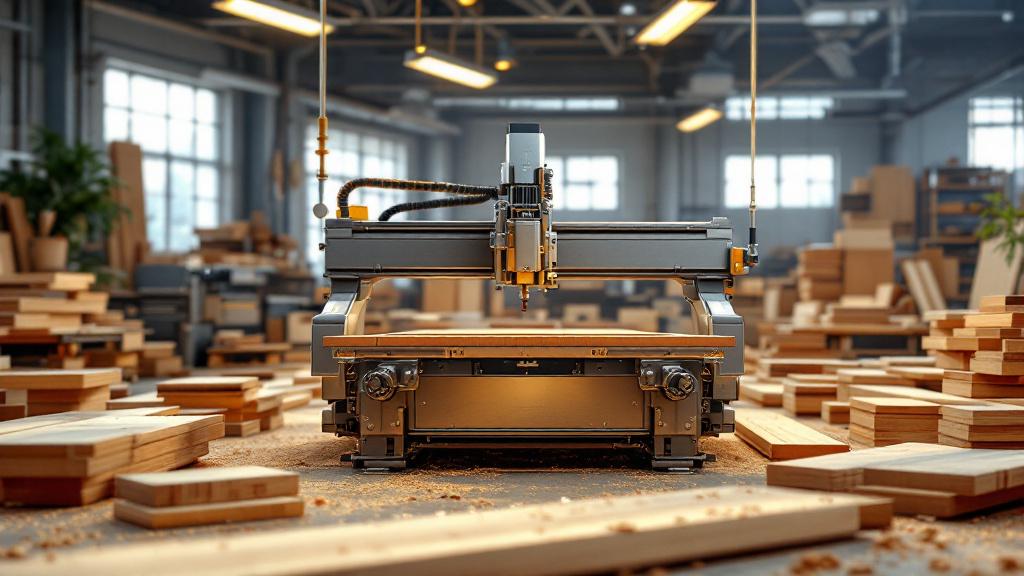
Woodworking has always been associated with craftsmanship and manual labour. For centuries, artisans created unique products, passing their skills from generation to generation. However, the modern market places different demands: high production speed, flawless precision, and the ability to work on unique, complex projects. Manual labour, for all its value, often cannot deliver these parameters at the required scale. As technology advanced, manufacturers began looking for ways to increase efficiency while preserving quality.
In this context, CNC machines (computer numerical control machines) have become a key tool for many companies working with wood. They represent not merely a new piece of equipment but a genuine technological leap that has transformed approaches to production. Where making complex parts once required long hours of painstaking work, the same task can now be completed in less time while guaranteeing that every copy is identical. This radically changes the business model, making it possible to shift from one-off orders to serial production without any loss of quality. The introduction of CNC technology has been a response to a market that values both speed and quality.
Switching to CNC equipment is a strategic decision for any business that wants to stay competitive. It’s not just the purchase of a machine but an investment in the enterprise’s future. Automating processes makes it possible to optimise every stage of production, from cutting the material to the finishing operations. It avoids the errors associated with the human factor and delivers consistently high product quality. Production becomes more predictable and controllable. As a result, companies can offer their clients not only standard solutions but also products that would previously have been difficult or impossible to make by hand.
Many managers of woodworking enterprises have already realised that scaling the business is difficult without CNC technology. When order volumes grow, manual production runs up against limits of time and labour input. CNC machines, on the other hand, easily handle the increased load while maintaining efficiency. They make it possible to switch quickly between different tasks, from creating simple parts to intricate carving, which makes production more flexible. This is especially important for companies working with a wide product range. The flexibility CNC offers allows them to respond quickly to changes in demand.
An important aspect of adopting CNC is standardisation. Where each craftsman might once have carried out the same operation in their own way, a CNC machine does it according to a set program, which rules out any deviations. Standardisation, in turn, simplifies quality control and makes the end product more reliable. This increases client trust and builds a positive reputation for the company. Clients know they’ll get exactly what they ordered, with no surprises. This approach to production becomes the foundation for long-term success.
Thus, CNC machines are more than just a tool. They are the foundation for building a modern, efficient, and competitive enterprise in the woodworking sector. They open the door to new projects, optimise existing processes, and help the business grow. It is a technological solution that combines the centuries-old traditions of working with wood with the possibilities of the digital age. In the following sections, we’ll take a detailed look at exactly how CNC machines change the business.
Precision and repeatability: the key to flawless quality
One of the most significant advantages of CNC machines is their exceptional precision. A person, even the most experienced craftsman, cannot ensure the perfect repeatability of every movement. The slightest variation in the pressure applied, the angle, or the path of movement can cause parts to differ slightly from one another. A CNC machine, on the other hand, working from a pre-loaded program, performs each operation to within tenths or even hundredths of a millimetre. This makes it possible to create absolutely identical products, which is critically important for serial production.
Repeatability is not just a convenience but an economic necessity. For example, when making furniture components such as cabinet fronts or chair legs, every part must fit the others perfectly. If even one of them has an error, this can slow down assembly or lead to rejects altogether. CNC machines guarantee that all elements cut from the same program will be fully interchangeable. This simplifies logistics and assembly and reduces the percentage of defective products, which directly affects the profitability of the business.
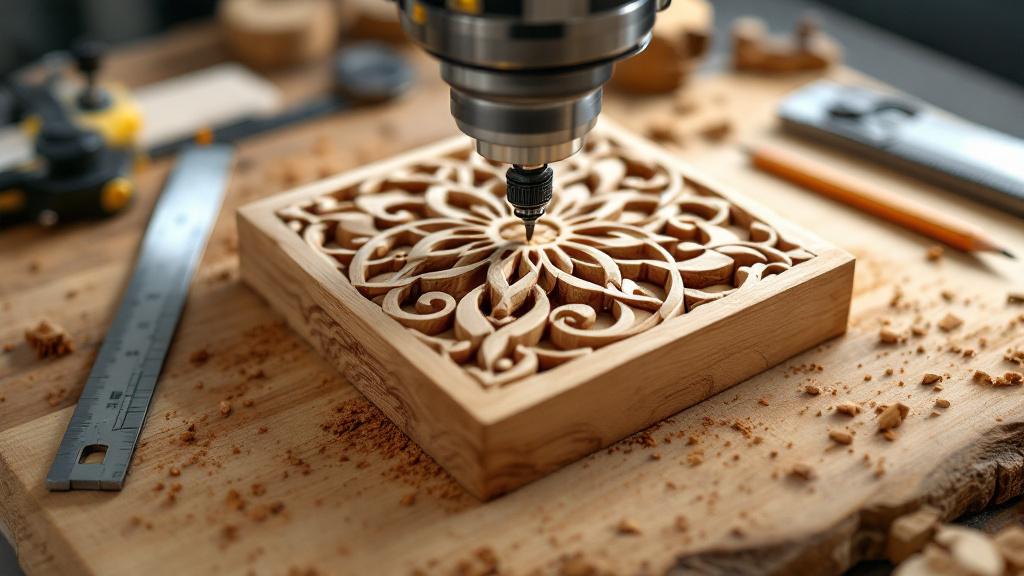
In the production of complex decorative elements, such as carved panels or milled patterns, the precision of a CNC machine makes it possible to bring the most intricate ideas to life. A program created from a 3D model controls the tool so that it reproduces every curve and line with mathematical accuracy. Hand carving, for all its uniqueness, cannot deliver such detail and symmetry. A CNC machine can reproduce a complex design an unlimited number of times, which opens up new possibilities for the mass production of exclusive products.
This precision also makes it possible to work with very thin and delicate materials, where any error can cause breakage. Computer-controlled cutters move at set speeds and pressures, which rules out the risk of damaging the workpiece. This is especially important when working with valuable wood species, where the cost of the material is high. Using CNC machines makes it possible to minimise losses and use every workpiece as efficiently as possible.
One example of using high precision is the production of intarsia or marquetry, where different wood species are joined into a single pattern. A CNC machine can cut the smallest details with perfect geometry, making the joints practically invisible. Manual work here would be extremely time-consuming and would require incredible skill, and the result still wouldn’t be so perfect. CNC makes it possible to create complex, multi-part compositions with minimal effort.
Precision also affects the quality of the finish. A correctly cut part requires less sanding and refining, which reduces the time spent on the final operations. If the edges and surfaces are even and smooth from the outset, the end product looks neater and more professional. This not only saves time but also raises the overall perception of the product’s quality. Clients immediately see the difference between a product made on precision equipment and one made by hand.
For a business that aims to reach a new level, the repeatability and precision provided by CNC are fundamental. They make it possible not just to produce products, but to create them in accordance with strict quality standards. This forms a reliable basis for growth and helps win the trust of clients who value consistency and flawlessness. Ultimately, it is these very qualities that distinguish professional production from amateur work.
Optimising production and reducing costs
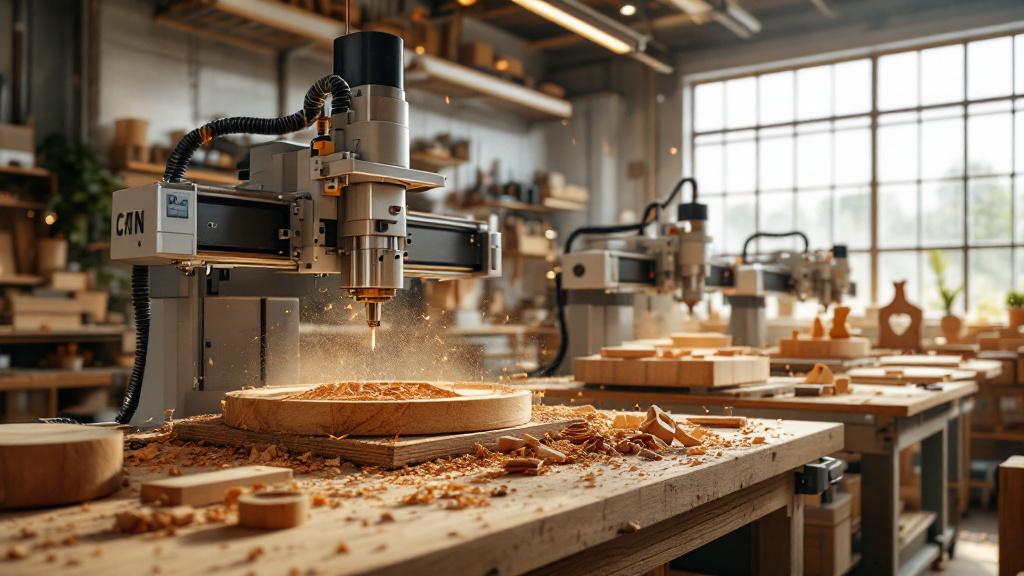
The introduction of CNC machines is directly linked to the optimisation of production processes, which in turn leads to a significant reduction in costs. One of the key factors here is material savings. The software controlling the machine makes it possible to lay out parts on a sheet or workpiece as efficiently as possible. This is called nesting, and its purpose is to minimise the amount of waste. Instead of cutting parts one by one, leaving large gaps between them, the program arranges them so as to use up almost the entire area of the material.
Imagine you need to cut many round or shaped parts from a rectangular sheet of plywood. Doing this as economically as possible by hand is a difficult task. A person can’t calculate the optimal arrangement of all the elements to reduce the amount of offcuts. A CNC machine with the appropriate software does this in a matter of minutes, creating a cutting plan that can save up to 20–30% of the material. For large-scale production using tonnes of wood, this translates into enormous savings.
Another important aspect is the reduction in production time. CNC machines work around the clock and without breaks, performing operations at high speed. While the operator prepares the next workpiece or handles another task, the machine keeps working. This makes it possible to significantly shorten order lead times and increase the overall volume of production. Achieving such speed by hand is impossible, since a person is subject to fatigue, needs breaks, and their speed is limited by physical capabilities.
Lower labour costs are another obvious plus. A single operator can oversee the work of several CNC machines at once, which reduces the number of staff needed to do the same work. Where each operation once required a separate specialist (a miller, a carver, a sander), one person can now manage the entire process, from preparing the program to the final machining. This doesn’t mean people lose their jobs; rather, their qualifications rise, and they move from routine operations to more complex ones that require intellectual effort.
Minimising rejects, which we discussed in the previous section, is also part of the savings. Every defective part is not only a loss of material but also wasted time. Thanks to their precision and repeatability, CNC machines practically eliminate the rejects caused by measurement errors or careless execution. This means that every workpiece that goes into the machine is highly likely to become a finished product.
Integrating CNC machines into the production process makes it possible to automate other stages as well. For example, some models can automatically change tools or load and unload workpieces. This further reduces time and labour input. As a result, the cost per unit of production falls, which makes the business more competitive in the market. The savings achieved at every stage make the use of CNC technology financially justified.
Thus, optimising production with CNC is a comprehensive process that touches every aspect of the business. Material savings, reduced time, lower labour costs, and minimised rejects — all of this enables a company not just to survive but to thrive in the market. It is an investment that pays off not only through increased productivity but also through reduced costs. The business becomes more flexible and profitable, and its market position is strengthened.
Expanding the product range and increasing the complexity of products
The use of CNC machines opens the door for a woodworking business to create products that would be impossible or prohibitively expensive with manual production. The capabilities of programmed control make it possible to create complex, three-dimensional shapes, curved surfaces, and highly detailed parts. Previously, this required years of training and the unique skills of a master carver. Now, with a 3D model in hand, a CNC machine can render it in wood with perfect precision. This allows the business to offer clients unique and exclusive products that set it apart from the competition.
One example is the production of bent furniture or complex decorative elements. With CNC, parts with curved lines and shapes can be cut from a solid piece of wood, giving the product elegance and a modern look. Doing this by hand would be extremely difficult, since it would require various bending and gluing techniques that would increase production time and cost. A CNC machine does this quickly and precisely, making it possible to create products with a unique design in large volumes.
Another direction is the creation of architectural elements. Carved casings, balusters, columns, capitals — all of these can be made with a CNC machine. The program can reproduce a complex ornament or pattern that repeats on every part without any deviation. This is especially important when restoring historic buildings or creating classical interiors, where a perfect match of all elements is required. CNC technology makes it possible to combine tradition with the possibilities of digital modelling.
Working with various materials also becomes easier. A CNC machine can work not only with solid wood but also with MDF, plywood, plastic, and other composite materials. This makes it possible to expand the product range and offer clients a wider choice. For example, you can create combined products where some parts are made of wood and others of different materials, which gives them a distinctive style. This makes the business more flexible and better able to meet the demands of different market segments.
The ability to switch quickly between different projects is another advantage. A CNC machine can run one program and then, after a quick tool change, immediately move on to another, completely different task. This makes it possible to work on individual orders without stopping the main production. For example, you can carry out serial work and, in spare time, make exclusive parts for a specific client. This makes the business more flexible and allows it to earn from different types of orders.
Creating complex shapes and structures with CNC is not just a technological possibility but a marketing tool. A company that can offer a client a unique design and high quality will always have an advantage. This makes it possible to set a higher price for the product and to build the image of an expert in its field. Clients are willing to pay more for uniqueness, quality, and the chance to bring their ideas to life, and CNC machines provide that chance.
Thus, CNC machines are a tool for creativity and business growth. They make it possible to go beyond standard solutions and create products that impress with their complexity and beauty. They are not just equipment but a strategic asset that enables a company to take a leading position in the market and attract clients looking for something special.
Improving safety in production
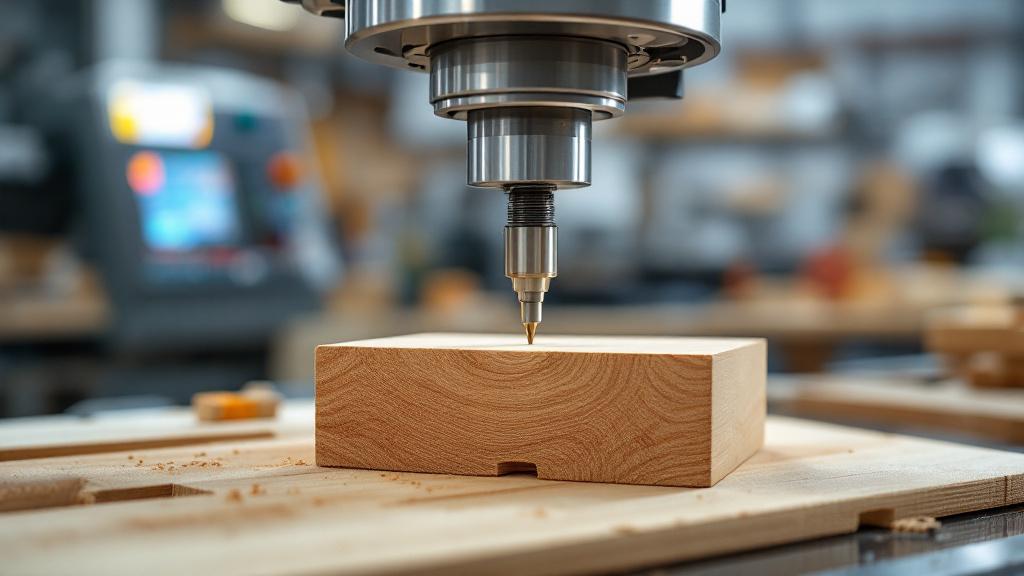
The question of safety in any production is one of the top priorities. Woodworking has always been considered one of the most injury-prone industries because of the use of sharp, fast-rotating tools. Manual work with cutters, saws, and chisels involves a high risk of injury, up to the most serious kind. The introduction of CNC machines makes it possible to significantly reduce these risks and make the working environment much safer. The main reason is that the operator has almost no contact with the cutting tool during operation.
In traditional production, the worker has to hold the workpiece, bring it up to the tool, and control the force and speed of feed. This requires constant concentration and carries the risk of a snag or an accidental movement that can lead to injury. A CNC machine, by contrast, securely fixes the workpiece, and the tool moves according to a set program without human involvement. The operator stays at a safe distance and merely monitors the process. This eliminates direct contact with the dangerous zones of the machine.
Most modern CNC machines are equipped with safety systems that automatically stop operation in the event of an emergency. For example, if the door of the protective enclosure opens during operation, the machine stops instantly. Sensors may also be installed that respond to overheating, a fault in material feed, or other malfunctions. These systems prevent accidents and protect both the operator and the equipment itself.
Another important aspect is reducing the risk of injury from dust and fine shavings. During manual woodworking, a large amount of particles is thrown into the air, which can be harmful to health with prolonged exposure. CNC machines are usually fitted with extraction systems that collect most of the dust and shavings. This makes the air in the production area cleaner and reduces the strain on employees’ respiratory systems. As a result, working conditions become more comfortable and safer.
Automation also makes it possible to do away with the need to perform monotonous and tiring operations that can lead to accumulated fatigue and, as a consequence, to mistakes. For example, prolonged work with a hand router causes vibration that can affect the health of the joints and nervous system. A CNC machine does this work without human involvement, which reduces the physical strain on employees and improves their overall well-being.
From a management perspective, the introduction of CNC machines simplifies compliance with occupational safety standards. Having automated equipment and safety systems makes it easier to pass inspections, since all processes are controlled and risks are minimised. This not only creates a safe environment for workers but also protects the business from possible fines and lawsuits related to workplace injuries.
Thus, switching to CNC equipment is not just a matter of efficiency but also of the business’s social responsibility. Ensuring employee safety is not only a legal requirement but also the basis for creating a healthy working atmosphere. CNC machines make production safe, reduce risks, and create conditions for comfortable and efficient work. It is an investment in the well-being of employees and the stability of the company.
Speeding up order fulfilment
In the face of fierce competition in the woodworking market, the speed of order fulfilment is becoming one of the key advantages. Clients don’t want to wait months for their order to be completed. The introduction of CNC machines makes it possible to significantly shorten this time, which makes the business more attractive. The acceleration happens on several levels, starting with the production process itself.
As we’ve already noted, CNC machines work quickly and without breaks. They can perform complex operations in a matter of minutes, whereas manual work would take several hours or even days. For example, milling a complex pattern on a furniture front, which by hand can take a whole day, takes 30–40 minutes on a CNC machine. This makes it possible to process large volumes of products quickly and reduce the order backlog.
Another factor affecting speed is the ability to work around the clock. A CNC machine doesn’t get tired, doesn’t need sleep or a lunch break. If production is organised in several shifts, the machine can run 24/7, which substantially increases productivity. This makes it possible to fulfil large orders within tight deadlines and take on more projects at once. If needed, the machine can be set to run unattended at night, and in the morning you simply collect the finished parts.
Software also plays an important role in speeding up the process. Preparing the program for the machine takes far less time than drawing up plans and marking out parts by hand. A designer or process engineer creates a model in a special program, and it is instantly converted into commands for the machine. This makes it possible to quickly make changes to the design or create new projects. If a client wants to change something in their order, it can be done in a few minutes without starting all the work over again.
The acceleration applies not only to production but also to logistics and assembly. Since all parts produced on a CNC machine have perfect geometry, they assemble easily and quickly. There’s no need to fit or rework each part by hand, which significantly reduces assembly time. This is especially important for manufacturers of furniture or other complex products, where every element must fit perfectly into the structure.
Thus, CNC machines allow a company to work faster and more efficiently. This makes it possible not only to fulfil orders on time but also to offer shorter lead times than competitors. Clients value speed and reliability, and CNC technology makes it possible to provide both. The company becomes more flexible and can respond quickly to market demands, which is the foundation for steady growth and success.
Quality management and minimising rejects
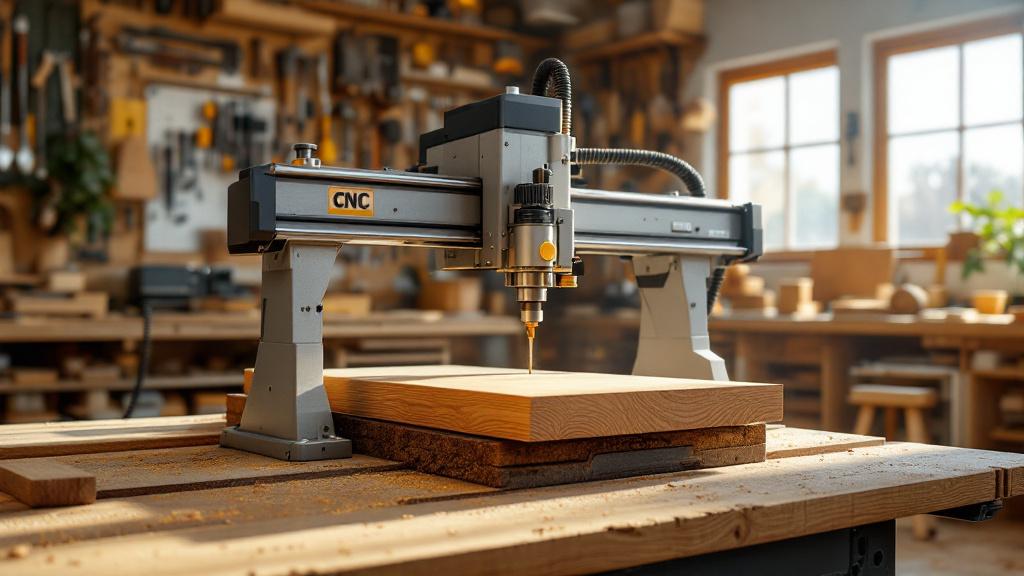
Quality control is one of the most important stages in any production process. In woodworking, where even a small inaccuracy can ruin the appearance and functionality of a product, this is especially relevant. Manual production always carries the risk of the human factor: fatigue, inattention, or simply insufficient experience can lead to mistakes. Thanks to their automation, CNC machines make it possible to practically eliminate this factor and achieve consistently high quality.
The basic principle of a CNC machine’s operation is the execution of a program in which every movement of the tool is strictly defined. This means that if the first part is made correctly, the thousandth will be exactly the same. This makes it possible to set high quality standards and to be confident that all products will meet them. In manual production, each batch has to be checked selectively, whereas with CNC machines you can be confident in the quality of every part.
Minimising rejects is a direct result of this consistency. Where the reject rate in manual production can run to several percent, on CNC machines it tends towards zero. Errors can only arise from initially poor-quality material or a program fault, not from operator mistakes. This saves not only materials but also the time that was previously spent reworking or remaking defective products.
Improved quality is also linked to the ability to work with more complex shapes. A CNC machine can perform milling with high precision, creating smooth, even surfaces that require minimal subsequent processing. This reduces the time spent on sanding and refining and increases the aesthetic appeal of the end product. The fewer manual operations, the lower the risk of scratches, chips, or other defects.
For a business that works with expensive wood species, minimising rejects is a critically important factor. The cost of valuable wood can be very high, and every spoiled workpiece means significant financial losses. A CNC machine makes it possible to use such materials with maximum efficiency, which makes production more profitable.
In addition, quality control is simplified. All the operating parameters — speed, depth of cut, path of movement — are set in the program and do not change during operation. This makes it possible to calculate precisely the time and materials for each project. A manager can be confident that the order will be completed on time and to the proper standard, which increases client trust and improves the company’s reputation.
- Guaranteed dimensional accuracy
- Perfect repeatability of complex shapes
- A reduced reject rate
- Simplified quality control
- Time and material savings
Thus, using CNC machines is not just a way to produce faster but a way to produce better. It is an investment in product quality, which is the foundation for long-term success. A company that can guarantee its clients flawless quality will always have an advantage in the market.

Integration with modern technologies
Modern CNC machines are not isolated equipment but part of the enterprise’s overall digital ecosystem. Their capabilities extend far beyond the simple machining of wood. Integration with other technologies makes it possible to automate the entire production cycle, from design to the shipment of finished products. This gives the business an enormous advantage, as all processes become interconnected and controllable.
One of the key elements of integration is the link with CAD (Computer-Aided Design) and CAM (Computer-Aided Manufacturing) programs. A designer creates a 3D model of the product in a CAD program, after which it is imported into a CAM program. There, a control program (G-code) is generated automatically or manually, which is then loaded into the machine. This eliminates the need to transfer drawings by hand, which reduces time and minimises errors. The whole process becomes digital and fast.
The link with production management systems (ERP) also plays an important role. CNC machines can be connected to a common network that makes it possible to track their operation in real time. A manager can see how many parts have been made, how long each operation took, and how much material was used. This makes it possible to plan production more efficiently, allocate resources, and keep deadlines under control. The data received from the machines helps in making more considered decisions on process optimisation.
Automation can also cover other stages. For example, some machines can automatically feed workpieces from a magazine or remove finished parts. This makes it possible to work almost without operator involvement. Robotic systems can load and unload parts, which makes production even more efficient and safe. This is especially relevant for large-scale production, where order volumes are very high.
The use of cloud technologies also expands the possibilities of CNC. Programs and models can be stored in the cloud, which allows employees to work on a single project from different locations. This simplifies collaboration with remote designers or contractors. Software updates can also happen remotely, which ensures that the machines are always running the most up-to-date version.
- A direct link with CAD/CAM programs
- Integration with ERP systems for control and planning
- The use of robotics to automate loading/unloading
- Cloud solutions for collaboration and data storage
Thus, CNC machines are not just milling or sawing machines but intelligent equipment that can be integrated into the enterprise’s overall management system. This makes it possible to create a fully automated and efficient production cycle that works as a single mechanism. Technological integration is the path to building a modern, high-tech, and competitive business.
Training and staff qualifications
The introduction of CNC machines changes not only production processes but also the requirements for staff qualifications. Where a craftsman was once expected first and foremost to have hand-tool skills and knowledge of the characteristics of wood, now the skills of working with software, reading drawings, creating 3D models, and operating complex equipment come to the fore. This doesn’t mean the old skills become unnecessary; rather, they are complemented by new, technological ones.
A CNC machine operator is no longer just a worker but a specialist who must understand the principles of how the equipment works, be able to read and create programs, and know the basics of materials science and mechanics. They need to be able to respond quickly to faults, find and fix problems, and optimise programs to improve efficiency. This is more complex and interesting work that requires continuous learning and development.
For the business, this means the need to invest in staff training. A company that buys a CNC machine must be prepared to train its employees to work with it. This can be either in-house training or bringing in external specialists or sending employees on courses. Such investments pay off, since qualified staff can use the equipment to its full capacity, which directly affects productivity and profitability.
However, it’s worth noting that learning to work on a CNC machine takes far less time than learning traditional craft skills. Becoming a master of hand carving takes years of practice. But mastering work on a CNC machine takes just a few months. This makes it possible to find qualified specialists more quickly and reduce the time spent training new employees.
At the same time, working on a CNC machine makes it possible to redeploy the workforce. Where a craftsman once spent a lot of time on routine operations, they can now take on more complex and creative tasks. For example, they can work on the design of new products, handle quality control, or train other employees. This increases the value of each specialist and makes their work more productive.
A list of the skills needed to work on a CNC machine:
- Knowledge of the basics of CAD/CAM programs
- The ability to read technical drawings and 3D models
- An understanding of the principles of how CNC equipment works
- Skills in setting up and maintaining the machine
- Knowledge of the properties of various wood species and materials
- The ability to analyse and optimise processes
Thus, the introduction of CNC machines changes the requirements for staff, making them more technological and intellectual. This creates new opportunities for employee growth and development and allows the company to attract more qualified specialists. Investment in staff training is an investment in the future of the business, one that pays off through increased efficiency and quality.
Conclusion: CNC machines as an investment in the future
The introduction of CNC machines into woodworking production is not just a modernisation but a strategic decision that allows the business to move to a new level. We have looked at the many advantages this technology offers, and each of them is important in its own way.
- Precision and repeatability ensure consistent quality and minimise rejects.
- Production optimisation makes it possible to save on materials, time, and labour resources.
- An expanded product range opens up new opportunities for design and attracting clients.
- Improved safety creates comfortable and safe working conditions.
- Faster order fulfilment makes the company more competitive.
- Quality control guarantees that every product will meet high standards.
- Integration with technology makes it possible to create a single, efficient management system.
- Staff training raises employees’ qualifications and opens up new opportunities for them.
Taken together, all these factors make CNC machines not just a tool but a reliable foundation for long-term success. This equipment makes it possible not only to increase productivity but also to create products that stand out for their high quality, unique design, and competitive price. A company that invests in CNC invests in its own future — in the ability to grow, develop, and take a leading position in the market. It is the path to building a modern, efficient, and profitable business.





