
How to choose sheet materials for interior finishing and outdoor use
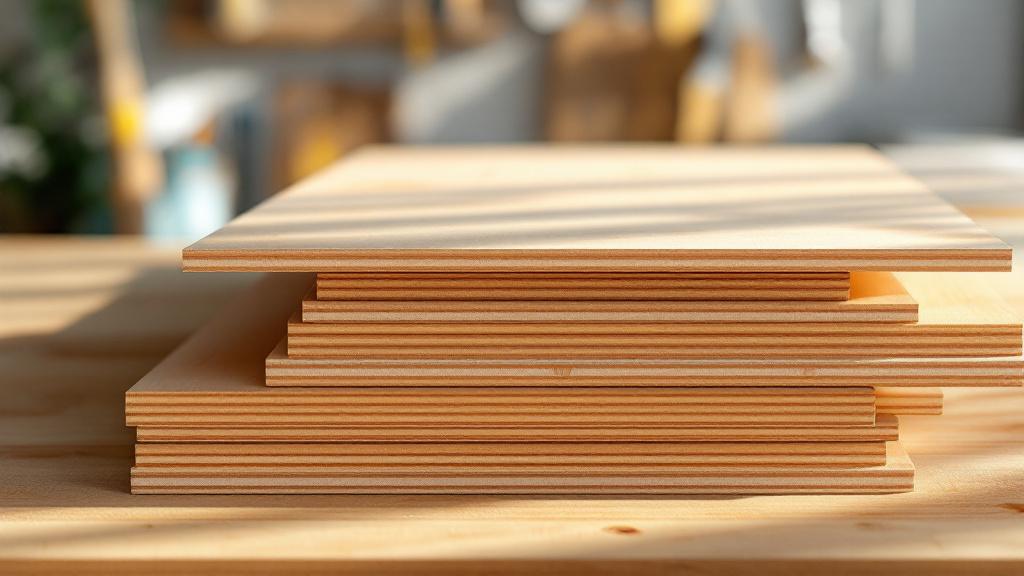
In woodworking and the making of wooden products, there is often a need to use sheet materials. They have long become an integral part of furniture manufacturing, construction and interior finishing. This is a versatile solution, especially when you need to carry out finishing or create a ready-made product quickly, well and inexpensively.
But the choice is not as simple as it might seem at first glance. Not all sheet materials are equally suited to different operating conditions. Some feel better indoors, away from moisture and temperature swings; others calmly survive winter and summer on building façades. Getting the choice wrong means wasting money and time. And if you work in woodworking, it also brings reputational risks: the client cares about a result that lasts for years.
Let us take a detailed look at what sheet materials there are, what they are suited for, what their pros and cons are, and what nuances to consider when selecting them.
Why sheet materials are so important in woodworking
Before talking about specific varieties, it is important to understand why sheet materials have become so sought-after in the first place.
First, there is the cost saving. Producing solid wood is time- and material-intensive. Sheet materials, on the other hand, are most often made from recycled wood waste: strands, shavings, sawdust. In essence, they give a second life to wood raw material that would otherwise simply have gone to waste or fuel. For a woodworking business, this is a chance to offer the client an affordable solution without sacrificing quality.
Second, there is versatility. A sheet material is a blank from which you can make anything: furniture carcasses, decorative panels, partitions, wall cladding, subfloors, roofing substrates and even façade elements. The main thing is to choose the right type of board.
Third, there is ease of processing. Sheets are easy to saw, drill, sand and machine with a router. This speeds up production processes and reduces labour costs. On top of that, sheets come in large sizes, which allows you to reduce the number of joints and seams in a structure.
But — and this is an important point — not every material is universal. Some sheets work great indoors but “fall apart” outside. Others are good for rough work but are completely unsuitable for painting or decorative finishing. So, to avoid mistakes, let us look at the main types of materials.

The main types of sheet wood materials and their characteristics
Plywood — a reliable, time-tested material
Plywood is one of the oldest and most widely used wood sheets. It is produced by bonding several layers of veneer — thin slices of wood. Each layer is laid perpendicular to the previous one, which makes the structure strong and resistant to deformation.
Uses:
- interior finishing of rooms (walls, ceilings);
- furniture manufacturing (carcasses, drawers, backs);
- building floors and partitions;
- façade cladding (provided it is protected from moisture).
Plywood is produced in various grades. For interior finishing, the more commonly used grade is FK (with urea-based glue). It is safe and environmentally friendly, but afraid of water. For outdoor conditions — only FSF, which is bonded using phenol-formaldehyde resin and withstands high humidity. There is also laminated plywood — it is already covered with a protective film and resistant to weather and wear.
Pros:
- high mechanical strength;
- resistance to cracking;
- a smooth surface suitable for painting and cladding;
- environmental soundness (especially for grades without toxic glues);
- ease of processing (it saws, sands and bends when steamed).
Cons:
- prone to swelling without protection;
- higher cost than particleboard or OSB;
- requires impregnation, varnish or paint for outdoor use.
Particleboard — an affordable, widely used material
Particleboard (PB) is made from a mixture of wood shavings, binding resin and additives pressed into a sheet under high pressure. It is one of the most mass-produced and affordable materials.
Uses:
- furniture carcasses, shelves, partitions;
- interior wall cladding;
- rough floor finishing;
- decorative panels (when clad with veneer or film).
Pros:
- affordable price;
- large formats and various thicknesses;
- easily processed with ordinary tools;
- can be covered with veneer or film.
Cons:
- afraid of moisture (swells when wet);
- when cheap grades are used, it may emit formaldehyde;
- requires cladding — the sanded surface is not very attractive.
There are also moisture-resistant varieties of particleboard (marked “MR-PB”), but even they are not designed for outdoor use — at most for kitchens and bathrooms with moderate humidity.
MFC — a ready-made solution for furniture and finishing
If you need a board that already looks like a finished decorative element, choose melamine-faced chipboard. This is the same particleboard, but covered on top with a melamine film. The film can carry any pattern: wood, stone, solid colours, textile and even leather.
Uses:
- fronts and carcasses of wardrobes, chests of drawers, kitchen units;
- interior partitions and niches;
- wall panels, decorative inserts;
- an economical option for made-to-order furniture.
Pros:
- a ready-made aesthetic surface;
- not afraid of stains, easy to clean;
- a strong, wear-resistant film;
- time saving — no need to varnish or paint.
Cons:
- for dry rooms only;
- does not lend itself to deep milling;
- with chips, restoration is practically impossible.
In the manufacture of MFC furniture it is especially important to cut the edges neatly and to apply the edge banding well — otherwise the material will quickly start to break down under moisture and loads.
MDF — a versatile material for decorative finishing
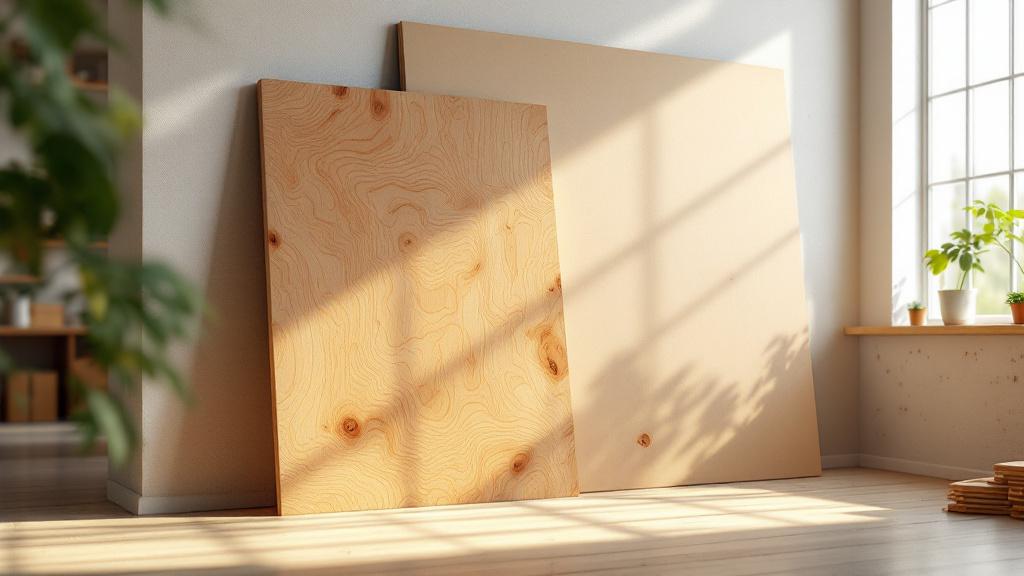
MDF (medium-density fibreboard) is wood dust pressed under high pressure into a dense, uniform sheet. In woodworking, MDF is especially prized for how easily it lends itself to milling and painting.
Uses:
- making furniture fronts;
- interior doors and architraves;
- carved panels and decorative elements;
- wall cladding in living spaces.
Pros:
- a smooth, perfectly even surface;
- holds paint and enamel excellently;
- suitable for milling for patterns or 3D effects;
- high density and sound insulation.
Cons:
- very afraid of water — swells when wet;
- heavier than particleboard;
- requires quality primer and painting.
Outdoors, MDF is not used at all — even brief contact with moisture is fatal. But indoors, especially in interior design, it is one of the best materials in terms of price-to-capability ratio.
OSB — a construction titan for frames and façades
Oriented strand board (OSB) is a board made of long strands bonded with strong resins. Its main feature is the directional laying of strands in layers, thanks to which the material has excellent bending and compression strength.
Uses:
- external sheathing of frame houses;
- roofing substrate;
- subfloors;
- substrates for façade materials.
Pros:
- resistant to moisture and temperature swings;
- high mechanical strength;
- low price;
- resistant to rot (especially OSB-3 and OSB-4).
Cons:
- a coarse texture — requires a finishing coat;
- may give off a smell of resins;
- not always suitable for interior finishing without cladding.
OSB is indispensable in building houses using frame technology. But in its bare form it is rarely left inside a living space — more often it serves as a base under plasterboard, cladding boards or panels.

How to choose sheet materials for interior finishing
Choosing materials for interior work is a special task. Here it is important to consider not only beauty and strength, but also such factors as humidity, temperature conditions and the specifics of how the room is used.
The main requirements for interior finishing materials
- Safety and environmental soundness
In living rooms, children’s rooms, bedrooms and kitchens it is extremely important to use materials that do not emit harmful substances. In making wooden products, glues and resins are often used that can emit formaldehyde. That is why preference should be given to grades with a minimal content of such substances — for example FK plywood or certified MFC with low emission levels. - Moisture resistance
Humidity varies greatly from room to room. In the bathroom and kitchen humidity is high, so sheet materials must have additional protection against moisture — this can be moisture-resistant plywood, moisture-resistant particleboard (MR-PB) or moisture-resistant MDF with a coating. In living rooms, hallways and bedrooms you can use ordinary materials without special protection. - Strength and resistance to mechanical damage
If you plan to finish walls that may be subject to impacts or scratches (for example a hallway or a children’s room), it is better to choose denser and harder materials — high-grade plywood or laminated boards. For decorative panels in living rooms you can use lighter and more delicate materials — MDF, MFC with a decorative coating. - Appearance and finishing options
Indoors, the aesthetic factor matters. The material should have an attractive surface or take a coating of varnish, paint, veneer or film well. Here MDF wins thanks to its perfectly smooth structure, plywood makes it possible to preserve the natural grain of the wood, and MFC and laminated plywood please the eye straight away.
Recommendations for choosing specific materials for different interior rooms
- Living room, bedroom, study:
Here you can use FK plywood, MDF, MFC with a decorative coating. For plywood and MDF it is advisable to apply finishing coatings: paint, varnish or veneer, to emphasise the beauty of the wood and ensure durability. MFC is suitable for cabinet furniture, built-in wardrobes and decorative wall panels. - Kitchen:
In conditions of high humidity and temperature the material must be moisture-resistant. Use moisture-resistant plywood (FSF), moisture-resistant particleboard (MR-PB) or moisture-resistant MDF with a protective coating. MFC is suitable if it has a quality edge and a film resistant to steam and accidental splashes. - Bathroom and washrooms:
Very humid rooms require only moisture-resistant and water-repellent materials. For wall cladding, moisture-resistant plywood treated with special impregnations is an excellent choice. MDF and particleboard should be used with caution — only if the material is coated with a water-protective varnish and installed in places with minimal contact with water. - Corridors, hallways:
Here the loads on materials are moderate, but mechanical damage is possible. It is better to use high-grade plywood or laminated particleboard, which withstand impacts well and are easy to clean.
How to choose sheet materials for outdoor use
Outdoor use is a separate story. Here very high demands are placed on materials: they must withstand temperature swings, precipitation, ultraviolet radiation, wind and mechanical stresses.
The main properties to focus on
- Moisture resistance and resistance to rot
The material must be either moisture-resistant by default (FSF plywood, OSB 3 and 4) or have external protection (varnishes, paints, impregnations, films). The absence of such protection is a sure path to swelling, cracking and breakdown. - Mechanical strength and dimensional stability
Sheets must retain their geometry and must not warp or delaminate. OSB, FSF plywood and laminated plywood handle this excellently, whereas ordinary particleboard and MDF are not suitable for outdoors. - Protection against UV rays
Constant exposure to the sun fades the surface and destroys the structure. For outdoor work, materials with a laminated or painted coating are used, or they are additionally coated with paint. - Environmental soundness and safety
Although the requirements for formaldehyde emission are lower outdoors, it is still better to choose certified and proven boards, especially if the work is being carried out near residential buildings.
The best sheet materials for outdoor finishing and construction
- FSF-grade plywood — the most popular option. It is moisture-resistant, withstands rain, snow and sun, and keeps its strength for a long time. It is ideal for cladding façades, frame structures, creating outdoor furniture and temporary buildings. It can additionally be coated with protective agents to extend its service life.
- OSB class 3 and 4 — a material specially developed for use in outdoor conditions. It is used for sheathing walls and roofs and as a base under siding or plaster. OSB has high strength and is easy to install, but it requires further finishing for looks and additional protection.
- Laminated plywood — thanks to its protective film, it is not afraid of moisture and UV. It is suitable for making outdoor furniture, façade panels and decorative elements.
- Special moisture-resistant particleboard and MFC — used rarely, only if the materials have a protective coating and are intended for installation under canopies or on covered terraces.

Practical tips for selecting sheet materials
- Determine the operating conditions. The most important step is to understand exactly where the material will be used. Humidity, temperature, load, exposure to sun and wind — all these factors decide the fate of the chosen sheet.
- Choose the grade and class, not just the name of the material. For example, plywood comes in different grades — FK, FSF, FOF. Moisture-resistant particleboard and ordinary particleboard are not the same thing. It is better to consult the supplier and ask for quality certificates.
- Pay attention to thickness. The thickness of a sheet affects its strength and durability. For sheathing walls and façades it is better to choose a thickness of 12 mm and above; for furniture, 16 mm and 18 mm are the most popular.
- Check the surface and condition of the sheet before buying. It should be even, without defects, cracks or delamination.
- Consider the possibility of subsequent finishing. If you plan to paint, veneer or varnish, make sure the material allows for this.
How to properly process and protect sheet materials
Even moisture-resistant materials need additional protection — especially when it comes to outdoor work.
- Impregnations and primers. For plywood and particle boards you can use special antiseptic and moisture-protective impregnations. They reduce water absorption and protect against mould.
- Varnishes and paints. A crucial stage, especially for façades. Varnish will protect against moisture and UV; paint will add beauty and create a barrier against mechanical damage. It is better to use façade compounds designed for wood.
- Edges and ends. The most vulnerable spots. They must be covered with edge banding, sealant or additionally impregnated. This prevents rapid swelling and breakdown.
- Correct installation. Sheets should be installed with gaps for expansion, to avoid deformation under temperature changes. Fasteners must be of good quality and match the material.
Technologies for processing sheet materials in woodworking
Sheet materials are a versatile basis for a wide variety of products and finishing solutions. To achieve high quality and durability, it is important to process and use them correctly.
The main stages of processing sheets
- Sawing and cutting to size
At this stage the sheets are sawn to the required sizes and shapes. For this, circular saws, band saws or panel saws are used. Cut precision is very important so that products have neat edges and minimal waste.
Particular care is needed with materials sensitive to moisture and deformation — plywood and MDF. The cut must be even so as not to allow delamination or chipping.
- Milling and drilling
To make holes, cut out decorative elements or connecting parts, routers and drills are used. MDF and plywood are ideal for milling thanks to their uniform structure.
When processing laminated materials it is important to use sharp, specialised equipment so as not to damage the decorative coating.
- Edge processing
Edges are the weak point of sheet materials. In woodworking they are usually processed in several ways: edge banding is applied (PVC, melamine, veneer), sealant is poured, they are sanded and polished. This increases the product’s service life and improves its appearance. - Sanding and surface preparation
Sanding is a mandatory stage before painting or applying paint and varnish materials. It levels the surface, removes irregularities and makes it possible to achieve maximum adhesion with paint or varnish. - Coating and finishing
Depending on the product’s purpose, different types of coating are used:
- Varnishes and oils to preserve the natural grain of the wood;
- Paints and enamels to create bright colours and textures;
- Veneer and films to imitate expensive wood species or other materials.

Features of making products from sheet materials
Furniture and cabinet products
Sheet materials are an ideal choice for making wardrobes, tables, shelving units and kitchen sets. They allow structures to be created at minimal cost while preserving strength and aesthetics.
- The choice of material for furniture depends on the area of use. For visible fronts, MDF or MFC with a decorative coating is often used. For the internal carcass, plywood or ordinary particleboard is suitable.
- Joining parts is an important point. Cam locks, dowels, minifix connectors and other fasteners that ensure the reliability of the structure are often used.
- The finishing of fronts is the key to attractive-looking furniture. Here painting, veneering and laminating are often used.
Decorative panels and partitions
Sheet materials give plenty of scope for creativity — you can create unique panels with carving, milling and painting. They are suitable for zoning rooms and creating accent walls.
- Using MDF makes it possible to create intricate patterns and three-dimensional details.
- Plywood with thin veneer is an excellent choice for a natural, warm interior.
- MFC panels are an economical option for large areas.
Outdoor products from sheet materials
Moisture-resistant plywood and OSB are used to make garden furniture, decorative façades, canopies and gazebo elements. With proper processing and protection, products made from these materials last a long time and look beautiful.
Useful tips for the successful use of sheet materials
- Plan the project in advance
Before buying materials, carefully calculate the dimensions, the required thickness and the number of sheets. This will help avoid unnecessary costs and defects. - Store the sheets correctly
Stack the boards in a dry, well-ventilated space, horizontally on an even surface. Do not allow contact with moisture and direct sunlight. - Use professional tools
For processing sheets it is better to use specialised equipment and quality cutting tools. This will improve the quality of the edges and surface. - Pay attention to the ends
It is precisely the ends that often begin to break down first due to moisture ingress. Use edge materials, sealants and protective impregnations. - Do not skimp on protective coatings
Even the most moisture-resistant materials benefit from additional protection with varnish or paint. This will extend the service life of the products and preserve their appearance.
Conclusion
Choosing sheet materials is a task that requires attention and knowledge of the specifics of wood boards. But if you approach the matter competently, you can obtain reliable, beautiful and durable products and finishing solutions.
Plywood, particleboard, MFC, MDF and OSB — each of these materials has its place in woodworking. They differ in composition, characteristics and price, and by combining them correctly you can create projects of any complexity and purpose.
For interior work, environmentally sound and aesthetic plywood, MDF and laminated boards are suitable; for exterior work — moisture-resistant FSF plywood and OSB. Do not forget the importance of proper processing, protection and installation — this determines how long your products will delight with quality and beauty.
If you are engaged in woodworking and the manufacture of wooden products, the careful selection of sheet materials is one of the key stages that affects the success of the whole job. Do not be afraid to experiment and improve — these materials open up great opportunities for creativity and production.





