
Working with Acrylic Glass and Plastic in the Production of Wooden Furniture
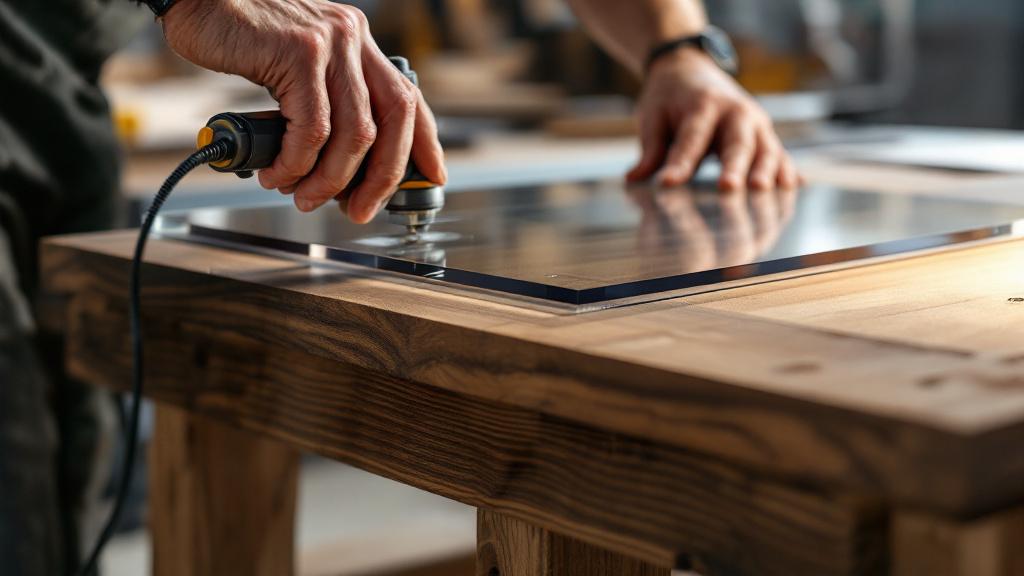
Modern furniture production in natural solid wood increasingly moves beyond classic, purely wooden solutions. As a company deeply immersed in woodworking, it is clear to us that using materials such as acrylic glass (acrylic) and various types of plastic opens up new horizons in design and functionality. These polymers give products a sense of lightness, visual volume and contemporary accents while preserving the warmth and strength of solid wood. Combining the noble texture of wood with the transparent or coloured structure of polymers calls for a special approach, dedicated technologies and, above all, an understanding of the unique properties of each material. In this article we look at the key aspects of integrating these materials into wooden structures.
Choosing polymer materials for furniture production and their properties
The right choice of material is the first and one of the most critical steps when combining wood and polymers. Acrylic glass (polymethyl methacrylate, PMMA) and the various types of plastic used in the furniture industry (such as ABS, polycarbonate and PVC) have completely different properties that directly affect the processing technology and the durability of the finished product. Understanding these differences is fundamental to achieving high quality.
Acrylic glass is valued for its exceptional transparency, which often surpasses even ordinary silicate glass. This material offers high light transmission and does not yellow over time under UV exposure, which is critically important for display cases, shelves and decorative inserts. In addition, acrylic has excellent impact resistance: it is many times more resistant to breaking than ordinary glass, yet lighter. This quality makes it a safe and practical choice for fronts, cabinet doors and worktops, especially in homes with children. It is important to note that acrylic glass is sensitive to scratches and requires more careful handling than wood.
Plastic composites, in turn, offer a wide range of colour and texture options, including imitations of other materials such as metal or stone. They can be used to create fronts, edges, handles, hardware and functional elements, for example internal drawer dividers. Different types of plastic vary in rigidity, heat resistance and resistance to chemicals. ABS plastic, for example, is strong and easily thermoformed, which makes it possible to create complex curved parts that perfectly complement wooden elements.
When choosing a polymer you also have to take into account its thermal expansion, which differs significantly from that of wood. Wood is a natural material that “breathes”, reacting to changes in humidity and temperature. Polymers also expand and contract, but according to different laws. This factor is key when designing fastenings, in order to avoid internal stress and deformation of both the wooden and plastic components over time. Failing to account for this parameter correctly can lead to cracking of the plastic inserts or loosening of the fasteners.
Another important aspect is the environmental friendliness and safety of the materials. Modern manufacturers offer acrylic glass and plastics that comply with strict standards and do not release harmful substances. In our furniture work we favour certified polymers that can be used in living spaces, including in children’s furniture and in the kitchen. This guarantees not only quality but also responsibility towards the consumer.
For specific applications, such as kitchen fronts, high-gloss acrylic-based plastics are often used. They offer excellent resistance to moisture, grease and aggressive cleaning agents, which makes them an ideal companion for wooden frames and carcasses in demanding conditions. Matte plastics, meanwhile, can be used to create contrasting or more restrained, tactilely pleasant surfaces.
When evaluating materials we always consider the thickness and format of the sheets, their availability and the stability of supply. This allows us to optimise the cutting process and minimise waste, which ultimately affects the cost of the finished product. Working with large-format sheets of acrylic glass or plastic requires specialised equipment and experience to ensure a precise and clean cut.
Ultimately, choosing a material is not simply about finding the most transparent or the cheapest option. It is a comprehensive decision that takes into account the design concept, the operating conditions, the strength requirements, compatibility with wood and economic viability. Only this approach guarantees a harmonious and durable combination of wood and polymer in a furniture structure.
Processing and cutting technologies for polymer sheets
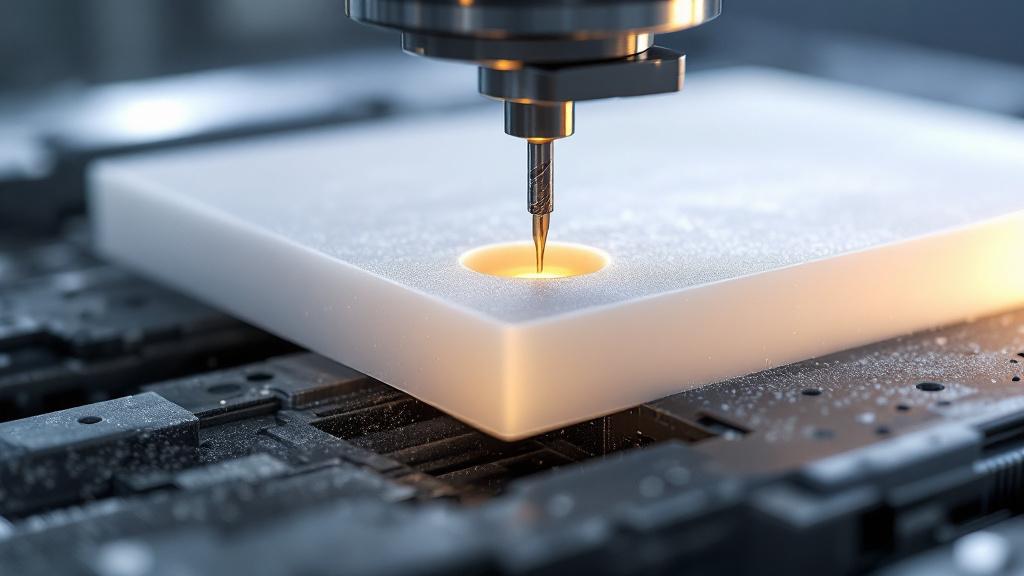
Integrating acrylic glass and plastic into wooden furniture begins with precise, high-quality cutting. The processing technologies for these materials have their own specifics and differ from the processes familiar from woodworking. When working with wood we use circular saws with certain sharpening angles and feed rates, but for polymers these parameters must be adjusted to avoid melting, chipping and the appearance of micro-cracks.
For cutting acrylic glass and many types of plastic, the optimal tool is high-precision CNC milling equipment. Router cutting produces a perfectly even, clean edge that often requires no additional sanding or polishing. The choice of cutter is critically important: for acrylic, special single-flute or two-flute cutters with a sharp cutting angle and effective chip evacuation are used. At the same time, you have to control the spindle speed and feed rate so that the material does not overheat and melt, sticking to the cutting edge. Cooling the cutting zone, whether by air or with special fluids, also plays a key role.
Laser cutting is another highly efficient method, especially for thin acrylic sheets and complex shaped elements. The advantage of the laser lies in its ability to create incredibly precise, intricate contours and a perfectly smooth, flame-polished edge that looks polished. However, laser cutting is not suitable for all types of plastic – some polymers, such as PVC, release toxic fumes when heated, which makes this method inapplicable. In addition, when laser-cutting thick acrylic a slight yellowing or “sooting” can remain on the edge, requiring subsequent finishing.
Traditional methods, such as the use of circular or band saws, are also applicable but require special blades with a specific tooth geometry (for example, a triple-chip grind) and an increased number of teeth. The cutting speed must be reduced compared with wood in order to minimise friction and heat. When sawing plastic it is important to ensure the sheet is rigidly clamped and to avoid vibrations, which can cause micro-cracks, especially along the edges.
After cutting, additional edge finishing is often required. For acrylic glass this may be polishing. A perfectly transparent edge is achieved by mechanical polishing using special pastes and soft wheels, or, in industrial conditions, by diamond polishing on machines. Thermal (flame) polishing is also used to quickly obtain a glossy edge, but it requires high skill and may be unsuitable for large parts because of the risk of deformation.
Drilling holes is a separate task that demands attention. Wood forgives certain inaccuracies, but when drilling acrylic glass and plastic you have to use drill bits with a sharpening angle different from the standard ones for wood. An ordinary metal drill bit can “grab” or crack the material at the exit. It is recommended to use drill bits specially designed for plastics, with a blunt sharpening angle and minimal feed, and always to place a backing board under the sheet to prevent chipping on the underside.
To create curved elements from acrylic glass, thermal bending is used. Acrylic becomes pliable when heated to a certain temperature (usually around 90–160°C). This makes it possible to form sheets along a radius, creating curved fronts, shelves or decorative elements that pair perfectly with curved wooden frames. Precise control of the temperature and heating time is critically important to prevent clouding or the formation of bubbles in the material.
Thus, the successful processing of polymers for furniture projects is a symbiosis of high-precision equipment, the right tooling and specific technological knowledge that must be integrated into the standard woodworking process.
Methods of fastening and joining polymers to wood
Fastening acrylic glass and plastic to the wooden elements of a structure is one of the most complex stages and requires an engineering approach. As already mentioned, the key problem lies in the difference in the coefficients of thermal expansion and in the hygroscopicity (the ability of wood to absorb moisture) of the materials. The wrong choice of fastener and joining method will lead to rapid loss of strength, cracking of the polymer or deformation of the wooden frame.
The most common and reliable mechanical fastening methods require conditions that allow for compensation of the movement of the material.
- Screw connection with compensating elements: This is the main method for fastening acrylic glass and rigid plastic. The holes in the polymer should be slightly larger than the screw diameter (a loose fit) to give the material room to contract and expand without excessive stress. Special elastic washers (made of silicone or rubber) are always used under the screw head and, ideally, between the polymer sheet and the wooden surface. These washers absorb micro-movements and prevent direct contact between the rigid fastener and the fragile acrylic surface, which reduces the risk of cracking. For wooden carcasses, special furniture screws or Euro screws are often used.
- Use of profiles and clamping systems: To create display cases, transparent doors or shelves, aluminium or plastic profiles are often used to hold the edge of the acrylic glass or plastic. These systems allow the sheet to “float” in the groove or frame, which also compensates for thermal expansion. The profile is fixed rigidly to the wood, and the polymer is simply inserted or clamped into it via soft seals. This method provides not only reliability but also an aesthetic, finished appearance.
- Adhesive joints: Gluing is a more complex and less universal method when combining wood and polymers, but it is indispensable for creating visually seamless structures. For acrylic glass, specialised reactive adhesives are used (for example, based on dichloroethane or acrylic adhesives of the Acrifix type) that effectively “weld” the acrylic molecules, providing a strong, almost invisible joint. However, such adhesive is not designed for gluing acrylic directly to wood. To join dissimilar materials (plastic/wood), polyurethane, epoxy or specialised adhesive compounds are used, which have high adhesion to both types of surface and retain a certain elasticity after curing.Important note: Epoxy resins and some polyurethane adhesives can provide sufficient strength, but their use must take into account the possibility of thermal and hygroscopic movement of the wood. A rigid adhesive joint over a large area can cause the plastic to crack or the wooden part to deform. It is therefore preferable to use gluing on small contact surfaces or as an additional means of fixing.
- Groove and tongue-and-groove joints: This is where the acrylic glass or plastic is inserted into a specially milled groove in the wooden frame. The depth and width of the groove must be calculated to allow for the polymer’s expansion. Often a soft rubber or silicone seal is additionally inserted into the groove, which securely holds the panel and prevents it from rattling while still giving it a little freedom of movement. This method is most typical for making doors and side panels.
The fastening process always requires prior surface preparation. The wooden elements must be clean, dry and, ideally, finish-treated (coated with varnish or oil) before the polymer is mounted. Plastic and acrylic surfaces are also cleaned of dust, grease and protective film immediately before installation. Any dirt or dust trapped under a fastener can cause a stress concentration and subsequent failure of the polymer.
Careful planning and the right choice of fastener and installation method are an investment in the durability and reliability of a combined furniture product.
Design integration: the aesthetics of combining textures
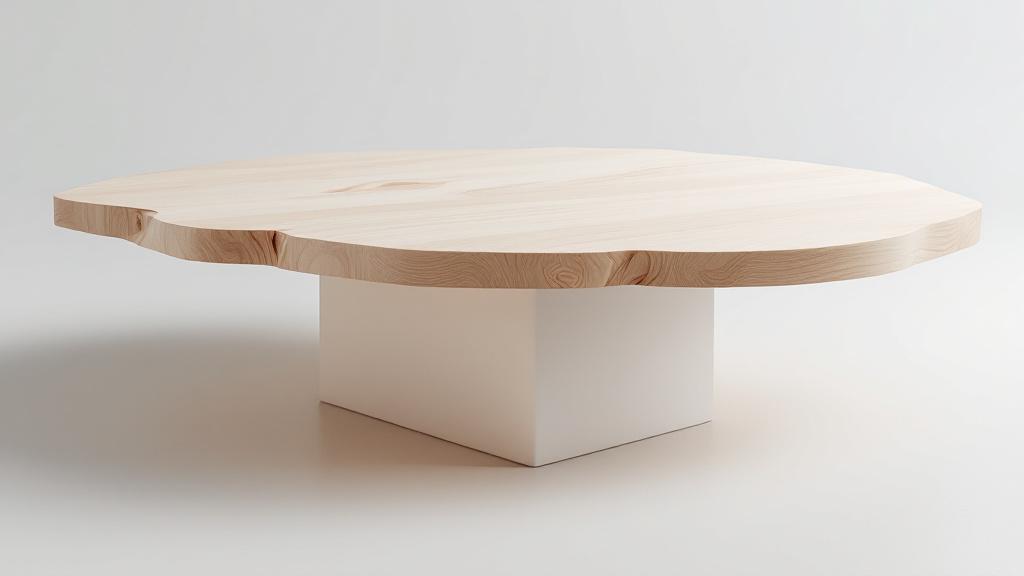
Combining natural wood with synthetic polymers is not only a technical question but also a deeply design-driven one. Successful integration is achieved when the materials do not conflict but instead reinforce each other’s strengths, creating a harmonious and contemporary appearance. Wood brings warmth, natural uniqueness and a sense of solidity, while acrylic glass and plastic bring lightness, transparency, modern geometry and a play of light.
Principles of harmonious combination:
- Contrast and accent: Most often, acrylic glass (in transparent or tinted form) is used to create a contrast between the natural, matte or textured surface of the wood and a smooth, glossy or transparent polymer insert. Transparent elements (cabinet doors, side panels, shelves) allow the contents to be seen without disrupting the visual integrity of the solid wood. This is the ideal solution for collector’s or display furniture.
- Colour solutions: When it comes to coloured plastic, the design decision lies in choosing the palette. Deep, saturated plastic colours (such as black, burgundy or emerald) can effectively highlight light wood species (ash, maple) or, conversely, create a monochrome, elegant look combined with dark wood (wenge, walnut). Using bright, accent plastic colours can give a wooden product a modern, even avant-garde look, often used in children’s or youth furniture.
- Lighting and optics: Acrylic glass has unique optical properties. It can act as a light guide. Integrating LED lighting around the perimeter of an acrylic insert creates a glowing-edge effect, giving the furniture a futuristic or luxurious look. Lighting can also highlight the texture of the wood if positioned so that it illuminates, for example, carving or growth rings.
- Texture solutions: Plastic can be used not only in a smooth, glossy finish. There are matte, satin or even textured plastics that imitate fabric or leather. Such a combination can be used to create a tactile contrast: warm, smooth wood combined with a cold but textured plastic panel. This opens up possibilities for creating complex, multi-layered surfaces.
- Functional and decorative elements: Plastic is often used for non-load-bearing hardware and décor. For example, legs, handles or inserts for decorative perforation can be made of plastic, which is easily moulded into complex, ergonomic shapes. At the same time, acrylic glass is indispensable for creating protective overlays on worktops that keep the natural wooden surface visible while protecting it from mechanical damage and moisture.
An important aspect is also the balance of volumes. If the polymer inserts take up too large an area, there is a risk that the wooden base will be lost and the product will no longer be perceived as “wooden”. Our task is to use polymers as accent or functional elements that emphasise the beauty and solidity of the wood, rather than dominating it. A well-chosen combination makes it possible to create furniture that meets the most current trends in modern design while retaining the fundamental values inherent in products made of natural wood.
Features of finishing and care for combined products
Finishing and the subsequent care of furniture that combines wood, acrylic glass and plastic require special attention, since each material has its own sensitivity to varnishes, cleaners and mechanical action. Incompatibility of the materials at this stage can nullify all the effort put into design and production.
Wooden elements are traditionally treated with varnishes, oils or wax. These coatings protect the wood from moisture and wear and emphasise its texture. However, when applying the finishing coat it is important that it does not get onto the polymer parts. Some solvents used in varnishes and paints (especially aggressive nitro varnishes) can damage the surface of acrylic glass or some plastics, causing them to cloud, lose their gloss or even crack (so-called “stress cracking”). For this reason, the polymer elements are often mounted after the complete finishing and drying of the wooden parts.
Polymer surfaces – acrylic glass in particular – require special care.
- Polishing acrylic glass: If small scratches or scuffs appear on the surface of the acrylic glass during production, they can be removed with a special polishing paste for acrylic. This is a labour-intensive but effective process that restores the original gloss and transparency. Ordinary abrasive cleaning agents used for glass or metal can irreversibly damage the acrylic, so their use is strictly ruled out.
- Scratch protection: Plastic fronts and inserts, especially glossy ones, are more resistant to stains than wood but are prone to scratching. During use, contact with abrasive sponges, metal brushes and aggressive powder cleaners must be avoided.
Caring for the finished product:
Caring for furniture made of combined materials should be comprehensive:
- Wood: Regular wiping with a soft, dry cloth; periodic renewal of the oil or wax coating (where present) to maintain protective properties and appearance.
- Polymers: Use only a soft cloth (microfibre) and non-aggressive cleaning agents intended for plastic or acrylic, or simply a soapy solution. Do not allow alcohol-based products (for example, ordinary glass cleaners) to come into contact with acrylic glass, as they can damage the surface.
- Fasteners: Periodic checking of the screw connections. Given the thermal movement of the materials, the fasteners may loosen over time. It is important to tighten them carefully, so as not to crush the plastic or cause cracking.
For products that will be used in damp conditions (for example, kitchen furniture), particular attention is paid to sealing the joints between wood and plastic. Using moisture-resistant sealants (neutral silicone) prevents water from getting into the structure of the wood or under the plastic facing, which is critical for the durability of the structure.
Ultimately, correct finishing and informing the customer about the specifics of caring for combined furniture are part of our responsibility for the quality and durability of the products we manufacture.
Thermal and moisture resistance: accounting for the “behaviour” of the materials
The differences in how wood and polymers react to changes in temperature and humidity are a key engineering challenge when they are used together in furniture production. Wood is a hygroscopic, anisotropic material that absorbs or releases moisture from the surrounding environment, which leads to changes in its dimensions, primarily across the grain. Plastics and acrylic glass, although they have low hygroscopicity, have a significantly higher coefficient of thermal expansion than wood.
Hygroscopicity of wood: Depending on the relative humidity of the air, wood can swell (increase in volume) or shrink (decrease in volume). This movement can create significant internal stress in rigidly fixed polymer elements. For example, if a plastic panel is rigidly fixed in a wooden frame and the air humidity rises sharply, the swelling wood will begin to exert pressure on the plastic, which can cause it to crack. That is why, as we said in the section on fastenings, it is critically important to use compensating gaps and elastic gaskets that allow the wood to move independently of the polymer.
Thermal expansion of polymers: The coefficient of linear thermal expansion (CLTE) for acrylic glass is several times higher than for wood. This means that as the temperature rises (for example, as a result of direct sunlight falling on a front), the acrylic glass will expand significantly faster than the wooden frame into which it is inserted. If this movement is blocked by rigid fasteners or insufficient gaps, internal stress will arise. In cold weather (during transport or storage) the process runs in the opposite direction, which can also loosen the fastenings.
- For engineering calculations it is necessary to take into account the maximum and minimum range of temperatures and humidity in which the furniture will be used. For example, bathroom furniture or outdoor furniture requires more significant tolerances and more moisture-resistant wood species.
- When designing furniture with large polymer inserts (for example, transparent worktops or doors), rigid, continuous gluing around the entire perimeter should be avoided. It is better to use spot-applied, elastic adhesive joints in combination with mechanical compensating fasteners.
- The use of stabilised wood or multi-layer materials such as plywood or MDF (which are more dimensionally stable than solid wood) as a base for fastening the plastic can partially solve the problem of hygroscopic movement.
Understanding and calculating these physical phenomena is what distinguishes professional production from amateur work. We must design joints so that they are flexible, yet at the same time invisible and reliable, guaranteeing the durability of the product in various climatic conditions. Successful integration is always a search for the perfect balance between the rigidity of the structure and the necessary freedom of movement of the materials.
Using CNC technology for precise alignment
High-precision alignment of wooden and polymer parts requires the use of modern CNC (computer numerical control) machines. Manual methods or less accurate equipment will inevitably lead to gaps, unevenness and, consequently, problems during assembly and use.
The key role of CNC:
- Precise cutting and milling of grooves: A CNC router makes it possible to cut both wooden and polymer sheets with an error within tenths of a millimetre. This is critical for creating precise grooves in wooden frames and mating elements (for example, tongues or profiles) in plastic inserts. Only this level of precision guarantees that the polymer panel will fit perfectly into its seating groove.
- Compensating holes: CNC machines are indispensable for drilling screw holes in acrylic glass. They can programmatically account for the required compensating gap (making the hole slightly larger than the screw diameter) and place it precisely by coordinates, which eliminates the errors inherent in manual drilling.
- Complex geometry: If curved or shaped inserts are required (for example, plastic windows in wooden doors with a complex, non-rectangular contour), CNC machining is the only way to obtain identical, symmetrical parts from both wood and polymer. The software (CAD/CAM) ensures a perfect match of the contours.
- Series production and repeatability: For series furniture production, the use of CNC technology guarantees that all parts will be identical. This not only speeds up the assembly process but also makes replacing elements (for example, in the event of damage to a plastic insert) simple and precise.
Software and calibration:
The success of integrating CNC into the process depends on the correct preparation of the control programs. The programs for processing wood and for processing polymers must be synchronised and must take into account the specifics of each material – the different cutter thickness, the tolerances for expansion, the need for a finishing pass for polymers. Regular calibration of the machines and strict adherence to the technological charts for each material (cutting speed, feed, depth) are mandatory conditions.
The use of CNC technology in this production segment is not a matter of fashion but a production necessity that ensures the required level of quality and precision when working with materials that have different physical properties.
Sound insulation and vibration protection in combined structures
Acrylic glass and plastic, especially in the form of thin panels or doors, have a high tendency to resonate. When doors are opened and closed, and during ordinary household vibrations (walking, appliances running), these elements can produce rattling or dull sounds, which negatively affects the perceived quality of the furniture. Preventing these undesirable effects is an important part of the engineering approach.
Methods of reducing noise and vibration:
- Use of seals: The most effective and common method is the use of rubber, silicone or felt seals around the perimeter of the polymer inserts. A seal not only seals the joint and compensates for the movement of the material but also acts as a damper, absorbing vibrations and preventing direct contact between the polymer and the rigid wooden frame.
- Soft gaskets under the fasteners: With screw fastening, as already mentioned, elastic washers are always used. These washers perform a dual function: they compensate for thermal expansion and dampen vibrations, preventing the screw from rattling in the hole.
- Specialised hardware: For doors and drawers that use acrylic glass or plastic, it is recommended to use hardware with soft-close mechanisms and dampers. These mechanisms ensure smooth and silent closing, which minimises impact loads and the accompanying sounds.
- Precision of fit: The more precisely the polymer panel fits into its groove, the less likely it is to move freely and rattle. This once again underlines the importance of high-precision CNC machining. If the gap is too large, even a seal may not be able to hold the panel in place.
Acoustic properties of the materials: It is important to note that the material itself can affect the acoustics of a room. Smooth plastic or acrylic surfaces reflect sound well, which can increase reverberation. For large surfaces, you can consider using matte or textured plastic, as well as perforated or acoustically treated polymer panels, which can improve sound absorption.
Careful engineering of the fastening points with an emphasis on damping materials is a mandatory element of the production process, which makes it possible to achieve a sense of “premium quality” and silent operation in combined furniture products.
Safety and occupational health when processing polymers
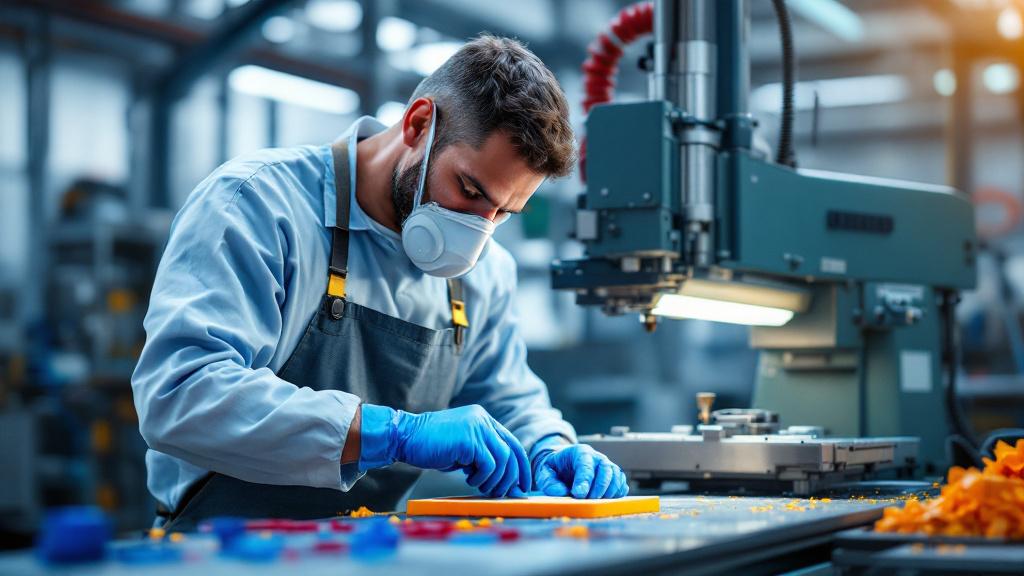
Processing acrylic glass and plastic involves specific risks that differ from working with wood. Compliance with safety rules and the use of personal protective equipment is a priority.
The specific risks:
- Dust and chips: During mechanical processing (sawing, milling, sanding) acrylic glass and plastic produce fine, sharp dust and chips. This dust can be an irritant to the respiratory tract and eyes, and it also tends to accumulate static electricity, which can make it difficult to remove.
- Thermal effects: During high-speed cutting or drilling, as well as during laser or thermal-bending processing, the material can melt. As a result, acrid or toxic fumes may be released, especially when working with PVC and some other polymers.
- Fragments: Although acrylic glass is less brittle than silicate glass, incorrect drilling or an impact can produce sharp fragments or micro-cracks that pose a hazard.
Safety measures:
- Respiratory protection: The mandatory use of respirators with appropriate filters when working with plastic dust. The presence of effective extraction ventilation over the workstation, especially when using laser cutting or thermal bending.
- Eye and skin protection: Wearing safety glasses or face shields. Polymer dust and chips can easily damage the eyes. When working with adhesives or cleaners, and during heat treatment, protective gloves must be used.
- Fire prevention: Polymers, unlike wood, can melt and burn, releasing large amounts of smoke. It is necessary to strictly control the heating temperature in the cutting zone and to have fire-extinguishing equipment suitable for polymer materials on hand.
- Processing PVC: When working with polyvinyl chloride (PVC), laser cutting is strictly prohibited, since it releases hydrogen chloride – a highly toxic substance. Only mechanical processing methods are used for such materials.
- Static electricity: Since polymers are prone to accumulating a static charge that attracts dust, it is necessary to provide for grounding of the equipment and to use antistatic agents for cleaning the surface.
Training staff in the specifics of working with polymers, regular safety briefings and strict monitoring of the use of personal protective equipment are an integral part of our production process.
Durability and repairability of combined furniture
The question of durability and repairability is key for any furniture, especially for high-quality products that combine natural and synthetic materials. A properly designed and manufactured product should last for decades.
Durability is ensured by:
- Quality of raw materials: The use of only stable, high-quality grades of acrylic glass and plastic that are resistant to UV, chemical and mechanical action. The use of properly dried, stable wood.
- Engineering design: As has been emphasised repeatedly, the correct calculation of compensating gaps and the use of elastic, movable fastenings are critically important. This prevents the occurrence of internal stress, which is the main cause of premature failure of polymers.
- Protection against moisture: The use of moisture-resistant varnishes and sealants in the contact zone between wood and polymer, especially in damp rooms.
Repairability:
Unlike fully wooden products, where repair often comes down to sanding and refinishing, the repair of combined furniture has its own specifics.
- Polishing scratches: Minor damage on the surface of acrylic glass (scratches, scuffs) can be removed by polishing with special pastes. This makes it possible to restore the appearance without replacing the entire part.
- Replacing elements: Repairability should be built in as early as the design stage. Fastening acrylic glass with screws and profiles (instead of continuous gluing) makes it possible to easily remove a damaged polymer element and replace it with a new one without having to disassemble the entire wooden frame. This significantly simplifies and reduces the cost of repair.
- Repair of wooden elements: In the event of damage to the wooden frame, the presence of a polymer insert requires its careful removal before repairing (sanding, filling, painting) the wood, and its precise re-installation afterwards.
Our production philosophy assumes that every element of a product should be accessible for servicing or replacement. This is achieved through the use of demountable structures and standardised fastening units. The durability and repairability of combined furniture made of wood and polymers are not merely technical characteristics; they are a guarantee of high quality and a responsible approach to production.
- Approximate applications of acrylic glass and plastic in wooden furniture:
- Acrylic glass: Transparent display-cabinet doors, protective overlays on wooden worktops, shelves with a “floating” effect, decorative inserts with internal lighting, transparent furniture handles and legs.
- Plastic (including acrylic): High-gloss or matte fronts for kitchen cabinets (based on MDF with a plastic coating), edge-banding material for the edges of wooden panels, functional internal trays and drawer dividers, decorative elements and hardware of complex shape.
The specifics of edge banding and edge finishing
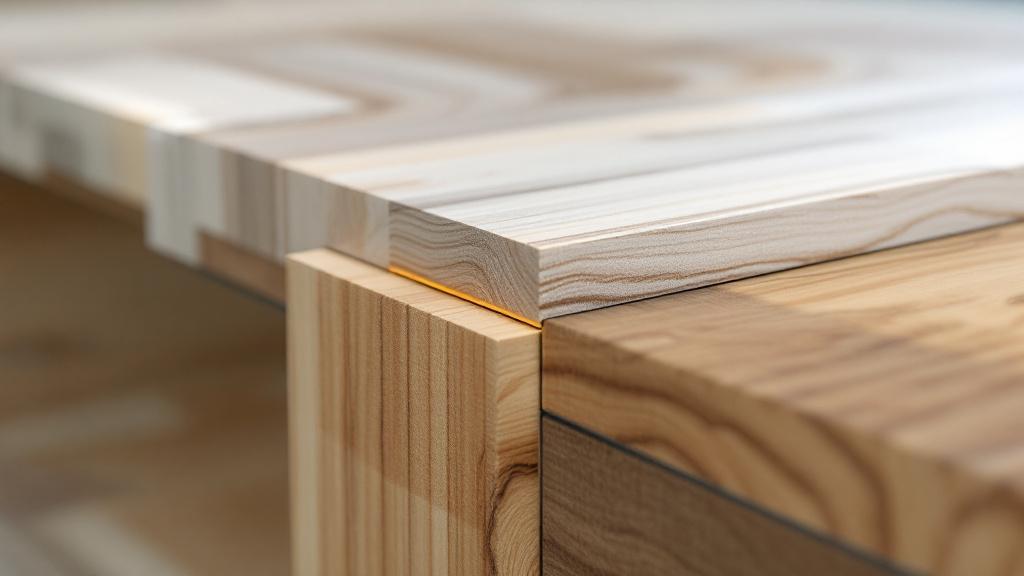
Edge banding plays an important role in combined furniture, since it serves not only to give the edges an attractive finish but also to protect the wood-based materials (particleboard, MDF) from moisture. When combining wood with polymers, the edge can be made either of traditional PVC or of a specialised acrylic material.
- Traditional edging (PVC, ABS): This is the most common type of edging for panel materials. It provides high strength and impact resistance. The choice of colour and texture can match either the panel itself or the wooden carcass, creating a harmonious transition or, conversely, a contrasting accent. The application process requires the use of specialised hot-melt adhesives that ensure a reliable bond to the panel edge. It is important to set up the machine correctly to avoid overheating and deformation of the edging, especially when working with thin or high-gloss materials.
- Acrylic 3D edging: This is a more modern and aesthetic solution, especially for glossy fronts. It creates a “three-dimensional” edge effect. Acrylic edging is often used to create a visually seamless transition from the front surface to the edge, imitating the monolithic look characteristic of acrylic glass or high-quality plastic. Such edging requires more careful processing and polishing after bonding in order to achieve a perfect gloss.
- Edge finishing of acrylic glass: If the insert itself is made of thick acrylic glass, the edges are not banded. Instead, they undergo finishing – sanding and polishing (mechanical or diamond) – to achieve absolute transparency and smoothness. Any carelessness in this process, for example scratches or clouding, will be critically noticeable on the finished product.
Quality edge banding is not merely an aesthetic element; it is a technological form of protection that extends the service life of a furniture product, especially in conditions of high humidity (kitchens, bathrooms).
Economic aspects and cost optimisation
Incorporating acrylic glass and plastic into the production of wooden furniture affects the overall cost and requires optimisation of the production processes in order to maintain competitiveness. The economics of this process are based on several key factors.
- Cost of raw materials: High-quality polymers (cast acrylic, specialised plastics for furniture) are often more expensive than standard wood-based boards, but cheaper than solid wood of valuable species or silicate glass. Correct cutting calculations and a minimal amount of waste directly affect the cost price.
- Investment in equipment: Processing polymers, as mentioned, requires high-precision CNC equipment and specialised tools (cutters, drill bits, polishing machines). The initial investment can be high, but it pays off through improved quality, precision and productivity.
- Weight reduction and logistics: Using acrylic glass instead of silicate glass makes it possible to significantly reduce the weight of the finished product. This, in turn, leads to savings on logistics (transport) and simplifies the installation process on site.
- Labour optimisation: CNC processing of polymers makes it possible to reduce the manual labour associated with fitting, drilling and polishing. This increases productivity and reduces the likelihood of defects caused by the human factor.
- Market value and profit margin: Furniture that combines wood with transparent or glossy polymers is often perceived by the market as more modern and design-oriented. This makes it possible to set a higher retail price and ensures a better profit margin compared with traditional, purely wooden furniture.
Thus, although the process of integrating polymers requires additional technological knowledge and investment, it opens up opportunities for creating more aesthetic, functional and, ultimately, more expensive and in-demand products. The economic benefit is achieved through optimisation of production and an increase in the perceived value of the product.





