
Types of joinery work and their features in modern wooden-product manufacturing
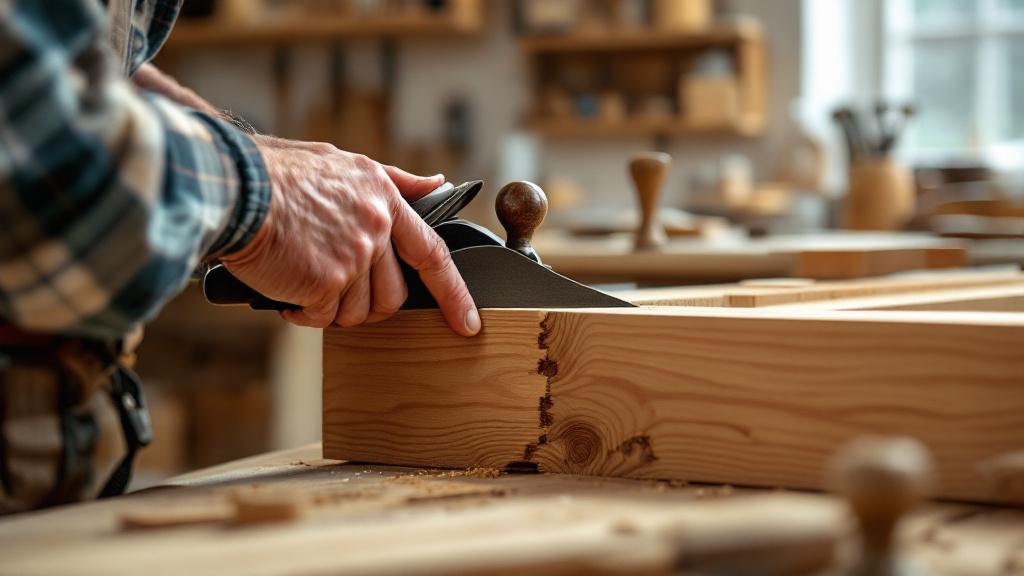
Making high-quality, durable wooden products is a complex, multi-stage process that demands not only deep knowledge of the material, but also command of a wide range of processing techniques and modern high-tech equipment. Joinery, while remaining a timeless craft at its core, is constantly evolving, integrating new approaches and technologies into traditional methods of working with wood. For a company that specialises in woodworking, understanding the full spectrum of joinery work and its subtleties is the foundation of successful production, making it possible to create goods that meet the very highest standards of quality and design.
Preparing and selecting the timber: the foundation of quality
The quality of the finished wooden product depends 80% on the raw material. This is precisely why preparing and selecting the timber is not merely an initial step but a critically important, foundational process that lays the groundwork for the durability and aesthetics of the future product.
The workflow begins with careful grading of the sawn timber. We assess every board or beam against a host of parameters, including wood species, moisture content, the presence and character of knots and cracks, and grain direction. Softwoods (pine, spruce) are traditionally used for load-bearing structures or products intended for a dense subsequent paint finish, whereas hardwoods (oak, ash, beech, walnut) are used for visible, front-facing furniture parts and decorative finishes, where high strength and expressive figure matter. The choice of a specific species is dictated by the product’s purpose: for kitchen worktops or bathrooms, for example, priority goes to species with high natural moisture resistance.
Particular attention is paid to drying the timber. This is perhaps the most crucial stage. We use industrial drying kilns that allow precise control over reducing moisture to the required 8–12% for furniture production. Under-dried timber will inevitably shrink, warp or crack once it is in the finished product, while over-dried timber becomes brittle and difficult to work. Drying schedules are selected individually, taking into account the thickness and species of the material, in order to avoid internal stresses and defects.
After drying, the sawn timber goes through a stabilisation process, during which it is left in storage to even out residual stress and reach equilibrium moisture with the workshop environment. Only then does the preliminary cuttingtake place, during which sections with major defects — dead knots, resin pockets or significant colour changes that cannot be corrected — are rejected.
Modern joinery production often uses the technology of finger-jointing lengthwise (for example, with a mini-tenon) and edge-gluing widthwise (making up furniture panels). This makes it possible not only to use short offcuts efficiently, improving waste-free production, but also to create parts that are more resistant to warping than those made from solid timber. Finger-jointed or glued blanks are less prone to deformation thanks to their multi-directional grain.
To improve performance characteristics, especially for products intended for outdoor use or damp rooms, the timber may undergo additional treatments such as heat treatment. Thermally modified timber (TMT) gains higher resistance to rot, reduced hygroscopicity and a stable, deep colour, making it an ideal material for façade elements or garden furniture.
Red or white wood: a classification that still matters today. Cabinetmaking (red-wood work) is traditionally associated with hard, valuable species (oak, mahogany) that require finer, more complex handwork and yield high-end products. White-wood work generally involves softer species (pine, birch), which are easier to work and are used for structures with lower wear demands or where economy matters.
Careful selection, proper drying and preparation are what ensure the material will behave predictably at every subsequent stage of processing, from sawing to the final finish. At this stage we invest time and resources in order to ultimately guarantee the customer the highest quality and durability of the finished product.
Machining: precision and automation
Machining is the central stage of joinery production, during which prepared sawn timber is turned into precise parts ready for assembly. Today this process is unthinkable without high-precision automated equipment that guarantees repeatability and minimal tolerances.
First comes cutting to size. Traditional circular saws are today giving way to panel saws with CNC (computer numerical control) and Nesting machining centres. Nesting technology, for example, makes it possible in a single cycle to optimise the cutting of a whole sheet of panel material (MDF, particleboard, plywood) or a large furniture panel, minimising waste and performing all the necessary operations, including milling and drilling. This significantly speeds up the process and improves part accuracy.
The next key process is planing and jointing. These operations are needed to create perfectly flat, straight reference surfaces and to obtain the required blank thickness. The jointer forms the reference face, while the thicknesser forms a second face parallel to it, ensuring the precise geometry of a beam or board. For complex curved parts, band saws are indispensable, followed by fine finishing on milling equipment.
Milling is perhaps the most varied type of machining. It includes creating profiles, grooves, rebates, recesses and decorative elements. Modern CNC routers can produce the most intricate three-dimensional reliefs, engraving and shaped work that once required hours of painstaking handwork. Programmed control makes it easy to produce parts with complex curved geometry to an accuracy of tenths of a millimetre.
An important aspect is drilling and boring (dowel boring). Furniture assembly requires an enormous number of precise holes — for dowels, confirmat screws, hinges and connectors. This task is handled by boring machines, which can drill holes in several planes at once. Introducing computer-aided design and CNC machines eliminates the human factor and ensures a perfect match of all mounting holes.
Nor should we forget secondary machining, which takes place after the blanks have been glued up or faced. It includes edge processing (edgebanding machines), sanding and additional milling. The technology of edge processing around the perimeter using vacuum clamps on CNC centres makes it possible to give panel elements their final shape quickly and to a high standard.
Ultimately, thanks to the integration of CAD/CAM systems (computer-aided design and manufacturing), modern machining makes it possible not only to increase the speed and volume of output, but also to ensure consistently high quality. Every element of the product, from the front to the internal drawer, matches the design drawings with incredible precision, which is critical for easy, reliable assembly.
Gluing and laminating: strength and aesthetics
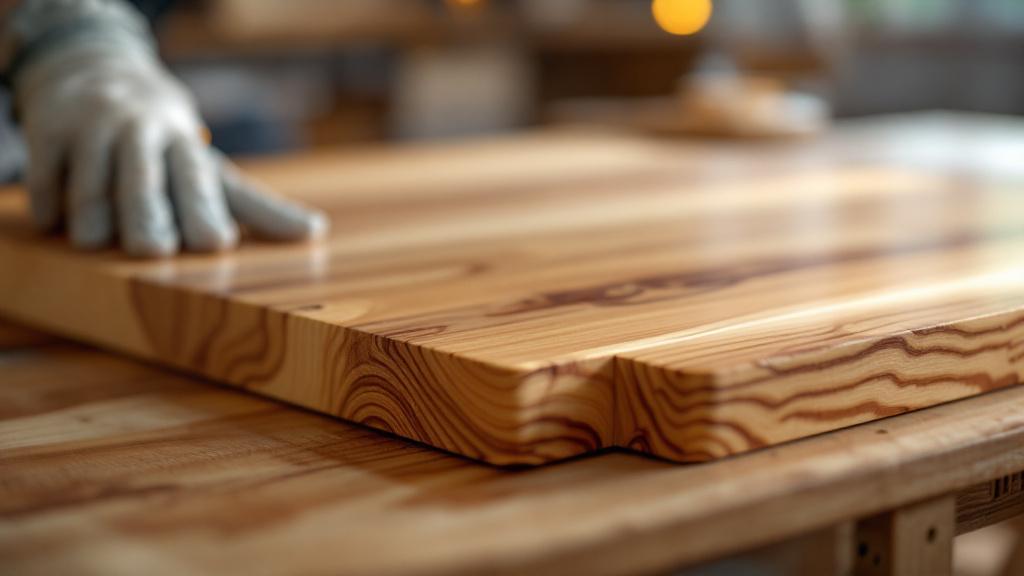
In modern joinery you rarely find products made entirely from a solid, unglued piece of wood. The processes of gluing and laminating are an integral part of production, allowing the material’s properties to be improved and design possibilities to be broadened.
Edge-gluing widthwise is the primary way of making up wide furniture panels from narrower lamellas. The aim of this process is not only to obtain the required width, but also to improve the stability of the blank. Selecting lamellas with alternating growth-ring direction makes it possible to compensate for internal stresses and minimise the risk of warping. Specialised presses and clamping frames are used for this, ensuring even pressure across the entire glued area. The choice of adhesive is also critical: for interior work, high-strength PVA adhesives (D3, D4) are usually applied, while for exterior work polyurethane formulations with enhanced moisture resistance are used.
Gluing up in thickness (or laminating) is used to create bent-laminated elements, for example curved chair backs or radius fronts. Thin layers of veneer or wood are glued in a special form under pressure, which allows the material to be given a complex, pre-defined curved shape that would be impossible when working with solid timber. This method delivers high strength while keeping the part relatively light.
Facing (laminating, veneering) is the process of gluing thin decorative materials onto a substrate (panel material — MDF, particleboard, or inexpensive solid wood).
- Veneering is the gluing on of natural or reconstituted veneer. This makes it possible to use the noble figure of expensive wood species while keeping the product affordable and structurally stable (an MDF core is less prone to deformation than solid wood). Veneering requires high-precision equipment such as membrane or hot presses to ensure a perfect fit with no bubbles.
- Film laminating (CPL/HPL plastics, finish foils) is used to create durable, wear-resistant and moisture-protected surfaces, which are especially relevant for kitchen and office products.
Modern gluing technologies, such as roller adhesive application and the use of high-frequency presses, have significantly sped up and improved the quality of these processes. A high-frequency field allows the adhesive to polymerise in a matter of minutes, which is critical for flow-line production.
In addition, gluing can be used to reclaim and finger-joint waste. Mini-tenon finger-jointing technology makes it possible to obtain long blanks from short offcuts that are no weaker than solid timber. This approach makes production more environmentally friendly and waste-free, boosting economic efficiency.
All these processes require strict adherence to the temperature and humidity regime in the workshop and precise adhesive dosing. High-quality gluing ensures a monolithic structure and its ability to withstand operating loads without failing.
Joinery joints: reliability and structural aesthetics
The heart of any joinery product is its joints. It is precisely their type, manufacturing accuracy and strength that determine the durability, reliability and — not least — the appearance of furniture or a decorative element. Modern production uses both classic methods proven over centuries and innovative fastening systems.
The traditional yet still relevant tenon joints are the foundation of joinery:
- The straight tenon (through or blind) is used to join pieces at a right angle (for example, in frames or drawers). It is one of the strongest methods, requiring high accuracy when cutting the tenon and the mortise.
- The dovetail is a trapezoidal corner joint that provides maximum resistance to pulling apart. It is often used to make high-quality drawers and gives the product a distinctive, recognisable look that underlines the joiner’s craftsmanship.
- The dowel joint is one of the most economical and widespread joints, where strength is provided by inserted round wooden dowels and adhesive. It requires precise drilling of paired holes, which today is easily achieved on boring machines.
Modern mechanical fasteners have greatly simplified the assembly process and made furniture more repairable and easier to transport:
- Cam connectors (for example, eccentric fittings) allow panel elements (carcass furniture) to be assembled and disassembled quickly.
- Confirmat screws (Euro screws) are used for reliable, fast joining of panel materials.
- Concealed fasteners are used where it is important to keep a clean surface with no visible fixings (for example, for wall-mounted shelves or decorative panels).
For extending the length or widening of blanks, the following are used:
- The mitre joint (at 45 degrees) is often used for frames and mouldings, where the joint should be as inconspicuous as possible and strength is achieved with adhesive and additional elements such as inserted splines.
- The finger joint (mini-tenon) is the ideal way to join short lengths end to end, creating a virtually monolithic, very strong beam.
In modern production, the manufacturing accuracy of mortises and tenonsis critically important. Most of these operations are performed on CNC milling centres or specialised tenoning machines. Thanks to digital control, parts from different batches can be matched perfectly, ensuring easy assembly with no need for fitting. During assembly, adhesive and mechanical fasteners are often used together to ensure maximum durability.
Artistic processing: carving, inlay, marquetry

Artistic processing of wood is what gives a product its uniqueness, character and high aesthetic value. In modern production these techniques combine traditional craftsmanship with the possibilities of digital technology.
Wood carving remains one of the most expressive techniques.
- Incised (chip) carving (recessing the background around the pattern) and relief carving (creating a raised design that stands out above the surface) are widely used to decorate façades, doors and furniture elements.
- In the past this was exclusively handwork. Today, CNC routers can perform complex 3D carving from a digital model, ensuring perfect symmetry and repeatability. However, after machining, some manual finishing is often required — cleaning up, refining fine details and smoothing — to give the carving a “living” look.
- Sculptural (three-dimensional) carving still remains the preserve of highly skilled craftsmen, who create legs, balusters and other three-dimensional elements.
Inlay and marquetry are techniques that make it possible to create intricate patterns and images by inserting or gluing pieces of wood, veneer or other materials (mother-of-pearl, metal) into prepared recesses.
- Inlay is the insertion of material into solid wood.
- Marquetry is a technique in which a pattern is assembled from pieces of veneer of different colours and textures and then glued onto a substrate.
- In modern production, the pieces for inlay and marquetry are often cut using laser cutting or precision plotters, which makes it possible to achieve an incredible accuracy of fit between elements, unattainable by hand.
Mosaic and parquetry involve creating geometric patterns on a surface. Parquetry, in particular, refers to the technique of creating a geometric design from pieces of veneer, which is often used to decorate tabletops and floors. Precision and repeatability are key here, and modern veneer-cutting tools ensure a perfect fit between elements.
Modern technologies also include:
- Laser engraving, which makes it possible to apply fine, highly detailed images or text onto a surface.
- Digital printing on wood, which opens up limitless possibilities for creating unique colour and graphic solutions that cannot be achieved with traditional tinting methods.
Despite the widespread use of CNC and laser technologies, the role of the master cabinetmaker has not diminished. It is the cabinetmaker who develops the patterns, selects materials with an eye for figure and colour, and carries out the final finishing that brings machine-made parts to life and gives the product its artistic completeness.
Sanding and scraping: the perfect base for finishing
Sanding and scraping are a stage that is often underestimated, yet it is precisely this stage that determines the quality of the final finish and, therefore, the overall look and tactile feel of the finished product. The surface must be not merely smooth but perfectly prepared, so that the lacquer or oil lies evenly and brings out the beauty of the wood.
Scraping is the removal of the thinnest layer of wood with a sharp blade (a cabinet scraper). This operation is needed to remove traces of machining, such as cutter marks or fuzz, that cannot be removed by coarse sanding. Scraping is especially important for preparing surfaces that will be coated with clear lacquers or oils, since it opens up the pores and figure of the wood to the maximum, making its appearance deeper and more expressive.
Sanding is a multi-stage process that starts with coarse-grit abrasive paper and ends with fine grit. Progressively reducing the grit (for example, P80–P120–P180–P240) makes it possible to gradually remove all the previous marks and make the surface perfectly smooth:
- In production, wide-belt sanding machines are used for flat surfaces. They ensure even pressure and high-quality sanding of large furniture panels and fronts.
- For curved and shaped parts, oscillating, orbital or planetary sandersare used, as well as specialised machines for sanding edges and profiles.
A key moment in the process is raising the grain. After the first sanding pass (P120–P150), the surface is treated with a weak water solution or primer, which makes the wood fibres “stand up”. Once dry, this fuzz is knocked back with the finest abrasive paper (P220–P240). This procedure guarantees that the finished product will not become rough after the final coating.
Modern standards require the complete removal of dust before applying finishing materials. After sanding, the surface is treated with compressed air and then with special tack cloths. Any remaining speck of dust that gets under a coat of lacquer or oil will become a visible defect.
Sanding quality also directly affects the consumption of coatings (paints and lacquers). The better a surface is sanded, the less coating is needed to achieve the desired effect, because the material will not be absorbed uncontrollably into loose areas. In general, proper sanding is an essential condition for achieving a premium appearance and a durable coating.
Finishing and protection: colour, texture and durability

Finishing and protection are the final and most visible stage of joinery work. It is here that the product acquires its final colour, degree of gloss and, most importantly, durable protection against moisture, ultraviolet light, mechanical damage and wear.
1. Tinting and staining
- Stains are used to change the colour of the wood while, rather than hiding it, actually emphasising its natural figure. Stains can be water-, spirit- or oil-based, each giving its own unique effect. Applying stain requires evenness and speed to avoid blotches.
- Liming / patination is an artificial-ageing technique in which special compounds (patina) are rubbed into the pores of the wood (for example, oak or ash with a pronounced figure) and then partly removed. As a result, the contrasting grain pattern becomes more expressive, creating the effect of noble age.
2. Protective and finish coatings
Various types of coating are used to protect wood, and the choice depends on the product’s purpose and the desired effect:
- Lacquers: form a durable film on the surface.
- Polyurethane lacquers: the most common in furniture production thanks to their high wear resistance, moisture resistance and resistance to chemicals.
- Acrylic lacquers: more environmentally friendly and less odorous, but less wear-resistant; often used for interior elements.
- Polyester lacquers: create a very thick, glossy coating with a “plastic” or “glass” effect.
- Lacquers are most often applied by spraying in special spray booths where cleanliness is maintained and humidity is controlled.
- Oils and waxes: penetrate deep into the wood’s structure, protecting it from within, but do not form a film on the surface.
- Natural oils (tung, linseed) with added wax: emphasise the natural, warm figure of the wood, allow it to “breathe” and are easily restored. Ideal for worktops and floors, where tactile feel and repairability matter.
- Enamels (paints): are used for a fully opaque, coloured finish. They are often applied to products made from less valuable species or panel materials (MDF). Multi-layer application, sanding between coats and final polishing make it possible to achieve a perfectly smooth, glossy or matt surface.
3. Modern application and curing technologies
- Roller application: used for flat panel elements, allowing lacquers and primers to be applied quickly and evenly.
- Ultraviolet (UV) curing: a revolutionary technology in which the coating polymerises under UV radiation in a matter of seconds. This significantly speeds up the production cycle and increases the coating’s strength.
Every finishing coat, whether primer, stain, lacquer or enamel, requires careful control of thickness, temperature and drying time. A professional finish is the guarantee that the product will delight the customer with its appearance and serve for many years, reliably protected against external influences.
Assembly and installation: the finishing touch
Assembly is the culmination of the entire production process, when individual, perfectly prepared parts are turned into a finished product. At this stage the role of the precision achieved at previous stages is especially apparent.
1. Workshop (stationary) assembly
For carcass furniture, doors and window units, stationary assembly is used in the workshop. The main task is to ensure the rigidity and geometric accuracy of the structure.
- Assembly on clamping frames and presses: Frame and carcass structures (doors, fronts) are assembled using adhesive and fixed in special pneumatic or mechanical presses (clamping frames) until the adhesive is fully dry. This guarantees that right angles are maintained and that there is no distortion.
- Fitting hardware: At this stage, hinges, locks and drawer runners are let in. Modern production uses jig routing and CNC boring machines, which automatically position the locations for hardware with high precision, eliminating errors.
2. Trial assembly and packaging
- Trial assembly: All products, especially complex furniture (wardrobes, suites), undergo a trial assembly in the workshop. This makes it possible to confirm that all elements match perfectly, check that the hardware works and identify any shortcomings before shipping to the customer. This is especially important for modular furniture that will be assembled on site.
- Packaging: The finished product or its disassembled components are carefully packaged for protection during transport. Special protective materials such as foam, corrugated board and film are used to prevent damage to the finish and corners.
3. Installation on site
Installation is the final stage, often carried out at the customer’s premises. The quality of installation depends directly on the quality of assembly and part preparation.
- Wall-mounted and built-in elements: For built-in furniture (kitchens, fitted wardrobes), precise fitting to walls and ceilings is critically important. Installation joiners use laser levels and precise measuring tools to ensure perfect horizontal and vertical alignment.
- Connection and adjustment: At this stage the doors, drawers and hardware are given their final adjustment, and built-in appliances are connected if the project provides for it.
Quality assembly is not just about joining parts together. It is a comprehensive process that confirms the accuracy of all the previous operations and guarantees that the product will be not only beautiful but also functional, and will serve for as long as possible.
Making doors and windows: the specifics of architectural joinery
Although many joinery workshops specialise in furniture, making doors and windows (architectural joinery) is a separate, very demanding field with its own specific features.
1. Material selection and protection
Doors and windows require timber that has high stability and resistance to weathering..
- The most commonly used material is glued laminated timber (three-layer or multi-layer) made from pine, oak, larch or meranti. Using glued laminated timber prevents the warping and cracking that are inevitable in products made from solid timber when temperature and humidity fluctuate.
- The timber is always given an antiseptic treatment and deep impregnation to protect it against rot, mould and insects. For exterior products it is critically important to use coatings resistant to UV radiation and moisture.
2. Production technology
The process of making doors and windows involves high-precision profiling.
- Profiling the timber: On specialised four-sided moulders, the timber is given a complex profile needed to form the rebates, grooves and tongues for seals, insulating glass units and hardware. Precision here is the key to good thermal and sound insulation.
- Tenon joints: The corners of the frame and the sash are joined using strong tenon joints (for example, a double tenon), which are glued and additionally reinforced with metal elements.
- Insulating glass units: Modern wooden windows are fitted with multi-chamber insulating glass units, which are held in the profile with beads and sealants. Quality glazing is critical for energy efficiency.
3. Hardware requirements
Doors and windows use specialised, heavy-duty hardware:
- Multi-point locking mechanisms: ensure that the sash is pressed tightly around the entire perimeter, guaranteeing an airtight seal.
- Hinges and handles: must withstand the weight of heavy wooden sashes and ensure ease of opening.
- A distinctive feature is the need to ensure precise positioning of all elements, in order to prevent draughts and sagging of the sashes.
Thus, joinery work in the production of doors and windows is a synthesis of classic joinery techniques with an engineering approach, where the main emphasis is placed on the airtightness, stability and high insulating characteristics of the final product.
Restoration and repair: a second life for wood
Restoration and repair of wooden products is a separate field of the joinery craft that requires unique skills, patience and a deep understanding of old technologies. Unlike series production, the main task here is not to create something new but to preserve the historical or aesthetic value of an existing item.
1. Diagnosis and damage analysis
The first stage is always a careful diagnosis of the item. The specialist must determine:
- The wood species and its condition (the degree of damage by rot or woodworm).
- The type of the original construction and joinery joints.
- The type and composition of the old finish coating.
- The causes of the damage (moisture, mechanical impact, UV radiation). This analysis is necessary to choose the correct restoration method that will not harm the item.
2. Structural restoration
- Eliminating defects: Damaged or missing elements (for example, parts of carving, legs, corners) are recreated using wood of similar age and species, in order to match the original as closely as possible. To fill small cracks and chips, special joinery fillers matched by colour are used.
- Reinforcing joints: Weakened tenon joints are carefully taken apart, cleaned of old adhesive and re-glued using modern, strong adhesive compounds. If the structure cannot be dismantled, it is reinforced by injecting adhesive.
3. Restoring the finish
This stage requires the utmost delicacy.
- Removing the old coating: Old lacquers or paints are removed very carefully, most often with chemical strippers or hand scraping, so as not to damage the patina and the fine carving elements.
- Tinting and coating: The recreated elements are tinted so that they harmonise with the original, aged wood. For the final coating, traditional materials are often used, such as shellac varnish, mastic or wax, which provide an authentic appearance.
4. Preservation and conservation
- Bioprotection: Wood that has been affected is always treated with antiseptic and insecticidal compounds to prevent further deterioration.
- Conservation: For especially valuable or fragile items, conservation methods may be applied that aim to stabilise the material and protect it from the effects of the environment.
Restoration is always a balance between the need for functional repair and the task of preserving the original spirit and appearance of the item. This confirms that in joinery, experience, attention to detail and respect for the material are decisive.
Tools and equipment: the joiner’s technological arsenal
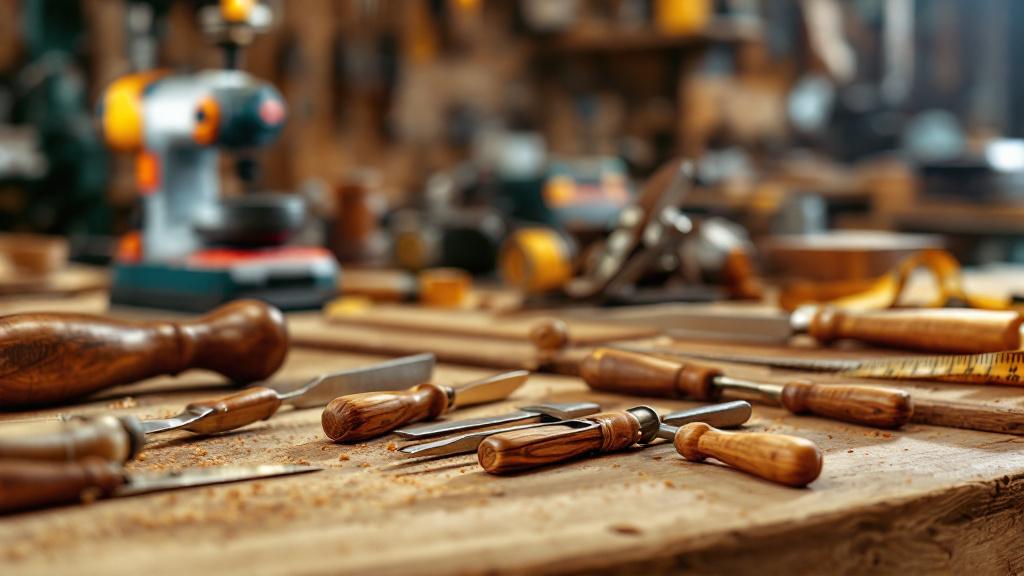
Modern joinery production is a symbiosis of centuries-old hand skills and cutting-edge technology. Tools and equipment make up the technological arsenal that makes it possible to achieve high productivity with consistently high quality.
The machinery fleet is the foundation of large-scale production.
- CNC machining centres: This is the central link. A modern CNC centre can perform cutting, milling (in 3, 4 or 5 axes), drilling and even engraving. Programming makes it possible to produce complex parts with an accuracy beyond human reach.
- Panel saws and sawing centres: provide precise, fast cutting of panel and profiled materials. Automated sawing centres make it possible to optimise the cutting layout, minimising waste.
- Edgebanding machines: are used to glue edge material (PVC, veneer) onto the edges of panel parts, ensuring an attractive appearance and protection against moisture.
- Presses and clamping frames: Hydraulic and vacuum presses are needed for gluing up furniture panels, veneering and creating bent-laminated elements.
Hand-held power tools are an indispensable helper.
- Routers (hand-held): used for finish work on edges, cutting grooves, creating profiles and small decorative elements, where a CNC machine is uneconomical or inconvenient.
- Mitre saws: used for precise cutting of blanks at a set angle (for example, 45° for frames or mouldings).
- Sanders:
- Random orbital: for all-round processing of flat surfaces.
- Belt: for coarse sanding and levelling large surfaces.
- Delta sanders: for working in corners and hard-to-reach places. Using quality, professional tools guarantees that sanding marks are kept to a minimum and the surface is perfectly smooth.
Hand joinery tools remain in demand despite automation.
- Planes and jointer planes: indispensable for fine fitting, chamfering and hand levelling.
- Chisels and mortise chisels: used for hand-trimming tenons, cutting out mortises and fine carving.
- Clamps and cramps: needed for temporarily holding parts during gluing or assembly. A professional workshop has a wide range of clamps of different lengths and clamping force.
Measuring tools are the foundation of precision.
- High-precision laser levels and tape measures: used for transferring dimensions and marking out on site.
- Squares, marking gauges, callipers: needed for checking part geometry and tolerances. In joinery, measurement accuracy often has to reach tenths of a millimetre.
Thus, a modern joinery workshop is a carefully organised environment where every tool, from a high-tech CNC centre to a hand chisel, is used to solve a specific task, ensuring maximum efficiency and quality.
Panel materials and composites: expanding the possibilities
Although solid wood remains the benchmark of quality and beauty, modern wooden-product manufacturing is unthinkable without the use of panel materials and composites. They offer structural stability, cost efficiency and new design possibilities.
- MDF (Medium Density Fibreboard): A medium-density board. This is perhaps the most popular panel material for making fronts and carcass elements. MDF is notable for its homogeneity and high density, which makes it possible to mill complex decorative profiles into it (for example, for classic fronts) and to coat it with enamels or foils. It is stable and less prone to deformation than solid wood.
- Particleboard (PB): A more economical material, used mainly for the internal load-bearing carcasses of furniture. Modern melamine-faced chipboard (MFC) offers high strength, moisture resistance and a wide choice of decorative finishes that imitate the texture of wood or stone, or plain colours.
- Plywood: A composite material consisting of glued layers of peeled veneer with perpendicular grain direction. Plywood is notable for its outstanding strength and stability against warping. It is indispensable in structures requiring high load-bearing capacity, or in decorative products where the expressive layered edge structure is valued.
- OSB (Oriented Strand Board): Consists of large wood strands bonded with resins. It is characterised by high mechanical strength and water resistance. In joinery it is often used to create structural bases, frames or as rough subfloors.
Features of working with panel materials:
- Edgebanding: Since the edges of boards look unattractive and are hygroscopic, they are always finished with edge banding. Modern edgebanding machines ensure a seamless bond of the edge (“zero-joint” technology using PUR adhesive or a laser), which increases moisture resistance and improves the product’s appearance.
- Drilling and boring: Panel materials require the use of specialised drill bits and hardware to ensure secure fastening in the less dense structure (especially particleboard).
- Cutting to size: For cutting particleboard and MDF, saws with scoring blades are used, which prevent chipping of the laminate or veneer along the edges of the cut, ensuring a clean, precise cut.
Using composites makes it possible to solve a wide range of tasks: from creating budget yet quality furniture to highly stable, strong bases for premium veneering, which makes production more flexible and competitive.
Quality control and standards: a guarantee of reliability
Ensuring quality control at every stage is not merely desirable but a mandatory element of modern joinery production. Only strict control guarantees that products conform to their stated characteristics and to standards of durability and safety.
Incoming inspection of raw materials:
- Moisture control: Incoming sawn timber is always checked with electronic moisture meters. Timber with an unacceptably high moisture content is rejected or sent for further drying.
- Visual inspection: The grade is checked for conformity, along with the absence of unacceptable defects (rot, mould, large cracks, dead knots).
- Checking panel materials: Conformity of thickness, surface flatness and the formaldehyde emission class are monitored (they must meet the E1 or CARB P2 standards for furniture).
In-process control:
- Geometry and dimensions: After each machining stage (cutting, milling), parts are measured with callipers and templates. Tolerance accuracy on tenon joints and grooves is critically important for assembly quality.
- Gluing quality: Spot strength tests of the glue line are carried out regularly. The absence of glue seepage and the even application of adhesive are checked visually.
- Sanding quality: The surface is checked for abrasive marks and fuzz before being sent for finishing.
Finish control:
- Coating thickness: Special instruments (thickness gauges) measure the thickness of the coating layer to conform to the process specifications.
- Adhesion: The bond strength of the coating to the wood is checked (a scratch or cross-hatch test).
- Appearance: Visual control for the absence of runs, orange peel, dust and colour unevenness.
Final control (acceptance testing):
- Functionality: The operation of all moving parts is checked — opening/closing of doors, extension of drawers, operation of locks.
- Assembly: A trial assembly of complex units is carried out.
- Stability and rigidity: The finished product is checked for stability and the absence of play in the joints.
Implementing standards such as ISO, along with internal technical specifications, is the guarantee that every product released meets the customer’s expectations and will serve them for a long time.
Design and visualisation: from idea to drawing

Modern joinery work begins long before the saw touches the wood. Design and visualisation are the first, fully digital stage, which makes it possible to accurately realise the customer’s ideas and eliminate potential problems at the drawing stage.
Digital design (CAD):
- Creating a 3D model: All products (furniture, doors, interior solutions) are first created in specialised 3D-modelling programs (CAD — Computer-Aided Design), such as AutoCAD, SolidWorks or specialised furniture software. This makes it possible to see the final product from all sides and check its proportions and functionality.
- Engineering development: Based on the 3D model, a complete set of design documentation is created:
- Assembly drawings: A diagram showing the sequence of assembly and the location of all parts.
- Part drawings: Drawings of each individual part indicating precise dimensions, allowances, joint types and drilling locations.
- Specifications: A complete list of all the necessary materials, hardware and components.
Visualisation and approval:
- Photorealistic visualisation: Based on the 3D model, realistic images (renders) are created that allow the customer to see how the product will look in their interior, taking into account the chosen wood figure, colour and lighting. This is a critically important stage for approving the design.
- Virtual reality (VR): In some cases VR is used to fully immerse the client in the designed space, making it possible to assess ergonomics and scale.
Integration with production (CAM):
- Data transfer: The most important aspect is the direct link between design and equipment (CAM — Computer-Aided Manufacturing). Data from the 3D model (for example, information on cutting and milling) is automatically converted into control programs for CNC machines. This eliminates the need to program the machine by hand and guarantees that the physical part will fully match the drawing.
Thus, professional design ensures:
- Precision: errors in dimensions and in the fit of parts are eliminated.
- Speed: the process of launching into production is significantly accelerated.
- Cost efficiency: cutting is optimised and waste is minimised.
Sustainability and eco-friendliness in joinery
Modern joinery production carries a high level of social responsibility, and the aspect of sustainability and eco-friendliness has become one of the key requirements. Customers increasingly choose companies that demonstrate a responsible approach to the use of natural resources.
Responsible forestry:
- Timber certification: Priority is given to suppliers who can provide certificates (for example, FSC — Forest Stewardship Council) confirming that the timber comes from forests managed in compliance with environmental and social standards.
- Using local species: Using local, rapidly renewable wood species reduces logistics costs and the carbon footprint of production.
Waste-free, efficient production:
- Optimising cutting: Using software to optimise the cutting of panel materials and solid wood makes it possible to minimise the amount of waste (sawdust, offcuts).
- Recycling waste: Wood waste (sawdust, shavings) is not thrown away but used:
- To produce fuel briquettes or pellets.
- As raw material for producing particleboard or MDF.
- For heating production premises.
Eco-friendly finishing materials:
- Low-emission coatings: Preference is given to coatings with a low content of volatile organic compounds (VOCs), such as water-based acrylic lacquers and natural oils with wax. This improves air quality both in the workshop and in the customer’s premises.
- Eco-friendly composites: Using panel materials with a low formaldehyde emission class (E0, E1) is standard practice.
Durability as eco-friendliness:
- The principle of sustainable development lies in creating products that will serve for as long as possible. Quality joinery, the use of strong joints and reliable coatings make products durable, reducing how often they need to be replaced and, therefore, resource consumption.
- The possibility of restoring and repairing wooden products is also an important aspect of eco-friendliness, since it extends the product’s life cycle and prevents its disposal.
Modern joinery is not only the mastery of processing, but also a conscious choice in favour of technologies and materials that minimise the negative impact on the environment.
Conclusion
Modern wooden-product manufacturing is a complex, multi-faceted process that combines centuries-old traditions of joinery craftsmanship with innovative digital technologies. From the careful selection and preparation of timber, through high-precision machining on CNC machines and reliable gluing, to artistic finishing and strict quality control — each of these stages is critically important. Understanding the specifics of each type of joinery work makes it possible not merely to manufacture goods, but to create durable, aesthetically valuable and functional products that meet the very highest demands of the modern market.





