
The physical nature of the materials: from veneer to wood dust
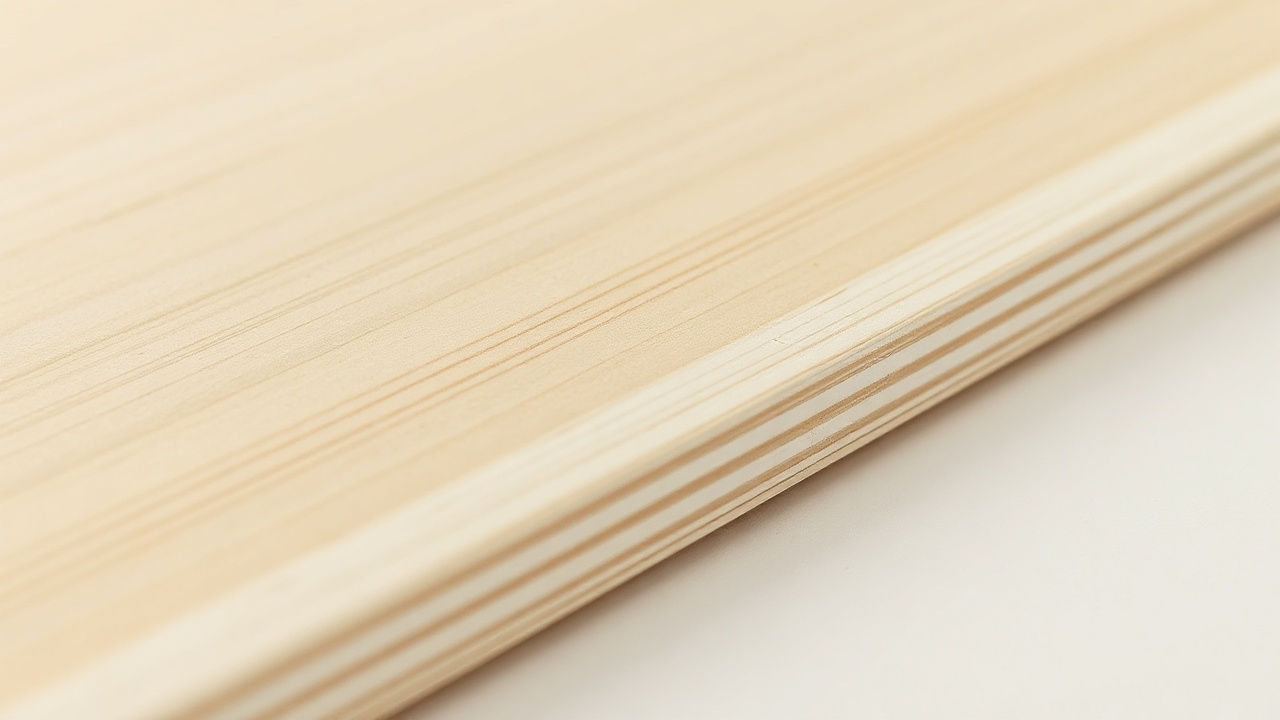
To understand what you will be working with, you have to look inside the structure. Plywood is a layered sandwich made by gluing together thin sheets of wood — veneer. The layers are laid so that the grain of adjacent sheets runs perpendicular. This gives it phenomenal strength in bending and torsion. Birch plywood is considered the gold standard for laser cutting thanks to its density and the beautiful figure of natural wood.
MDF (Medium Density Fibreboard) is the product of an entirely different process. It is a medium-density fibreboard made from very fine wood particles mixed with a binder and pressed under high pressure. If plywood is a structure, MDF is a homogeneous mass. It has no knots, voids or growth rings, which makes it predictable to machine but strips it of the natural aesthetics of wood.
For the seller the difference begins at the purchasing stage. Plywood comes in grades (from 1/2 to 4/4), where the first grade means a flawless surface and the fourth means knots and defects. MDF almost always has a perfectly even surface, which saves you from spending ages picking sheets in the warehouse. Plywood, however, wins on strength: at the same thickness, plywood products withstand significantly higher loads.
The figure of plywood is unique to each sheet. That lets you create products in the eco-friendlycategory that shoppers on marketplaces love so much. Raw MDF looks like grey or brown cardboard, so it almost always needs additional finishing: painting, laminating or veneering. That adds an extra step to the production cycle, which is critical for a beginner.
The weight of the materials also differs. MDF is heavier than plywood because of its density and high glue content. This matters when calculating logistics costs, especially if you plan to make large-format items. A heavy parcel is more expensive to ship and harder to store in marketplace warehouses on the FBO model.
Moisture is another important factor. Ordinary FK-grade plywood (moisture-resistant, urea-based glue) is afraid of direct contact with water but tolerates humid air. Without special protection, MDF swells far faster, losing its shape and turning into a loose mass. For making kitchen accessories or bathroom items, both materials will need serious protective treatment.
The specifics of laser and router cutting for a startup
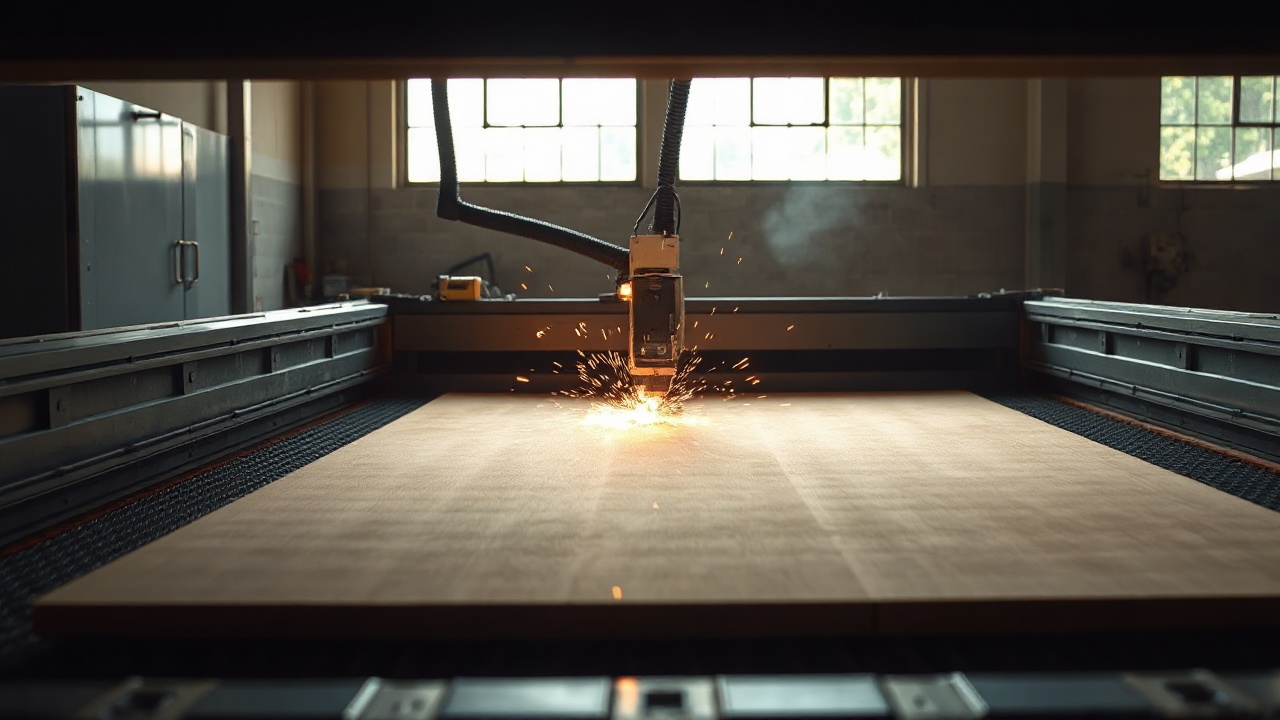
Most beginners start with laser cutting, because the barrier to entry is minimal. And here plywood shows its capricious character. Because of uneven density and knots hidden inside the layers, the laser may fail to cut through the sheet in certain spots. This leads to rejects that have to be finished by hand or scrapped. Experienced makers know: to minimise incomplete cuts, choose plywood of grade 2/2 or higher.
In a laser machine MDF behaves like a straight-A student. It cuts cleanly, with no surprises, and the edge comes out dark brown, almost black. However, because of its high resin content, cutting MDF releases far more acrid smoke. This calls for a powerful extraction system. If the workshop is in a garage or a small room without industrial ventilation, working with MDF quickly becomes unbearable.
Router machining on CNC machines opens up different horizons. On a router MDF machines perfectly — it does not chip, and it allows complex 3D reliefs and deep grooves. Plywood, on the other hand, tends to chip on the top veneer layer during routing, especially if the tool has gone dull. High-quality CNC work with plywood requires special compression bits, which press the fibres down as they cut.
- When cutting plywood with a laser, lens cleanliness matters, because resin can settle on the optics.
- MDF produces fine dust during routing that gets into every part of the machine.
- Plywood needs pre-sanding before cutting to remove the fuzz.
- MDF is better suited for engraving fine text thanks to its homogeneity.
An important nuance: laser-cutting plywood leaves soot on the edges that stains your hands. It has to be either sanded off or sealed with varnish. MDF also leaves soot, but it is oilier. If you plan to sell products in their natural state, plywood looks more refined even with a dark edge, creating a nice contrast.
The economics of the process also depend on cutting speed. Plywood cuts faster than MDF of the same thickness, because wood is less dense than a pressed board. That means less wear on the laser tube and lower electricity costs per unit. For a seller counting every cent of the cost price, this is an important argument.
Finishing: paint, varnish or oil?

Beginners often underestimate the painting stage. MDF is the perfect canvas. Thanks to its smooth surface it absorbs paint evenly. However, MDF edges are very porous and literally drink primer. To get a quality coating, edges need priming in 2–3 coats. After painting, an MDF item can look like plastic or metal, which expands your design options.
Plywood has a beautiful natural figure that it would be a shame to bury under opaque paint. Most often it is finished with stains, oils or clear varnishes. This emphasises the product’s eco appeal. But there is a nuance: plywood is a living material. Over time it can yellow slightly under UV light if the varnish contains no UV filters.
Let’s compare the finishing labour in a table:
| Finishing stage | Plywood (birch) | MDF (sanded) |
|---|---|---|
| Surface sanding | Required (grit 120–240) | Minimal (grit 240) |
| Priming the edges | One coat | 2–3 coats (high absorbency) |
| Painting (enamel) | Requires careful preparation | Goes on perfectly |
| Oil finish | Excellent result | Not recommended |
| Material consumption | Moderate | High (on the edges) |
For a seller working from home or in a small studio, the optimal choice is plywood together with oil finishes (for example, wax-based ones). It is eco-friendly, requires no spray booth or expensive spray gun. Oil is applied with a rag, dries quickly and forgives a beginner’s mistakes. MDF, by contrast, requires professional painting, otherwise the item will look cheap and amateurish.
If the brand concept is built on bright colours (children’s toys, holiday décor), then MDF becomes the more economical choice. It is cheaper in itself, and it is easier to lay down a dense coat of acrylic paint on it. Plywood under paint can raise the fuzz, which has to be sanded off after the first coat, doubling the finishing time.
Cost price and margins: let’s count the money
The material price is the foundation of profit. MDF is traditionally cheaper than plywood. The price difference per sheet can range from 20% to 50%, depending on the thickness and grade of the plywood. For a seller in the low price segment (low-cost items), this difference can be decisive. Every cent saved on a sheet turns into extra percentage points of margin on the marketplace.
You should, however, consider not only the price per square metre but also the reject rate. As already mentioned, low-grade plywood produces a lot of waste because of knots. MDF gives an almost 100% usable yield. If you plan to make small parts (earrings, badges, cake toppers), a single knot in plywood can ruin a dozen items at once.
Factors that affect the final cost of an item:
- The cost of transporting the raw material: Plywood and MDF sheets come in standard sizes (for example, 1525×1525 mm or 2800×2070 mm). Delivering large formats to the workshop is a noticeable expense.
- Consumables usage: Sanding discs, router bits and laser tubes all wear out differently.
- The maker’s time: MDF requires lengthy edge preparation, plywood requires careful sanding of the face.
- Packaging: MDF products are more fragile at the corners during transport.
Plywood lets you position a product in the premium or eco segment. Buyers are willing to pay more for an item where the structure of the wood is visible. MDF is often perceived as a budget option, which caps the upper price limit. So by working with plywood you can earn a higher markup for the same labour.
An interesting point is offcuts. Plywood scraps can be used to make small décor or even sold as blanks for children’s crafts. MDF scraps most often end up in the bin, since they are less attractive and hard to reuse without serious reprocessing.
Marketplace niches: where each material wins

The choice of material depends directly on what exactly you plan to sell. There are product categories where plywood is the absolute leader. These are above all children’s toys, busy boards, puzzles and building sets. Parents prefer natural wood for their children, and the smell of birch plywood works better than any advertising.
With interior décor the situation is different. If these are wall panels, world maps or desk organizers in loft style, plywood is unrivalled. Its texture adds cosiness. But when it comes to minimalist monitor stands, concealed storage systems or furniture that has to be painted to match the walls (Scandinavian style), MDF will look more natural.
For kitchenware (napkin holders, trivets) plywood is preferable, as it holds its shape better through temperature swings. Under heat MDF can start releasing formaldehyde resins more intensely, which is undesirable in food zones. Although both materials should carry eco certificates (emission class E1), plywood is psychologically perceived as safer.
In the gifts and souvenirs segment (boxes, wine cases, cards), plywood leads thanks to the ability to create flexible living hinges (laser cutting lets you bend plywood). MDF cannot do this — it simply snaps. So for complex packaging with curved elements the choice is obvious.
Storage and logistics: hidden pitfalls
Beginners often buy material in bulk, and that is where the problems start. Plywood is extremely sensitive to storage conditions. If you lay sheets at an angle or in a room with variable humidity, they warp. A sheet cups like a boat or twists like a propeller. Working with warped plywood on a laser machine is torture: the laser focus constantly drifts.
MDF is far more stable. It keeps perfect flatness even in less-than-ideal conditions. MDF sheets are heavy and lie tightly against each other, which prevents deformation. For a seller without a specially equipped warehouse, MDF is the safer asset. You can be sure that a month later the sheet will still be just as flat.
When shipping finished orders to buyers through marketplace logistics (Wildberries, Ozon, Yandex Market), it is important to remember fragility. Under a hard impact the edges and corners of MDF can simply crumble to dust, since the material has no fibrous bond. Plywood is far more resilient here: it may chip, but the overall geometry of the item survives.
- Always store sheet material only horizontally on a flat base.
- Use pallet wrap to protect the edges from excess moisture.
- For packaging MDF products, always use protective cardboard corners.
- Plywood items are better packed with a layer of kraft paper to avoid scuffing the finish.
If the warehouse is in a basement, forget about MDF without floor waterproofing. It will absorb moisture from the concrete and swell at the edges, after which those areas will have to be cut off. Plywood does not like damp either, but it reacts more slowly, giving you time to fix the situation.
Eco credentials and certification: what matters to the buyer
Today’s buyer has become demanding. The question “Isn’t this harmful?” appears in product comments more and more often. Both materials contain glues. FK-grade plywood uses urea-formaldehyde glue, which is considered safe for residential spaces. MDF also uses synthetic resins.
The most important indicator is the formaldehyde emission class. To sell home goods, and especially children’s products, the material must carry class E1 (or, better still, E0.5). When buying from a supplier, always ask for a certificate of conformity. This document not only confirms safety but may also be needed at the request of marketplace support.
Plywood has an image advantage. In the product description you can honestly write “made of natural wood”, which is a powerful purchase trigger. MDF is often called a “wood-based material” in descriptions, which sounds less appealing. However, MDF can be positioned as an eco choice in terms of forest conservation, since it is made from woodworking waste.
During thermal processing (laser cutting) the smell of the materials differs. Plywood smells of burnt wood, which many associate with cosiness and a campfire. When cut, MDF gives off a specific chemical odour. After production, MDF items should be aired out for 24–48 hours before packing, so the buyer doesn’t get a “chemical attack” when opening the box.
The final verdict: where should you start?
If you are only just entering the marketplace and have no professional paint shop, your choice is birch plywood, grade 2/2. It will let you create attractive, strong and eco-friendly products with minimal finishing costs. The option to use oils and waxes keeps production clean and accessible even in a small room.
MDF is worth choosing in two cases: either you need a perfectly homogeneous surface for a quality enamel finish (for example, to make premium organizers or minimalist décor), or you are fighting for every cent of the cost price in the hard mass-market segment, where design matters more than the tactile feel of wood.
Many successful sellers combine materials. For example, the body of an item is made from strong plywood, while decorative inserts or internal dividers are made from thin, cheap MDF. This approach balances the budget and keeps the product looking attractive. The main thing is to remember that at the start, avoiding rejects and earning positive reviews from your first buyers matters more than saving money.
Checklist for your first purchase:
- Check the plywood grade: for the visible faces, only 1/2 or 2/2.
- Make sure the MDF is sanded on both sides (unless it is the laminated version).
- Request an E1 certificate from the supplier.
- Take 2–3 sheets of each material for a test cut and paint job.
- Estimate the weight of the finished item to calculate logistics.
The world of wood-panel products is vast. Starting with simple plywood souvenirs, you will in time understand where the properties of MDF are more appropriate. Don’t be afraid to experiment, because it is precisely at the intersection of materials and technologies that the unique products which become bestsellers are born.





