
Historical transformation: from a primitive tray to a work of art
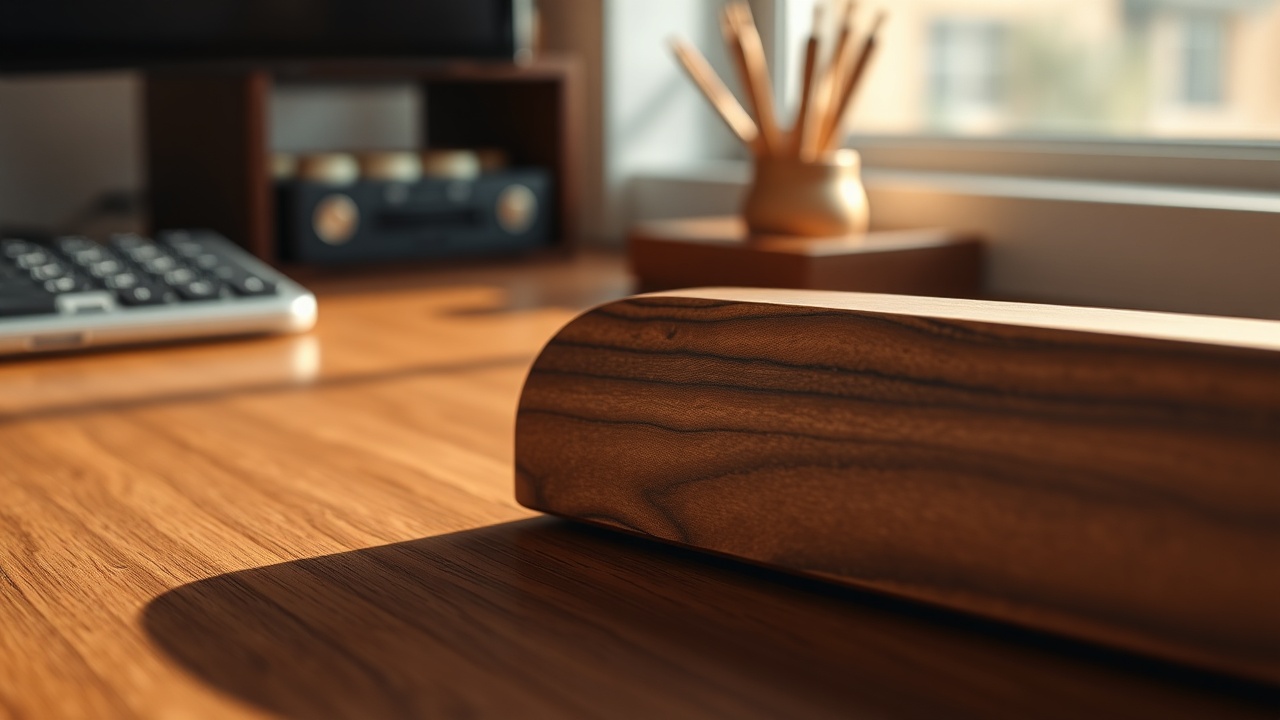
The history of desktop storage systems reaches back to the days when writing tools first became a mass instrument. Originally these were simple recesses in writing desks or massive inkstands of stone and metal. Yet it was wood that became the material to reconcile utility and aesthetics. In the age of digitalisation, when there are fewer physical objects on the desk, the role of organizers has, paradoxically, grown. Now it is not just a set of compartments for paperclips, but the central element of visual comfort.
In recent decades we have watched an ordinary wooden block with saw-cuts turn into a complex engineered construction. Where strength used to be the main requirement, today ergonomics and integration with gadgets come to the fore. Manufacturers have begun to realise that the user is buying not just a place to store things, but a way to order their thoughts by ordering their space. This has led to the appearance of modular systems that can be configured to individual needs.
Mass production in the Far East has flooded the market with cheap analogues made of bamboo and pressed shavings. This has created a certain challenge for small workshops. To survive, they have had to return to the roots of craftsmanship, using valuable wood species and sophisticated finishing techniques. The evolution of organizers today is a battle for tactile sensation. The user wants to feel the warmth of natural oak, ash or American walnut, not cold plastic or cheap laminate.
An important stage of development was rethinking functionality. A modern organizer is obliged to account for the presence of smartphones, tablets, wireless earbuds and smart watches. Hidden cable channels, built-in wireless chargers and magnetic holders have appeared. This is no longer furniture in miniature, but a hybrid device that unites the art of joinery with modern technology. The market has become oversaturated with standard solutions, and now the winner is the one who offers a unique user experience.
The overheating of the niche is forcing brands to look for new forms. Strict rectangles are giving way to biomorphic shapes, asymmetry and combinations of materials. Wood now sits alongside concrete, leather, brass and even epoxy resin. Yet it is wood that remains the base, because it possesses a unique pattern that cannot be replicated. Herein lies the main secret of success: to sell not a product, but the uniqueness of every single piece.
Professional designers note that a quality organizer today works as an “anchor” of attention. It draws scattered objects together, creating an island of order amid the chaos of work tasks. This is a psychological aspect that makers often underestimate. The client is looking for a way to lower their stress level, and items neatly arranged on a beautiful stand handle this task better than any antidepressant.
Analysing the competitive landscape and finding open segments
The market for wooden accessories today resembles an ocean where thousands of small workshops compete for the buyer’s attention by offering almost identical goods. Go to any popular marketplace and you will see hundreds of variations on the same phone stand or pen tray. To stand out, you need to carry out deep segmentation and find those customer pains that the big players ignore. Mass production is often geared to the average user, which leaves enormous opportunities for niche products.
The first step to setting yourself apart from competitors is functional specialisation. Instead of making an “organizer for everything”, it is worth trying to create a solution for a specific group of professionals. For example, an organizer for watchmakers, for illustration artists or for lovers of analogue photography. The narrower the specialisation, the higher the loyalty of an audience that for a long time could not find a suitable tool for its specific tasks.
The second aspect is working with materials and textures. Most competitors use standard sanding and an oil finish. You can stand out by applying rare techniques such as brushing, scorching, inlay or the use of stabilised wood. Below is a table comparing approaches to production that clearly shows the difference between the mass market and the premium segment:
| Criterion | Mass production | Niche/Premium |
|---|---|---|
| Material | Bamboo, MDF, pine | Oak, walnut, wenge, zebrano |
| Finish | Cheap varnish or wax | Natural oils, hard wax |
| Design | Template-driven, rectangular | Bespoke, ergonomic |
| Detailing | Sharp edges, visible seams | Rounded chamfers, concealed fixings |
| Packaging | Polyethylene, thin cardboard | Gift box, kraft, foam insert |
The third path is changing the business model. Instead of selling finished items, you can offer a construction kit or a customisation system. The ability to choose the wood species, the colour of the hardware and the number of modules makes the buyer a co-author of the product. This raises the value of the item in the client’s eyes and lets you justify a higher price. In an overheated niche, the winner is the one who lets the client feel their own exceptionality.
Nor should you forget the environmental agenda. Using reclaimed wood or materials from sustainable, FSC-certified forests is becoming a powerful marketing advantage. For the modern city dweller, mindful consumption is not just a trend but an important criterion of choice. The story of the wood an organizer is made from can become that very “hook” worth paying extra for.
Finally, an important factor is service and after-care. In the wooden-goods niche, where the product is physically durable, it is important to build a long-term relationship with the client. This could be a wood-care kit included in the set, a restoration warranty or the option to upgrade a modular system in the future. While competitors sell a one-off product, you sell a long-term solution.
Design as a tool of differentiation: rejecting templates

Many manufacturers make the mistake of copying the successful models of market leaders. As a result, the feed of products turns into an endless procession of identical objects. To break this cycle, you need to turn to industrial design and study the principles of form-making. True uniqueness is born at the meeting point of aesthetics and the solution of a specific problem. Design is not only how a thing looks, but also how it works.
One promising direction is minimalism with an emphasis on geometry. Rejecting superfluous details in favour of clean lines lets you highlight the natural beauty of the wood. Minimalism, however, must not be boring. Using hidden magnets to hold metal objects, integrating thin slots for memory cards or micro-recesses for styluses adds intelligence to the product. These are the details you don’t notice at once, but which make using the organizer a pleasant process.
Another approach is introducing architectural principles. An organizer can be seen as a micro-building on the desk. Using levels, transitions and bridges creates dynamism. Such objects invite you to examine them; they become a talking point (an ice-breaker) during business meetings or video calls. It is important to remember that in the modern world the workplace often ends up in the webcam frame, so the aesthetics of the background and the desk have become part of a specialist’s personal brand.
- Asymmetry: creates visual interest and lets you use the space for different types of objects more efficiently.
- Combining materials: inserts of natural leather to protect gadgets, brass elements for weight and style, felt for softness inside the compartments.
- Concealed hardware: using mortise joints instead of screws and glue, which showcases the joiner’s mastery.
- Textural contrast: combining perfectly smooth surfaces with rough, untreated live edges.
Ergonomics is another powerful design lever. Most stands do not account for the tilt angle of a smartphone for comfortable face unlock, or the wrist angle when writing. A well-thought-out design accounts for these small things. For example, a special channel for a pen should be just deep enough that you can pick it up easily with a finger rather than dig it out. It is precisely such micro-interactions that build user loyalty.
The colour palette also demands attention. While most limit themselves to “natural oak”, you can experiment with gradient stains, tinting into deep anthracite or dark-blue tones that preserve the wood’s texture but look modern and expensive. Black oak or bog birch can look far more striking in a loft or hi-tech interior than the standard ginger shades of pine.
Ultimately, design must tell a story. Whether it is a story of the striving for order or a story of respect for the traditions of woodworking. When form follows function while retaining artistic value, the product stops being just a stand. It becomes an artefact that is handed down as an heirloom or given to the closest of people. And this is the highest point of differentiation in an overheated niche.
Technological integration: wood in the age of gadgets
Modern people live surrounded by electronic devices, and a wooden organizer must become an organic habitat for them. One of the main problems of the desk is the abundance of wires. Stationary stands that merely “hold” a phone no longer satisfy the discerning client. The solution is smart integration, where wood serves as an aesthetic housing for high technology.
The integration of Qi-standard wireless chargers is now almost a standard for the premium segment. It is important, however, to do it well. A thin layer of wood over the charging coil preserves the visual integrity of the surface, while the phone starts charging the moment you place it on the wood. This creates a “magic” effect that consumers value greatly. In addition, you should provide cooling for the electronics so the wood does not overheat and warp over time.
Besides chargers, integrating USB hubs and docking stations is becoming relevant. Hiding the plastic housings of adapters inside milled cavities in the wooden base is an excellent way to clear the space of visual noise. Here are a few ideas for a technological upgrade:
- Built-in NFC tags that automatically switch the phone to “Do Not Disturb” mode or start a work playlist when it is placed in the slot.
- Magnetic connectors for quickly swapping power cables.
- LED backlighting with a motion sensor for soft illumination of the work area after dark.
- Acoustic cavities (passive amplifiers) that boost the sound of the smartphone’s speakers through the resonance of the wood.
The key point here is the invisibility of the technology. It should complement the wood, not dominate it. The user should see a beautiful piece of ash and discover its hidden capabilities only through interaction. This requires high milling precision and an understanding of the basics of electrical engineering. Using CNC machines makes it possible to achieve micron-level precision, which is critically important for the tight fit of electronic components.
Magnetic systems are another direction of technology. Magnets hidden under a layer of veneer let you hold paperclips, scissors or keys right on the vertical surfaces of the organizer. This looks striking and saves space. Magnets can also be used to connect separate modules into a single system, giving the user the ability to expand their organizer as needed. Modularity is the answer to the variability of the modern work process.
Introducing technology, however, imposes additional obligations. Wood is a living material that reacts to humidity and temperature. When designing tech-driven organizers, you must account for temperature clearances and use only quality components. A client who has bought an expensive item will be extremely disappointed if the built-in electronics fail within a month and it proves impossible to replace them without damaging the wooden housing.
Materials and finishing: the battle for tactility

In a world where we constantly touch the cold glass of smartphones and plastic keys, tactile hunger is becoming a reality. A wooden organizer is one of the few objects on the desk that can offer pleasant sensory experiences. That is precisely why the choice of material and the way it is finished are the most important tools in the competitive struggle. The difference between “just smooth” and “silky” wood determines whether a thing becomes beloved or merely useful.
Using exotic and hardwood species instantly moves a product into a different league. For example, American walnut is prized for its deep chocolate colour and expressive figure, while Canadian maple is prized for its density and light, almost milky tone. Working with such materials takes more effort and more expensive tooling, but the result justifies the investment. The buyer sees value in the material itself even before appreciating the design.
Finishing is an art in its own right. Many manufacturers flood the wood with a thick layer of varnish, turning it into something like plastic. This kills the material’s main value. The modern trend is using hardwax-oils. Such a coating penetrates the pores, protects the wood from within, but leaves its surface warm and “breathing”. Here are the main types of finish and their effect on perception:
- Natural oil: emphasises the depth of the grain, gives a matte sheen, requires periodic renewal.
- Polyurethane varnish (matte): creates a durable film, resistant to water and scratches, but less pleasant to the touch.
- Shellac: a traditional finish giving a vintage look and a noble sheen, but sensitive to alcohol and chemicals.
- Waxing: gives the softest, most “velvety” effect, ideal for items that are picked up often.
An interesting technique for differentiation is using textural contrast. Part of the organizer can be perfectly polished, while another retains a rough texture after sawing or brushing with metal brushes. This emphasises the wild nature of the material and creates a unique visual rhythm. Tactile marketing works on a subconscious level: if a thing is pleasant to touch, a person subconsciously ascribes higher quality to it.
Nor should you forget about smell. Natural wood treated with a quality oil containing linseed oil or beeswax has a subtle, pleasant aroma. Unlike the harsh chemical smell of cheap furniture, this creates a cosy atmosphere at the workplace. Smell is the strongest trigger of memory, and the client will associate your brand with a sense of calm and homely warmth.
Finally, it is worth considering combining wood with other materials that emphasise its virtues. For example, an insert of cold concrete or solid aluminium creates an industrial contrast with warm oak. A leather lining in the recess for glasses protects the lenses and adds a note of luxury. These details show that the manufacturer has thought through every use scenario, caring not only about beauty but also about keeping the client’s belongings safe.
Marketing meaning: how to sell a story, not a piece of wood
In an overheated niche, direct advertising of features (“our organizer is made of oak, its size is 20 x 30 cm”) works poorly. The buyer is looking not just for function; they are looking for a match with their values and lifestyle. So a successful brand today is not production, but storytelling. You need to tell stories about how things are made, who makes them and why it matters.
Content creation should focus on the process. People love a look behind the scenes. A video of a maker choosing boards by hand in the warehouse or carefully cutting a chamfer creates an emotional connection. It proves that soul and human labour have gone into the thing, rather than just the work of an automated line. In a world of mass consumption, handwork is becoming the new luxury.
Another important aspect is the product’s “mythology”. Where did this wood come from? Perhaps it is an old elm that fell during a storm, or oak from a century-old barn that was taken apart. Every crack and knot can become part of a legend. When a buyer acquires such an organizer, they are buying a piece of history. This makes the item unique even with a standard design.
- Personalisation: laser-engraving initials or a significant date makes a gift personal and rules out the possibility of a return.
- Packaging as a ritual: the unboxing process should give no less pleasure than the item itself (kraft paper, a wax seal, a sprig of lavender or a letter from the maker).
- Community: share photos of your clients’ desks, creating the image of a successful, organized person who chooses your brand.
- Educational content: explain how to care for wood, how to organize a workspace properly or how lighting affects productivity.
Social responsibility and eco-friendliness are not just words but a powerful marketing tool. If you donate part of your profit to planting forests or use only furniture-production waste (upcycling), you should shout about it. The modern consumer wants to feel part of something kind and constructive through their purchases. The organizer becomes a symbol of a conscious choice.
Don’t be afraid to show the face of the maker or the team. People buy from people. A small family workshop inspires far more trust than a faceless corporation. Tell people about the difficulties you faced in creating a particular model, about the search for the ideal shape or about how you tested a prototype over the course of a month. Honesty and vulnerability make a brand alive and appealing.
Ultimately, the goal of marketing is to turn an organizer from a “useful thing” into an object of pride. When a client sets your stand on their desk and takes a photo for social media, it means you have won the competitive battle. You have created not just a product, but a symbol of status and organization, one worth far more than the sum of the materials and hours of work spent on it.
Ergonomics and the psychology of space: more than order

Order on the desk correlates directly with clarity of thought. This is not just folk wisdom but a fact confirmed by research in cognitive psychology. A cluttered space constantly distracts attention, creating background stress. In this context a wooden organizer acts as a tool for managing attention. It creates a visual hierarchy in which every object has its own strictly designated place.
When designing an organizer it is important to account for reach zones. The objects we use most often (a pen, a smartphone) should be in the “hot” zone — within arm’s reach. Rarely used things (a stapler, spare business cards) can sit on the second tier or in closed compartments. A well-thought-out design guides the user’s hand intuitively, sparing them the need to spend cognitive resources searching for the small item they need.
Interestingly, the mere presence of natural wood in an interior lowers cortisol levels. Research shows that contemplating wood texture and having tactile contact with it promotes relaxation and concentration. This is called “biophilic design”. By introducing solid-wood organizers, we bring a piece of nature into a sterile office environment. Here is how psychology influences the choice of form:
| Form type | Psychological effect | Suitable segment |
|---|---|---|
| Strict angles | Discipline, structure, authority | Top management, lawyers |
| Smooth curves | Creativity, calm, cosiness | Designers, freelancers |
| Modularity | Control, adaptability, freedom | Programmers, engineers |
| Massiveness | Reliability, stability, status | Business owners, architects |
An important aspect is working with colour. Dark wood (wenge, dark oak) helps you focus; it seems to “absorb” excess light and does not distract from the monitor. Light wood (birch, ash, light maple) visually widens the space, making it more airy, which is useful in small offices or home studies. Understanding these nuances lets the manufacturer give the client expert recommendations, raising the value of the product in their eyes.
Another psychological device is creating a “ritual of starting work”. When a person sits down at the desk and lays out their gadgets in their places in the organizer, their brain gets a signal: “Time to concentrate.” This simple gesture helps you enter a state of flow. An organizer that makes this process pleasant and aesthetic becomes an indispensable tool of personal effectiveness. Psychological comfort is what people are ready to pay a premium price for.
Finally, it is worth considering the social aspect. An organized workplace with quality accessories is read by those around you (colleagues, clients) as a sign of professionalism and responsibility. “If a person’s desk is in order, then their affairs are in order” — this stereotype still works. In selling an organizer, you are selling the client self-confidence and the right image in the eyes of others.
Scaling and optimisation: how not to lose your soul in volume
When a workshop grows from a hobby into a business, it faces the main problem: how to increase production volume while preserving the individuality and quality that made its first clients fall in love with it. The transition to serial output often kills the charm of a craft product. The key to success here lies in a smart combination of automation and manual labour. Robots should do the grunt work, and a human should add the final touches.
Introducing CNC machines and laser cutters lets you standardise dimensions and ensure a perfect fit of parts. This lowers the reject rate and speeds up the process. It is important, however, not to stop at the “just came off the machine” stage. After automated processing, every organizer should pass through the maker’s hands for final sanding and finishing. It is precisely this hand-finishing that creates the very difference in feel that the buyer values.
Optimisation also concerns stock. Instead of storing hundreds of finished items, you can switch to a “semi-finished” system. The main bodies can be prepared in advance, while the final finishing, painting or engraving is done for a specific order. This lets you offer a wide range with minimal storage costs. Production flexibility becomes the decisive factor amid rapidly changing trends.
- Specialising staff: one person sands best of all, another applies oil masterfully, a third is responsible for packaging and quality control.
- A quality-control system: each stage should end with a check, so as not to waste time finishing a part that is already a known reject.
- Developing unified parts: using the same dimensions of grooves, modules or hardware for different organizer models.
- Working with waste: creating small accessories (card stands, keyrings) from offcuts of expensive wood raises profitability.
An important stage of scaling is finding reliable suppliers of raw material. As volumes grow, you can no longer buy wood at the nearest hardware store. Direct contracts with sawmills or drying kilns let you get material of stable quality at the best price. At the same time it is important to keep to your selection principles: even with large purchases, every board must be checked for defects that could ruin the look of the finished organizer.
Finally, scaling a business requires entering new sales channels. If it used to be Instagram or local fairs, now it is your own websites, international platforms (Etsy, Amazon) and work with corporate clients. Corporate gifts are a huge market for makers of wooden organizers. Companies look for quality, non-plastic gifts for their partners, and here your ability to produce a batch of 100–200 pieces with the client’s logo within tight deadlines will be decisive.
The main thing is to remember that growth must not come at the expense of meaning. Even if you produce thousands of items a month, the client should feel that their organizer is special. This is achieved through attention to detail, quality packaging and impeccable service. In an overheated niche, the winner is not the biggest but the most detail-conscious manufacturer, the one who managed to turn a craft into an effective and honest business.





