
The Psychology of Choice: Why Construction Kits Make a Universal Gift

The popularity of model kits and construction sets as gifts stems from deep-seated psychological needs. In a world where most of what we produce is intangible and digital, the chance to build something with your own hands gives a unique sense of completion and control. When you give a construction kit, you are not simply handing over a box of parts — you are offering “time alone with yourself” or a “family evening,” which is valued far above material objects. It is an investment in leisure that turns the process into a form of meditation.
Age-independence is another important factor. Modern 3D models long ago outgrew the category of children’s toys. Sophisticated engineering, the beauty of the materials and fine detailing make them a coveted purchase for adult collectors. To become a bestseller, a product must satisfy the need for status and intellectual challenge. Buyers look for an item they will be proud to display on a shelf in the study or living room once assembly is complete.
Another aspect is the so-called “IKEA effect.” Studies show that people place greater value on items they have invested their own effort into building. A finished model becomes a source of pride — something you want to tell guests about and put on show. For the product’s creator, this means free word-of-mouth: every assembled piece becomes living advertising for the brand within the customer’s home.
When developing the concept, it pays to focus on emotional triggers. Nostalgia, futurism, a love of technology or of nature — these themes resonate with the widest possible audience. If a model evokes fond memories or lets someone touch a dream (by building a replica of a legendary car, for instance), the likelihood of a purchase rises dramatically. A gift should look like a complete story, not merely a set of parts.
The key difference between a “gift-grade” kit and an ordinary one is the attention paid to first impressions. Unboxing is a ritual. The sound of the box opening, the scent of wood or quality plastic, the neat layout of the parts — all of this builds the product’s perceived value before assembly even begins. If this stage is poorly executed, the magic disappears and the product turns into just another instruction-following chore.
Choosing the Material: From Wood to High-Tech Polymers
The material dictates not only the tactile feel but also the complexity of production and the final price. Birch plywood remains the market leader thanks to its eco-friendliness and “warmth.” Laser cutting achieves micron-level precision, which is critical for mechanical models. Working with wood, however, means accounting for humidity and possible warping, which forces the manufacturer to build certain tolerances into the drawings.
Plastic kits offer a different aesthetic. Here the ability to create complex curved surfaces and transparent elements comes to the fore. Injection moulding or high-quality 3D printing can imitate metal, glass or futuristic materials. The main advantage of plastic is its durability and resistance to external factors, which matters for models intended for active use after assembly.
Metal kits occupy the premium segment. Assembling a model from polished steel or brass demands patience and precision, but the result looks like a piece of jewellery. Such models are often chosen as gifts for executives or connoisseurs of industrial design. Metal is more challenging technically: you have to devise ways of joining parts without glue — for example, through a system of slots and bendable tabs.
A comparison of the materials by key parameters is shown below:
| Material | Assembly difficulty | Tactile comfort | Durability | Eco-friendliness |
|---|---|---|---|---|
| Plywood (wood) | Medium | High | Medium | High |
| Plastic (ABS/PLA) | Low/Medium | Medium | High | Low |
| Metal (steel) | High | Medium | Very high | Medium |
| Cardboard (designer) | Low | Low | Low | High |
Hybrid solutions are also worth remembering. Combining wood with acrylic, or metal with leather, gives a model a unique character. Transparent inserts let you peek inside the mechanism, which never fails to delight technology enthusiasts. A variety of textures makes the assembly process more engaging and the finished object visually richer.
When choosing a material, logistics must be taken into account. Wood is heavier than cardboard but lighter than metal. The weight of the packaging directly affects shipping costs, especially in international trade. In addition, the material must meet safety standards: no toxic fumes, no splinters or sharp edges that could cause injury. Material quality is the foundation of a brand’s reputation.
Engineering Magic: Mechanics That Bring a Model to Life
To go truly viral, a product needs to be able to “do” something. A purely static figurine soon grows dull, but a model with a working mechanism can hold your gaze for hours. A kinetic sculpture is the pinnacle of the 3D-kit world. Gears, levers, counterweights and rubber-band motors turn assembly into an engineering quest and the result into a small miracle.
Designing mechanical assemblies calls for a deep knowledge of mechanics. It is essential that every part moves smoothly, without sticking. Wooden models often use paraffin wax to lubricate the moving parts, and including it in the box is a sign of care for the customer. The complexity of the mechanism must be balanced: too simple and it sparks no interest; too complex and it leads to assembly errors and disappointment.
Popular types of mechanics in construction kits:
- Wind-up motors: using rubber bands or springs to set the model in motion.
- Secret locks: boxes with combination mechanisms that open only after the correct sequence of actions.
- Automatons: figures that imitate the movements of living creatures (a bird in flight, a galloping horse).
- Clockwork mechanisms: working clocks or calendars that actually keep time.
One intriguing trend is the integration of electronics. A small motor, LED lighting or a sound module can significantly increase a model’s value. Here, though, it is important to keep balance so that the kit does not turn into an ordinary radio-controlled toy. The magic lies precisely in the fact that the user builds a complex system themselves, understanding how every gear works.
When developing the drawings, repeated testing is essential. Each iteration should reveal the “weak links.” It is important to have the assembly tested by people of different skill levels. If a beginner keeps making mistakes at a particular joint, the design needs to be simplified or given a more detailed explanation in the instructions. Reliability means the model still works after hundreds of operating cycles.
Design and Aesthetics: How to Fit into the Interior
A kit must look beautiful not only in the box but also on the shelf. Today’s buyer is demanding about style. Minimalism, steampunk, loft and retro-futurism are all in vogue. When creating a design, you should ask: “Will someone want to put this in the most prominent spot?” If the answer is no, the product is unlikely to succeed as a gift.
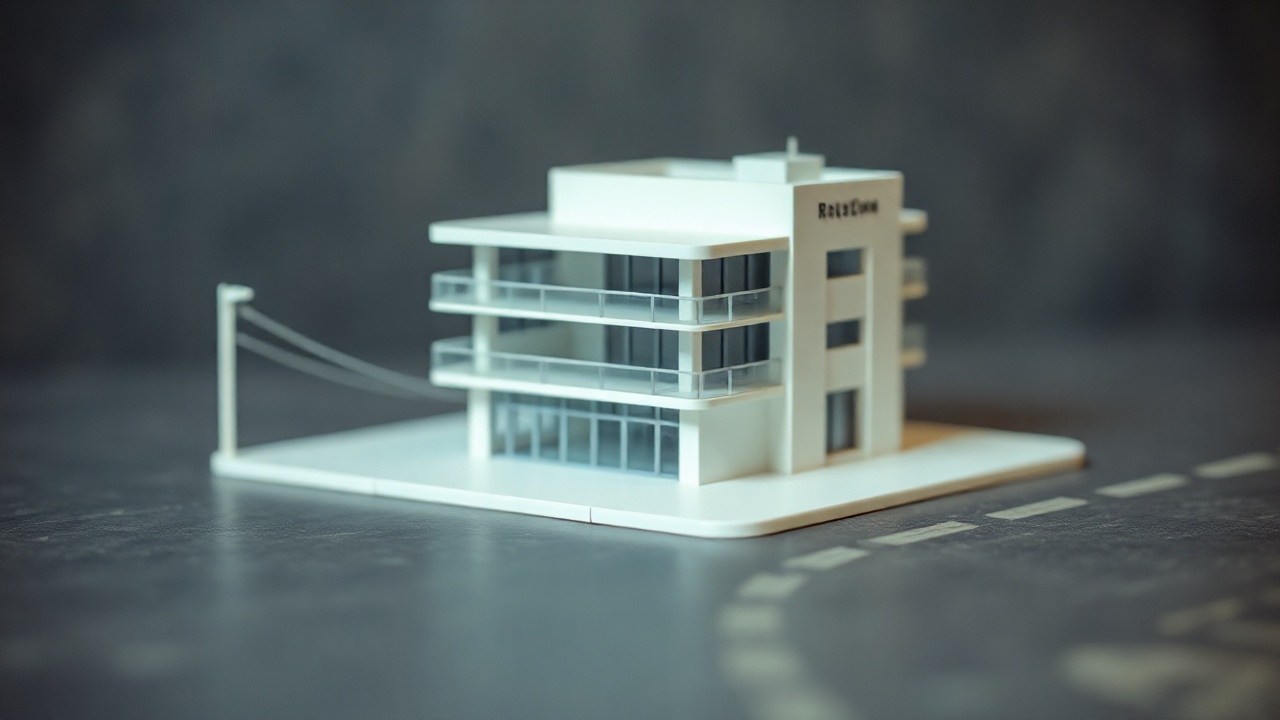
Detailing is the key to success. Engraving, laser perforation and layering create volume and depth. In a car model, for example, a carefully rendered dashboard, opening doors and a bonnet that reveals the engine beneath create a wow effect. In architectural models, accurate proportions and a recognisable style are what matter.
The colour palette plays an important role. Natural wood tones emphasise eco-friendliness, while monochrome black or metallic elements lend a futuristic look. Bright accents are sometimes appropriate, but it is important not to overdo them so the model does not look “cheap.” Using quality dyes that leave no marks on the hands during assembly is a mandatory quality requirement.
Packaging is an extension of the design. It should communicate the product’s status. Kraft cardboard, foil stamping or transparent windows let the buyer assess the quality at a glance. Inside the box, everything must be perfectly organised: trays for the parts, protective paper, a beautifully designed instruction booklet. Unboxing should become an aesthetic pleasure.
The Manual as Part of the User Experience

A poor manual can kill even the most brilliant product. Ideally, the assembly process should be clear without words, at the level of infographics. Using step-by-step 3D illustrations with clear indications of how the parts move and an emphasis on the tricky moments is the industry’s gold standard. Every action should be numbered, and the parts required should be easy to identify on the blank sheets.
Modern technology makes it possible to supplement paper manuals with digital services. A QR code on the box can lead to a video assembly tutorial or an interactive 3D model you can rotate on your smartphone screen. This is especially useful for complex assemblies where a static picture is not enough. A virtual assistant lowers the entry barrier and reduces the share of negative reviews from those who “couldn’t figure it out.”
Checklist for the perfect manual:
- A list of all parts with their codes.
- Warnings about fragile elements and tips on removing them.
- Symbols for lubrication, symmetry and checking the movement of the mechanisms.
- Advice on fixing common mistakes.
- The story behind the model or interesting facts about the prototype for inspiration.
The tone of the manual should be friendly and supportive. You can add gamification elements: “Congratulations, you’ve completed the hardest stage — assembling the engine! Now is the perfect time for a break.” This creates an emotional bond with the brand and makes the process less tiring. Quality print production of the manual also matters: the paper should be heavy and the printing crisp.
Pricing and Market Positioning
For a product to sell during the holidays, it must fall into specific price brackets. Usually these are the “budget gift” (up to a certain amount), the “mid-range segment” (the bulk of sales) and the “premium/collector’s edition.” The product line should include models of varying complexity and price so that customers can start small and gradually move on to more challenging projects.
The cost price is made up of materials, equipment run time (a laser cutter, for example), packaging, logistics and marketing. It is important to understand that a kit’s price reflects not only the cost of materials but also the intellectual labour of engineers and designers. Avoid price dumping: a price that is too low can raise suspicions of poor quality. It is better to justify the price through the uniqueness of the mechanisms and the level of service.
Analysis of construction-kit price segments:
| Segment | Target audience | Product features | Average assembly time |
|---|---|---|---|
| Entry-level | Beginners, children | Simple shapes, minimal mechanics | 1-3 hours |
| Standard | Mass-market buyer | Medium complexity, basic mechanisms | 4-10 hours |
| Expert | Collectors, enthusiasts | High detail, complex mechanics | 15-40 hours |
| Limited edition | Connoisseurs, gifting | Rare materials, exclusive design | Individual |
Positioning must clearly answer the question: who is this product for? “A hobby for engineers,” “stress relief for office workers,” “an educational activity for the whole family” — different messages call for different promotional channels. For holiday sales, it is important to stress that the product is gift-ready: “stylish packaging that needs no extra wrapping.”
Experience Marketing: How to Get People Talking

In the construction-kit niche, visual content works best. Time-lapse videos of the assembly process are the most effective advertising tool. Watching a working castle or aeroplane gradually emerge from a pile of parts is an incredibly mesmerising sight. Such clips spread beautifully on social media and draw in a cold audience.
Collaborating with reviewer-bloggers is another powerful lever. It is important to choose those whose audience values detail, quality and aesthetics. An honest review that shows both the difficulties of assembly and the delight of the result builds trust. You can run contests for the best paint job or modification of a finished model, encouraging user-generated content (UGC).
Seasonality plays a key role. Sales peak around major holidays, but you need to prepare for them well in advance. Themed collections (winter cottages for Christmas, say, or retro-car models for Father’s Day) help focus demand. Limited runs create a sense of scarcity and prompt collectors to buy immediately.
Don’t forget the fan community. Creating a forum or group where people can share tips, show off their work or request spare parts in case of breakage builds loyalty. Good service is when a customer knows that if they accidentally break an important gear, the manufacturer will send a replacement free of charge or for a nominal fee. This turns a one-time buyer into a repeat customer.
Production Nuances and Quality Control
Scaling up production requires automation. While a single laser machine may suffice at the start, a mass-market product needs a full production line. The main enemy of quality in kit manufacturing is equipment wear. Over time a laser may produce a thicker cut, which will cause parts to become loose or, conversely, fail to fit into their slots.
Quality control must be carried out at several stages:
- Inspection of incoming raw materials (plywood grade, plastic purity).
- Control measurements of sheet thickness before cutting (even 0.1 mm matters).
- Sample assembly from each batch to verify buildability.
- Visual inspection for engraving defects or chips.
It is important to plan a system for storage and kit packing. Hundreds of small parts are easy to mix up. Labelling the part sheets and using automated scales to check that each box contains a complete set will help avoid complaints. Remember that a single missing part in a 500-piece set means a ruined celebration for the customer and a serious blow to the brand.
Innovation in production can also become a competitive advantage. Using eco-inks to print directly onto wood, adopting biodegradable materials or working with recycled plastic are modern trends that appeal to conscious consumers. Continuous improvement of technology makes it possible to cut costs and increase product complexity while staying ahead of competitors.
Prospects for the Future: From Physical Models to Augmented Reality
The world of 3D kits never stands still. The future belongs to the integration of the physical and digital worlds. The technology of augmented reality (AR) makes it possible to bring a finished model to life: by pointing a smartphone at a wooden tank, the user can see the special effects of firing shots or historical background about the prototype. This turns the model into an interactive educational or gaming object.
Personalisation is another trend. The option to order a kit engraved with a name or with a custom design makes it the perfect corporate gift or a unique present for a loved one. Modern software makes it possible to automate the creation of individual layouts without significantly raising production costs.
Creating a product that people will give as a gift for every occasion is a marathon, not a sprint. It requires a combination of engineering thinking, artistic taste and impeccable service. But when you see your kit take pride of place in someone’s home and the customer come back for a new model, one thing becomes clear: the magic of creation is the most sought-after product of all time.





