
The essence of unit economics in wooden model-kit production
When it comes to producing assembly wooden model kits, many entrepreneurs make the mistake of focusing solely on total revenue at the end of the month. Yet the secret to sustainable growth lies in unit economics — the method of determining the profitability of one specific unit (a single item). In our case, the unit is a single boxed kit. Understanding exactly how much net cash each model sold brings in lets you adjust your price or optimise production costs before it is too late.
For makers of wooden products, unit economics is not just a set of dry figures — it is a survival map. If, after deducting every variable cost for packaging, plywood, glue and advertising, only a pittance remains, scaling the business will only multiply the losses. It is essential to understand the difference between contribution margin and operating profit. The margin on a single kit must cover not only its production, but also workshop rent, taxes and equipment depreciation.
The wooden-modelling industry has its own specifics: a high scrap rate in laser cutting and a strong dependence on the cost of raw materials. Quality birch plywood can spike in price and instantly eat into your profit if you have not built in a buffer. Calculating the unit shows the sales volume at which the project breaks even. This is critically important when planning your first large batch destined for marketplaces or specialist hobby shops.
Many newcomers forget to include small items in the unit cost — the sandpaper in the kit, the wax for lubricating the gears, or the logistics to the warehouse. Unit economics forces you to see the product as a sum of small outlays, each one affecting the bottom line. Without this analysis, the business turns into a guessing game where success depends on luck rather than mathematics.
Using the Contribution Margin metric lets you manage your range flexibly. If an intricate cathedral model yields less profit than a simple car because the laser runs so long, it may be time to rethink the design or the price. Unit economics exposes these “hidden underperformers” that look popular but drag the budget down.
The structure of variable costs: from plywood to engraving
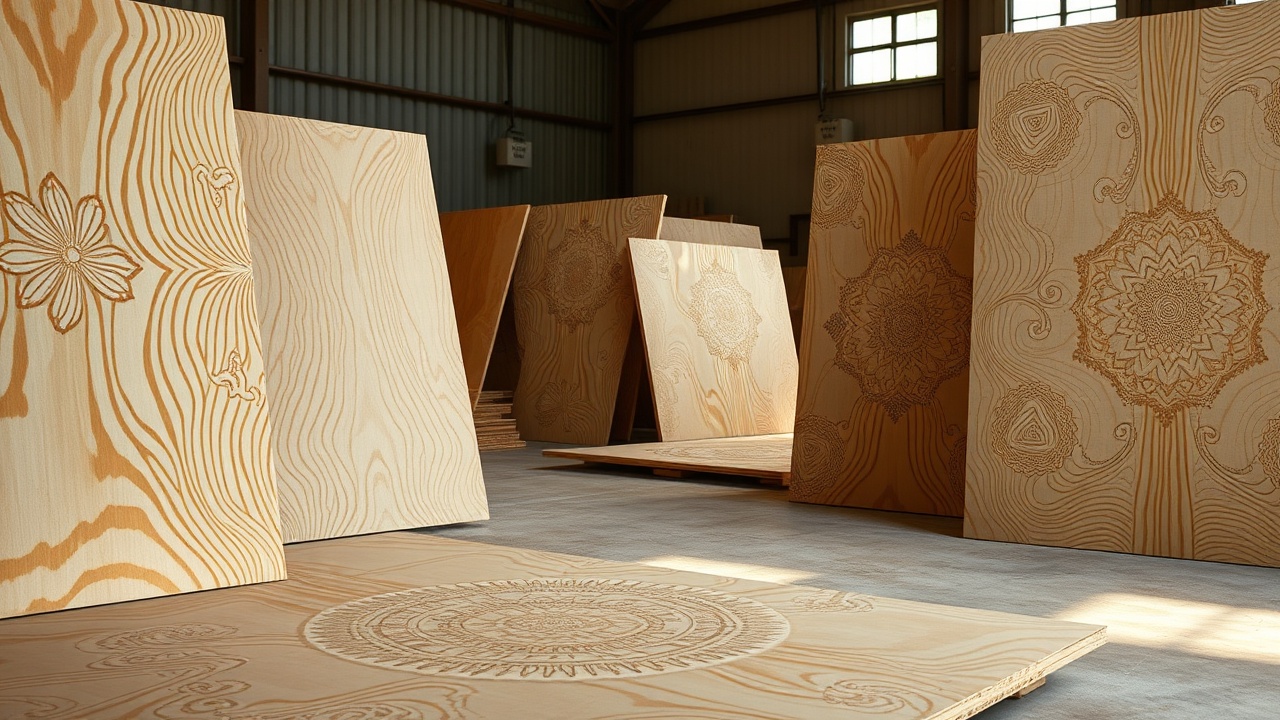
The first stage of the calculation is to determine COGS (Cost of Goods Sold), i.e. the cost of the goods sold. In wooden-model production, materials make up the bulk of this figure. Grade 1/2 or 2/2 plywood is the baseline, but do not forget the waste factor. Laser cutting is never waste-free: nesting the parts on a sheet always leaves offcuts that cannot be reused. Your calculation must account for the area of the entire sheet consumed by the batch.
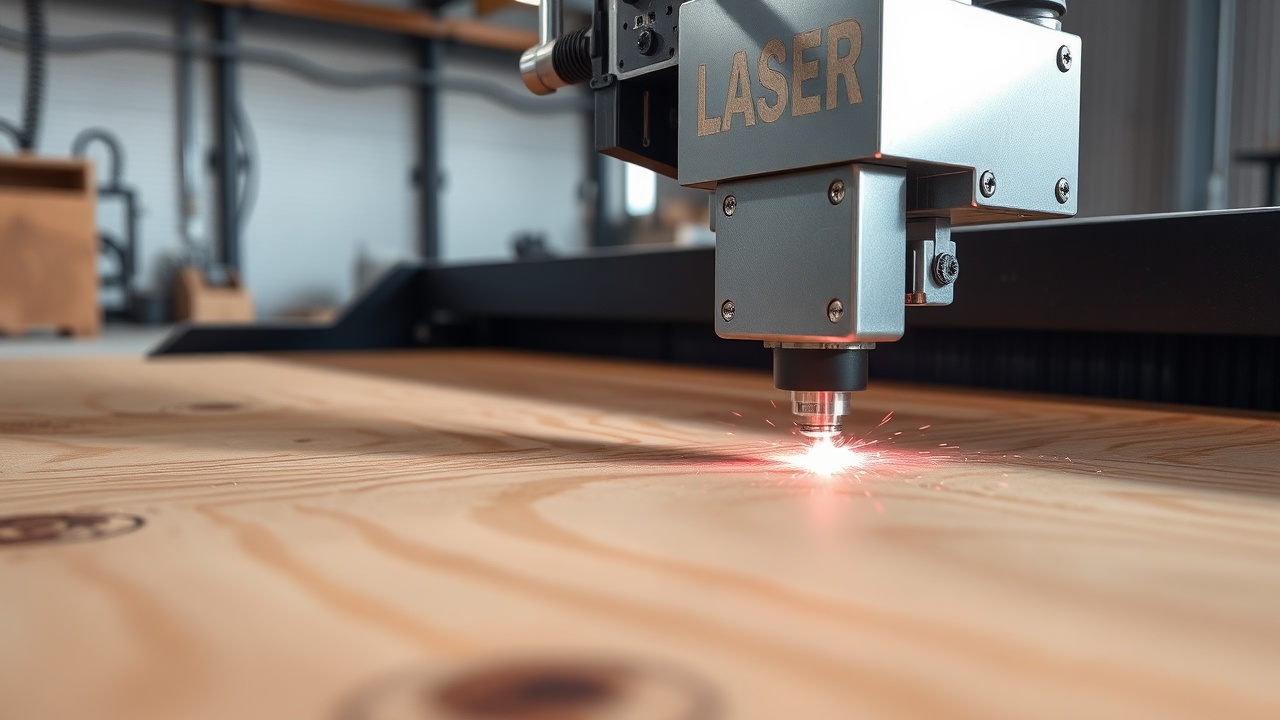
The second key component is equipment run time. The electricity drawn by a powerful laser and the wear on the laser tube are real money. The more intricate the pattern and the more small parts in the model, the longer the machine runs. One hour of machine time has its own cost, which must be spread across the number of units produced. Ignoring equipment depreciation means that a year from now you will have no funds to replace worn-out components.
Consumables are frequently underestimated. These include:
- Sanding belts and discs for the final finishing of parts.
- Glue (if the model does not assemble by tab-and-slot joints).
- Small hardware: elastic bands for the mechanisms, metal axles, toothpicks or wax candles.
- Branded packaging: cardboard boxes, shrink film, instructions.
The instruction sheet is a cost item in its own right. Quality printing on heavy paper costs noticeably more than a black-and-white printout. If you are aiming for the premium segment, packaging and instructions can amount to 15–20% of the total cost of goods. All these elements are variable costs: the more boxes you produce, the more you spend on these items.
You should also factor in the logistics cost of delivering raw materials to your warehouse. If you order plywood from another region, the delivery cost must be divided across the number of sheets and added to the price of each unit. In unit economics there are no trifles, because it is precisely these that turn a project profitable on paper into a loss-maker in practice.
Calculating CAC and the cost of acquiring a customer

Producing the model is only half the job. The other half is finding someone to buy it. Customer Acquisition Cost (CAC) is the cost of acquiring a single paying customer. For the wooden-kit niche this is one of the most volatile metrics. If you sell through social media or paid search, you divide the advertising budget by the number of sales made.
The specific challenge of hobby products is that the audience is fairly narrow. Advertising to a broad audience can be ineffective. It is important to track conversion at every stage of the funnel. If you spent €10,000 on advertising and sold 20 kits, your CAC is €500. If your margin on a single kit is only €400, you are working at a loss, even if the product is perfect.
To lower CAC, manufacturers often collaborate with modelling bloggers or take part in themed exhibitions. In such cases the calculation becomes trickier, as the effect may be delayed. In unit economics, however, it is important to budget an average CAC based on the experience of previous months. This tells you the maximum amount you can afford to spend to acquire a single customer.
Factors that influence CAC in the DIY-model niche:
- Quality of visual content: professional photos and assembly videos raise conversion.
- Seasonality: the cost per click rises before the holidays, but so does purchasing power.
- Reviews and social proof: real photos of assembled models lower the barrier to purchase.
- Choice of platform: on marketplaces CAC can be lower thanks to organic traffic, but other commissions appear there.
Do not forget returns and refusals. In the wooden-model segment they happen less often than with clothing, but they still occur (for example, transport damage). The cost of processing a return also falls on marketing or operating expenses, indirectly increasing your real CAC.
The impact of marketplace commissions on unit economics
Today most wooden-model manufacturers list on major platforms such as Wildberries, Ozon or Amazon. Here unit economics takes on a new layer of complexity. The marketplace charges a sales commission, a warehouse storage fee, delivery to the buyer and, sometimes, an inbound handling fee. All these figures must be locked firmly into your calculation sheet.
Marketplace logistics are often calculated from the dimensions of the packaging. The more compactly you can pack your kit without risking the parts, the cheaper each unit becomes. Many manufacturers deliberately rework the parts layout to fit the model into a flat box that falls into a cheaper shipping tariff class.
The platform commission is usually a percentage of the retail price. This means that as the selling price rises, so does the absolute size of the commission. It is also important to factor in mandatory promotions. Marketplaces often press sellers into lowering their prices. If your unit economics does not include a safety buffer for a 20–30% discount, taking part in such a promotion can wipe out your profit or push you into the red.
| Cost item | Own production (direct sales) | Sales via a marketplace |
|---|---|---|
| Sales commission | 0% | 10-20% |
| Storage | Own warehouse (fixed) | Daily charge (variable) |
| Delivery to the customer | Paid by the customer or by you | Marketplace tariffs (depend on dimensions) |
| Advertising within the platform | Not required | Search promotion (CPC/CPM) |
| Returns | Direct communication | Paid reverse logistics |
The table clearly shows that the cost structure changes substantially. On a marketplace you save on generating traffic (partly), but you pay for the infrastructure. In unit economics it is important to compare these sales channels separately, because the very same wooden tank can be super-profitable in your own online shop and loss-making on a large marketplace because of the logistics costs.
Fixed costs and the break-even point of a batch

Besides the variable costs tied to each box, there are fixed costs. These are the workshop rent, administrative staff salaries, taxes, internet and bank charges. In unit economics we allocate these costs across the expected volume of the batch produced. This is called cost allocation.
If your rent is €50,000 a month and you produce 100 models, each model carries a “load” of €500. If, however, you raise production to 1,000 models on the same premises, the rent share per unit falls to €50. This is a classic example of economies of scale. That is precisely why batch profitability is always tied to its volume.
The break-even point shows how many kits you need to sell to cover all costs. To calculate it, divide the total fixed costs by the contribution margin per unit. For example, if fixed costs are €100,000 and each kit leaves €1,000 after deducting variable costs, you need to sell exactly 100 units to break even. Everything sold beyond the 101st unit is your net profit.
In woodworking it is also important to account for seasonal downtime. If sales drop in winter, the fixed costs do not disappear. Unit economics helps you decide whether it is worth cutting the price in the off-season to sustain sales volume and cover fixed costs, or whether it is more advantageous to reduce headcount temporarily. Without these calculations the business risks running into a cash-flow gap.
Optimising production: how to reduce the unit cost
When the unit-economics calculation is done and the results are disappointing, the optimisation stage begins. In wooden-model production there are several levers for influencing the cost of goods. The first is cutting layout. Reworking the arrangement of parts on the plywood sheet (nesting) can save 5–10% of material. There are dedicated programs that minimise the distance between cut lines.
The second lever is reducing cutting time. The power of the laser tube directly affects speed. Switching to more powerful equipment or replacing the lenses with higher-quality ones lets you cut faster, reducing the machine-hour cost per item. It is also worth looking at the design: sometimes the model’s aesthetics do not suffer if you replace an intricate engraving with a through cut, which is quicker to perform.
The third route is working with suppliers. Buying plywood by the pallet rather than by the sheet gives a significant discount. Here, however, it is important to factor in the cost of storing large stocks of raw material. Unit economics helps you calculate whether the benefit of the wholesale price will outweigh the cost of tying up capital and renting extra warehouse space.
Ways to reduce costs without losing quality:
- Packaging automation: using semi-automatic shrink-wrap machines.
- Changing the type of wood: using quality MDF instead of plywood for internal parts.
- Optimising logistics: consolidating shipments to marketplace warehouses to lower the cost per pallet space.
- Introducing a quality-control system: cutting the share of defects returned by customers.
Do not overlook the human factor either. Training the machine operator to set the focal distance correctly can significantly reduce charring on the wood, which cuts the time spent on subsequent sanding. Every minute saved and every square centimetre of plywood, scaled across a batch of a thousand pieces, turns into serious money.
LTV and repeat sales in the world of wooden kits
Lifetime Value (LTV) is the total profit that a single customer brings over the entire time they interact with your brand. For a maker of assembly kits this is a critical metric. Someone who has assembled one mechanical model is highly likely to want a second, if the experience was positive. This means the CAC for the second and subsequent purchases will be close to zero, sharply raising the overall profitability of the business.
To increase LTV, you need to work on creating collections. If you have a “World Architecture” or “Military Vehicles” series, customers will want to complete the whole set. Slipping a discount coupon for the next purchase straight into the box is an excellent way to encourage a repeat order. In unit economics this shows up as an increase in the average profit per acquired customer while the cost of acquiring them stays the same.
It is important to track the Retention Rate . If people buy one kit and never come back, the problem may lie in overly complex instructions or poor wood quality (splinters, parts that snap). Fixing these issues directly affects your financial results over the long term. The unit economics of the first sale can even be negative, if you know for certain that LTV will cover those costs within six months.
It is also worth considering the introduction of a “consumables” or add-ons range. For example, paints for colouring the models, extra tool sets, or special display cases for storing the assembled masterpieces. These products carry a high margin and are easily added to the basket alongside the main model, significantly improving the economics of every unit in the customer’s cart.
Final checklist for verifying batch profitability
Before you fire up the lasers and start producing a new batch, you must run all the numbers through a final filter. Unit economics does not tolerate assumptions — it loves facts. If you are unsure of the cost per click, budget for the pessimistic scenario. If you do not know the exact defect rate, take the market average (usually 3–5%).
Make sure you have accounted for taxes. Depending on your business structure (sole trader vs. limited company), the tax burden can substantially change the picture. Many small-business schemes tax the entire turnover, including the portion the marketplace took as its commission. This is a common trap that novice entrepreneurs fall into, calculating tax only on the “net” cash in their account.
Check the following points:
- Have you included the depreciation of the laser tube and mirrors?
- Have you accounted for transport packaging (tape, stretch film, outer boxes)?
- Have you factored in the cost of storing goods in the warehouse for more than 30 days?
- Is there a margin buffer (at least 15–20%) for taking part in marketing promotions?
- Have you costed labour — even if you assemble and pack everything yourself, your time is worth money.
If, after all the calculations, Net Profit per Unit remains positive and meets your payback goals, the batch is ready to launch. Recalculating your unit economics regularly (at least once a quarter) will let you respond promptly to changes in plywood prices, logistics services and advertising rates, keeping your wooden-model business stable and profitable.





